Last updated November 20, 2026 · By Seth Semilof
What is the difference between the Hawker 800XP, 850XP and 900XP?
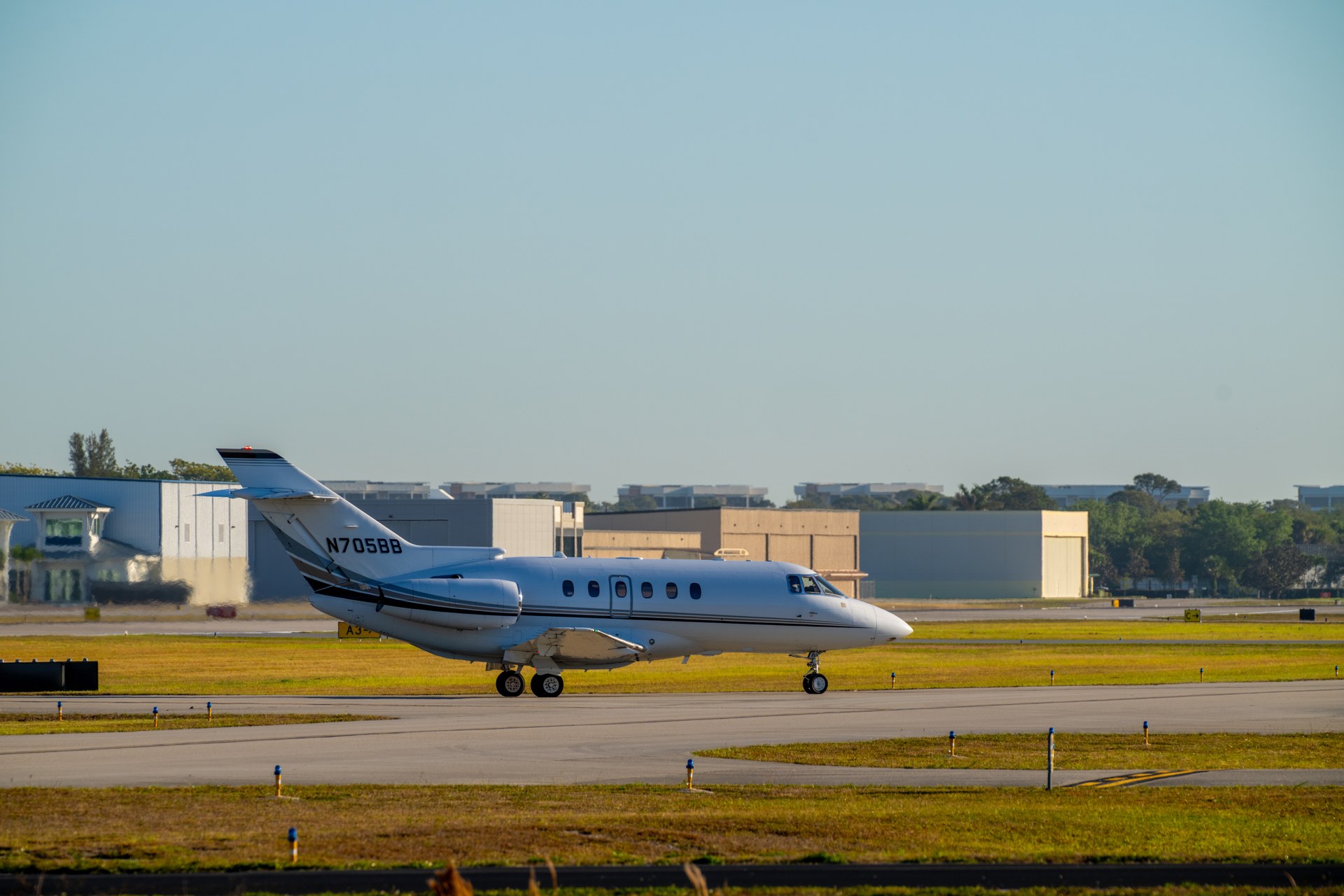
These three midsize jets share the same basic Hawker 800-series cabin and are often discussed as one family on the charter market. The differences that matter are engines, winglets and published range — not cabin size. FAA Type Certificate Data Sheet A3EU, Revision 44 (November 6, 2017), is the certification baseline for all three, along with other 125-series models. The TCDS does not publish a single NBAA trip range. Where we quote range, we use a manufacturer Specification & Description or a manufacturer media statement, and we leave a cell blank rather than invent a figure.
The Hawker 800XP is the baseline aircraft in this group. The FAA approved it on July 28, 1995. Raytheon Aircraft Company’s 2004 Hawker 800XP Specification & Description (serial numbers 258717, 258723 and on) lists two Honeywell TFE731-5BR engines (the TCDS still uses the earlier Allied Signal name for the same engines), standard seating for 8 passengers plus a crew of two (optional layouts up to 12 passengers), and a published range of 2,540 nm, ±3 percent, with 4 passengers and 2 crew, including taxi, takeoff, climb, cruise, descent and NBAA IFR reserves.
The Hawker 850XP is a separate 800-series model on TCDS A3EU, approved February 28, 2006. The data sheet says it differs from the 800XP in one major respect: the addition of winglets on the outboard wings. It keeps the same TFE731-5BR engines. That is the factory-winglet fact we can publish from a primary source. We still do not publish a standalone 850XP range figure, because we do not have a manufacturer Specification & Description for that model. If a quote involves an 850XP, the operator uses that aircraft’s flight manual, not a generic 800XP number.
The Hawker 900XP is the later factory airplane. The FAA approved it on August 24, 2007. TCDS A3EU says it differs from the 850XP by installing Honeywell TFE731-50R engines in place of the TFE731-5BR engines, and by updating Rockwell Collins Pro Line 21 avionics to integrate the new engine limitations in the cockpit. Hawker Beechcraft’s 2011 product description, repeated in Textron Aviation’s media archive, calls it a midsize jet that can carry a full load of passengers and fuel over 2,800 nautical miles. That is the manufacturer’s wording we use — “over 2,800 nm” with a full load — not a more precise aftermarket figure.
An aftermarket Hawker 800XPR upgrade later combined 900XP-style winglets and TFE731-50R engines on existing 800XP airframes. Hawker Beechcraft said those upgraded aircraft would fly more than 2,800 nautical miles. An 800XPR is not the same as a factory 900XP; ask which airplane is actually being offered.
How did the 800-series Hawker family develop?
All three airplanes sit on the long HS.125 / Hawker 800 type certificate, which the FAA first approved in 1964 for the Hawker Siddeley DH.125 Series 1A (TCDS A3EU). The 800XP, 850XP and 900XP are later models on that same sheet, not new clean-sheet jets.
| Model | FAA approval (TCDS A3EU) | What the type certificate says is different | Engines on the TCDS |
|---|---|---|---|
| Hawker 800XP | July 28, 1995 | TFE731-5BR engines in place of the earlier 800’s TFE731-5R engines, plus other 800XP-specific changes listed in section XVIII | Two Allied Signal TFE731-5BR |
| Hawker 850XP | February 28, 2006 | Addition of winglets on the outboard wings, relative to the 800XP | Two Allied Signal TFE731-5BR |
| Hawker 900XP | August 24, 2007 | TFE731-50R engines in place of the 850XP’s TFE731-5BR engines, and updated Pro Line 21 avionics for the new engine limits | Two Honeywell TFE731-50R |
TCDS A3EU lists a 15-passenger maximum for the 850XP and 900XP, with the approved seating configuration left to the serial-specific Airplane Flight Manual or weight-and-balance manual. That certified maximum is not the same thing as a typical charter layout. Raytheon’s 800XP specification lists 8 passengers standard and up to 12 optional. We confirm the seat map on the tail you are offered.
How do the published specs compare?
| Item | Hawker 800XP | Hawker 850XP | Hawker 900XP |
|---|---|---|---|
| Engines | Honeywell / Allied Signal TFE731-5BR | Same TFE731-5BR (TCDS A3EU) | Honeywell TFE731-50R and factory winglets (TCDS; 2011 Hawker Beechcraft description) |
| Winglets | Not a factory 850XP/900XP winglet airplane; some tails later received the 800XPR upgrade | Factory winglets on the outboard wings (TCDS A3EU) | Factory / enhanced winglets (Hawker Beechcraft 2011) |
| Published range | 2,540 nm ±3% (4 pax + 2 crew, NBAA IFR), Raytheon 2004 | No manufacturer Specification & Description in hand; use the AFM for that tail | Over 2,800 nm with a full load of passengers and fuel (Hawker Beechcraft 2011) |
| Cruise speed / MMO | 447 kt ±3% at 37,000 ft and 22,000 lb, ISA; MMO Mach 0.80 (Raytheon 2004) | Not restated from the 800XP book; confirm in the AFM | MMO Mach 0.80 (TCDS A3EU); no manufacturer cruise figure cited here |
| Cabin length / height / width | 21 ft 4 in / 5 ft 9 in / 6 ft 0 in (Raytheon 2004) | Same 800-series cabin family; confirm the tail | Same 800-series cabin family; confirm the tail |
| Cabin volume (800XP book) | 604 cu ft | Same cabin family | Same cabin family |
| Baggage (800XP book) | 33 cu ft internal + 16.5 cu ft aft of the cabin | Confirm on the tail | Confirm on the tail |
| Typical / certified seats | 8 standard; up to 12 optional (Raytheon 2004) | TCDS maximum 15; layout is serial-specific in the AFM | TCDS maximum 15; layout is serial-specific in the AFM |
| Takeoff / landing | 5,030 ft at 28,000 lb; 2,650 ft at 23,350 lb (FAR 25, sea level, ISA), Raytheon 2004 | TCDS maximum brake-release weight 28,000 lb and maximum landing weight 23,350 lb; distances from the AFM | TCDS maximum brake-release weight 28,000 lb and maximum landing weight 23,350 lb; distances from the AFM |
| Maximum operating altitude | 41,000 ft (Raytheon 2004; FAA certified) | 41,000 ft (TCDS A3EU) | 41,000 ft (TCDS A3EU) |
| Sources for this row group | Raytheon 2004 Specification & Description; TCDS A3EU | TCDS A3EU only for the figures shown | TCDS A3EU; Hawker Beechcraft / Textron media, 2011 |
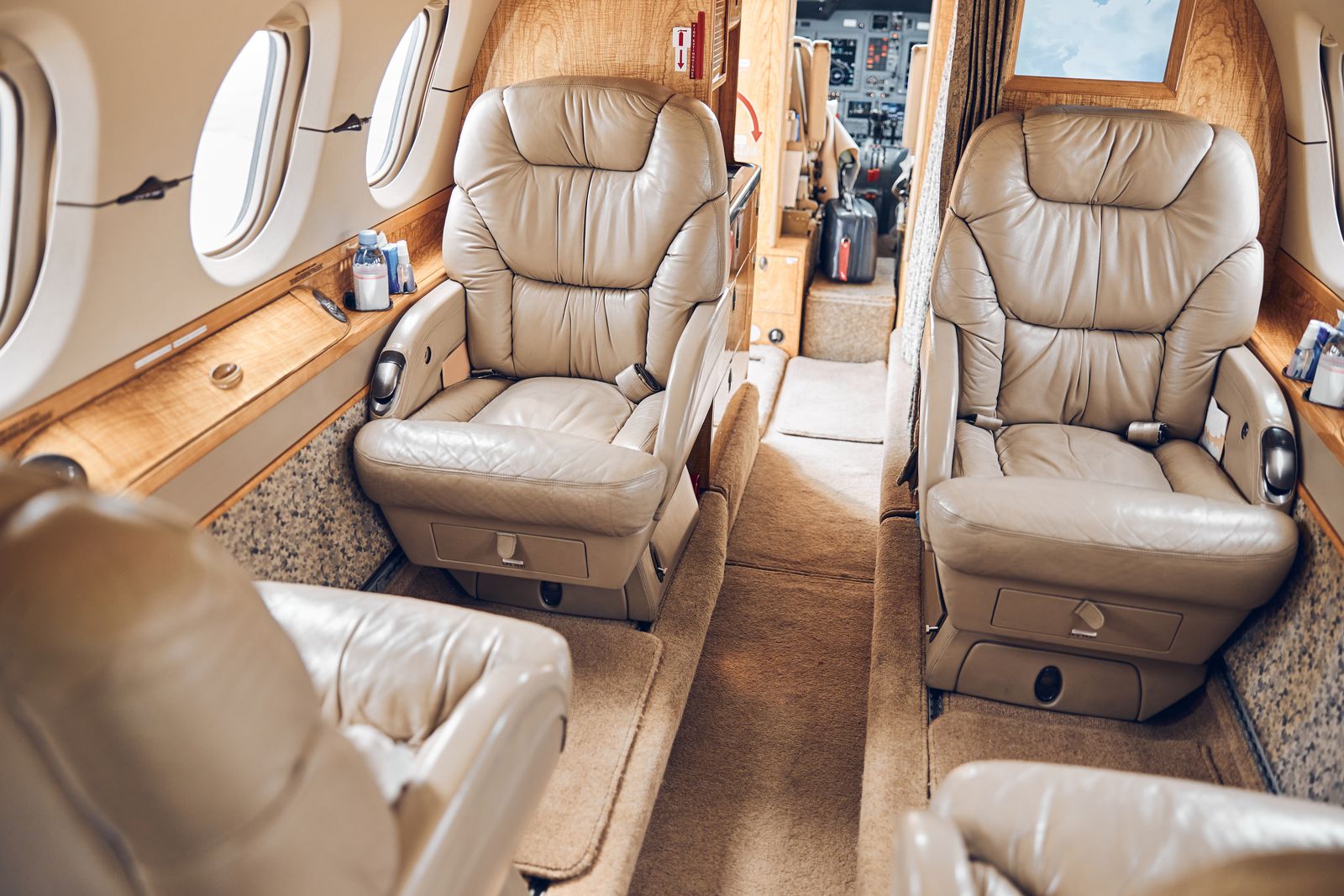
The 800XP cabin figures come from the same Raytheon document: length is measured from the cockpit divider to the aft pressure bulkhead and includes the aft lavatory; height is approximately 5 ft 9 in depending on carpet thickness; maximum width is 6 ft 0 in (4 ft 3 in at the floor). The standard interior is 5 individual seats and a 3-place divan. At 41,000 ft, an 8.55 psi differential gives a 7,500 ft cabin altitude. Those cabin dimensions are the 800-series fuselage that the 850XP and 900XP also use. We still confirm seat maps and baggage on the specific tail, because refurbished interiors vary.
Which one fits your trip?
Use the manufacturer figures as planning numbers, then let the operator check the flight manual for winds, payload and the departure runway. The table below is a trip-fit guide, not a promise that a given model will fly a city pair nonstop on your date.
| Kind of trip | What the published figures suggest | What to confirm |
|---|---|---|
| East Coast or Midwest to Florida, or other mid-length U.S. legs well inside 2,000 nm | The 800XP’s 2,540 nm published range, and the later 900XP’s “over 2,800 nm” with a full load, both have planning margin for many of these trips with a midsize cabin of about eight seats | Passenger and bag weight, and whether the offered airplane is an 800XP, 850XP, 900XP or an 800XPR |
| Longer U.S. transcontinental or a long Caribbean overwater leg | A factory 900XP, or a documented 800XPR, has a higher published-range statement than the 800XP’s 2,540 nm book figure and may be the more comfortable planning choice | A specific AFM check. Do not assume an 850XP matches the 900XP number, and do not assume an unmodified 800XP will do the longer leg |
| You were offered an 850XP | You get the 800-series cabin and, per TCDS A3EU, factory winglets and TFE731-5BR engines | Range and field lengths from that tail’s AFM only. We do not substitute a 800XP or 900XP brochure number |
| Short runway or a heavy baggage load | The 800XP book takeoff figure is 5,030 ft at 28,000 lb, sea level, ISA. The 850XP and 900XP share the same 28,000 lb brake-release and 23,350 lb landing-weight limits on the TCDS | The actual takeoff and landing distances in the AFM for that day’s weight and temperature |
What should you know about the 800XPR upgrade?
The 800XPR is an aftermarket modification, not a fourth factory model in the table above. Hawker Beechcraft’s May 17, 2011, announcement said the upgrade combines 900XP-style winglets and TFE731-50R engines on existing 800XP airframes, and that upgraded aircraft would fly more than 2,800 nautical miles. Serials, engine programs and avionics still vary. If a quote says “800XP” and the pictures show winglets, ask whether the airplane is a factory 850XP, a factory 900XP, or an 800XPR conversion.
These aircraft left the factory years ago. Year, engine program, avionics (many fly Collins Pro Line 21), interior condition and whether an 800XP later received the 800XPR upgrade all vary by serial number. We arrange flights only with ARGUS- or Wyvern-rated operators and diligence the tail rather than the model name alone.
How do you request a quote?
Haute Jets is a private jet charter broker, not an operator. We have access to 3,500+ aircraft in 175 countries. Two FAA ATP-rated pilots are on the trip, and we monitor flights 24/7. No jet cards, no membership fees. We work to eliminate repositioning fees where the routing allows. Most quotes arrive within 60 minutes.
Send dates, airports, passenger count and bags via request a quote, or call (800) 257-5661. We will tell you whether the offered airplane is an 800XP, 850XP, 900XP or an 800XPR, and whether the leg is realistic in that aircraft’s flight manual. We do not publish charter prices on this page. A real quote names a specific tail, operator and itinerary.