If you're considering a private jet because your dog can't face another airline cargo experience, you're not overreacting. Most first-time clients call with the same concern. They aren't trying to make travel glamorous for a pet. They're trying to make it tolerable, predictable, and safe.
That distinction matters. In 32. Flying with Pets Private Jet, the primary advantage isn't only that pets can stay in the cabin. It's that you can control the variables that usually make pet travel difficult: the aircraft, the operator's policy, the pace of the day, the documentation, and the arrival process.
The Unmatched Serenity of Private Pet Travel
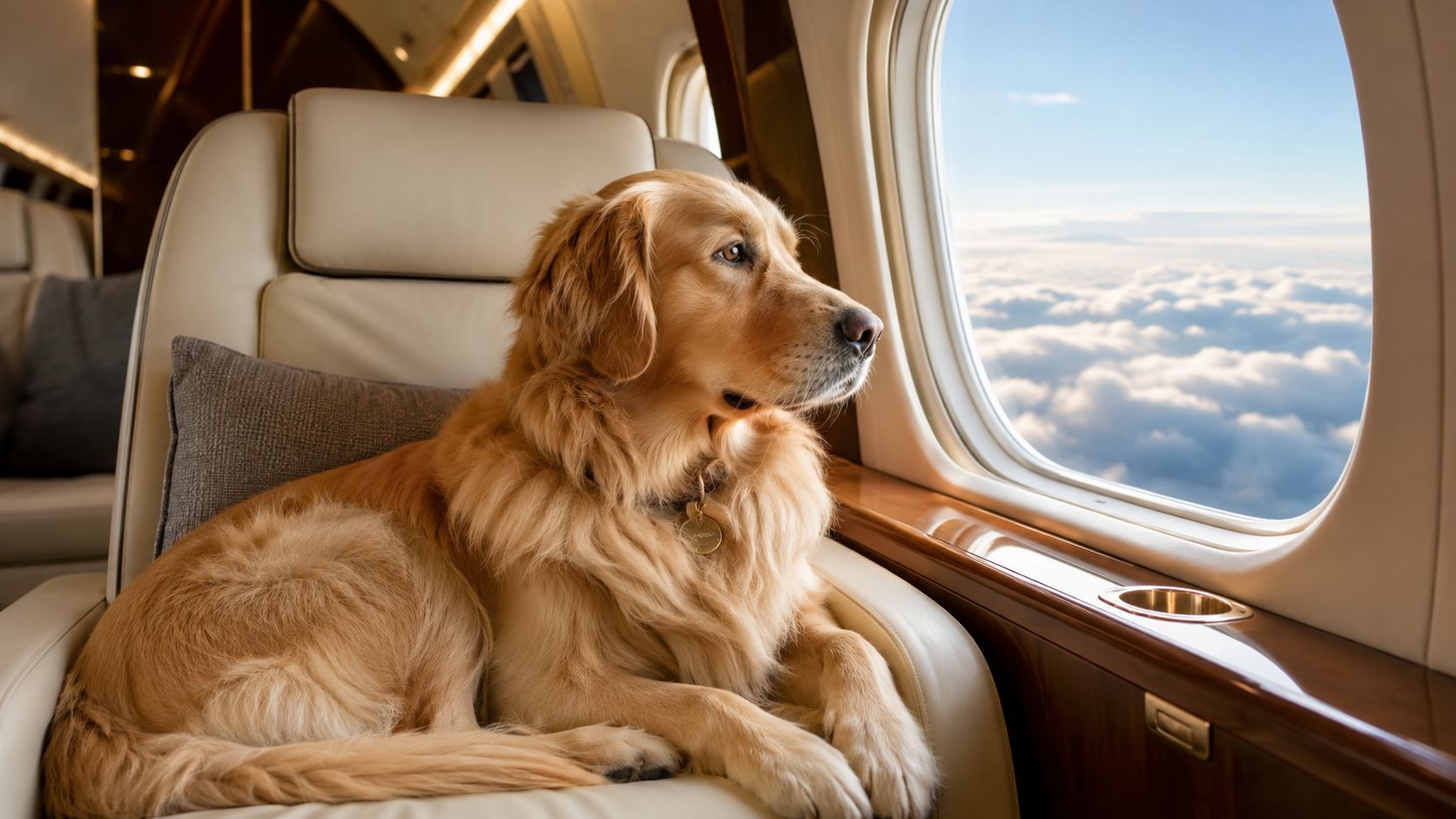
The difference usually becomes obvious before the aircraft door even closes. On a commercial itinerary, a pet owner worries about check-in rules, carrier enforcement, noise, crowds, and whether the animal will be separated from them. On a private flight, the dog walks from the car to the terminal lounge, boards with the family, and settles into a quiet cabin with familiar voices.
That calm isn't just anecdotal. A 2023 owner-reported study on pet air travel found that about 6% of pets in the United States board a plane every year, and dogs accounted for 58% of pets traveling by air. The same study reported that almost 60% of dogs had flown once or twice, while over 40% of pet owners described canine air travel as extremely or very stressful.
For many owners, that's the whole case for private aviation. The concern isn't whether a dog can technically be transported. It's whether the trip respects the animal's temperament and keeps the family together.
What cabin access changes
In practical terms, a private cabin solves several problems at once:
- Continuous supervision: You can watch breathing, posture, hydration, and stress cues instead of hoping everything is fine out of sight.
- Less sensory overload: Private terminals are quieter and more controlled than crowded commercial gate areas.
- More natural handling: A dog can remain near its people, blanket, toy, and routine rather than being processed like freight.
- Flexibility in seating and setup: The crew can help you create a calm space instead of forcing a one-size-fits-all arrangement.
Private pet travel works best when the flight feels like an extension of home, not an endurance test.
Owners who are early in the planning stage usually benefit from a basic overview of how flying with pets on a private jet works before they start comparing aircraft. That first step helps clarify what's possible and where the actual constraints are.
What first-time clients often misunderstand
The quiet cabin matters, but it isn't the only reason these trips go well. A smooth pet charter depends on decisions made before departure. The right operator asks about breed, size, habits, leash control, accident risk, and destination rules. The wrong one merely says pets are allowed and leaves the details for later.
That's why private pet travel should be treated as a logistics exercise with a luxury outcome. When it's planned correctly, the experience feels effortless. When it's planned casually, even a beautiful jet can become the wrong choice.
Preparing Your Pet for a First-Class Flight
Most flight problems start on the ground. A dog that hasn't practiced short separations, worn a harness comfortably, or settled in a travel space won't suddenly become relaxed because the cabin is elegant.
Preparation should begin with the pet, not the aircraft. The best pre-flight routine is conservative, familiar, and boring. That's usually what keeps the day calm.
Start with a veterinary check and a routine review
Book a pre-travel veterinary appointment early enough to fix anything the vet finds. That visit isn't just about a health certificate if one is needed later. It's where you catch vaccination gaps, skin irritation, digestive issues, ear sensitivity, motion history, or behavior changes that could matter in flight.
Ask practical questions, not just medical ones. Can your pet handle a delayed meal? Are there any reasons to avoid certain treats? Is your dog prone to nausea after car rides? If you're considering calming products, your vet should guide that decision.
Practical rule: Don't experiment with new supplements, treats, or routines for the first time on flight day.
For owners who want a concise pre-departure refresher, these essential tips for flying on private jets with pets are a useful companion to a vet-approved travel plan.
Train for the environment you want
Even if your pet won't spend the whole flight in a carrier, carrier familiarity still helps. So does practicing calm waiting in a harness and leash. The objective isn't strict obedience. It's reducing novelty.
A few habits make a noticeable difference:
- Practice short settle sessions in a travel bed, soft carrier, or blanket-covered corner at home.
- Use the exact harness and leash you'll bring to the airport, so nothing feels unfamiliar.
- Take short car rides that end somewhere neutral or pleasant, not always at the vet.
- Reward calm behavior after movement, noise, and waiting.
Dogs read patterns quickly. If every travel cue means chaos, they carry that into the terminal.
Pack a real pet carry-on
Many owners remember food and forget function. The pet bag should support comfort, cleanup, and routine.
- Food and treats: Bring familiar portions only. Travel day isn't the time for rich snacks.
- Water setup: Pack a bowl your pet already uses, plus wipes for spills.
- Comfort items: A blanket or shirt that smells like home often helps more than a new toy.
- Hygiene supplies: Puppy pads, waste bags, paper towels, and cleaning wipes belong in every kit.
- Control items: Harness, backup leash, ID tag, and any muzzle your destination or handler may require.
- Records folder: Keep copies of vaccine records and any travel paperwork together, even for domestic routes.
What usually doesn't work
Overhandling a nervous dog tends to amplify the problem. Constant reassurance, crowded goodbyes, and last-minute routine changes can make an animal more alert, not less. Heavy feeding before departure is another common mistake, especially for dogs with sensitive stomachs.
A well-prepared pet generally travels best after normal exercise, a familiar routine, and a quiet lead-up to departure. The more ordinary the morning feels, the better the odds of a smooth flight.
Sourcing the Right Pet-Friendly Aircraft
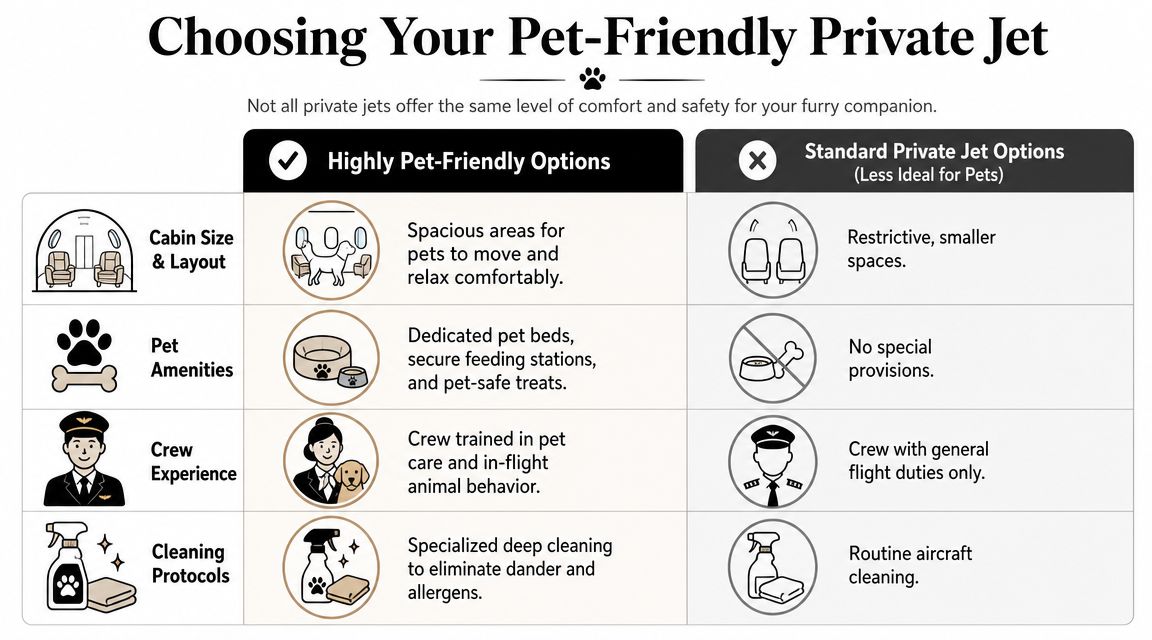
The most expensive mistake in pet charter isn't choosing private aviation. It's choosing the wrong aircraft under the assumption that all private jets handle pets the same way.
They don't. Cabin dimensions, seat layout, baggage configuration, boarding ease, and operator policy all shape the trip. A jet that feels perfect for two executives on a short hop can be a poor fit for a family traveling with a large retriever and luggage.
Why aircraft choice changes everything
Some aircraft give a dog enough space to settle without blocking movement in the cabin. Others force the animal into a narrow aisle or underfoot area that becomes stressful for everyone onboard. The issue isn't luxury level. It's usable space.
Flexjet's published guidance makes the trade-off concrete. A Phenom 300 pet-capacity example from Flexjet states that the aircraft can carry 3 medium-to-large dogs with 7 passengers. The same guidance says a Gulfstream G650 can carry 5 medium-to-large dogs with 15 passengers, and a G450 can accommodate 4 dogs with 16 passengers. That tells you what experienced operators already know. Larger cabins create more flexibility for families, staff, and pets traveling together.
The decision isn't light jet versus large jet alone
The better question is whether the specific cabin supports your specific travel style.
| Aircraft consideration | Why it matters for pets |
|---|---|
| Floor space | Gives the animal room to lie down without crowding legs and aisle access |
| Passenger count | More people onboard can reduce usable pet space, even on a premium cabin |
| Entry and boarding setup | Easier boarding helps older dogs, nervous dogs, and large breeds |
| Cabin layout | Club seating and open areas can be more workable than tighter configurations |
A fleet page can help you compare categories, but serious pet planning starts when you review the actual private jet fleet options and then confirm the exact aircraft's policy and layout.
Questions to ask before you commit
The right charter conversation gets specific fast. Ask these before signing anything:
- Are all pets accepted, or only with prior approval?
- Does the operator restrict certain breeds or sizes?
- Must pets remain leashed during taxi, takeoff, or landing?
- Is a carrier required for any phase of the trip?
- How does the crew prefer the cabin to be set up for the animal?
- What happens if the pet has an accident or sheds heavily?
A broker or advisor who can't answer these questions before payment is asking you to absorb the risk.
What experienced travelers prioritize
First-time clients often focus on the prettiest cabin photos. Repeat clients focus on fit. They want enough room for the dog to settle, enough policy clarity to avoid airport surprises, and enough operator experience that no one onboard acts uneasy around animals.
That's where aircraft sourcing becomes genuine luxury. Transparency beats assumption. A straightforward answer about limits, handling, and cabin suitability is worth far more than vague reassurance that pets are welcome.
Ensuring In-Flight Safety and Comfort
Once onboard, the job becomes simple. Keep the environment steady, familiar, and easy for the pet to read.
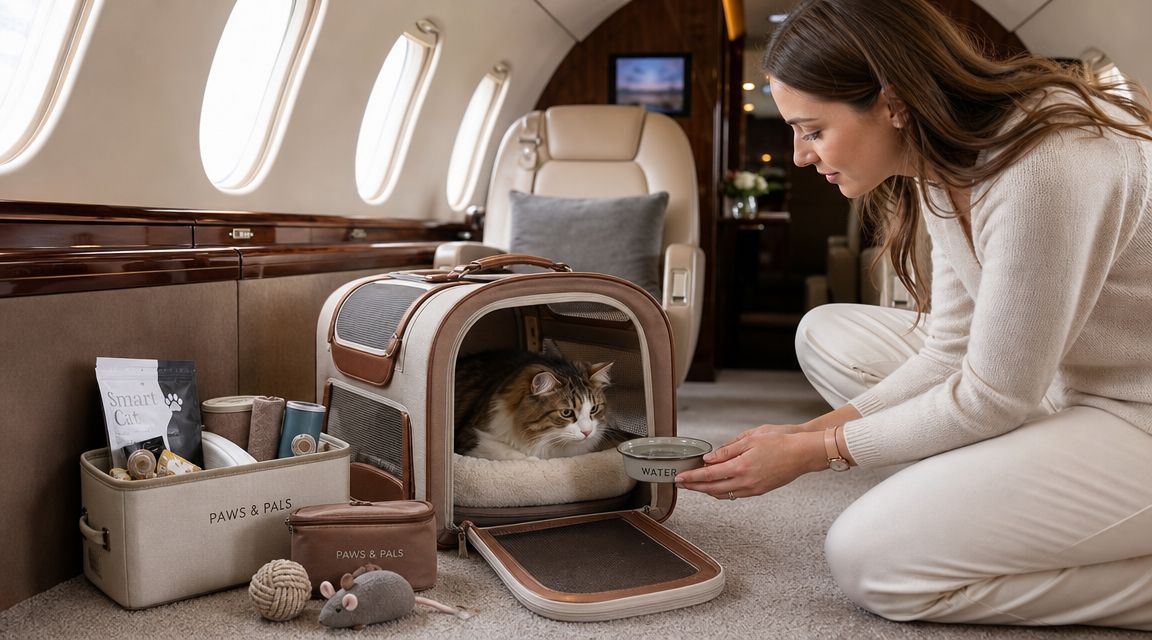
A private cabin gives you freedom, but it shouldn't become a free-for-all. Dogs usually do best when they have one defined resting zone, one handler giving consistent cues, and minimal excitement during engine start, taxi, takeoff, and descent.
Set up one calm space
Choose a spot before the animal starts roaming. That area should include a familiar blanket, the dog's usual harness, and enough room to settle without obstructing foot traffic. Most pets relax faster when they know where they're meant to be.
For many owners, the safest setup includes a harness and short lead during movement phases of flight. That isn't about distrust. It's about avoiding slips, sudden starts, or stress responses during turbulence.
- Use a familiar blanket: Known scent often settles a dog faster than verbal reassurance.
- Keep the leash short: Enough freedom to lie down, not enough to wander unexpectedly.
- Limit greetings: Crew interaction should be calm and brief unless the pet seeks it out comfortably.
The smoothest flights aren't the ones where the dog explores the whole cabin. They're the ones where the dog loses interest and goes to sleep.
Manage food, water, and bathroom timing
Hydration matters, but overdoing it early can create problems late. Offer small amounts of water at intervals rather than encouraging a full bowl at once. Keep meals light and familiar, especially on shorter sectors.
Bathroom planning should be handled before boarding and with backups onboard. Puppy pads are practical, even if you don't expect to need them. They reduce stress for the owner, and that calm transfers to the animal.
A smart day-of sequence usually looks like this:
- Exercise before leaving for the terminal
- Potty break right before boarding
- Small sips of water after boarding
- Food only if it fits the pet's usual routine and stomach tolerance
For owners who like extra location tracking once they're on the move, this guide to the safety of pet air tags is worth reviewing. It gives useful context on how tracking tools fit into a broader safety routine.
Takeoff and landing need more structure
These are the two phases when even calm pets can become alert. Noise changes, body sensation shifts, and owners often become tense without realizing it. Keep commands simple. Ask for familiar behaviors only.
Later in the flight, if your pet has settled and the crew confirms conditions are smooth, you can relax the setup a bit. Early restraint and later flexibility usually works better than the reverse.
A quick visual walkthrough can also help first-time owners think through the onboard routine:
Navigating International Pet Travel Rules
The biggest misconception in pet charter is that private aviation removes border requirements. It doesn't. Private flights can simplify the cabin experience, but they do not waive import rules, health documentation, or customs scrutiny.
In fact, international pet travel often becomes more sensitive because people assume the aircraft solves everything. It doesn't. Regulatory coordination is the hard part.
The timing window matters
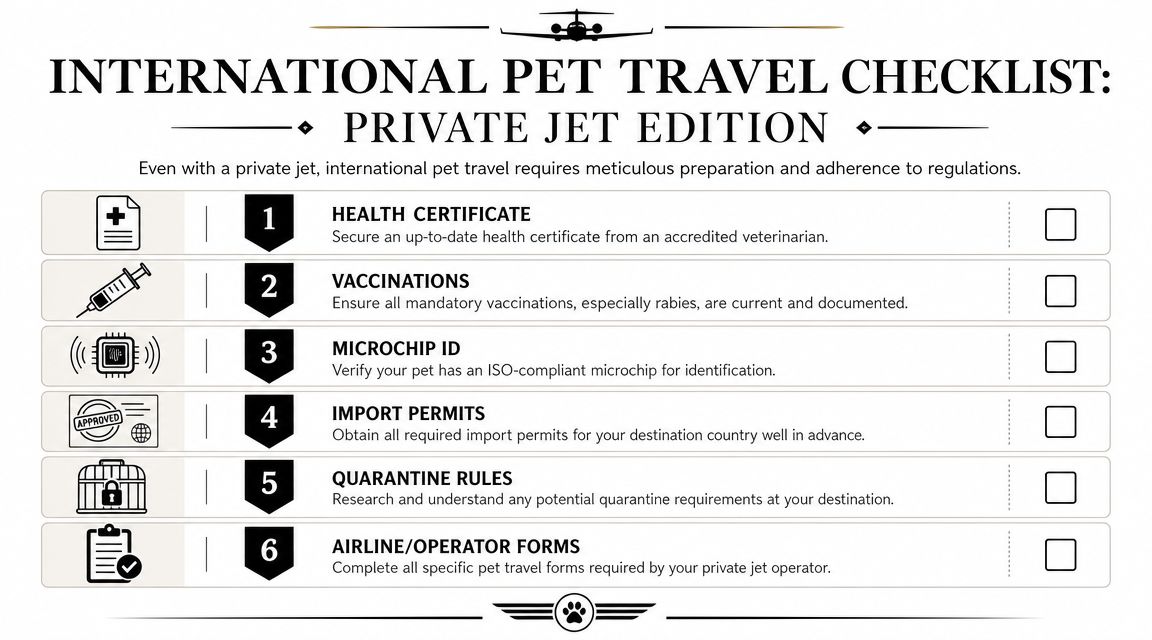
For international trips, timing is where plans often fail. Industry guidance notes that a federally accredited veterinary inspection and certification for private jet pet travel is commonly required within 10 days of departure, and travelers are advised to carry digital and physical copies because border procedures can be stricter than expected.
That requirement changes how you plan the week before departure. If a vaccine record is incomplete, a microchip number doesn't match, or a destination has a breed-related rule, the issue can stop the trip even if the aircraft is ready.
What you need to verify before dispatch
A clean international file usually includes several layers of confirmation. The exact list depends on route and destination, but the recurring issues are consistent.
- Microchip records: Names, numbers, and scan details need to match the rest of the file.
- Vaccination history: Rabies documentation is often the first document officials review.
- Health certification: The timing and signing process matter as much as the content.
- Import permissions: Some destinations require advance approval or specific entry procedures.
- Arrival protocol: Customs, veterinary inspection, and possible quarantine rules must be understood in advance.
Border officials don't care that you're flying private. They care whether the documents match the destination's import rules.
Where owners run into trouble
The common failure point isn't the flight itself. It's assuming one country's standards are close enough to another's. They often aren't. Some jurisdictions focus heavily on microchip compliance. Others scrutinize vaccine sequencing, entry airports, or veterinary endorsements.
This is why the phrase "pets can fly in-cabin" is only half the story. The cabin may be easy. Entry clearance may not be.
For a broader operational perspective, this resource on planning international pet moves is useful because it reflects the kind of destination-by-destination thinking pet owners need well before wheels-up.
A practical way to manage the process
Treat international pet travel like document control, not travel styling. Build one folder with physical originals, one digital backup, and one final review close to departure. Then confirm that the operator, handler, and owner all have the same version of the file.
A simple pre-departure review should cover:
| Checkpoint | What to confirm |
|---|---|
| Identity | Pet name, owner name, and microchip details match across all records |
| Medical file | Vaccinations and health documents are current and properly signed |
| Destination entry | Import rules, restricted breeds, and inspection procedures are understood |
| Travel copies | Physical and digital versions are packed and accessible |
Private aviation reduces some friction. It doesn't eliminate compliance. The families who travel well internationally are the ones who respect that distinction from the beginning.
Understanding Pet-Related Charter Costs
Most operators don't price pets the way commercial airlines do. You're usually not buying a separate pet ticket. But that doesn't mean traveling with an animal has no cost impact.
The cost sits in the structure of the trip. If your dog requires a larger cabin, easier boarding, more floor space, or an operator with a more accommodating policy, that changes the aircraft you can realistically book. On international routes, document handling and ground coordination can also become part of the operational picture.
Where pet travel affects the charter bill
The main cost drivers are usually indirect, not itemized as "pet fees."
- Aircraft size: A larger dog, multiple pets, or a full passenger load can push you into a bigger cabin category.
- Cleaning exposure: Some operators assess cleaning charges after accidents, heavy shedding, or unusual odor removal.
- Ground handling complexity: International arrivals may involve added coordination around inspection and document presentation.
- Schedule protection: Owners sometimes choose more convenient routings or timing to reduce pet stress, and that can affect pricing.
What clients should ask for in writing
The cleanest bookings are the ones where the pet-related terms are confirmed before departure. Ask whether post-flight cleaning can be charged, whether any breed-specific approval is pending, and whether the operator has special handling conditions for the route.
A short written summary should answer three questions:
- Is the pet approved on this exact aircraft and itinerary?
- Are any additional charges possible, and under what circumstances?
- Who is responsible if destination authorities require extra handling or deny entry?
Good pricing isn't just a low number. It's a quote that tells you where the risk is.
The real trade-off
For pet owners, the largest financial decision is often choosing the aircraft that makes the trip easy rather than merely possible. That's usually money well spent. A cabin that fits the pet comfortably, an operator that handles animals routinely, and a clear paper trail reduce the chance of expensive disruption later.
That is what transparent chartering should look like. You should know whether you're paying for more range, more room, better routing, or a simpler operating environment for your pet. When those details are vague, the trip may still work. But you're traveling on assumption, not planning.
If you want a pet-friendly charter handled with exact aircraft choice, transparent pricing, and access to a global network of Wyvern and Argus-rated operators, Haute Jets can help you arrange the right flight without the usual guesswork.