You know the moment when a private jet that used to feel generous suddenly feels too small.
It happens fast. A New York to Miami run with four people and light luggage is easy on a midsize jet. Then the trip changes. You add family, assistants, security, garment bags, golf clubs, a dog, or a coast-to-coast schedule that cannot tolerate a fuel stop. On paper, you are still "just chartering a jet." In practice, you need a different category of aircraft.
That is where the Bombardier Challenger 601 earns its place. It is one of the smartest step-up options in charter because it gives you what first-time large-cabin clients prioritize: real cabin width, legitimate long-range capability, and a trip experience that feels calmer from wheels up to touchdown. It is not the newest aircraft in the market, and that is not a weakness. For many charter clients, it is the value play. You get a lot of airplane without paying only for recency.
If you are deciding between squeezing into a smaller jet or moving into something that can handle longer routes and fuller passenger loads with less compromise, the Challenger 601 deserves serious consideration. If you want broader context on the family, this overview of the Bombardier Challenger 600 family is a useful companion.
Ready to charter a Challenger 601?
Haute Jets offers on-demand access to Wyvern, ARGUS, or IS-BAO rated Challenger 601 aircraft — no memberships, no repositioning fees, and full transparency on every quote.
Get Your Charter Quote →An Introduction to the Challenger 601
A first-time large-cabin charter client usually starts with the wrong question.
They ask, "How much bigger is it?" The better question is, "Will this trip feel easier?" That is the key test.
Take a common scenario. You have been chartering midsize aircraft for short business hops or weekend leisure travel. Then your itinerary expands. You need to move a larger group coast to coast. Or you need a route with enough range margin that a fuel stop does not break the day. The old solution starts feeling cramped and operationally annoying.
The Challenger 601 fixes that problem in a very direct way. It is not trying to be flashy. It is trying to be useful.
When clients usually move up
Most clients move into this aircraft for one of three reasons:
- More people: You need a cabin that works for a full executive team, a family group, or a mixed group of travelers who do not want knees touching for hours.
- More range: You want an aircraft that can cover serious distance without treating every longer mission as a compromise.
- More comfort per dollar: You want large-cabin benefits without jumping straight into the pricing tier of newer flagship jets.
That combination is exactly why the Bombardier Challenger 601 remains so relevant in charter.
Why this jet still matters
The aircraft has a reputation as a dependable, spacious workhorse. That phrase gets overused in aviation, but here it fits. This jet keeps showing up in charter discussions because its core strengths are not trendy strengths. They are enduring ones.
You feel them in the cabin first. The width changes how the trip feels. People can settle in, talk, work, nap, or stay out of each other's space. On a longer flight, that matters more than a glossy brochure or a newer cabin veneer.
Advisor's view: If your last charter felt tight, especially with more than a handful of passengers, the Challenger 601 is the kind of upgrade you notice immediately, not abstractly.
This aircraft makes sense for buyers who want function with polish. It is a practical luxury jet. That is a compliment.
The Challenger 601 Legacy: A Charter Market Staple
A client needs to move eight executives from New York to the West Coast, wants everyone rested on arrival, and does not want to pay for a newer jet just to get a bigger name on the tail. This is exactly the kind of trip where the Challenger 601 earns its keep.
The aircraft became a charter staple because Bombardier fixed the parts of the original Challenger that limited its appeal, then kept what clients value. The result was a large-cabin jet with real transcontinental utility, a cabin people could live in for several hours, and operating economics that still make sense in on-demand charter.
According to the National Air and Space Museum's Challenger production history, the Challenger 601 entered service in the early 1980s as an improved development of the Challenger 600. The practical takeaway matters more than the model chronology. Bombardier turned the platform into a more capable charter aircraft, not just a revised brochure aircraft.
Why the 601 became the one operators kept booking
The Challenger 601 succeeded because it solved real charter problems.
Stronger turbofan engines gave the aircraft the kind of range and payload flexibility that made longer trips more realistic for operators planning around weather, passenger count, and bags. The cabin dimensions also gave the aircraft a clear advantage in its class. Clients felt less confined, and that directly improved the experience on coast-to-coast missions.
That combination is why this jet stayed relevant. It delivered large-cabin comfort without forcing clients into the pricing tier of newer heavy jets.
The 601-3A made the platform even more charter-friendly
Bombardier kept refining the aircraft. The 601-3A first flew in 1986, entered service in 1987, and added updates that mattered in daily charter use, including winglets and more fuel capacity, according to the Royal Aviation Museum of Western Canada's Bombardier Challenger reference.
Those are not trivia points. Winglets and fuel improvements help operators plan trips more efficiently, especially on longer missions where every stop, payload decision, or routing change affects schedule and cost. For a charter client, that often means fewer compromises.
Why first-time charter clients should care
Do not judge this aircraft by age alone. Judge it by what it does for your trip.
A well-maintained Challenger 601 gives you three things that matter immediately:
- A cabin that stays comfortable for a full travel day: The aircraft was built around space, not just seat count.
- Range that works for serious domestic missions: You can cover long U.S. routes without treating every itinerary like a stretch case.
- Better cost discipline than many newer large-cabin options: In an on-demand charter model, especially one with no repositioning fee, that can make the total trip price far more attractive than clients expect.
That last point matters. A first-time charter client often focuses on hourly rate and misses the full trip cost. The smarter approach is to look at what the aircraft lets you avoid. Extra fuel stops, tighter cabins that push you into a bigger jet next time, and repositioning charges that distort the true quote.
The legacy, translated into charter value
The Challenger 601 holds its place in the market because it still solves a practical brief. Move a midsize group a long distance in a cabin that feels properly large, then do it at a price point that can be more rational than newer alternatives.
That is why experienced charter advisors keep recommending it. The 601 is not popular by habit. It is popular because, for the right mission, it is still one of the most sensible large-cabin charter choices you can make.
Inside the Cabin: Space, Comfort, and Amenities
You notice the Challenger 601's value before takeoff. A team of eight boards with carry-ons, garment bags, and laptops. Nobody has to turn sideways to pass. Nobody feels wedged into a tube. That is the difference a true wide-cabin jet makes.
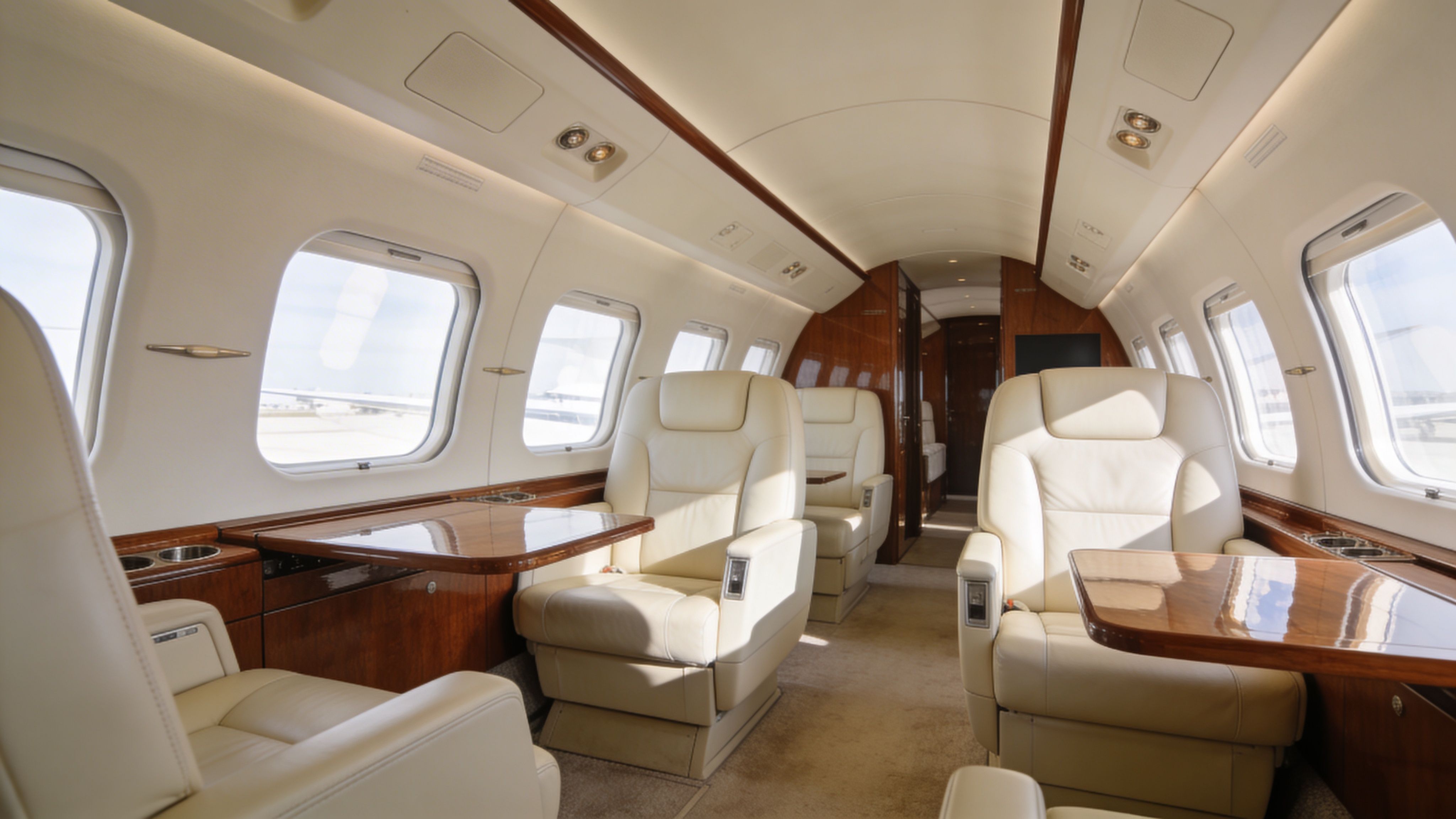
The Challenger 601's cabin dimensions are a big reason it remains so popular in charter. According to the FAA Type Certificate Data Sheet for the CL-600 series, the aircraft's cabin is about 28 feet long, just over 8 feet wide, and more than 6 feet high. For a charter client, those numbers mean one thing. You get a cabin that feels settled, not compressed.
That matters more than first-time clients expect. A large-cabin charter should let you travel in normal postures. Sit comfortably. Stand without stooping. Move to the lavatory without making half the cabin adjust.
What the space changes in real use
The Challenger 601 works well because the cabin is wide enough to stay functional once people, bags, food, and devices are onboard.
Here is what that changes on a real trip:
- Face-to-face seating feels natural: Conversations do not turn into knee management.
- Movement is easier: Passengers can get up without disrupting the whole row.
- The cabin stays usable for a full flight: One person can work while another rests and another eats.
- It feels quieter socially: More personal space reduces the low-grade tension that builds in tighter cabins.
That last point gets overlooked. On a two-hour flight, you can tolerate a cramped layout. On a longer sector, cabin flow becomes part of the product you are paying for.
Seating, baggage, and the practical fit
The Challenger 601 is commonly configured for a good number of passengers in charter service, though certified seating can be higher depending on the aircraft. It also offers generous baggage capacity for a large-cabin jet, which is one reason advisors keep recommending it for family travel, executive groups, and longer trips where people do not pack light.
That flexibility helps control total trip cost. You are less likely to outgrow the aircraft because of luggage, passenger count, or simple comfort. In an on-demand charter model with no repositioning fee, that matters.
Most aircraft in this category are arranged around a few core needs:
- Club seating for meetings or family conversation
- An additional lounge or divan area for stretching out
- A real galley for proper catering
- A fully enclosed lavatory for privacy
Book with those features in mind, not just the aircraft name. Tail-specific configuration matters.
Comfort is more than square footage
A good cabin does not just look large. It helps you arrive in better condition.
The Challenger 601 has long been valued for a comfortable cabin environment and the kind of upright, spacious interior that makes a full travel day easier to handle. That is especially helpful for passengers who want to work in flight, travelers bringing pets, and families who need room to manage children, personal items, and meal service without the cabin feeling chaotic.
Many first-time charter clients focus on exterior age too much. The better question is whether the individual aircraft has been updated where it counts. Upholstery, connectivity, cabin finishes, entertainment options, and galley condition all vary by tail number.
Many upgraded aircraft now include modern comfort features. Recent upgrades on many models ensure amenities like high-speed Wi-Fi are available, though that should always be confirmed on the specific aircraft before booking.
That last point is simple. If Wi-Fi matters, confirm Wi-Fi on the exact aircraft. Do the same for power outlets, pet policy, baggage access, and cabin layout.
Here is a quick visual look at the cabin environment:
Practical advice: Choose the Challenger 601 if your group wants a cabin that stays comfortable once everyone is onboard. It is a smart fit for longer domestic trips, passengers traveling with pets, and clients who care about overall trip value, not just the lowest hourly quote.
My cabin verdict
This is the reason to charter a Challenger 601.
The cabin gives you space that feels expensive in the right way. More comfort, better flow, easier baggage planning, and less pressure to upgrade to a larger aircraft than your trip really needs. For many charter clients, that is exactly where the 601 earns its keep.
Performance, Range, and Typical Charter Itineraries
Leave Teterboro after breakfast, work comfortably in the air, and land in Los Angeles in time for an afternoon meeting. That is the mission profile the Challenger 601 handles well. For a first-time large-cabin charter client, that matters more than any spec sheet. You are buying fewer interruptions, less fatigue, and a trip that stays on schedule.

The 601 is a true long-leg charter aircraft. It cruises fast enough to make coast-to-coast flying practical, and its high-altitude capability helps it stay above much of the traffic and weather that create a rougher, slower trip lower down. For the passenger, the result is simple. Less time wasted. Better ride quality. More confidence that a nonstop itinerary will stay nonstop.
What the range means in plain English
The primary selling point is mission efficiency.
On the right day and with the right passenger load, the Challenger 601 can cover long domestic routes and a limited set of international city pairs without a fuel stop. That is where charter value becomes obvious, especially through an on-demand model with no repositioning fee.
Typical routes where the aircraft makes strong sense include:
- New York to Los Angeles
- Miami to Seattle
- Los Angeles to Honolulu
- Northeast U.S. to parts of Western Europe on the right variant and conditions
That does not mean every advertised route is guaranteed year-round. Weather, winds, runway conditions, baggage, and passenger count still decide the final answer. Good charter planning is not about chasing brochure range. It is about choosing an aircraft that gives you a realistic chance of flying your trip cleanly.
Where the extended-range variant earns its keep
Some Challenger 601 aircraft are better suited to longer missions than others. The extended-range versions give you more planning margin, which is exactly what you want if your schedule has no room for an unscheduled fuel stop.
That extra margin is valuable on eastbound transatlantic flying, longer U.S. sectors, and leisure trips where baggage adds up quickly. It also gives your broker more flexibility to price the trip intelligently. A jet that can complete the mission nonstop is often the more cost-effective option, even if its hourly rate is not the absolute lowest on paper.
If your mission starts pushing the upper end of what this platform can do, it is smart to compare it with a newer long-range sibling like the Bombardier Challenger 604 jet.
Airport access matters too
Range gets attention. Airport practicality closes the deal.
The Challenger 601 is large enough to deliver a proper cabin experience, but it still works well for many regional airport missions that make private aviation worthwhile in the first place. That means less time spent driving to a major hub and more time spent closer to your destination.
Advisor's view: Book the aircraft that flies your route nonstop, lands closer to where you need to be, and does not create extra costs through repositioning or unnecessary fuel stops.
Typical itineraries I recommend it for
The Challenger 601 is a smart charter choice for:
- Transcontinental business trips — You can move a larger group in one aircraft and arrive ready to work, not wrung out from a stop along the way.
- Long leisure flights with heavy baggage — Family travel, golf clubs, ski gear, and multiple checked bags are easier to handle here than in a smaller jet that looks cheaper until the mission gets complicated.
- Select international routes — On the right aircraft and the right day, nonstop capability can materially improve the trip.
The bottom line is straightforward. The Challenger 601 works best for clients who want large-cabin comfort, real route capability, and a trip cost that still makes sense in the charter market. That is why it remains such a practical on-demand option.
How the Challenger 601 Compares to Similar Jets
You are usually choosing between three outcomes here. Pay more for a newer badge. Pay more for extra range you may not use. Or book the aircraft that gives your group the best cabin experience for the trip you are flying.
That is why the Challenger 601 stays relevant in charter.
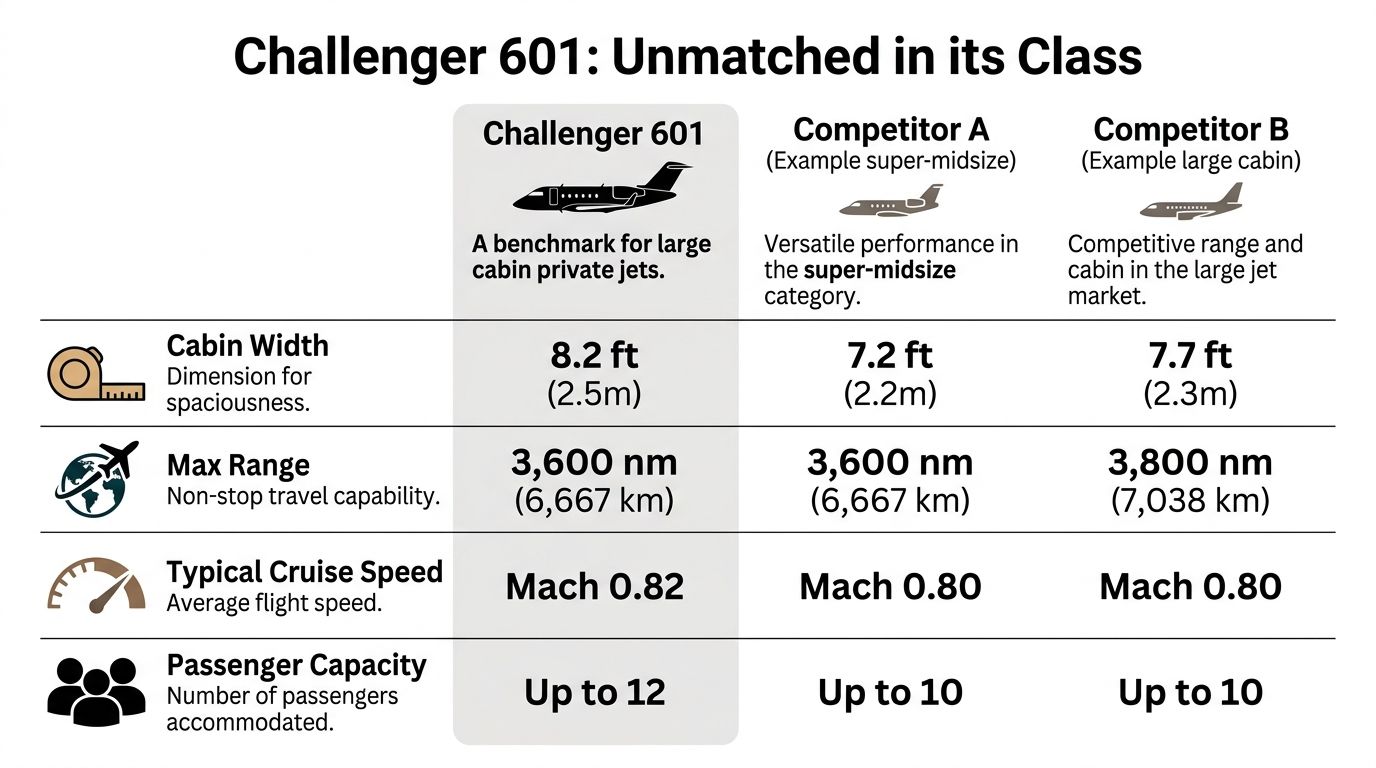
Its advantage is practical, not cosmetic. The 601 gives you a wide cabin, strong luggage utility, and cruise performance that still feels like proper large-cabin private travel. For a charter customer, that translates into a trip that feels less cramped, handles baggage with less drama, and often avoids the price jump that comes with newer heavy jets.
What clients usually compare it against
The two aircraft that come up most often are:
- Dassault Falcon 2000
- Gulfstream G-IV
Both are credible options. I would book either on the right mission. But the Challenger 601 has a clearer value proposition than many first-time clients expect. It is the aircraft I point to when the priority is roomy seating, easier group travel, and better cost discipline across the full trip, not just the hourly rate.
If you are comparing the broader aircraft family, this overview of the Bombardier Challenger 604 jet helps clarify what changed in later models and whether those upgrades are worth paying for.
Challenger 601 vs competitors
| Metric | Bombardier Challenger 601-3A | Dassault Falcon 2000 | Gulfstream G-IV |
|---|---|---|---|
| Cabin feel | Wide, open cabin that works well for groups who want to spread out | Comfortable cabin with a different design emphasis | Classic large-cabin feel with strong name recognition |
| Typical passenger appeal | Strong fit for 8 to 12 passengers prioritizing space and comfort | Often chosen by clients balancing cabin preferences with mission specifics | Often chosen by clients who want traditional heavy-jet presence |
| Baggage practicality | A strong point for family travel, extended trips, and bulky personal items | Depends heavily on configuration | Depends heavily on configuration |
| Cruise profile | Fast enough to feel efficient without losing the cabin-first appeal | Competitive, depending on aircraft and mission | Competitive, with reputation built around range |
| Best reason to choose | Spacious cabin experience and strong charter value | Specific mission fit or brand preference | Prestige, range profile, and classic heavy-jet positioning |
Where the 601 clearly wins
Cabin comfort decides this comparison more often than brochures do.
The Challenger 601 is the better choice for clients who will notice width, aisle room, and personal space the moment they step on board. That includes executives planning to talk face-to-face in flight, families traveling with carry-ons and checked bags for everyone, and first-time private flyers who will judge the whole experience by how relaxed the cabin feels.
It also performs well for clients traveling under an on-demand model where repositioning fees are avoided. In that setup, the value case gets stronger.
Where another jet might make more sense
Choose a different aircraft if the cabin look matters more than the cabin size, if your route needs more range margin on that specific day, or if you need a sleeping setup the available 601 does not offer.
That said, many clients overspend on image and underspend on comfort. The Challenger 601 avoids both mistakes.
Bottom line: If you want a charter aircraft that turns technical specs into real passenger benefits — more room, easier baggage handling, solid speed, and better total-trip value — the Challenger 601 is often the smarter booking than the shinier alternative.
Understanding Challenger 601 Charter Pricing
You are not buying an hourly rate. You are buying a trip outcome.
For Challenger 601 charters, the right question is simple: what will this aircraft cost you door to door, and what do you get for that spend once everyone is on board? That is where the 601 often earns its place. It gives you true large-cabin utility without pushing every trip into the premium pricing territory associated with newer heavy jets.
Why the 601 often makes financial sense
The Challenger 601 has another advantage beyond cabin size. It is powered by GE CF34 engines, a mature engine platform widely used across business and regional aircraft fleets. That matters because operators and maintenance teams know the engine well, parts support is established, and the aircraft is generally easier to keep in service than more obscure legacy options.
You feel that in the quote. Reliable dispatch and familiar maintenance support help operators control downtime, and controlled downtime supports more competitive charter pricing.
The line item that changes the deal
First-time charter clients usually compare jets by hourly rate and stop there. That is a mistake.
Repositioning cost often decides whether a quote is attractive or only looks attractive at first glance. If the aircraft is based far from your departure airport, you may be paying for empty flight time before your trip begins. That detail can materially change what looked like a strong deal.
This is exactly why the no-repositioning-fee model matters so much on an aircraft like the 601. A jet with a sensible charter rate becomes a much better value when you remove the extra ferry cost that inflates many one-off quotes. If you want a clearer view of how those charges stack up, read this explanation of private jet charter pricing and cost drivers.
What value looks like on a Challenger 601
A smart quote does more than post a lower number. It fits the mission cleanly.
Ask four questions before you approve a 601 charter:
- Will this aircraft complete my route efficiently under the expected conditions?
- Will my group have enough space to stay comfortable for the full flight?
- Will baggage fit without last-minute compromises?
- Is the quoted price clean, or is empty-leg positioning buried inside it?
That is the practical lens to use. A smaller jet can show a lower base rate and still end up costing more once you factor in a fuel stop, baggage limits, or the need to split passengers across aircraft categories.
My advice
Book the aircraft that matches the mission, not the aircraft that wins the first glance on price.
For clients who want a wide cabin, solid coast-to-coast capability on many common routes, and better cost control under an on-demand model without repositioning fees, the Challenger 601 is often one of the smartest large-cabin charter choices on the board. It is not the newest option. It is often the more disciplined one.
How to Book Your Challenger 601 with Haute Jets
Booking a Challenger 601 should be straightforward. Too often, it is not.
The usual problems are familiar. You are shown a generic aircraft category instead of a specific jet. Wi-Fi is described vaguely. Pet approval is left unresolved until late in the process. The final invoice reveals costs that were not clear upfront. Serious charter clients should reject that entire model.
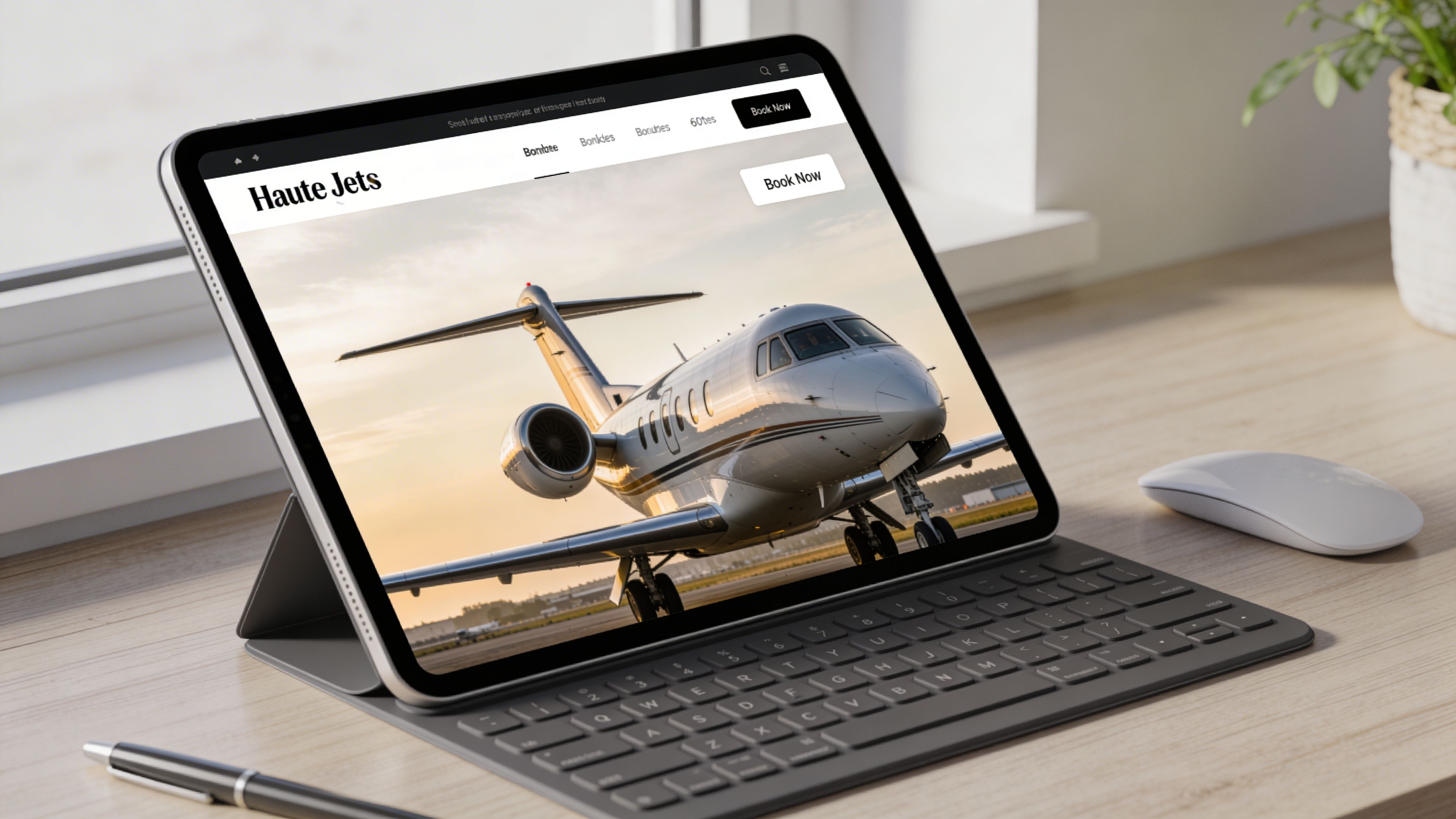
A better booking process is disciplined. It confirms the exact aircraft, the specific onboard features, the operator credentials, and the trip economics before you commit.
Step one: define the mission properly
Start with the facts that determine fit:
- Passenger count
- Luggage profile
- Pet travel needs
- Desired catering
- Wi-Fi requirement
- Preferred airports
- Flexibility on departure time
A Challenger 601 can be excellent for your trip, but only if the specific aircraft and layout align with how you are traveling.
Step two: ask for the exact aircraft
Do not settle for "Challenger 601 or similar."
Ask for the exact aircraft details. You want to know the year, interior condition, cabin configuration, connectivity, and whether the operator can confirm any special requests before paperwork is signed.
That single discipline eliminates a huge share of charter disappointment.
Step three: verify safety standards
Operator quality is not optional.
Haute Jets states that its network includes only Wyvern Wingman and Argus Gold/Platinum-rated operators, which is the right standard for clients who do not want to compromise on third-party audited safety credentials. That filter matters because the aircraft type alone does not tell you enough about the operator behind the flight.
Step four: insist on transparent pricing
A clean quote should explain the trip, not hide it.
Look for clarity on:
- The selected aircraft
- Whether the jet is already near your departure point
- Onboard amenities you specifically requested
- Any itinerary-related cost drivers
The goal is not to find the lowest headline number. The goal is to book the right aircraft on clean terms.
Step five: expect pre-flight confirmation
A professional charter process should end with certainty, not ambiguity.
Haute Jets states that clients receive 24-hour pre-flight confirmation with details such as tail number, crew bios, weather briefing, and passenger manifest. That is exactly what serious clients should expect before departure.
Booking advice: If a charter provider cannot clearly confirm the aircraft, operator, amenities, and pre-flight details, keep shopping.
Why this approach works
For first-time large-cabin clients, confidence comes from specificity.
You want to know:
- What aircraft you are getting
- Who is operating it
- Whether the cabin suits your group
- Whether the quote reflects the true trip cost
That is the standard. Anything less is amateur hour.
Ready to charter a Bombardier Challenger 601?
Haute Jets offers on-demand access to exact aircraft from a global network of Wyvern, ARGUS, or IS-BAO rated operators — transparent trip planning, no memberships, and a booking process built for clients who want the right jet.
Contact Haute Jets →Frequently Asked Questions
Is the Challenger 601 a good charter jet for first-time private flyers?
Yes. The Challenger 601 is one of the best introductions to large-cabin charter. It offers a wide, comfortable cabin, strong coast-to-coast range, and a price point that is often more accessible than newer heavy jets — making it ideal for clients stepping up from midsize aircraft.
How many passengers can a Challenger 601 carry?
Most Challenger 601 aircraft are configured for 8 to 12 passengers in executive charter layouts, with certified seating that can be higher depending on the specific aircraft. The wide cabin keeps even a full group comfortable on longer flights.
Can the Challenger 601 fly coast to coast nonstop?
Yes. On the right day and with an appropriate passenger and baggage load, the Challenger 601 can fly transcontinental routes like New York to Los Angeles nonstop. Extended-range variants offer additional margin for longer sectors.
How does the Challenger 601 compare to the Challenger 604?
The Challenger 604 added extended range, an updated cockpit, and cabin refinements over the 601. For many domestic missions, the 601 delivers similar cabin comfort at a more competitive charter rate. The 604 is the better pick when extra range or avionics matter for your specific trip.
What safety standards should I expect when chartering a Challenger 601?
Always confirm that the operator holds Wyvern Wingman or Argus Gold/Platinum ratings. These third-party audits verify pilot qualifications, maintenance standards, and operational history — giving you confidence beyond what the aircraft type alone can provide.