

You're at the FBO, bags are loaded, the crew is ready, and the departure board still looks normal. Then the pilot says there's a ground delay, and the only question that matters is whether your slot is real, current, and close enough to protect the rest of the trip.
That's where the FAA EDCT lookup matters. For private jet travelers and charter teams, Expect Departure Clearance Time is not a paperwork detail, it's the release time that determines when a flight can leave under traffic management. If you miss the timing window, the aircraft doesn't just “run late,” it can fall out of compliance and lose the slot it was assigned.
What EDCT Means for Your Private Jet Flight
A charter client hears “delay” and usually thinks weather, congestion, or ATC holding. Those issues can all be true, but EDCT is more specific than a generic delay notice. It is a runway release time assigned under Traffic Management Initiatives, which means the aircraft is being metered into the system, not just estimated to depart later.

Why private flights care about a metered slot
On a private flight, the pain point is usually timing precision. A missed release can affect everything that follows, from passenger boarding to downstream connections, crew duty planning, and arrival windows. The FAA's EDCT Lookup page is built for that reality, because it lets an operator check whether an Expect Departure Clearance Time has been issued for a specific flight, but only after the flight plan has been filed and transmitted to ETMS. The tool is flight-specific, not airport-wide, which is why it matters more to dispatchers and pilots than to someone just looking for a general status update.
The practical distinction is that EDCT is not the same as a broad ground delay notice. In FAA operations, that release time is tied to the broader flow management system, and it's treated as a concrete departure control measure rather than a loose estimate. If you're arranging a charter, that difference changes how you coordinate catering, passenger arrival, and crew call times.
The FAA's own lookup also warns that EDCT values can shift because delay programs are dynamic. That's why checking an old screenshot or a stale dispatch note can create the wrong impression. For trip planning context, it helps to pair this with airport logistics, especially if you're comparing FBO timing, ramp access, and passenger arrival flow in our private jet airport guide.
Practical rule: treat EDCT as an active operating constraint, not a forecast. If the current slot changes, the rest of the departure plan needs to change with it.
How to Perform an FAA EDCT Lookup
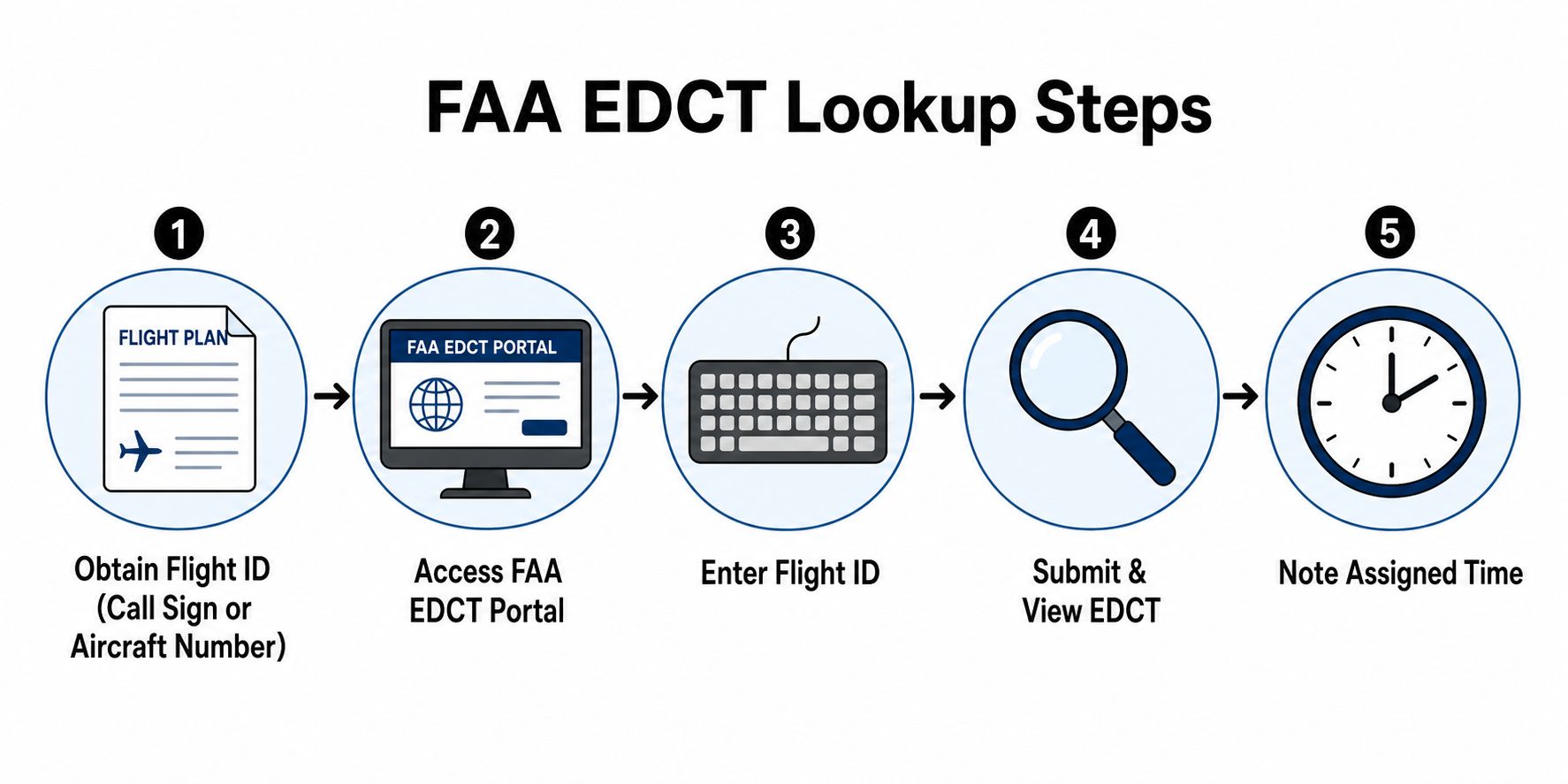
The FAA lookup is simple to use, but only if the flight details are exact. That's the part many travelers miss. A partial call sign, a guessed aircraft type, or a destination entered loosely can return nothing useful even when a slot exists.
Use the flight plan identifiers exactly as filed
The lookup requires three exact identifiers from the flight plan, typically the call sign or aircraft registration, the departure airport, the destination airport, and often the aircraft type. In practice, that means you should pull the same version of the flight plan that was filed, not an informal shorthand from a scheduling note. A small mismatch is enough to make the search look empty.
The most common mistake is entering a “close enough” identifier and assuming the aircraft has no EDCT. That's risky because delay programs can be active even when the lookup returns no result for the wrong record. For flight departments, this is why the dispatcher or pilot should confirm the exact filed details before anyone concludes the departure is clear. The same flight should also be checked against broader operational tracking, especially if you're managing multiple legs or repositioning options, which is where a real-time flight insights tracker can fit into a larger workflow.
Confirm it close to departure
The FAA recommends confirming the EDCT 45 minutes or less before departure, which tells you everything you need to know about the timing sensitivity. A slot that looked valid earlier in the day may no longer be valid by the time passengers reach the FBO. If the delay program changes, the value can change with it.
When the lookup shows a valid EDCT, treat that time as the controlling release point. If no EDCT appears, don't assume the flight is free of delay pressure, because the flight may not be in an active program yet or the identifiers may not match. The operational habit that works best is to recheck the slot near the planned push and then coordinate boarding around that current value, not the original itinerary time.
Read the result the right way
A returned EDCT means the flight is being assigned a controlled departure slot. No result can mean the flight isn't currently captured by the tool, the plan hasn't been transmitted, or the search fields were wrong. The result itself doesn't tell you everything about why the slot exists, only whether one has been assigned.
For operators, that means the lookup is useful as a clearance verification step, not as a complete disruption explanation. The timing and the identifiers matter more than the pretty interface.
Understanding the 5-Minute Compliance Window
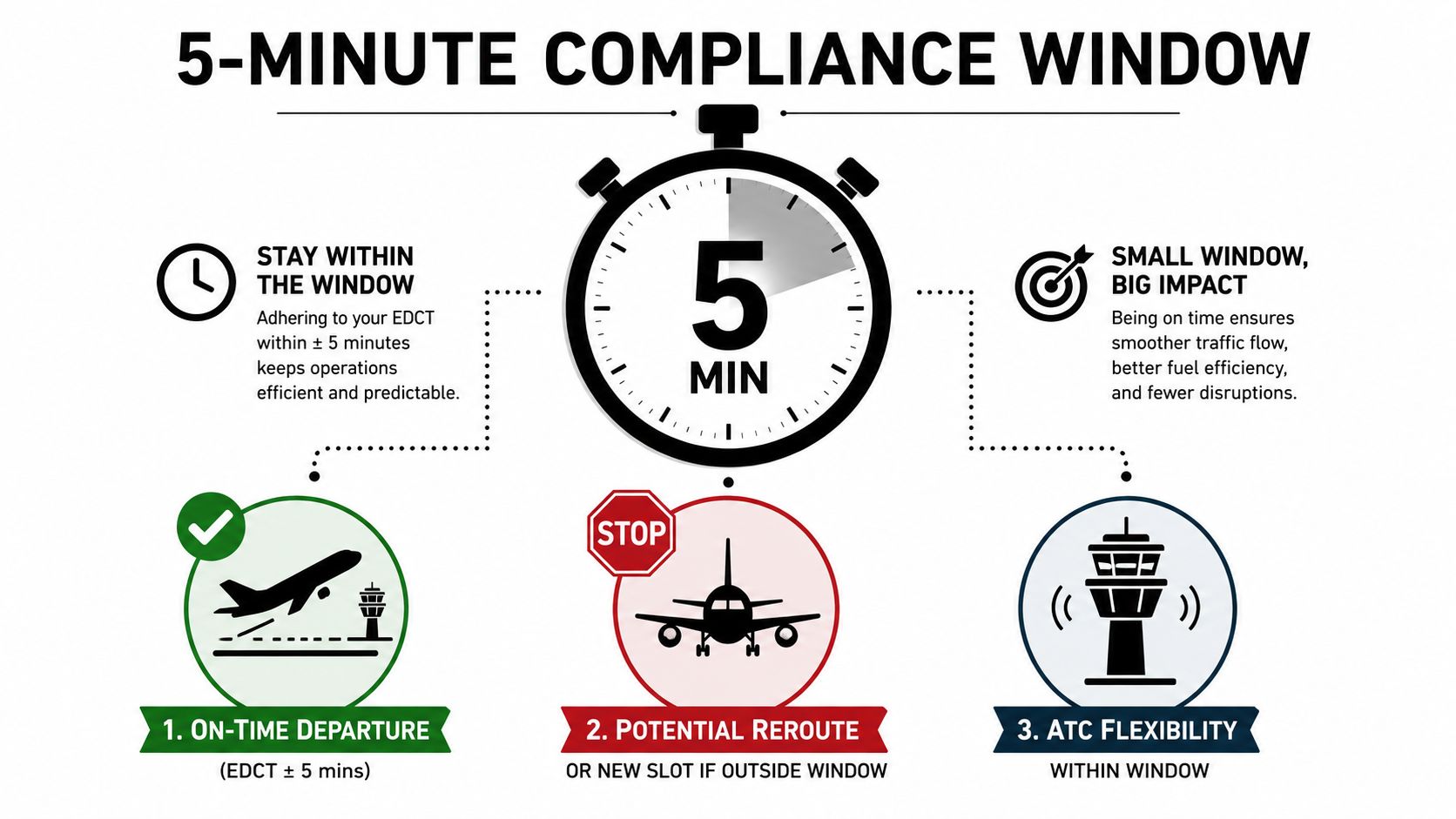
EDCT isn't advisory in the casual sense. FAA compliance logic treats it as a narrow operating window, and that window is what keeps a metered departure from turning into another airborne delay problem.
The window is tight on both sides
FAA guidance says aircraft operators are expected to depart within 5 minutes of the assigned EDCT departure time, and departures that are more than 5 minutes early or more than 5 minutes late are treated as noncompliant. That matters because a lot of charter clients assume “close enough” is fine. It isn't.
In real dispatch terms, the assigned slot is a metering commitment. If the crew pushes too early, the flight can miss the planned sequencing and create a new problem for ATC. If it pushes too late, the slot can fall out of tolerance and the departure may need to be reworked. The compliance logic is built to support traffic flow, so the operational discipline is to line up taxi-out with the current slot, not the old estimated wheels-up time.
The slot is a release time, not a suggestion.
What happens when the slot changes
FAA training materials also show that the system looks at the last EDCT sent when multiple EDCTs exist. If a newer EDCT arrives within 10 minutes of departure processing, both the new and prior EDCT can be checked to determine which one applies. That is an important operational nuance because a stale printout can be misleading.
For crews, the best response is active monitoring. Don't anchor on the first time you saw. If a revised slot comes in, the taxi plan, the boarding cadence, and the final push all need to align to the latest message. This is one reason flight departments spend so much time on departure coordination when the day is unstable.
Why clients notice this at the FBO
Passengers usually experience the compliance window as a wait, then a sudden move. That's not indecision, it's the crew protecting the slot. If the pilot delays boarding by a few minutes, the reason is often simple, the aircraft is being held to fit the current EDCT instead of burning the slot early.
The practical takeaway is straightforward. EDCT is a hard metering constraint, and the safest approach is to track the current time, not the original one.
When the Lookup Shows No Results
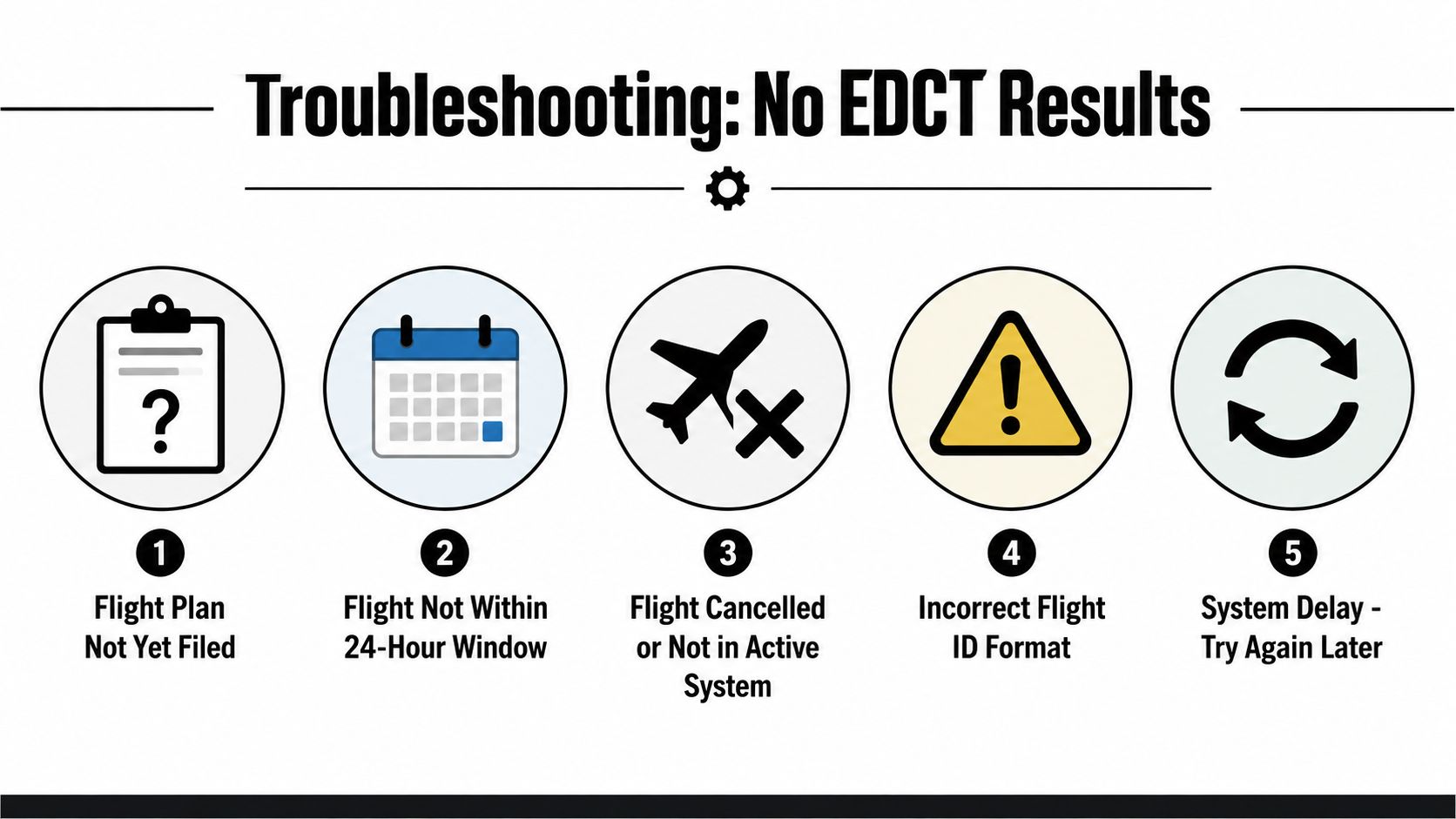
A blank result doesn't automatically mean the flight is free to go. It usually means one of three things: the flight isn't filed or transmitted yet, the search data is off, or the trip isn't captured in a current delay program.
Start with the filed flight plan
If the plan hasn't been filed and transmitted to ETMS, the lookup can't return a meaningful EDCT. That's why the first check is always flight plan status, not the passenger schedule. If dispatch hasn't pushed the plan through, the FAA tool has nothing to read.
The second check is the exact call sign format. The lookup is specific about the identifiers it needs, so an omitted registration suffix or the wrong aircraft type can make a valid flight look invisible. That's especially common when a charter itinerary changes aircraft late in the process and the search form still reflects the earlier tail number.
Separate flight-specific data from program-level data
If the flight still shows nothing, the next question is whether there's an active airport or airspace constraint at all. The FAA lookup does not identify whether a delay came from an Airspace Flow Program or a Ground Delay Program, so if you need the broader cause, you have to consult the ATCSCC Advisories Database. That distinction matters because a blank EDCT result can coexist with a larger traffic-management issue elsewhere in the system.
A useful habit is to check the flight plan first, then the exact identifiers, then the active delay programs around the route. That order saves time and avoids false conclusions. It also keeps the crew from overreacting to a missing value that may be outside the tool's scope.
Use the blank result as a diagnostic, not a verdict
A no-result response is not the same as a clean departure. It's a signal to verify the inputs and the program status. If the flight is still within the filing window and the route is under traffic management, the absence of a result should trigger a second review, not a release to board immediately.
Operational habit: when the result is blank, confirm the filed plan, then confirm the active advisory source, then re-run the lookup with the exact identifiers.
Operational Strategies to Minimize EDCT Impact
A charter flight can look organized on paper and still lose time at the departure window if the EDCT is handled too late. In practice, the operators who keep flights moving are the ones who treat the slot as part of the launch plan, not as a detail to confirm at the curb.
Use timing and airport choice deliberately
Operators that stay ahead in delay-prone conditions usually do two things. They watch the departure window early, and they choose airports with less congestion when the mission allows it. That does not remove traffic management, but it can reduce the chance of getting trapped in a poor slot at a heavily constrained field.
Filing strategy matters as well. A flight plan filed too casually, or updated after a late aircraft swap, can make the EDCT process harder and create last-minute confirmation work. Teams that keep a tight dispatch rhythm and verify the flight data early are better positioned to react when the slot shifts.
If the itinerary gives you a choice between waiting for a cleaner release and pushing immediately into a bad metering window, the right answer depends on the downstream schedule. A short wait can protect the trip better than taking off at the wrong moment and losing more time in the system. That judgment is easier when the crew has strong tooling, including top compliance tracking platforms that keep time-sensitive tasks visible across the operation.
The same planning mindset applies before wheels even move. A shorter taxi, a better hangar position, or a departure point that trims repositioning time can keep the whole operation inside the window the FAA is enforcing, which is why many teams pair EDCT checks with reducing private jet travel duration through flight time and hangar optimization. Small timing savings matter more when the slot is tight.
Delay boarding until the slot is real
One practice that works in the field is holding passenger boarding until the EDCT has been confirmed close to departure. That is not about inconvenience, it is about avoiding a situation where everyone is seated and ready while the slot is still moving. A charter cabin is more useful when it is not being used as a waiting room for a stale time slot.
For operators, the control point is the last pre-departure check. If the flight is already inside the critical confirmation window, confirming the slot again before boarding keeps the crew from making promises the system may not support. That is the point many guides miss, because a slot that looked fine earlier can still shift enough to affect an on-time release.
Repositioning can also help. If the origin airport is the problem, moving the aircraft to a nearby field with less traffic pressure can sometimes avoid the worst of a ground delay program. That choice has trade-offs, because repositioning adds complexity and can create its own timing burden, but it can still beat sitting in a constrained departure queue.
The cleanest operations teams think in terms of slot risk. They compare the value of waiting, repositioning, or pushing with the current clearance. That mindset is better than chasing the first available wheels-up time.
EDCT in the Context of Private Jet Charter Operations
EDCT belongs inside the larger departure-confirmation workflow, not as a separate afterthought. In a well-run charter operation, the departure time is checked alongside the weather brief, the crew assignment, the manifest, and the aircraft positioning plan, because all of those pieces affect whether the flight leaves on the expected timeline.
FAA reporting also shows that EDCT is monitored as a national operational category, with the Airport Analysis EDCT Compliance Report publishing counts and percentages of arrivals and departures affected by EDCT delays. That tells you the system is widely used, not a fringe exception, and it explains why professional operators treat it as a core dispatch variable rather than an occasional nuisance. The FAA's own data framework reinforces the point that compliance and delay tracking are part of normal U.S. airspace management, not a rare edge case.
What different users should take away
For individual travelers, the main lesson is simple, ask whether the current slot has been confirmed within the last hour before departure. For corporate flight departments, the issue is repeatability, because multiple aircraft, different crews, and overlapping itineraries make stale timing especially expensive. For travel advisors and concierges, EDCT awareness helps prevent schedule promises that can't survive an active traffic-management day.
The best operators don't wait for the system to surprise them. They monitor it, verify it, and adjust the ground timeline before the passenger reaches the ramp. That's the standard clients should expect.
If you want charter planning that accounts for timing constraints like EDCT from the start, visit Haute Jets to arrange a flight with a team that builds departure coordination into the booking process. Their approach helps clients stay ahead of slot changes, avoid avoidable ground delays, and keep complex itineraries moving with fewer surprises.