You're probably dealing with one of two realities right now. Either your dog is small enough that a commercial airline might allow cabin travel, or your dog is large enough, anxious enough, or important enough to you that cargo isn't acceptable. Most owners don't struggle with whether they love their dog enough to bring them. They struggle with whether the flight option in front of them is safe, practical, and humane.
That's the key question behind how to fly your dog on a plane. Not whether it's technically possible. Whether the process respects your dog's health, your schedule, and your tolerance for risk.
On Haute Jets Journal, I'll give you the direct answer. If your dog is tiny, calm, and flying on a simple domestic route, commercial cabin can work. If your dog is large, flat-faced, elderly, reactive, or not suited to confinement and airline chaos, private aviation isn't an indulgence. It's the cleanest solution.
Choosing How Your Dog Will Fly
Your dog is at your feet, your bags are packed, and the flight decision is now the trip's single biggest risk point. Choose well, and the day stays calm. Choose poorly, and you force your dog through crowded terminals, carrier confinement, cargo handling, and airline rules that were never designed around animal comfort.
Private jet travel is the clear first choice for flying with a dog. It keeps your dog in the cabin with you, cuts out the airport chaos that unsettles animals before takeoff, and gives you control over timing, handling, and space. Commercial options are workarounds. Private aviation is the proper setup if safety, comfort, and predictability matter.
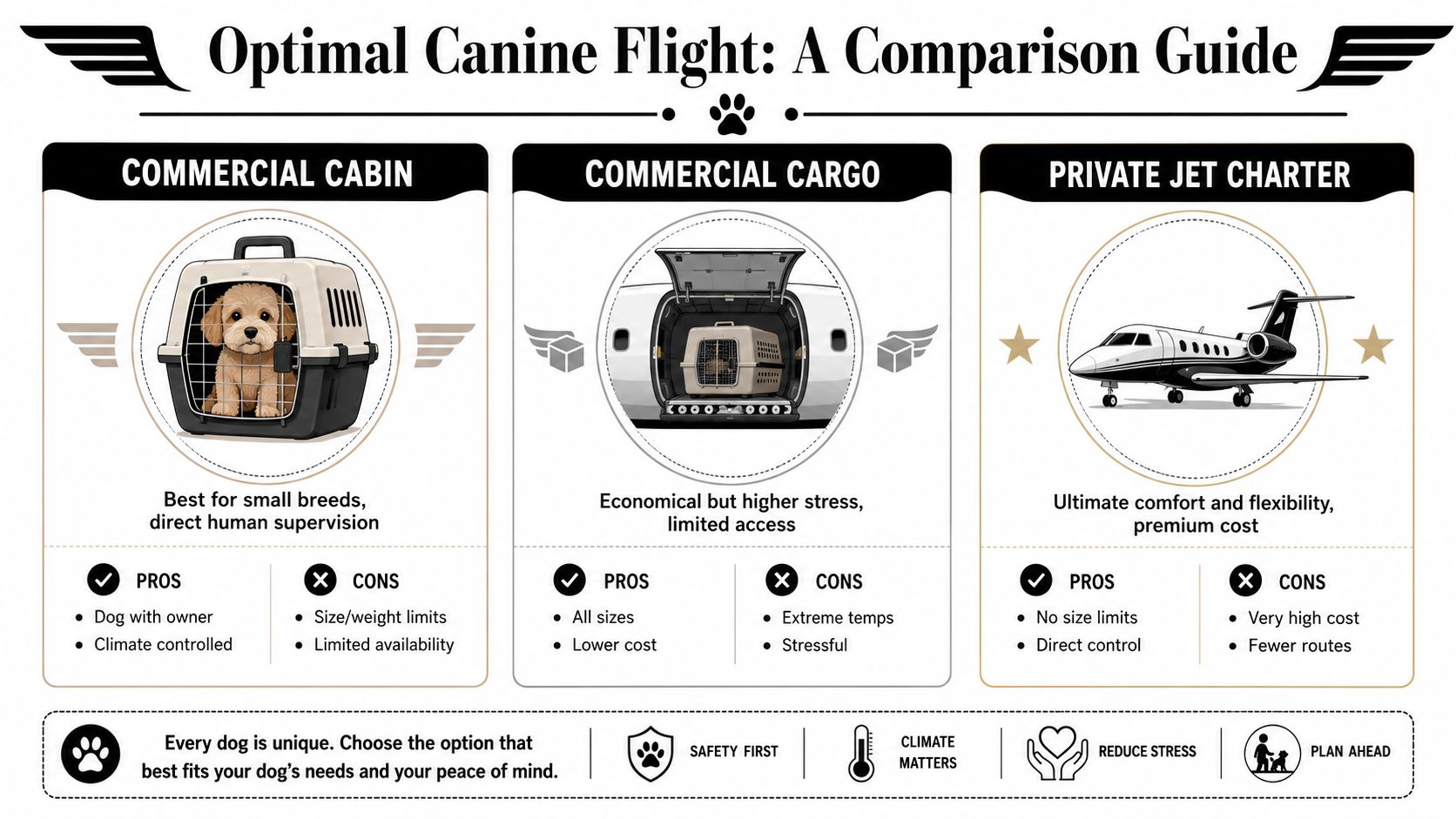
Many owners start by looking at commercial cabin because it feels familiar and the upfront fare looks lower. In practice, it works for a very small group of dogs. Airlines commonly restrict in-cabin travel to dogs small enough to fit inside a carrier under the seat, as noted in Humane World's guidance on pet air travel.
Commercial cabin is limited, not comfortable by default
If your dog is small, quiet, and fully settled in a soft carrier, commercial cabin can be acceptable. That usually means a toy breed with solid crate manners and a straightforward route. It does not mean “any dog who behaves well at home.”
The comfort problem is simple. Under-seat travel still means a tight carrier, long waits, security screening, nearby strangers, and almost no room for adjustment once the airline has checked you in.
If your dog cannot rest comfortably in an airline-approved carrier for the full airport and flight window, rule this option out.
Cargo is the fallback option, not the standard you should accept
Cargo exists because commercial airlines cannot or will not accommodate many dogs in the cabin. That does not make it a sound first choice. It means your dog is separated from you and handed off to a system built around airline operations first.
That tradeoff is hard on many dogs and unacceptable for some. Flat-faced breeds are a serious concern in cargo, and if you are also crossing borders, you need to pair flight planning with entry rules such as navigating CFIA pet travel rules. If you own a brachycephalic, elderly, reactive, or medically sensitive dog, stop treating cargo as a normal compromise.
Private jet charter is the best way to fly with a dog
Private aviation removes the weakest parts of pet air travel. Your dog stays with you in the cabin. You keep eyes on your animal the entire time. The airport process is quieter, faster, and far easier on dogs that get overstimulated by crowds, noise, and waiting.
That matters for small dogs and large dogs alike, but it matters most for the dogs commercial airlines handle badly. Large breeds, senior dogs, puppies, flat-faced breeds, and dogs with anxiety all benefit from fewer touchpoints and direct owner supervision. If you are comparing operators, review pet-friendly private flight options with a practical standard. Confirm cabin access, airport handling, restraint expectations, and how the crew manages pets on board.
Dog travel options compared
| Factor | Commercial Cabin | Commercial Cargo | Private Jet |
|---|---|---|---|
| Dog size | Usually limited to very small dogs | Accepts larger dogs, subject to restrictions | Dogs of many sizes can stay in cabin with owner |
| Owner access | Dog stays with owner, inside carrier | No access during flight | Dog remains with owner in cabin |
| Stress level | Moderate to high for many dogs | High | Lower, with fewer handoffs and less terminal stress |
| Breed limitations | Severe size constraints | Some breeds face added risk or restrictions | Better fit for dogs that should avoid cargo |
| Control over experience | Low | Very low | High |
| Best use case | Small, crate-trained dogs on simple routes | Last-resort option | Owners prioritizing safety, comfort, and control |
Use commercial cabin only if your dog is small enough, calm enough, and well-suited to carrier travel. Treat cargo as a last resort. If you want the flight to be smooth for both you and your dog, book private.
Navigating Pre-Flight Paperwork and Health Checks
A dog can be calm, well trained, and perfectly suited to flying, then still get stopped because the paperwork is wrong. That failure happens on the ground, and it ruins the trip just as fast as a canceled flight.
Private aviation gives you far more control over the travel day. It does not excuse sloppy documentation. If anything, it makes the standard clearer. Handle the medical file and entry requirements first, then confirm the aircraft.
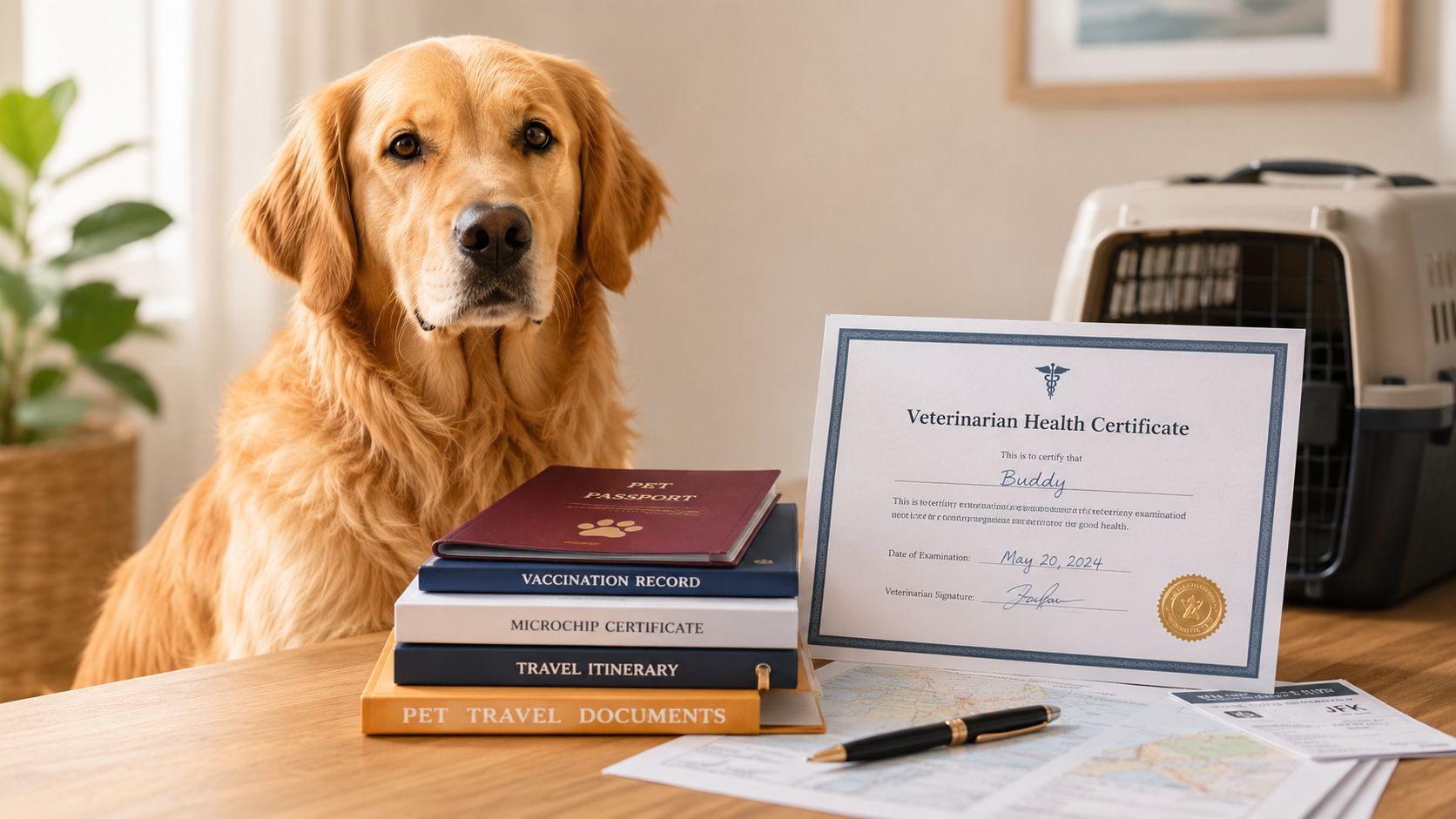
Build the document file before anything else
Book the veterinary appointment early enough to correct problems, update vaccines, and issue any required certificates within your destination's acceptance window. Then create one physical folder and one digital copy with identical contents. You want every document available at departure, at customs, and on arrival without digging through email.
Your file should include:
- Current veterinary records that show your dog's health status
- Rabies documentation if your route or destination requires it
- Microchip details where identification standards apply
- Carrier or operator forms completed exactly as requested
- Import permits or entry paperwork for international travel
Cross-border trips are where owners make expensive mistakes. Each country sets its own entry rules, and officials will not smooth over missing forms because your dog is friendly or your flight is private. If you are crossing into Canada, this guide to navigating CFIA pet travel rules is a useful example of how technical country-specific compliance becomes.
ESA and service dog rules deserve precision
Commercial airlines draw hard distinctions between emotional support animals and trained service dogs. The ADA National Network resource on flying with service animals explains that those categories are treated differently, and owners get into trouble when they assume a generic letter covers both.
That confusion matters most on commercial itineraries, where airline policy can turn a routine booking into a paperwork fight. Private travel removes much of that friction because your dog is not being squeezed through the same carrier rules and cabin restrictions. Customs and import rules still apply, though. For international private itineraries, this private jet customs guidance lays out the order correctly: medical clearance first, border compliance next, flight logistics after that.
My rule for clients
Do not plan around the flight until the documents are clean.
Owners often focus on comfort items before they have legal entry sorted out. That is backward. A private jet is the clear answer if you want your dog beside you, under your supervision, and away from the chaos of commercial terminals. But even the best aircraft and crew cannot fix an expired vaccine record or a missing import form at the border.
If the file is incomplete, you are not ready to fly.
Crate Selection and Cabin Acclimation
You do not want to discover at boarding that your dog treats confinement, engine noise, or close quarters as a threat. That problem starts at home, and it gets harder to fix once a travel schedule is in motion.
This is one of the clearest dividing lines between commercial and private flying. Commercial trips often force your dog into a carrier, under a seat, or into cargo handling routines that create stress before the aircraft even leaves the ground. Private aviation gives you control. Your dog can usually remain beside you in the cabin, under your supervision, with room to settle properly. That is the safer setup, and for many owners, it is the only one I recommend.
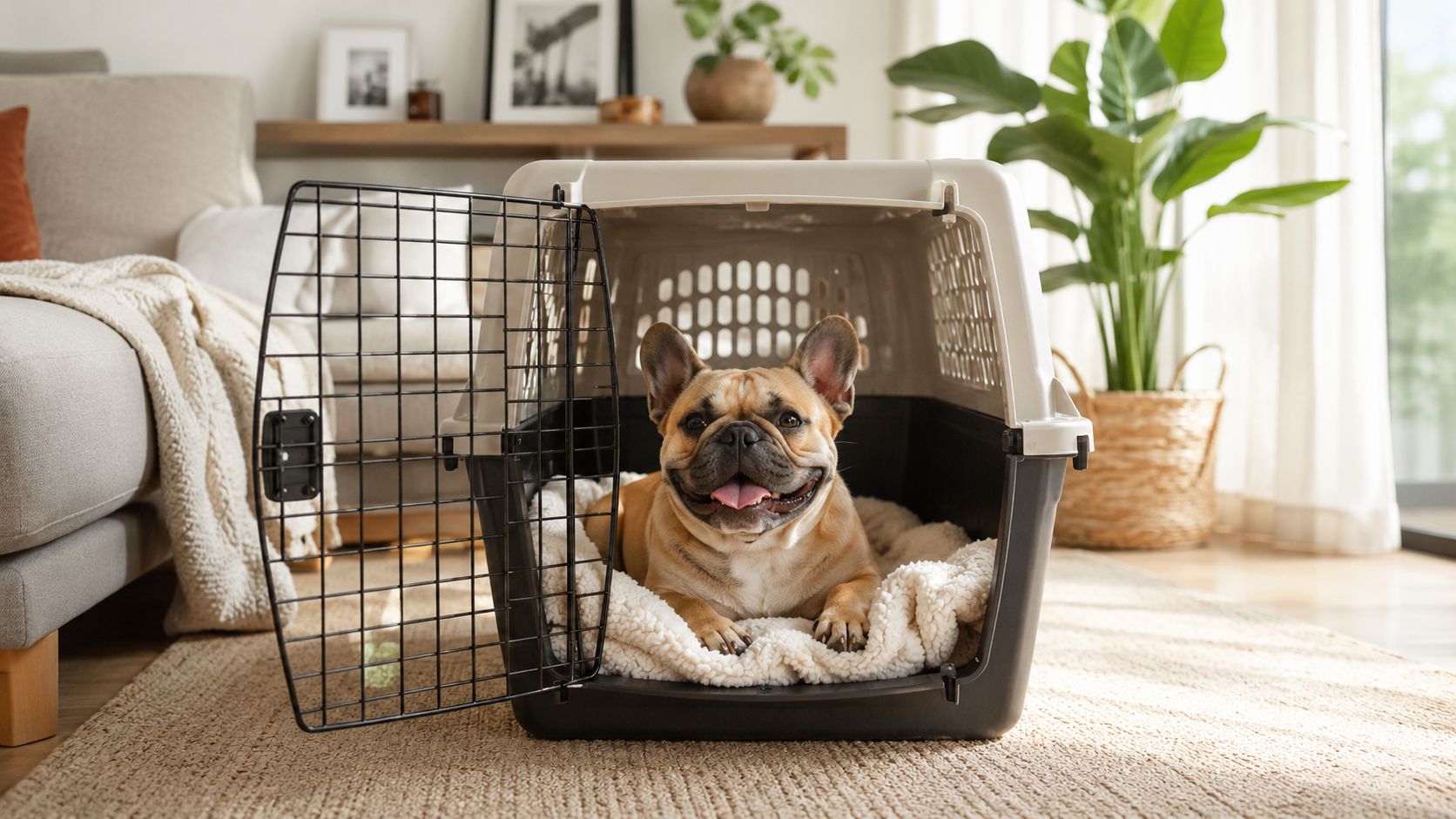
Choose the setup your dog can actually handle
If your itinerary requires a crate at any point, buy it early. Put it in a familiar room. Leave the door open. Add bedding that already smells like home, and let your dog enter and exit without pressure. A crate should feel ordinary well before travel day.
For private cabin travel, focus less on the container and more on the behavior. Your dog should be able to lie still on a designated blanket, stay settled on leash, and wear a harness without pawing, twisting, or protesting. If your dog is large, strong, or prone to fear reactions, carry a properly fitted muzzle and train with it in advance. That is not pessimism. It is good judgment.
Train for recovery, not perfection
Owners often ask for unrealistically polished behavior. You do not need a dog that performs like a statue. You need a dog that can settle, stay responsive, and recover quickly after a new sound or sensation.
Use a simple progression:
- Start with short sessions in the crate or on the travel blanket at home.
- Reward calm posture and relaxed attention, not excitement.
- Add mild disruption like rolling bags, door chimes, or short car rides.
- Extend the duration so your dog learns that resting is the task.
If your dog struggles with separation or unfamiliar routines, this guide on effective methods for dog well-being is worth reading because it builds confidence instead of forcing obedience.
Rehearse the cabin before you ever fly
A private jet cabin is calmer than a commercial cabin, but it is still new. Dogs notice vibration, scent, seat layout, and your own tension. If you are rushed or anxious, your dog will often reflect it.
Run a full practice session at home. Put on the harness. Clip the leash. Lay out the exact blanket you plan to bring. Ask for a down-stay beside a chair or ottoman that stands in for the seat. Wait. Reward calm. Repeat until the routine feels boring.
A visual walkthrough can help if you want a training reference before flight day.
A successful flight does not require your dog to enjoy every minute. It requires your dog to understand that the cabin is controlled, safe, and temporary.
Your Day-of-Travel Action Plan
Your dog reads your tempo before the car even leaves the driveway. If the morning feels rushed, noisy, and disorganized, expect that tension to show up in the cabin. Set the pace early and keep it controlled.
Private aviation gives you a calmer start than commercial travel ever will. No crowded terminal. No loud gate area. No conveyor belt of strangers, delays, and rigid pet rules. That matters because a dog that arrives settled usually flies settled.
The morning checklist
Handle the basics with discipline. Feed lightly if your dog tolerates that well, especially on shorter flights. Offer water in sensible amounts, not a full bowl right before departure. Give your dog a proper walk, not a quick lap around the block, then make the final potty stop as close to boarding as possible.
If your dog has a medical condition, follow your veterinarian's plan exactly. Travel day is not the time to test a new feeding schedule, change medication timing, or guess your way through insulin management.
Keep your own routine clean too. Have the collar or harness on early. Pack the car before the dog comes out. Confirm documents, wipes, leash, and medication before you leave home. The goal is simple: no last-minute scrambling in front of your dog.
What to pack for the dog
Use one dedicated soft bag and keep every pet item in it. Splitting supplies between three bags creates mistakes.
Pack:
- Printed health and travel documents
- A secure leash and well-fitted harness
- A familiar blanket or mat
- Waste bags and cleaning wipes
- Medication in original packaging
- One known chew or comfort item
- A small water bowl and towel
If you want a more detailed overview of what operators typically allow and how in-cabin pet arrangements work, review this guide to flying on a private jet with pets before departure.
Boarding and in-flight handling
Board after exercise and the final relief break. That order prevents avoidable problems.
Once inside the aircraft, settle your dog immediately into the spot you planned in advance. Use a harness restraint if your operator permits it, or secure the crate properly if that is the approved setup. Do not let your dog wander the cabin during boarding just because the environment feels relaxed. Calm structure beats freedom every time, especially during taxi, takeoff, and landing.
Bring a muzzle if your dog is large, inexperienced, or sensitive to handling. A muzzle is a backup tool, not a prediction of bad behavior. Serious pet travel planning accounts for contingencies before they become problems.
Skip the dramatic fixes
Sedation is not a shortcut for poor preparation. If your dog needs medication, make that decision with your veterinarian well before flight day and test the plan in advance when appropriate. Do not give a new sedative for the first time on the way to the airport.
Bring the dog you prepared. Do not try to medicate away a situation that better planning should have prevented.
That mindset is one of the clearest dividing lines between a stressful trip and a controlled one. On a commercial itinerary, you are often forced to work around the system. On a private flight, you control the pace, the handling, and the environment. That is why private aviation is the right answer for many dog owners, not a luxury add-on.
Booking Your Flight and Managing Costs
Pet travel costs are often underestimated because of a focus on the headline fare and an oversight of the associated friction. Crate purchases, pet fees, stricter booking rules, route limitations, and the cost of a stressed dog all add up. The cheaper ticket can become the more expensive mistake.
Ask better booking questions
Whether you're speaking with an airline, a charter broker, or a direct operator, ask the questions that determine the actual experience:
- Where does the dog ride in cabin, in carrier, or in cargo?
- What breeds or sizes are restricted
- Is a crate mandatory, optional, or prohibited in cabin
- What documents must be submitted before departure
- What happens if the destination changes entry requirements
- How is the pet secured during taxi, takeoff, and landing
If the representative gives vague answers, keep looking. Pet travel shouldn't rely on “it's usually fine.”
Cost is about value, not just fare
Commercial travel can look economical because the base ticket is visible and the compromises are hidden. If your dog fits the rules, that may be acceptable. If your dog doesn't, commercial travel often turns into a chain of expensive workarounds.
Private charter costs more upfront. That's obvious. The relevant question is whether the extra cost buys something meaningful. In pet travel, it does. You gain direct supervision, fewer transitions, simpler handling, and an environment built around the passenger rather than around mass throughput.
Why on-demand private charter can make more sense than people assume
Some charter pricing gets inflated by aircraft repositioning. That's where clients overpay for a jet that has to be moved into place before their trip even starts. A platform like Haute Jets' pet-friendly private charter page is relevant here because the model centers on sourcing aircraft from a broad owner-operator network and avoiding unnecessary repositioning where possible. That matters when you want a specific cabin setup, a pet-accepting operator, and transparent trip structure without a membership commitment.
The booking standard I recommend
Use this filter before you commit:
| Booking issue | What you want to hear |
|---|---|
| Pet acceptance | Clear confirmation that your dog is approved for the itinerary |
| Cabin arrangement | Exact explanation of where the dog will sit or lie |
| Restraint policy | Harness, leash, or crate rules stated plainly |
| Document handling | A checklist, not a casual verbal summary |
| Ground process | Specific arrival time, terminal process, and boarding sequence |
If the provider can't answer those questions cleanly, they're not ready for your dog.
Ensuring a Safe and Serene Journey
The safest dog flight is the one that removes avoidable stress at every stage. That starts with choosing the right flight method. It continues with paperwork, training, and day-of discipline. Owners often obsess over gear and forget the central truth. Mode of travel determines most of the experience.
A small, well-crated dog on a short commercial route may do perfectly well. Many don't fit that profile. Large dogs, flat-faced dogs, first-time flyers, and dogs that feed off crowded environments need a setup with fewer variables and more owner control. That's why the commercial-versus-private decision matters so much more than the choice between one crate brand and another.
The short list that matters most
- Pick the flight method based on your dog, not your wishful thinking
- Handle paperwork early and assume border requirements are strict
- Train for calm behavior at home before you ever approach an airport
- Follow a disciplined travel-day routine with exercise, moderate water, and light feeding
- Secure the dog properly in flight with the approved setup for that aircraft
Treat the dog like a passenger, not luggage
That shift in mindset changes everything. When owners treat the dog as a real traveler, decisions improve. They stop pushing unsuitable airline options. They stop delaying paperwork. They stop showing up with an untrained dog and hoping airport staff will somehow make it work.
If you want another practical resource to round out your planning, ChowPow's dog travel guide is a helpful read for general travel habits and preparation routines.
Your dog doesn't care about status. Your dog cares about proximity, familiarity, and whether you keep the experience stable.
That's the standard I'd use for every flight decision.
If you want a private flight option that can accommodate your dog in the cabin and keep the trip customized to your itinerary, explore Haute Jets.