You're probably in one of two situations right now. You either fly private often enough that airline friction has become intolerable, or you manage travel for someone who does. In both cases, the primary question isn't luxury. It's access, predictability, and cost control.
That's why 21. Wheels Up review 2026 matters. Wheels Up still has brand recognition, airport visibility, and a familiar membership structure. But the private aviation market has changed. Travelers now have a clean alternative to prepaid programs and fleet-driven constraints. They can buy lift on demand, trip by trip, aircraft by aircraft.
This isn't just a review of one company. It's a review of two different ways to think about private flying. One model asks you to join, commit, and work inside a branded system. The other lets you source the right aircraft when you need it, without carrying the overhead of a membership product all year.
If you're still deciding how to book private flights in the current market, this 2026 private jet charter guide is a useful companion. The core decision is simple. Do you want to buy access to a program, or do you want to buy the actual flight?
The Private Jet Dilemma in 2026
Private aviation got sharper after the last few years of disruption. Buyers became less sentimental. They started asking harder questions. What am I really paying for? Which aircraft am I really getting? How much flexibility do I lose when I prepay into a branded platform?
That shift matters because the old jet card pitch doesn't land as cleanly as it once did. Travelers used to tolerate membership friction because the alternative felt fragmented. Today, that argument is weaker. The marketplace is more mature, operator networks are broader, and many clients no longer see value in locking money into a single provider unless the economics clearly justify it.
Here's the practical split.
| Decision factor | Legacy jet card program | On-demand charter marketplace |
|---|---|---|
| How you buy | Membership or structured access | Trip by trip |
| Capital commitment | Upfront commitment and program rules | No prepaid block required |
| Aircraft access | Primarily tied to platform inventory and sourcing rules | Wider market access based on trip need |
| Pricing style | Dynamic or program-based billing | Quoted per mission |
| Best for | Travelers who want one brand and predictable habits | Travelers who value flexibility and aircraft choice |
Most buyers don't need another glossy membership promise. They need a procurement model that matches how they travel. That means short-notice changes, varying trip lengths, different cabin needs, and less tolerance for hidden cost layers.
The smartest private aviation decision in 2026 usually starts with a basic question. Are you paying for convenience, or are you paying for someone else's fixed platform costs?
That's where the Wheels Up discussion becomes useful. The company is not the same business it was a few years ago. But even after real operational improvements, the underlying model still carries the same structural tension. It's a legacy access product competing in a market that increasingly rewards open sourcing.
The Re-imagined Wheels Up Model Explained
Book a Monday morning shuttle from New York to South Florida, then change the return, add a second passenger, and ask for a larger cabin on 24 hours' notice. That is the kind of real-world trip that exposes what Wheels Up sells in 2026. It sells access to a managed system, not unlimited market choice.
What changed at Wheels Up
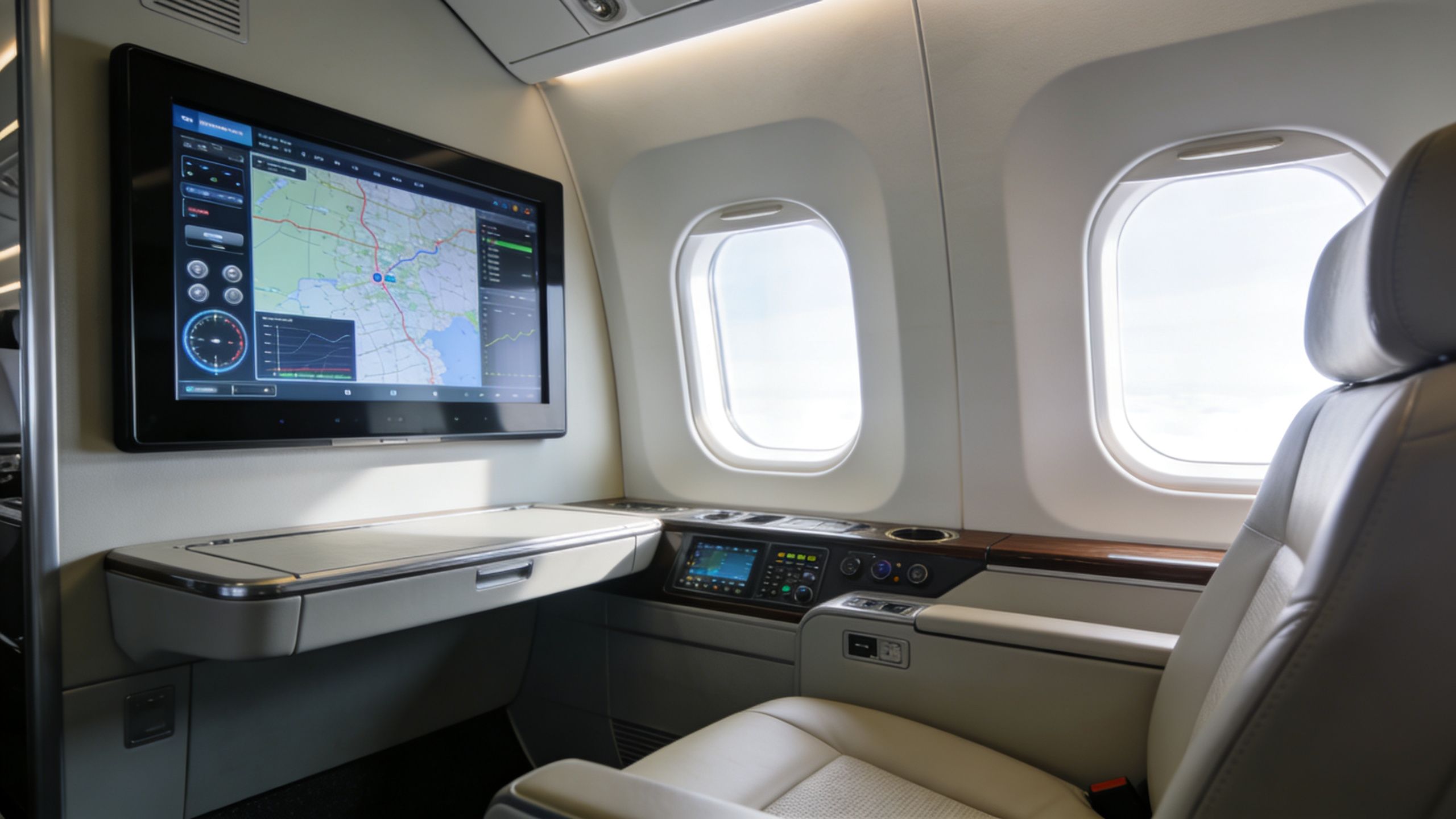
Wheels Up is in better shape operationally than many buyers assume. The company simplified its fleet, exited older aircraft, and concentrated on two popular categories: the Embraer Phenom 300 series and the Bombardier Challenger 300/350 series. It also expanded the number of owned and leased aircraft in those fleets and tied that shift to stronger utilization of its newer equipment, according to Flying magazine's report on the Wheels Up fleet modernization.
That matters for one reason. Standardization usually improves dispatch reliability, maintenance planning, crew training, and product consistency. A tighter fleet is easier to run than a mixed collection of aging aircraft.
Wheels Up deserves credit for making that correction. It fixed part of the execution problem.
What the current product actually is
The business model is still the main issue.
Wheels Up remains a branded access platform with membership logic, internal sourcing priorities, and pricing that flows through its own operating structure. That works for clients who want one provider, familiar service workflows, and a narrower set of aircraft categories. If you value brand continuity over procurement flexibility, the model is easy to understand.
It is less attractive if you buy private aviation the way a disciplined consumer or finance team should buy it. You are not just paying for a flight. You are paying for the costs required to maintain a controlled platform: fleet commitments, staffing, scheduling infrastructure, and the margin layers that come with an asset-heavy system.
That is the core distinction between a legacy jet card framework and a modern private jet charter booking model. One sells entry into a branded ecosystem. The other sources the right aircraft for the mission.
A quick visual overview helps.
The hidden constraint
A newer fleet does not change the commercial architecture. Wheels Up still has to direct demand through its own network design and sourcing logic. That can produce a good experience on common routes and familiar mission profiles. It can also create friction when your trip falls outside the sweet spot.
This is why many 2026 buyers misread the company. They see modernization and assume flexibility. They are not the same thing. Wheels Up has improved the machine, but it still asks the client to buy within the machine.
My recommendation is simple. Use Wheels Up if you want a structured brand experience and your travel pattern is repetitive enough to fit it cleanly. If your schedules change, your cabin needs vary, or you want market pricing on each mission, an open on-demand charter model is the stronger buying decision.
The Haute Jets On-Demand Charter Alternative
The primary alternative to Wheels Up isn't another membership. It's the on-demand marketplace model.
Many buyers gain clarity once they stop thinking like club members and start thinking like charter consumers. You don't need a branded access plan if what you want is the right aircraft, at the right time, for the right mission profile.
How the on-demand model works
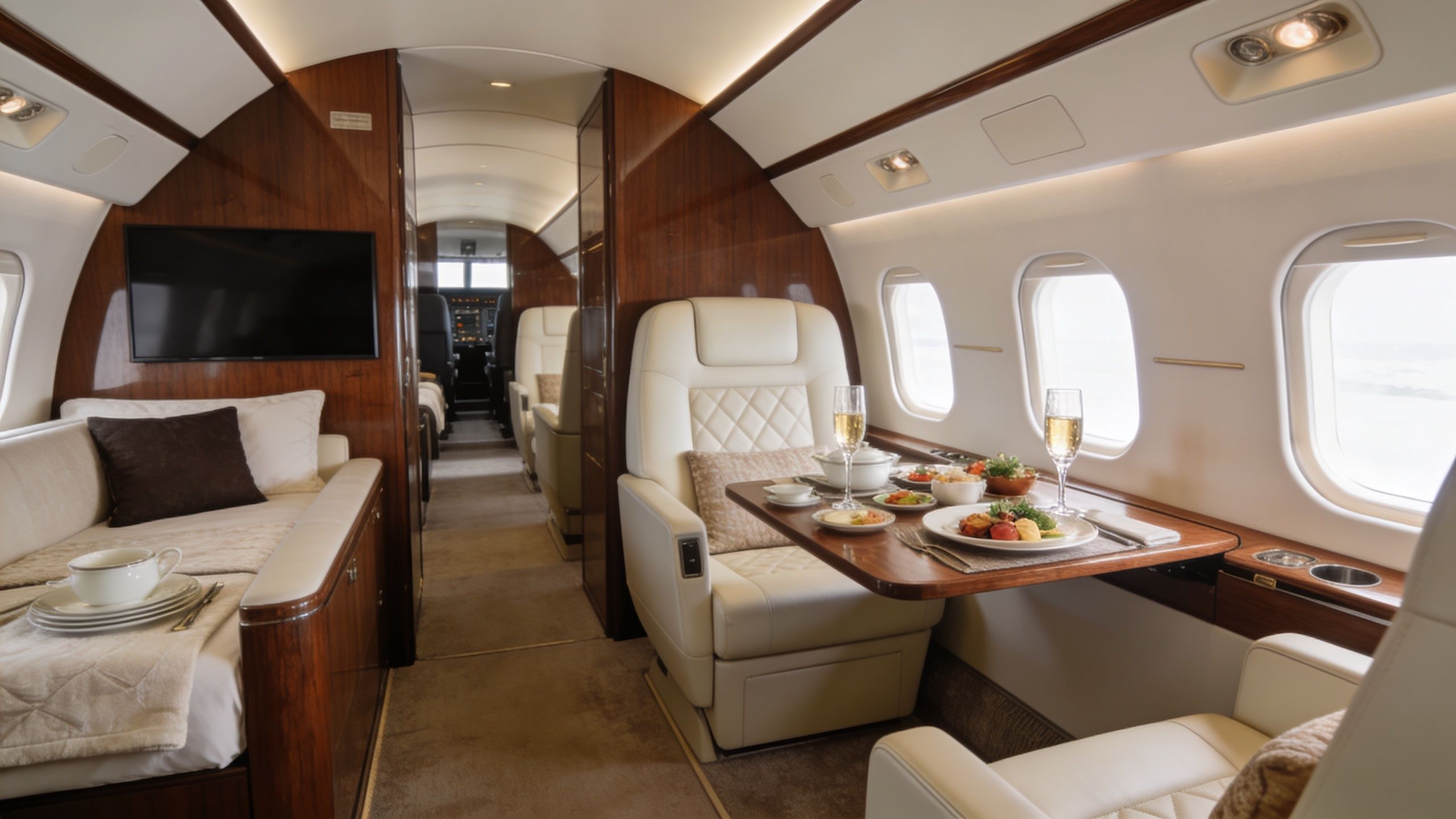
An on-demand marketplace sources aircraft per trip rather than steering every request through a fixed branded system. That changes the economics and the booking logic.
Instead of paying to stay inside a program, you request a trip and evaluate the specific aircraft options available for that mission. That means the platform can match a short regional hop differently from a coast-to-coast business flight or a long-range international itinerary.
The practical benefits are easy to understand:
- No membership layer. You pay for the trip, not for annual access.
- No blackout-date logic. Availability depends on actual sourcing, not program restrictions.
- More aircraft specificity. You can evaluate the exact aircraft instead of only a broad category.
- Cleaner procurement. Finance teams can assess each trip as a standalone spend.
One example of that model is Haute Jets private jet charter, which operates without jet cards or annual fees and sources from owner-operators rather than forcing clients into a prepaid membership structure.
Why the economics are different
This is the part many private flyers miss. Fleet-based programs often carry repositioning cost inside the product, whether it's obvious in the invoice or not. The marketplace model attacks that problem by sourcing aircraft closer to the departure need.
According to Trillionaire Daily's comparison of Wheels Up and NetJets, Wheels Up's model uses variable upfront costs and dynamic hourly billing, while the owner-operator marketplace approach avoids the 20 to 40% repositioning markup embedded in fleet-based models.
That's the structural distinction. It's not about style. It's about who absorbs the inefficiency.
Advisor's view: If you don't fly in one narrow pattern all year, paying trip by trip usually gives you better alignment between spend and actual travel need.
The on-demand model won't be ideal for people who are emotionally attached to a single aviation brand. But for buyers who care about flexibility, aircraft choice, and avoiding prepaid friction, it's usually the cleaner answer.
Head-to-Head Comparison Wheels Up vs Haute Jets
The cleanest way to judge these options is to stop looking at logos and start looking at procurement mechanics. Wheels Up and an on-demand charter marketplace solve the same problem in very different ways.
Pricing model and financial friction
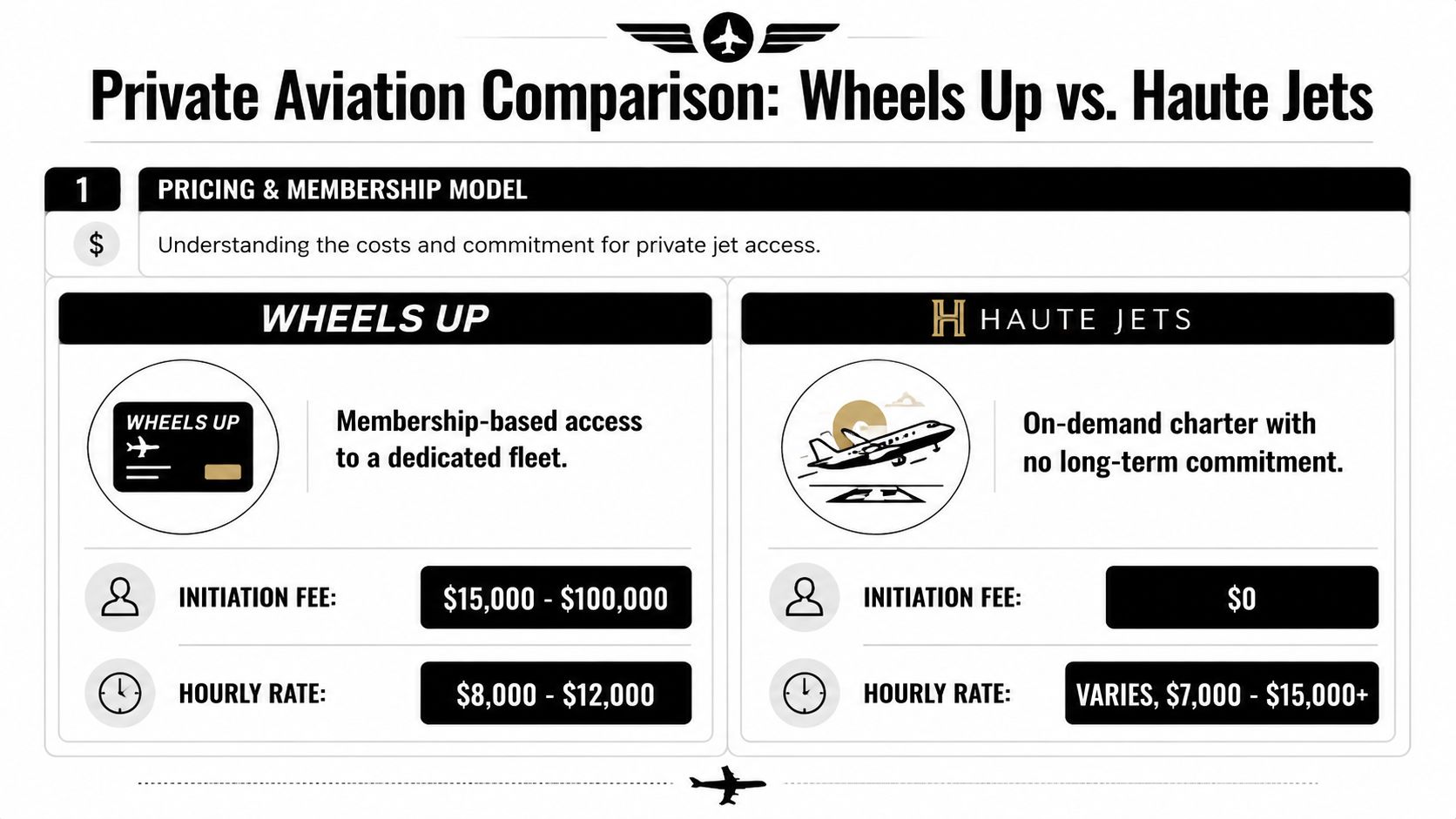
Wheels Up uses a membership-oriented structure with variable upfront costs and dynamic hourly billing. That gives some flexibility compared with older prepaid cards, but it also creates budget ambiguity. If you're a finance-minded buyer, ambiguity is a cost.
An on-demand marketplace flips that logic. You buy each mission on its own merits. No annual fee layer. No sunk-cost pressure to keep using one provider just because you already committed capital.
| Criteria | Wheels Up | On-demand marketplace |
|---|---|---|
| Commercial structure | Membership-led access | Pay per flight |
| Budgeting | Less predictable because pricing can vary | Easier to evaluate per trip |
| Client psychology | Encourages program loyalty | Encourages mission-by-mission comparison |
| Waste risk | Higher if usage patterns change | Lower because there's no prepaid lock-in |
The biggest difference isn't the headline rate. It's whether you're paying for transportation or paying to stay inside a system.
Fleet access and aircraft choice
Wheels Up is better than it used to be operationally, but it's still a platform with its own fleet priorities. That means your trip request gets filtered through internal availability, program rules, and branded product design.
A marketplace works in reverse. It starts with the mission, then sources the aircraft. That's a better fit for travelers whose needs change from trip to trip.
If you regularly need different cabin sizes, specific baggage capability, pet flexibility, or an exact aircraft type, open-market sourcing is more rational.
Transparency and markup exposure
The contrast is stark. A fleet-based model can hide inefficiency inside the structure. A marketplace model forces the trip to stand on its own economics.
The most important cost distinction from the available data is this:
Wheels Up's variable upfront costs and dynamic hourly billing create pricing ambiguity, while the owner-operator marketplace model offers wholesale pay-per-flight pricing and avoids the 20 to 40% repositioning markup embedded in fleet-based models, according to the earlier Trillionaire Daily analysis.
If you're comparing private aviation options the way a CFO would, that matters more than brand familiarity.
Booking process and user control
Some travelers like the simplicity of dealing with one branded program. That's a fair preference. But simplicity can become a trap when it reduces control.
A modern marketplace booking process usually gives you more visibility into the actual aircraft, operator, and trip structure. You're not just buying “light jet access.” You're buying a specific solution to a specific transport requirement.
That matters on real trips. A same-day business shuttle, a family ski weekend, and a long-range international flight should not be treated as interchangeable products.
Which model wins on pure logic
Here's the blunt answer.
- Choose Wheels Up if you strongly prefer a single-brand experience and you accept that convenience may come with pricing opacity.
- Choose an on-demand marketplace if you want better alignment between what you pay and what you fly.
- Avoid memberships entirely if your annual flying pattern changes often or your aircraft needs vary materially by trip.
Wheels Up is easier to understand emotionally because it looks like a club. The marketplace model is easier to defend financially because it behaves like procurement.
Analyzing Operational Stability and Safety
You book a Monday morning departure for a board meeting, and the jet shows up on time. That solves the immediate problem. It does not answer the bigger one. Should you trust one branded program with future access if the operating business is stable but the balance sheet is still under pressure?
Wheels Up has made real progress on execution. Private Jet Card Comparisons' January 2026 analysis of Wheels Up performance cited a 99% completion rate, 89% on-time performance, and also pointed to meaningful financial strain, including a steep stock decline and debt that outweighed its market capitalization as of April 2026. That combination matters.
A legacy jet card model lives or dies by the stability of the central company. If dispatch improves, members benefit. If the company tightens capacity, changes terms, or struggles financially, members feel that too. The operational result can look strong right now while the platform risk remains higher than many buyers assume.
That is the key distinction buyers miss.
Safety and reliability should be judged at two levels. First, can the trip depart as promised? Second, who is operating the aircraft, under what standards, and how exposed are you to one company's corporate risk?
An on-demand charter marketplace changes that equation. You are not relying on one asset-heavy provider to be your single gatekeeper to lift. You are sourcing each mission through a network of vetted operators, which lowers concentration risk and gives you more control over aircraft selection and operator quality.
That makes the safety conversation more concrete. Instead of accepting a brand-level promise, you can review operator credentials, aircraft history, and mission fit for the specific trip. Haute Jets outlines that vetting standard well in its guide to private jet safety and reliability standards.
My advice is simple. Treat Wheels Up's improved dispatch record as a positive operating sign, not a full answer. If you fly often enough to care about continuity, safety oversight, and procurement discipline, the marketplace model gives you a cleaner risk profile because your access is tied to vetted lift options, not one company's financial condition.
Ideal Use Cases Who Should Choose Which Model
The right answer depends less on aspiration and more on travel pattern. Most bad private aviation decisions happen when buyers pick a product that doesn't match how they fly.

The corporate travel manager
This traveler needs accountability. They track cost by trip, support multiple executives, and deal with changing schedules. They rarely benefit from locking the company into one branded access model unless usage is extremely predictable.
A marketplace approach usually fits better because each mission can be sourced according to passenger count, route, and schedule. That makes internal reporting cleaner. It also avoids the common problem of trying to force unlike trips into one program framework.
Wheels Up can work here if the company values a branded relationship over sourcing flexibility. I don't think that's the stronger financial decision in most cases.
The spontaneous leisure flyer
This traveler books around lifestyle, not policy. A ski weekend appears. A holiday changes. A beach trip moves by a day. That person needs freedom more than membership identity.
For that buyer, on-demand charter is usually the obvious fit. They don't need annual aviation administration. They need responsive access without worrying about whether they're getting value from a prepaid relationship.
The family with varied trip profiles
Families often fly private in inconsistent patterns. One trip is a short domestic hop. Another needs more luggage. Another includes pets, nannies, or grandparents. A fixed program is rarely elegant for that kind of variation.
A marketplace model handles those shifts better because it lets the aircraft match the mission. A family shouldn't pay for product rigidity just to say they belong to a flying club.
The loyalist who wants one brand
Wheels Up still maintains a distinct advantage in this area. Some travelers prefer not to compare options for every trip. They seek a single provider, one familiar workflow, and a consistent customer experience.
That's a valid preference. But it's a preference, not a financial advantage.
If your top priority is brand familiarity, a membership program can still make sense. If your top priority is matching aircraft and cost to each trip, it usually doesn't.
The highly specific flyer
This traveler cares about aircraft details. They may want a certain cabin layout, a certain model, or a specific long-range capability. They don't want a broad category label. They want precision.
That traveler should avoid being boxed into a legacy-style access product. Specific needs are better served by broad market sourcing.
Our 2026 Recommendation For The Modern Traveler
My recommendation is simple. Most private flyers should not default into a jet card or membership product in 2026. They should start with on-demand charter and only move toward a branded program if they can prove, in their own flying pattern, that the restrictions are worth it.
Wheels Up is not the easy target it once was. The company has improved its fleet, narrowed its focus, and produced stronger operational execution. That matters. If you're loyal to a single ecosystem and you want a recognizable brand handling your trips, it may still fit.
But the model still asks you to accept program logic over market logic.
That's the issue. Private aviation works best when the aircraft, operator, timing, and routing are selected for the mission itself. It works worst when the client adapts to the provider's structure. Membership products often reverse that relationship. They make the traveler fit the platform.
For modern buyers, that's outdated.
If you value flexibility, transparent trip-level buying, broader aircraft choice, and less prepaid friction, the on-demand marketplace is the smarter path. It gives you a cleaner purchasing model and usually a more rational one. You're not buying belonging. You're buying lift.
That's where this 21. Wheels Up review 2026 lands. Wheels Up is improved, but it still represents a legacy way of packaging private aviation. The market has moved. Buyers should move with it.
If you want trip-by-trip private aviation without annual fees, jet cards, or blackout-date friction, Haute Jets offers on-demand charter sourced from owner-operators, with access to specific aircraft rather than a generic membership bucket.