
You're probably weighing two very different frustrations.
One is obvious. You're tired of paying retail charter rates for repeat trips you know are coming. The other is quieter, and more expensive if you ignore it. You don't want to commit serious capital to a fractional program, then discover it works beautifully for your Tuesday shuttle to New York and badly for the trips that matter most: the last-minute board meeting, the family detour to a secondary airport, the international hop with different cabin requirements, the holiday week request that suddenly gets complicated.
That's the core debate in 22. charter vs fractional ownership. It isn't just cost per hour. It's whether you value predictable access on repeat missions more than complete freedom on unpredictable ones.
Most marketing in private aviation pushes a false binary. Charter is framed as casual. Fractional is framed as serious. I don't buy that. Serious flyers care about operational fit, not labels. If your schedule is volatile, your destinations vary, or your aircraft needs change trip by trip, the cleaner answer is often charter, even if you fly often. If your flying is repetitive and disciplined, fractional can make sense.
The smartest clients increasingly think like portfolio managers. They don't ask which model wins in theory. They ask which model handles the core use case, and which model covers the gaps without trapping capital or reducing options.
The Modern Private Flyer's Dilemma
A founder based in Miami flies the same corridor several times a month. A family office principal moves between New York and South Florida on a familiar cadence. A CEO shuttles between major business centers with little variation. Those clients often like the idea of a fractional share because routine flying rewards structure.
Then reality intervenes.
A child's school schedule changes. A board meeting gets moved up. A weather event forces a different departure point. A ski trip needs a different aircraft than a business day trip. A Europe itinerary introduces airport, range, and crew-duty complications that don't fit neatly inside a program built around standardized access.
That's where the usual sales pitch falls apart. Fractional ownership promises consistency. Charter delivers optionality. Those are not the same thing.
The old question misses the real one
Most buyers ask, “Which costs less?” That's too narrow. The sharper question is, “Where does each model fail when my schedule stops behaving?”
For stable domestic patterns, fractional can feel efficient. For uneven travel, it can become restrictive in ways brochures rarely emphasize. You're not just buying flight time. You're buying into a system with fleet limits, term commitments, and program rules.
Charter isn't the backup plan for people who couldn't justify fractional. For many sophisticated flyers, it's the primary tool because it adapts faster than their lives do.
What wealthy flyers actually need
High-net-worth travelers rarely live inside one mission profile. They may have:
- Routine corporate flying between major hubs
- Family travel with changing passenger counts and baggage needs
- Seasonal travel to congested or remote destinations
- International requirements that call for different range, cabin, or operator options
- Short-notice departures where speed matters more than program structure
That mix is why the best answer is often strategic rather than ideological. If you only compare hourly economics, you'll miss the operational truth. Private aviation is valuable because it removes friction. The wrong model puts friction back in.
Understanding The Two Core Aviation Models
The mechanics matter. If you don't understand how each model is built, you can't evaluate what you're buying.

How on-demand charter works
On-demand charter is the cleanest model to understand. You request a trip, review aircraft options, choose the one that fits the mission, and pay for that flight. There's no ownership stake, no long-term contract, and no standing obligation if you don't fly next month.
Think of it as bespoke access, not subscription access.
The practical benefit is control at the trip level. You can choose a light jet for a short business hop, a super-midsize for a longer route, or a larger cabin when the passenger list changes. If your priorities are flexibility, aircraft choice, and no capital tied up, charter is straightforward. If you want a deeper primer on the model itself, Haute Jets has a useful explainer on what a chartered jet is.
How fractional ownership works
Fractional ownership is closer to a timeshare structure for private aviation. You buy a share in an aircraft program. That share entitles you to a defined amount of annual access, usually tied to a specific share size and aircraft category.
The key difference is psychological as much as financial. With charter, you're buying transportation. With fractional, you're buying into a managed ownership structure.
Several core features usually define the model:
- Share-based access tied to an annual allotment of flight hours
- Upfront capital commitment to acquire the share
- Recurring monthly charges for management and program overhead
- Occupied hourly fees when you fly
- Program rules governing notice periods, fleet substitution, and usage terms
Why this distinction matters
These aren't just two payment methods for the same service. They are different operating philosophies.
Charter optimizes for mission-by-mission freedom. Fractional optimizes for planned utilization across a set program structure.
Practical rule: If you want each trip to dictate the aircraft, charter fits. If you want your annual flying pattern to fit a program, fractional fits.
Neither is superior in all cases. But one of them will be wrong for your travel needs.
A Financial Breakdown of Each Approach
A client flies 35 hours one year, 70 the next, then suddenly adds Europe, Aspen in peak season, and a few short-notice family trips. That is where bad private aviation buying decisions get expensive. A simple hourly-rate comparison misses the commitments that stay in place when your travel pattern stops behaving.
Charter is a variable expense. Fractional is a capital commitment layered with recurring fees and trip charges. If your schedule is irregular, the financial risk is not just what you pay per hour. It is what you keep paying when the program no longer matches how you travel.
Financial Components Charter vs Fractional Ownership
| Cost Component | On-Demand Charter | Fractional Ownership |
|---|---|---|
| Upfront commitment | No significant up-front investment | A 1/16 share can require a $500,000 to $750,000 buy-in, according to Wiser Investor's aviation planning comparison |
| Ongoing monthly cost | No standing monthly fee in the basic pay-as-you-go model | Fixed monthly management costs apply |
| Usage pricing | Paid per trip | Occupied hourly fees apply on top of fixed costs |
| Cash flow profile | Flexible, transactional | Fixed plus variable |
| Balance sheet exposure | None from aircraft ownership | Capital tied to an aircraft share |
That table is the starting point, not the conclusion.
Fractional can make financial sense for a client who flies consistently, books in a disciplined way, and stays inside the program's sweet spot. Many do not. They buy for a stable domestic pattern, then start requesting holiday departures, international itineraries, or aircraft changes that push them outside the assumptions that made the program look efficient in the first place.
That is why I focus clients on three questions:
How much capital should this decision absorb?
A fractional share is an allocation of capital, not a travel deposit. That money has an opportunity cost, and affluent buyers often ignore it because the aviation pitch centers on access, not capital efficiency.How repeatable is your flying pattern?
Fractional rewards repeat behavior. If your annual usage swings, the fixed monthly charges become dead weight quickly.How often will your mission profile break the program?
This is the blind spot. If you regularly need unusual routes, peak-day departures, or last-minute lift, you may still end up chartering on top of your fractional commitment.
For trip-level context, Haute Jets has a useful private jet cost breakdown by aircraft category and mission type.
The fundamental financial question
The right question is simple: Are you buying efficient access for a predictable pattern, or are you preserving freedom for an unpredictable one?
Charter preserves liquidity and adapts well to an aviation portfolio approach. You use it when the mission changes, when the route is awkward, or when your primary solution cannot produce the right aircraft at the right time. Fractional can lower friction for repeat users, but it also creates a tendency to force trips into a structure you already paid for.
My recommendation is straightforward. If your travel is irregular, seasonal, international, or often booked close in, treat charter as the default tool. If you fly enough to justify fractional, keep charter in the mix anyway. The smartest buyers do not choose one model out of loyalty. They build an aviation portfolio that matches how they travel.
Operational Control Flexibility and Aircraft Access
The decision takes on genuine significance. Most dissatisfaction in private aviation doesn't start with billing. It starts when a client needs a trip handled a certain way and the model can't adapt.
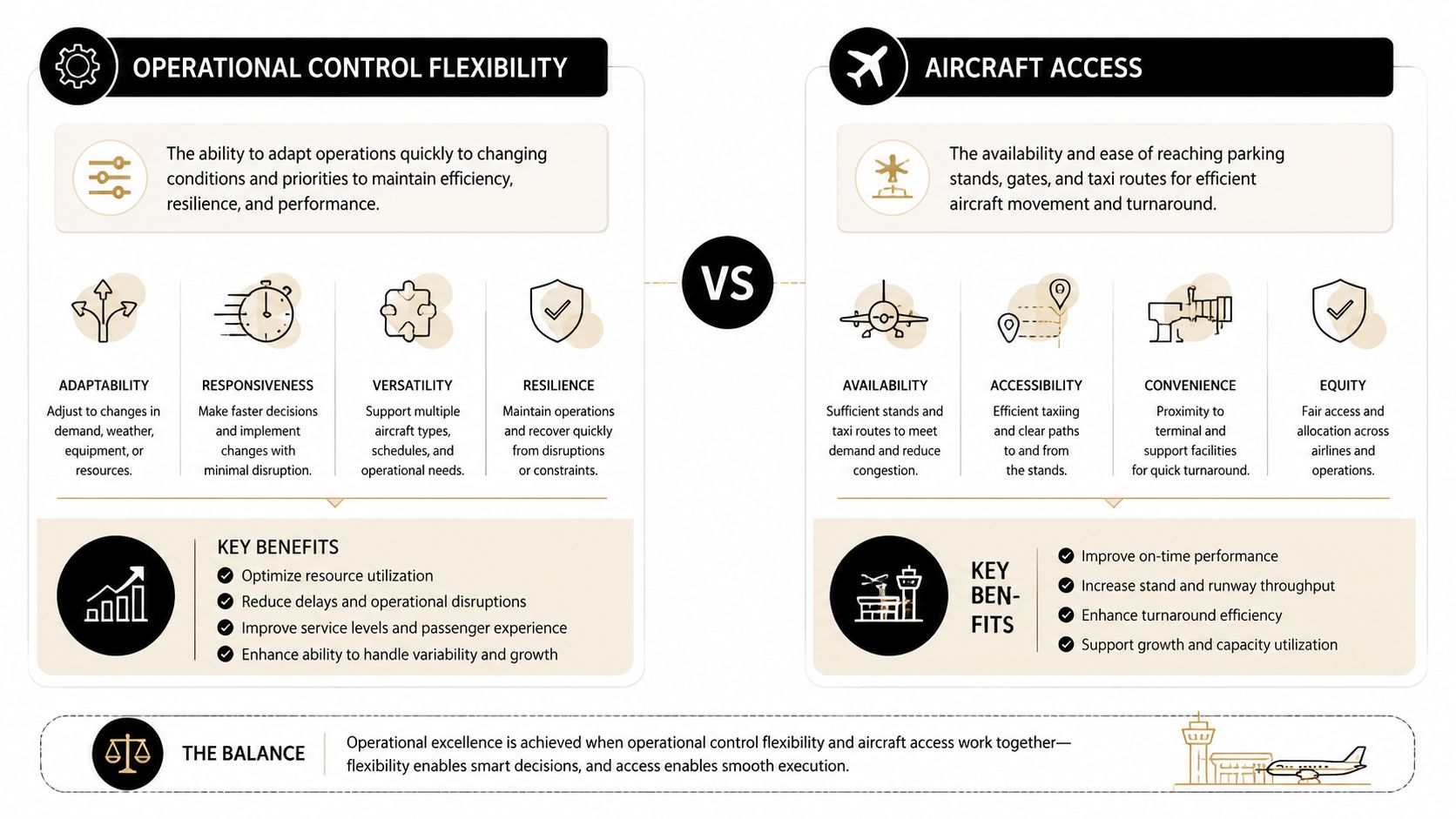
Fractional ownership is structured as a purchase of a specific aircraft share, commonly in 1/16 increments tied to about 50 annual flight hours, and programs usually run for roughly 3 to 7 years, as outlined in Magellan Jets' fractional ownership overview. That structure creates discipline, but it also creates boundaries.
Where fractional works well
If your schedule is repetitive, fractional can feel smooth.
You tend to benefit most when you:
- Fly repeat routes between major markets
- Book with reasonable lead time
- Prefer a familiar service environment
- Value predictability over tailoring each trip from scratch
That consistency is real. For some clients, it's worth a lot.
Where charter pulls ahead
Charter wins when the mission changes more than the traveler admits it does.
You're not confined to one fleet logic. You can source the right aircraft for the day's job. That matters when range, runway, cabin size, baggage, pets, or passenger count shifts. It also matters when you need a departure from a less common location, or a return that no longer resembles the outbound leg.
Here's the side-by-side view buyers should focus on:
| Decision Factor | Charter | Fractional |
|---|---|---|
| Scheduling style | Mission-specific, flexible | Structured around program access |
| Aircraft choice | Choose the aircraft that fits the trip | Usually tied to program fleet and substitution rules |
| Best use case | Irregular, varied, bespoke flying | Repeatable, planned flying |
| Commitment level | Transactional | Multi-year |
| Adaptability | High | Good inside program boundaries |
A guaranteed system isn't the same as an unrestricted one.
The blind spot buyers discover late
The hardest trips are rarely the routine ones. They are the exceptions.
Those exceptions include last-minute departures, remote airport operations, international requirements, and seasonal demand spikes. Fractional programs can handle some of that, but they are not built for infinite flexibility. They're built for managed allocation.
Charter, by contrast, lets the mission drive the sourcing decision. That's why many discerning travelers who can afford either option still prefer charter for complex itineraries.
If you want one program to solve every mission, you'll probably end up disappointed. If you want the right aircraft for each mission, charter aligns better with how aviation operates.
The 50-Hour Rule and Usage Thresholds
The industry keeps returning to one benchmark because it's useful. It just isn't complete.
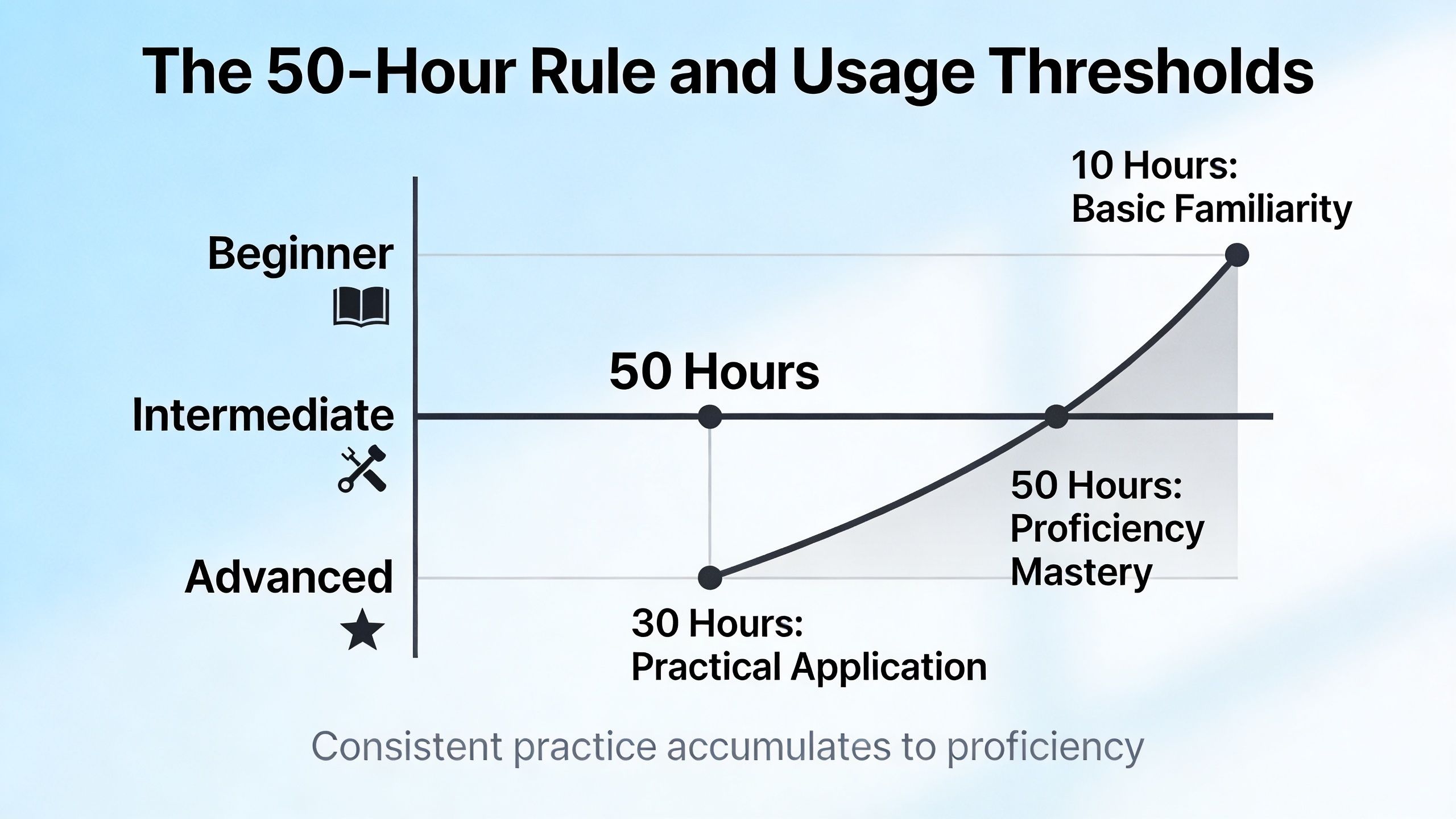
Multiple aviation sources state that travelers flying under about 50 hours per year often find on-demand charter the most economical choice, while the 50 to 200 hour range is where fractional ownership can start offering better value, according to FLYING Magazine's comparison of private jet charter and fractional ownership.
Why the rule matters
This threshold exists for a reason. Below that level, it's hard to justify tying up capital and taking on fixed monthly costs. If you're an occasional flyer, charter usually gives you what you need without forcing commitment.
Once your usage becomes regular, the economics can shift. A flyer who repeatedly consumes a meaningful annual block of hours may benefit from the structure fractional provides.
If you're evaluating share structures, this private jet share guide is a useful companion.
Why the rule is also incomplete
Hours don't tell you whether your flying is simple or messy.
Two clients can both log the same annual usage and need completely different solutions. One flies the same domestic pattern over and over. Another flies a patchwork of business, leisure, and international trips with changing lead times. The first client is a stronger fractional candidate. The second may still be better served by charter, despite similar annual hours.
Use the threshold as a filter, not a verdict.
From a practical standpoint:
- Under the benchmark. Charter is usually the cleaner answer.
- Inside the benchmark range. Fractional deserves a serious look if your routes are repeatable.
- Above the benchmark with irregular missions. Don't assume fractional wins. Complexity can outweigh raw hours.
Buyers who obsess over hours and ignore trip variability often choose the wrong model.
Evaluating Asset Risk and Exit Strategy
Fractional ownership is sold as access. It should also be evaluated as asset exposure.
When you buy a share, you are not just buying convenience. You're purchasing an interest tied to an aircraft and a program. That means your exit matters from day one. If your travel needs change, your company changes policy, or you decide the program no longer fits, getting out may not be as clean as getting in.
The commitment issue
A multi-year term changes the nature of the decision. You're not sampling a service. You're entering a structured holding period with limited flexibility relative to charter.
That matters because travel behavior changes faster than buyers expect. A new assistant, a relocated office, a different family pattern, or a shift toward international travel can make your original assumptions obsolete.
What charter avoids
On-demand charter has none of that balance-sheet drag.
You don't carry a share. You don't worry about disposition timing. You don't need to calculate whether staying in the program for another year is cheaper than unwinding it. If your needs change, you stop booking.
That simplicity is underrated.
For clients who view private aviation as a tool rather than a trophy, charter's biggest advantage isn't glamour or even flexibility. It's the absence of residual entanglement. The trip ends, and the obligation ends with it.
Your Decision Framework The Aviation Portfolio
The old debate asks you to choose a side. That's too simplistic for how affluent clients travel.
A growing trend in 2026 is the aviation portfolio, where fractional owners use their share for routine trips but rely on on-demand charter for remote departures, international routes, and special aircraft needs that fractional programs struggle to cover efficiently, as described in Paramount Business Jets' aviation portfolio analysis.

That matches what serious buyers already understand. No single model dominates every mission. The question is where each one belongs.
When I'd recommend fractional
Fractional ownership is worth considering if you have a disciplined travel pattern.
It fits clients who:
- Fly recurring routes with enough consistency to benefit from structured access
- Value predictability more than custom aircraft choice on every trip
- Accept a multi-year commitment and the capital that comes with it
- Operate mostly inside major-market patterns where program convenience is strongest
When I'd recommend charter
I'd recommend charter without hesitation if your profile looks like this:
- Your annual use is below the common threshold discussed earlier
- Your schedule changes often
- You need different aircraft for different missions
- You fly internationally or to remote points
- You want zero long-term obligation and no trapped capital
For clients who want on-demand sourcing without memberships or prepaid structures, Haute Jets is one charter option. It sources aircraft from owner-operators, lets clients choose the specific aircraft, and works on a pay-per-flight basis.
My direct advice
If your flying is predictable and repetitive, fractional can be rational.
If your life is unpredictable, charter is usually the smarter base strategy.
And if you're a heavy flyer with both routine and irregular needs, stop trying to force one model to do two jobs. Use a portfolio approach. Let fractional cover the repetitive corridor if it fits. Use charter for everything that falls outside that narrow lane, especially last-minute changes, international missions, and aircraft-specific requirements.
That's the honest answer most buyers need. Charter is not the lesser option in this equation. In many real-world situations, it's the more intelligent one because it protects your time, your options, and your capital.
If you're deciding between charter and fractional ownership, Haute Jets can help you evaluate the operational fit trip by trip. The useful conversation isn't “Which model sounds more exclusive?” It's “Which one works for how I fly?”