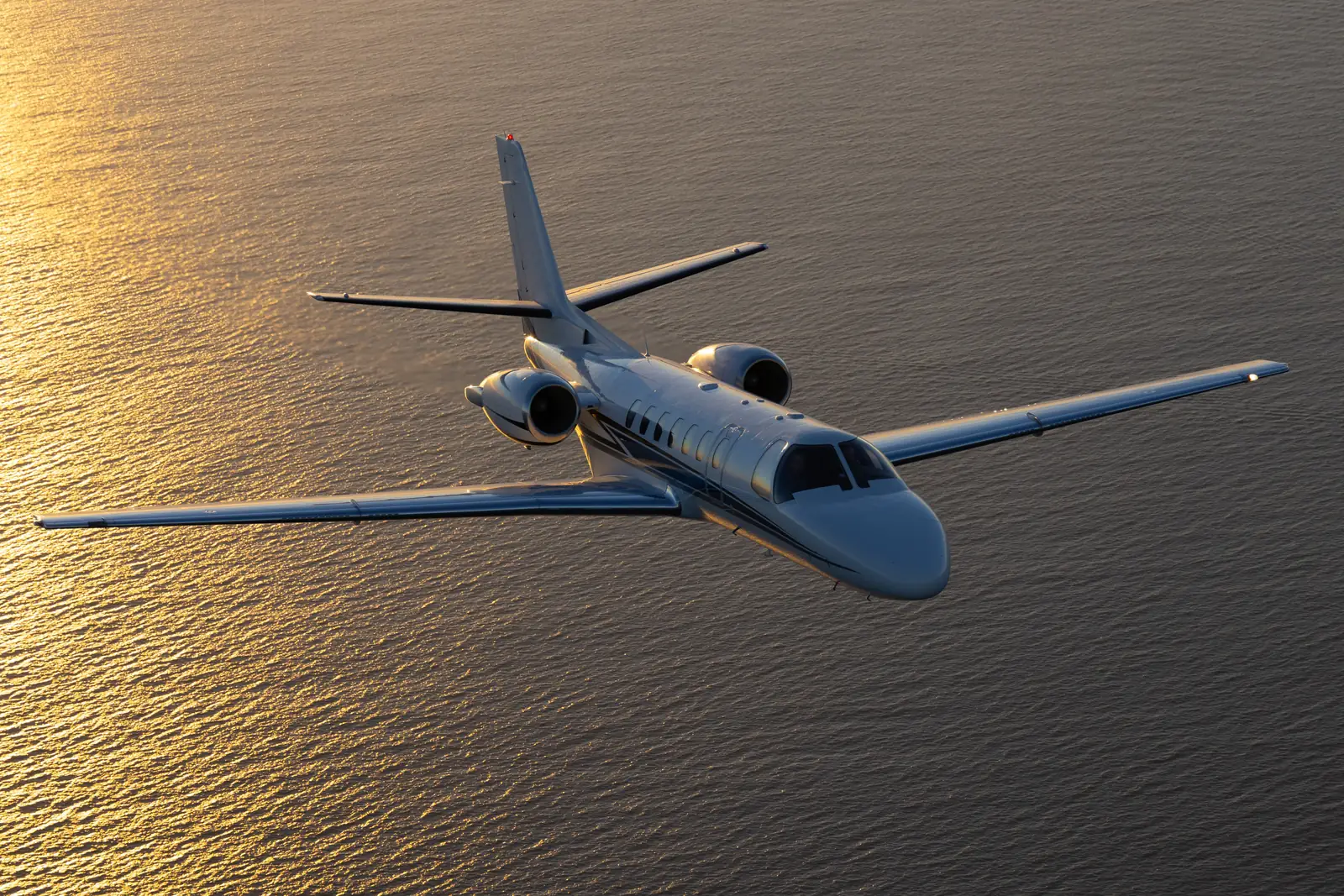
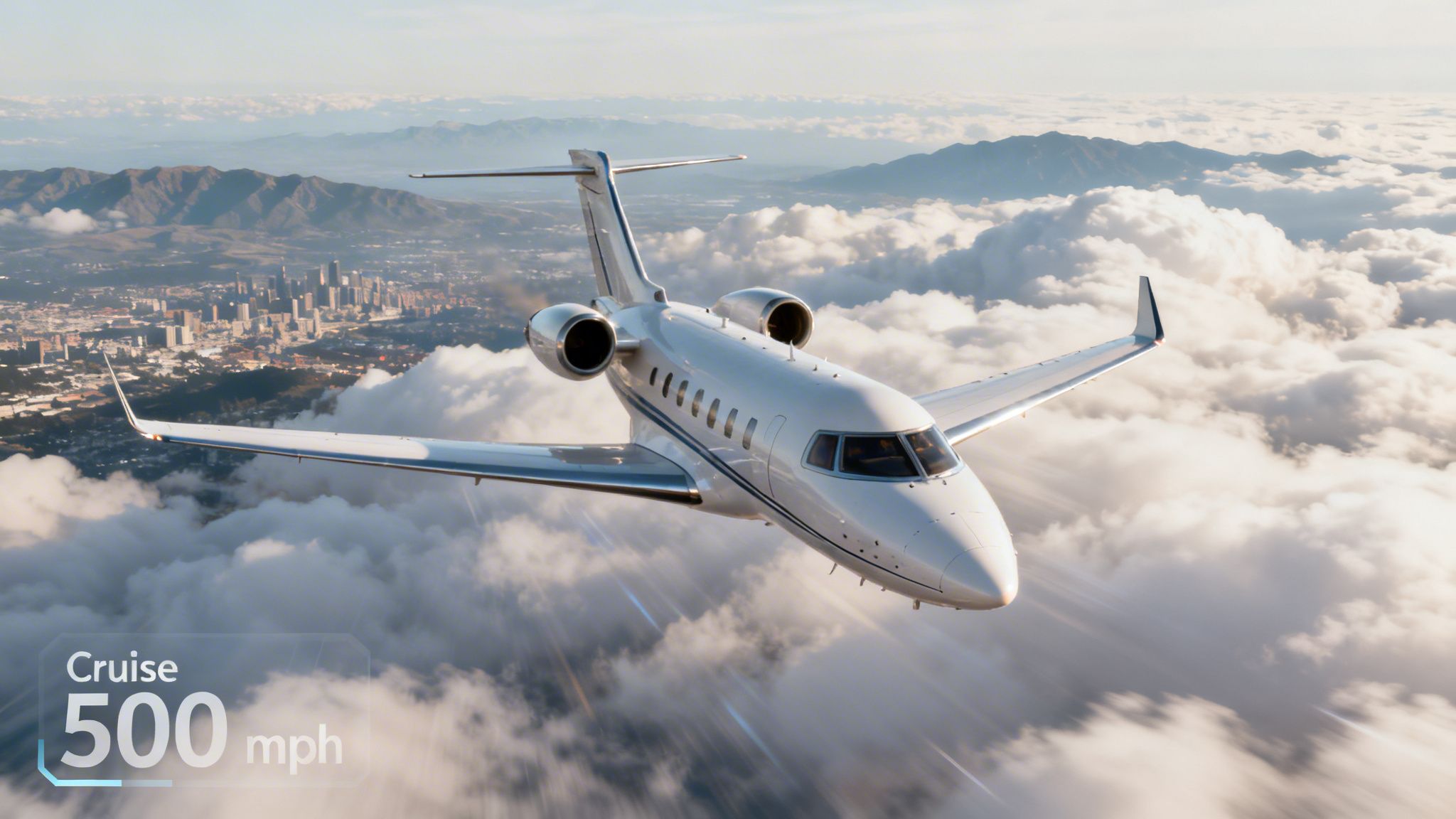
Most private jets cruise somewhere between 460 and 575 mph (that's 400-500 knots in pilot-speak), which puts them right in the same league as commercial airliners—and sometimes even a little faster. But the real game-changer isn't raw speed. It's the incredible amount of time you save on the ground that makes private travel so powerful.
The Real Answer to How Fast Private Jets Fly
When people ask, "how fast do private jets fly," they're usually getting at a much bigger question: "How much time will this really save me?" While the speed in the air is impressive, the true value of flying private is measured from your front door to your final destination. It's about turning a full, stressful day of travel into just a few productive hours.
This is the ultimate luxury for executives and busy individuals who understand that time is their most valuable asset. The ability to completely sidestep crowded terminals, long security lines, and rigid airline schedules is what truly sets private aviation apart from everything else.
Speed Beyond the Numbers
Think about it. A commercial airline might advertise a five-hour flight, but that doesn't account for the two hours you'll spend at the airport on both ends of the trip. With a private jet, you can often arrive at a private terminal just 15 minutes before departure, park right next to your plane, and be in the air moments later. It's a completely different way to travel.
The real advantage of private aviation isn't just flying faster; it's the power to reclaim your entire travel day, turning hours of waiting into productive work, family time, or simply a moment to relax.
The Fastest Jets in the Sky
Of course, for those who want to get there as quickly as humanly possible, some jets are built for pure speed. High-performance aircraft can shave even more time off your journey, especially on longer flights where every minute adds up.
For example, the legendary Cessna Citation X is one of the fastest production jets ever built, cruising at a blistering 528 knots (608 mph). That kind of speed can turn a New York to Los Angeles flight into an under-four-hour trip, easily beating commercial flight times by over an hour. Other speed demons, like the Bombardier Global 7500 at 516 knots (594 mph), deliver similar performance for intercontinental routes.
At Haute Jets, our network of over 3,500 aircraft includes some of the fastest models available. You can learn more about these incredible machines in our guide to the fastest business jets like the Cessna Citation X.
Cruise Speed vs. Maximum Speed: What's the Difference?
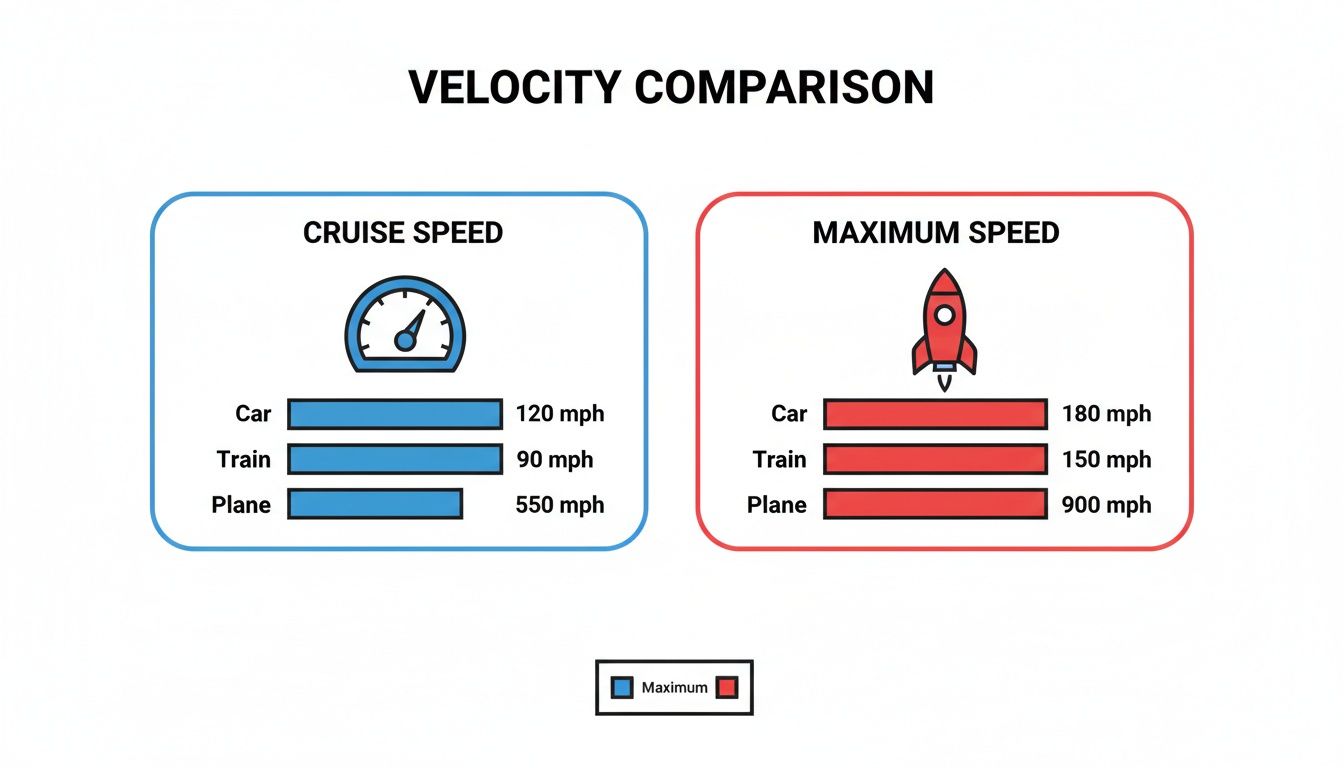
When you look up how fast a private jet can fly, you'll almost always find two different numbers: cruise speed and maximum speed. It seems obvious to want to go as fast as possible, right? But in the real world, pilots almost never push the jet to its absolute limit.
Understanding the "why" behind this is crucial, as it gets to the heart of how these incredible machines balance physics, safety, and economics.
Think of it like driving a high-performance sports car. Sure, you could redline the engine and hit its top speed on a perfectly empty track. But for a long road trip, you'd never do that. You'd settle into a comfortable highway speed that gives you the best mix of performance, fuel economy, and engine health.
That's the perfect way to think about a jet's two most important speed ratings.
Maximum Speed: The "Never Exceed" Limit
Maximum speed, which you'll see listed in technical specs as Vmo (Velocity Maximum Operating) or Mmo (Mach Maximum Operating), is the aircraft's absolute structural speed limit. This is the "red line." Pushing a jet beyond this speed puts dangerous stress on the airframe and is strictly forbidden.
This number is determined through thousands of hours of intense engineering and flight testing. While it's an impressive figure on paper, it's not a practical speed for everyday flying. Hitting that limit burns fuel at an astonishing rate, puts incredible strain on the engines, and drastically shortens the aircraft's range. It's a safety boundary, not an operational target.
Cruise Speed: The Smart and Efficient Sweet Spot
This is where the magic happens. Cruise speed is the optimal velocity for a given flight, delivering the best possible balance of speed, fuel efficiency, and engine performance. For every single trip, pilots and their flight planning software calculate the ideal cruise speed, taking into account the aircraft's weight, altitude, and even the winds aloft.
Cruise speed is the real workhorse of private aviation. It's the number that matters, representing the most efficient way to fly. It ensures you can cover long distances without compromising safety, engine health, or your budget.
Sticking to the optimal cruise speed provides some very tangible benefits:
- Better Fuel Efficiency: This is a big one. Flying at cruise speed significantly cuts down on fuel burn, which is the largest single operational cost of any private flight.
- Longer Range: By sipping fuel instead of guzzling it, the aircraft can fly much farther.
- Engine Health: Just like redlining a car engine, running jet engines at full throttle leads to premature wear and tear.
- A Smoother Ride: The cruise portion of a flight is generally the smoothest and quietest, creating a much more comfortable environment in the cabin.
A Look at Speed Across Different Private Jet Categories
When people ask, "how fast do private jets fly?" the real answer is, it completely depends on the jet. The world of private aviation is incredibly diverse, with different aircraft built for very specific missions.
Light Jets: Agile and Efficient
Light jets are the sports cars of the private aviation world. They're built for shorter, regional hops—perfect for a quick 2-3 hour flight.
- Typical Cruise Speed: 400–450 knots (460–518 mph)
- Best For: Short-haul routes and small groups of up to 8 passengers.
- Example: The Embraer Phenom 300 cruises comfortably around 453 knots (521 mph).
Mid-Size Jets: The Versatile Workhorses
Mid-size jets hit the sweet spot, offering a fantastic blend of range, speed, and cabin comfort. They are the go-to choice for longer domestic trips. For more detail, check out our guide to comparing light, midsize, and heavy private jets.
- Typical Cruise Speed: 450–520 knots (518–598 mph)
- Best For: Coast-to-coast US flights and larger groups.
- Example: The Gulfstream G280 cruises at 482 knots (554 mph).
Heavy and Ultra-Long-Range Jets: The Global Leaders
At the very top sit the heavy and ultra-long-range jets. These flagships are designed to connect continents with non-stop flights of 12-14 hours or more.
- Typical Cruise Speed: 500–600 knots (575–690 mph)
- Best For: Intercontinental and international travel.
- Example: The Gulfstream G650ER cruises at 516 knots (594 mph) with a range of 7,500 nautical miles.
Aircraft Speed by Category: Real World Examples
| Jet Category | Example Aircraft | Cruise Speed (Knots/MPH) | Est. Flight Time (NYC to MIA) |
|---|---|---|---|
| Light Jet | Embraer Phenom 300 | 453 knots / 521 mph | ~ 2 hours, 25 minutes |
| Mid-Size Jet | Gulfstream G280 | 482 knots / 554 mph | ~ 2 hours, 15 minutes |
| Heavy Jet | Gulfstream G650ER | 516 knots / 594 mph | ~ 2 hours, 5 minutes |
What Really Affects a Private Jet's Speed?
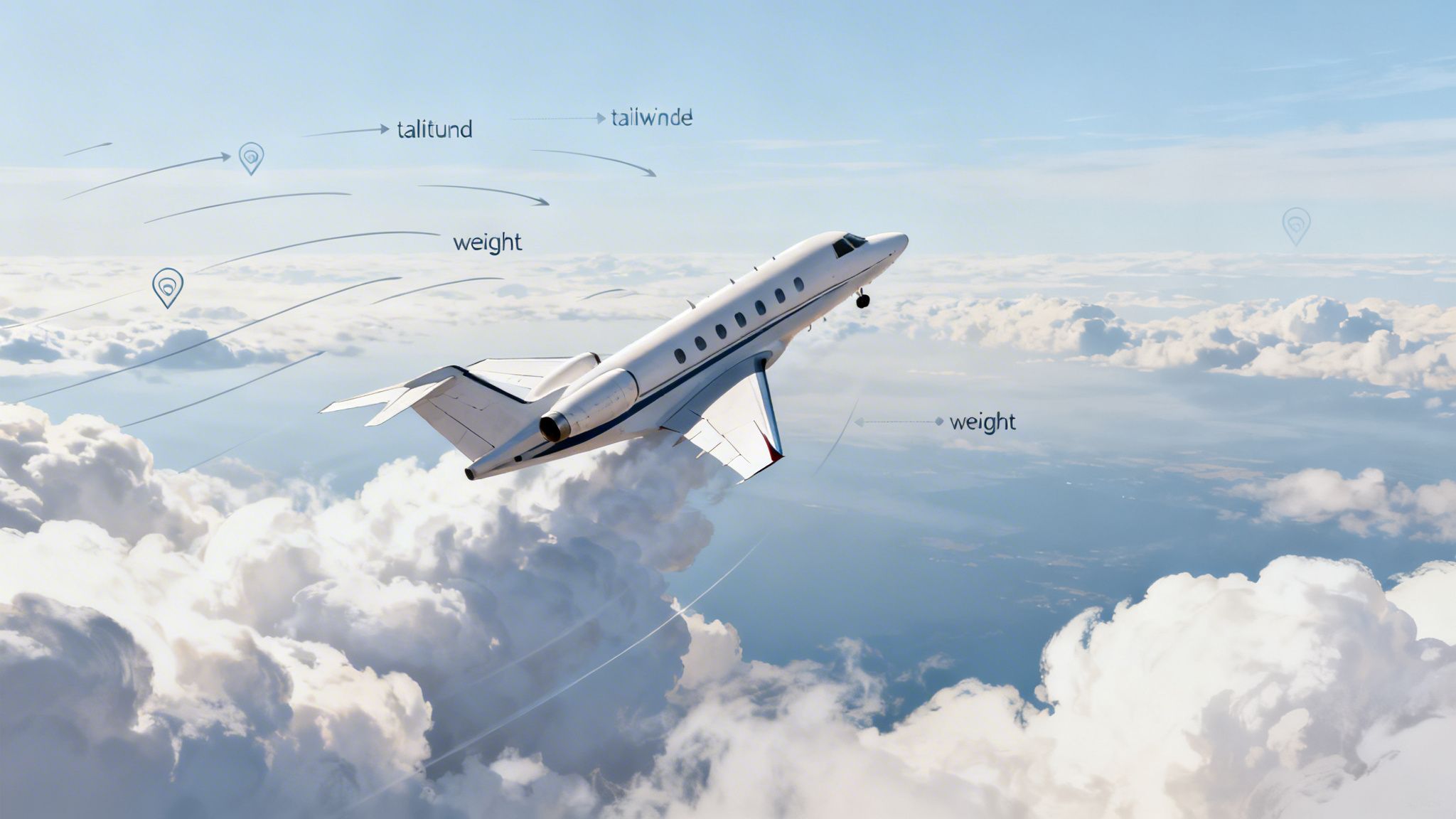
A private jet's spec sheet might boast an impressive cruise speed, but that number is just the beginning of the story. The actual speed a jet flies over the ground—its ground speed—is never a fixed number.
Altitude: The Superhighway in the Sky
As a jet climbs higher, the air becomes thinner. This thinner air creates less drag. With less resistance, the engines can propel the jet forward more efficiently, achieving higher speeds while sipping less fuel. It's why you'll often find private jets cruising between 35,000 and 51,000 feet.
Flying at high altitudes is like finding an empty, freshly paved superhighway in the sky. It provides a smoother, faster, and more fuel-efficient path.
Winds: The Unseen Push and Pull
- Tailwinds: A strong wind blowing in the same direction as the jet can easily boost ground speed by 100 mph or more.
- Headwinds: Flying directly into the wind forces the engines to work harder, leading to a longer flight and higher fuel burn.
Aircraft Weight and Aerodynamic Design
A lighter aircraft simply needs less power to get moving and stay in the air. Beyond just weight, the plane's aerodynamic design is fundamental. Engineers pour thousands of hours into sculpting the wings, fuselage, and even the engine casings to slice through the air with minimal resistance.
Private Jets vs. Commercial Airliners: The Real Speed Advantage

If you just look at the raw speed once they're in the air, the race between a private jet and a commercial airliner is surprisingly close. But the real competition isn't won at 40,000 feet. It's won on the ground.
The Ground Game: Where Time Is Won or Lost
With a private jet, you can often arrive at a private terminal just 15-20 minutes before departure, park right next to your plane, and be in the air moments later. No lines, no crowds, no waiting.
The core advantage of flying private isn't a faster plane; it's a faster process. You're not buying a slightly quicker flight—you're buying back 3-4 hours of your day.
Real-World Example: Chicago to Aspen
- Commercial Journey: 2 hours at ORD + 2.5-hour flight + 3.5-hour drive = 8 hours total.
- Private Journey: 20 mins at the FBO + 2-hour direct flight = 2 hours 20 minutes total.
While a commercial giant like a Boeing 747 cruises at a respectable 490 knots, a private star like the Cessna Citation X+ can push past 530 knots. But the game-changer is airport access. Private jets can land at over 14,000 airports worldwide, compared to the roughly 500 hubs that commercial airlines rely on.
Choosing the Right Jet for Your Mission
The real goal is to find the perfect aircraft for your specific mission—one that hits the sweet spot between speed, range, comfort, and cost.
Balancing Speed with Other Priorities
The most effective private jet charter is one where speed is a key ingredient, not the only one. True travel efficiency comes from balancing velocity with practical needs like passenger count, baggage space, and overall budget.
Making an Informed Decision
Here are the key factors you should always weigh:
- Number of Passengers: Is the cabin large enough for your group to travel comfortably?
- Trip Distance: Does the jet have the range to fly nonstop?
- Baggage Requirements: Do you have enough space for luggage, golf clubs, or presentation equipment?
- Budget: The fastest jets usually carry the highest hourly rates.
At Haute Jets, our job is to help you sort through these variables and pinpoint the ideal aircraft. We source from a network of over 3,500 aircraft to present you with options that tick all the right boxes.