
The most popular advice about jet charter brokers is also the most expensive: pick any reputable broker, compare a few aircraft, and book the one that fits your schedule.
That advice is incomplete. Not all jet charter brokers work the same way, and the difference shows up in your invoice long before it shows up in your cabin experience. One broker may source an aircraft that's already near your departure point. Another may quote a jet that looks attractive on paper, then bury the cost of moving that aircraft into your trip. You still get a private flight. You just pay more than you should.
For a new private flyer, that's the trap. The market sells convenience, but the key skill is understanding the broker's economic model. A smooth booking experience means very little if the aircraft was sourced inefficiently, the operator relationship is opaque, or the final quote includes fees you never saw coming.
Haute Jets Journal exists to make that process less murky. If you're going to use a broker, use one with your eyes open.
Your Guide to Choosing a Jet Charter Broker
First-time private flyers usually focus on the wrong thing. The real decision is not the cabin, the brand name, or the catering menu. It is the broker's economic model.
A broker can make one trip look polished and still price it badly. The expensive mistake usually hides in aircraft positioning. If the jet has to fly in empty to pick you up, you are paying for that leg whether the quote spells it out or buries it in the total. That is why two quotes for the same route can look close on the surface and land far apart on the invoice.
Start with geography and incentives. Where is the aircraft based? Who owns or controls it? Is the quote built around a local aircraft, or one that needs repositioning? Brokers with wholesale, direct-to-owner access usually have a better shot at finding lift that is already near your departure point. Brokers working through layers of middlemen often pass along unnecessary positioning costs and call it market pricing.
Practical rule: If a broker cannot explain, in plain English, where the aircraft starts the day and who is operating it, walk away.
You should also judge transparency before style. Serious clients ask for the operator name, the aircraft's base, and a clear explanation of every cost tied to getting that jet to the runway. Those are not aviation trivia questions. They are the difference between paying for your trip and paying for someone else's empty leg.
What to judge first
- Quote structure. Look for a broker who can explain each charge, especially repositioning and overnight crew costs.
- Operator disclosure. Get the direct carrier name early, not after you wire funds.
- Access to inventory. Wholesale, direct-to-owner sourcing usually produces cleaner pricing than recycled retail inventory.
- Alignment of incentives. Some brokers earn trust by controlling waste. Others earn more when your quote gets fatter.
Choose your broker the way you would choose a financial advisor. You want clear incentives, direct answers, and no mystery inside the bill.
How Jet Charter Brokers Really Work
A charter broker sells access, not airplanes.
That distinction matters because the broker usually does not own or operate the aircraft. The job is to source lift from third-party operators, compare options, negotiate terms, and manage the trip from quote to wheels up. According to NovaJet's overview of private jet brokerage, jet charter brokers typically operate on a commission-based model, earning between 5% and 10% of the total charter cost.
For a first-time flyer, that service can be useful. One point of contact is easier than calling multiple operators, checking availability, sorting crew duty limits, and coordinating catering, ground transport, and airport handling.
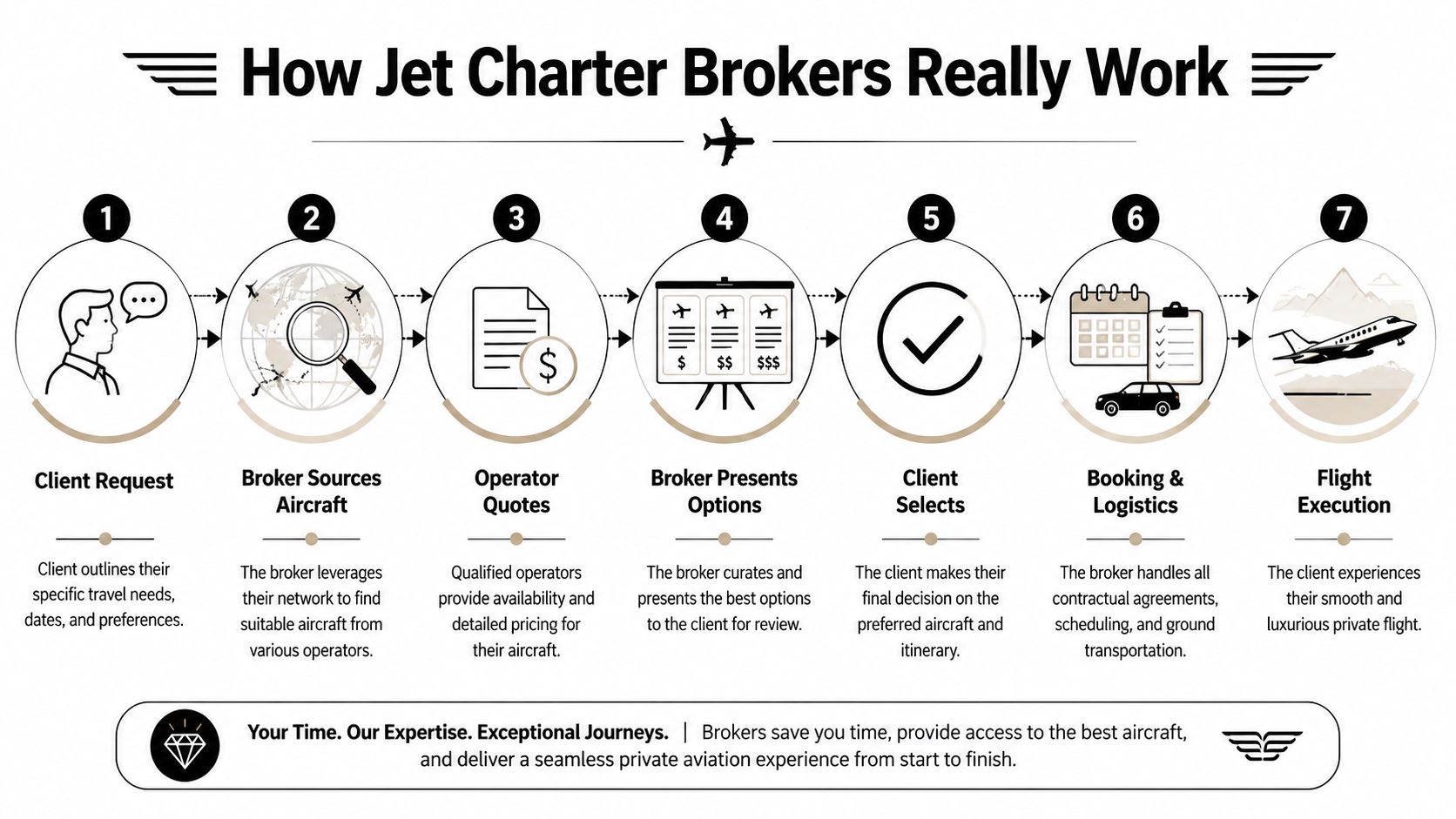
The standard workflow
The usual process looks like this:
- You submit a trip request with route, dates, passenger count, and cabin preferences.
- The broker shops the market through operator contacts and charter networks.
- Operators respond with availability based on aircraft location, crew legality, maintenance status, and schedule.
- The broker sends you options with pricing, aircraft details, and trip terms.
- You approve one aircraft and sign the charter documents.
- The broker coordinates logistics with the operator and any third-party services.
- The operator flies the trip because the broker is the seller and coordinator, not the carrier.
That is the retail model. It works. It also creates room for markup, weak disclosure, and lazy sourcing.
Where the money gets made
A percentage-based commission sounds simple, but it shapes behavior. If a broker earns more when the trip total rises, you need to know what is driving that total. Sometimes the answer is legitimate, such as peak demand or a larger cabin. Sometimes the answer is an aircraft that has to reposition from the wrong city, adding cost before your trip even starts.
This is the part new clients miss. The broker may present three jets that all look comparable, while one of them carries a much fatter margin because the routing includes expensive empty segments. If you do not ask where the aircraft is based and whether the quote came direct from the operator or through another layer, you are buying blind.
A better model is wholesale sourcing with direct-to-owner or direct-to-operator access. That approach does not remove broker compensation, but it cuts out extra retail layers and usually gives you a cleaner shot at an aircraft already positioned near your departure point. If you want a clearer view of how charter quotes are built, review this private jet charter pricing cost breakdown.
A good broker earns the fee by protecting you from waste. A weak broker earns more when waste stays hidden.
Why broker quality varies so much
Experience helps, but incentives matter more.
The best brokers know which operators answer quickly, which ones price fairly, and which aircraft are viable for your mission. They also know when to reject a flashy quote because the airplane is in the wrong place, the crew day is tight, or the operator is treating your trip like a filler leg.
Poor brokers do the opposite. They shop broad retail inventory, pass along inflated quotes, and rely on the fact that new private flyers rarely know how to spot deadhead exposure, layered markups, or weak operator disclosure.
Your takeaway is simple. Do not judge a broker by how many aircraft photos hit your inbox. Judge them by whether they can explain the operator, the routing, the aircraft's starting position, and why that specific option makes financial sense.
The Hidden Costs That Inflate Your Charter Price
Cheap-looking quotes often hide expensive routing.
The biggest culprit is repositioning. A broker finds an aircraft that looks attractive on paper, but the jet is sitting somewhere else. That airplane has to fly empty to your departure airport, and you end up paying for those hours whether they appear as a separate line item or get folded into the base quote.

As Stratos Jets explains in its overview of reputable broker pricing, repositioning can add significant cost to a charter. That extra spend is often the margin trap in brokerage. The quote looks competitive. The routing is what gets you.
What you are actually paying for
A Los Angeles departure is a common example. You request a midsize jet, and the broker sends over a polished quote fast. The problem is the aircraft may be based in Teterboro, Scottsdale, or another market that has nothing to do with your trip.
Now you are covering more than your occupied flight. You are covering the broker's decision to source an airplane from the wrong place.
That is the part new private flyers miss. Brokerage is not just about finding an available jet. It is about finding the right jet in the right geography at the right time. If the aircraft starts out of position, your price rises before your itinerary even starts.
For a clearer view of how these line items build into the final quote, review this private jet charter pricing cost breakdown.
The charges clients miss
Repositioning gets the most attention because it can swing a quote fast, but it is rarely the only leak.
- Aircraft positioning charges. Empty legs flown before pickup, after drop-off, or on both ends of the trip.
- Catering markups. Basic requests can turn into inflated pass-through charges once multiple vendors touch the order.
- Ground transport add-ons. Useful service, but often priced with margin unless you ask who is arranging it and what it costs.
- Operational extras. Permits, handling, overnight crew costs, and irregular operations can all increase the invoice.
A disciplined broker explains which fees come from your mission and which come from their sourcing model. That distinction matters. You cannot avoid every trip-specific charge. You can avoid paying retail for bad aircraft positioning.
Here's a quick explainer worth watching before you compare quotes:
How to cut the waste
Use a broker or platform that can source through a wholesale, direct-to-owner or direct-to-operator model. That is the cleanest way to reduce deadhead exposure. You get closer to the actual aircraft supply, trim extra retail layers, and improve your odds of booking an airplane already near your departure point.
Ask one direct question before you approve any quote: Where is the aircraft starting?
If the answer is vague, the price is probably padded.
If a broker sells you a “great rate” on the wrong aircraft in the wrong city, you are not getting a deal. You are funding empty repositioning time.
The Gold Standard of Safety Wyvern and ARGUS
New flyers often think legality equals quality. It doesn't. Meeting the minimum legal standard is the floor, not the benchmark.
If you're booking private aviation seriously, the standard should be simple: use jet charter brokers who source exclusively from operators with Wyvern Wingman or ARGUS Gold or Platinum ratings. That is the practical dividing line between “allowed to operate” and “independently verified to a higher standard.”
According to Haute Jets' safety overview, the operational safety benchmark for jet charter brokers requires sourcing from operators holding Wyvern Wingman or Argus Gold/Platinum ratings. These audits validate pilot experience, aircraft maintenance protocols, and safety management systems.
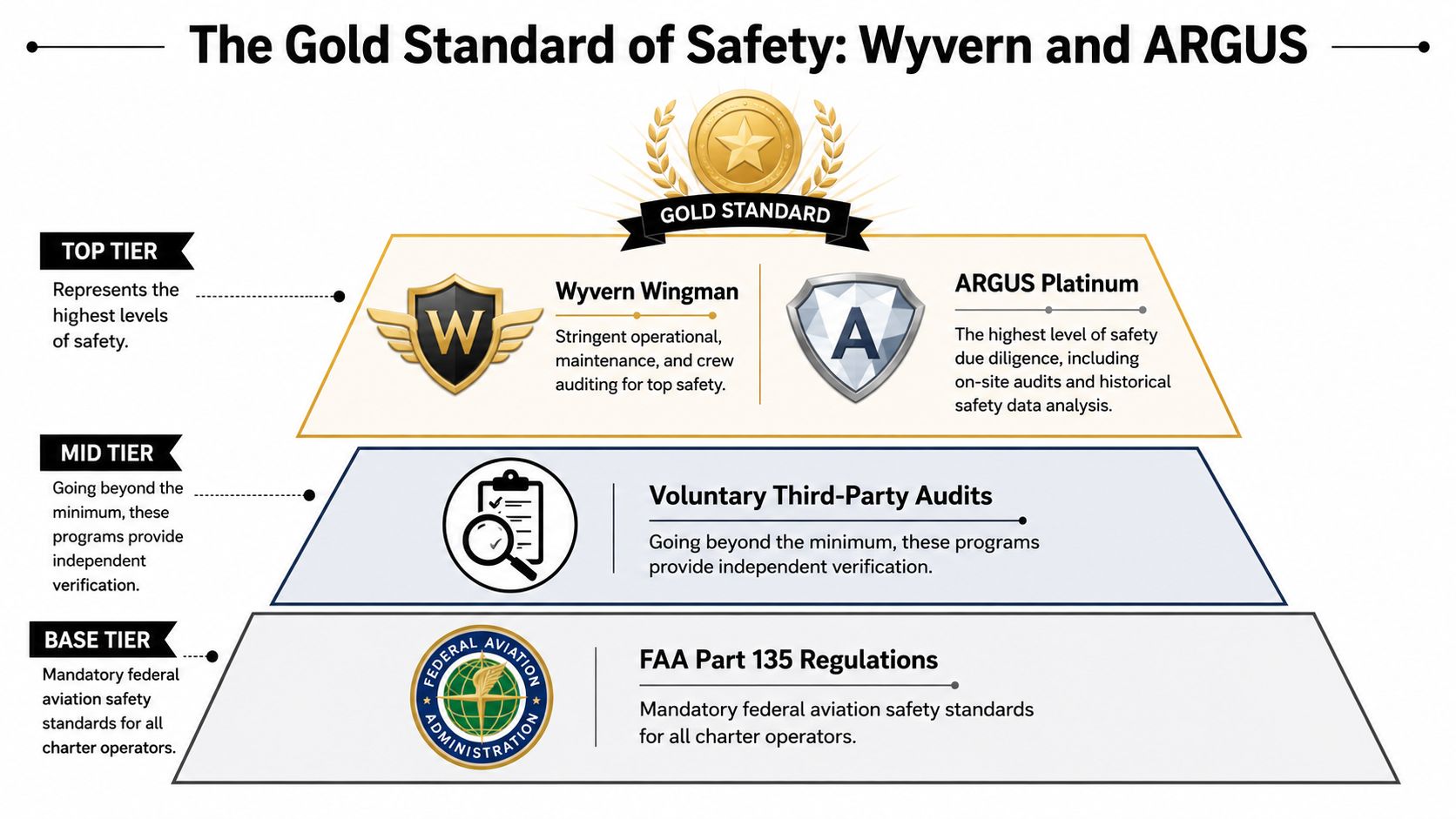
What those ratings tell you
A third-party safety audit isn't marketing fluff. It checks details clients rarely see on their own:
- Pilot qualifications and documented experience
- Maintenance discipline and adherence to aircraft requirements
- Safety Management System oversight, which tells you whether the operation is managed proactively or reactively
That doesn't mean every unrated operator is unsafe. It means you shouldn't make yourself the quality-control department.
What to ask the broker
Don't ask, “Is the operator safe?” That question invites a vague answer.
Ask these instead:
- Is the operator Wyvern Wingman or ARGUS Gold/Platinum?
- Will you provide the specific carrier name before contract?
- Can I review the operator details in writing?
If a broker dodges those questions, move on. Haute Jets Journal also has a useful deep dive into Wyvern and ARGUS safety ratings if you want the distinctions explained in more detail.
Safety doesn't start when the cabin door closes. It starts when the broker chooses which operators are even allowed into your quote.
Broker vs Jet Card vs Fractional A Strategic Comparison
Private aviation gives you three broad buying models. They're not interchangeable, and they don't suit the same kind of flyer.
A traditional broker gives you trip-by-trip access. A jet card gives you prepaid access under a membership structure. Fractional ownership gives you a share of an aircraft with long-term financial commitment. The right choice depends less on status and more on your flying pattern, tolerance for upfront commitment, and appetite for hidden structural cost.
The comparison that matters
| Model | Upfront Cost | Per-Hour Cost | Aircraft Choice | Ideal For |
|---|---|---|---|---|
| Broker | Usually none beyond the trip you book | Varies by trip and sourcing method | Broad, if the broker has real network depth | Clients who want flexibility and no long-term lock-in |
| Jet card | Large prepaid commitment | More predictable on paper, but often includes embedded costs | Usually limited by program rules | Frequent flyers who value convenience over open-market flexibility |
| Fractional | Very high capital commitment | Structured around ownership and program fees | Tied to program fleet access | Clients with heavy recurring use and long-term commitment |
| Direct-to-owner on-demand model | Usually pay per trip | Depends on local aircraft availability and operator access | Strong when the network includes actual owner-operators | Flyers who want flexibility with closer control over aircraft sourcing |
Where many clients get misled
The biggest misunderstanding sits between brokered charter and fractional-style inventory. Many clients think they're booking direct access to a local owner aircraft when they are being routed through a fleet program with its own economics layered in.
A 2026 IBAC study referenced by Los Angeles Private Jets found that 74% of charter clients believe they are booking “direct to owner” but are routed through a fractional program that charges 25 to 35% more for repositioning. That's a structural issue, not a branding issue.
So when a broker says they have “guaranteed access,” ask what that means. Guaranteed access can also mean guaranteed markup.
How to decide based on your flying style
If you fly occasionally and want route-by-route discretion, on-demand charter is usually the rational choice. You keep flexibility. You don't prepay a large block of hours. You can choose aircraft based on mission, not membership inventory.
If you fly often and prioritize convenience over open pricing, a jet card may fit. Just understand that simplicity often comes with embedded costs and tighter rules around aircraft substitution, service area, and notice requirements. The jet cards versus charters comparison on Haute Jets Journal is a helpful starting point for that tradeoff.
Fractional ownership belongs to a narrower client profile. It makes sense when flying volume is high enough to justify ownership-style commitment and the buyer values consistency over market flexibility. It does not make sense for someone who prefers flying private without overthinking airline schedules.
My advice
For most new private flyers, skip the prestige instinct. Don't start with the product that asks for the biggest commitment. Start with the model that gives you pricing clarity, real aircraft choice, and the ability to walk away after any single trip.
That usually means an on-demand structure with transparent sourcing.
How to Choose Your Jet Charter Broker A Vetting Checklist
A broker earns trust by making the economics visible. If they cannot explain who is operating the flight, how the aircraft was sourced, and whether repositioning is driving the price up, keep looking.
Ask for the operator disclosure early, as noted earlier in the article. Do it before you approve the quote, not after you have already decided to take the trip. A disciplined buyer gets the direct air carrier name, the broker's role in the transaction, and the insurance disclosure before signing anything.
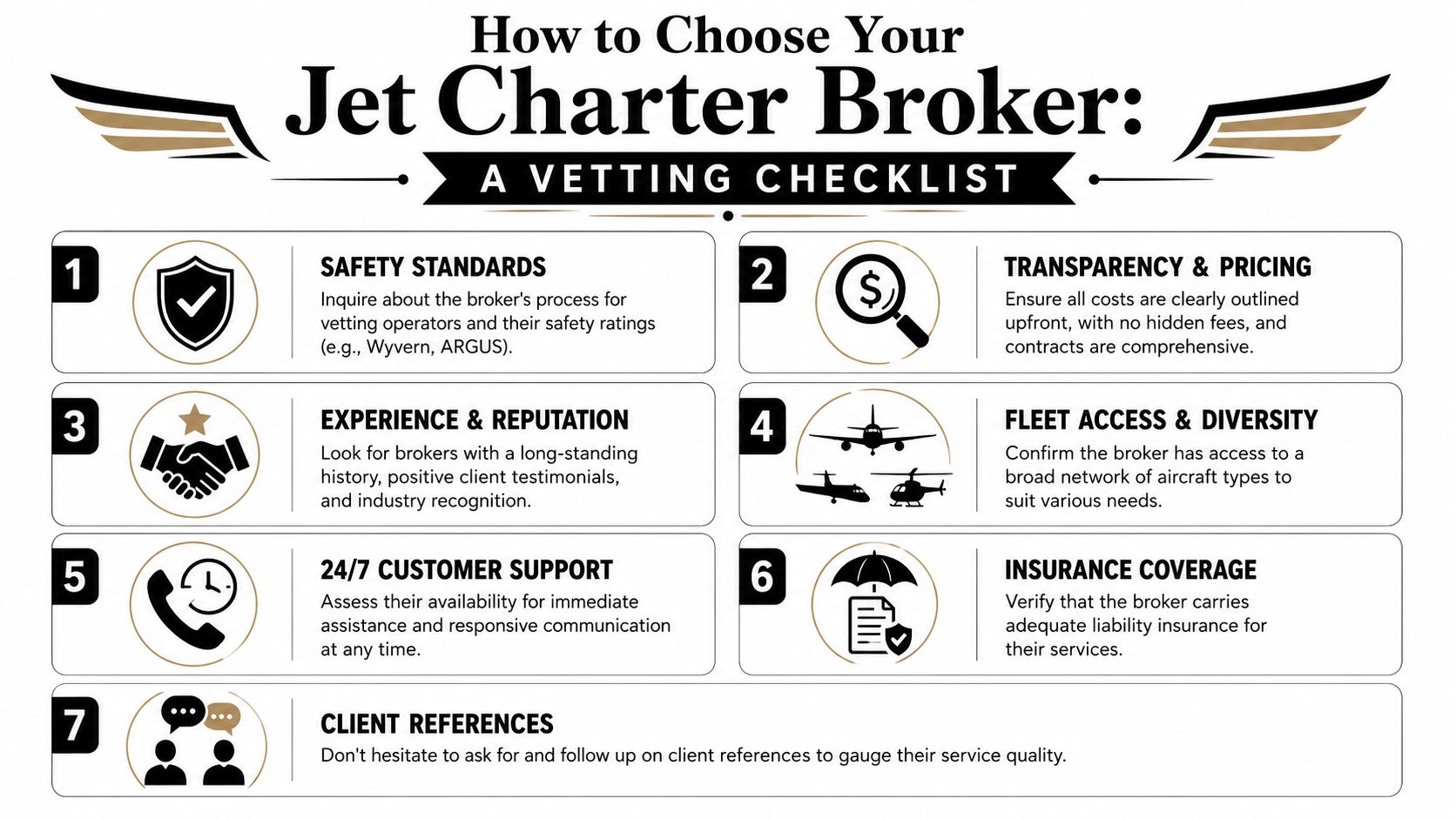
The questions worth asking
- Who is the direct carrier? Get the exact operator name and any DBA used in the market.
- What is your role in this transaction? A good broker answers plainly. Agent for the charterer, disclosed principal, or something else.
- Where is the aircraft based right now? This question exposes repositioning risk fast. If the jet has to come from another city, your quote can swell before you ever leave the ground.
- Are you sourcing this from the operator or through another middleman? More layers usually mean more markup and less clarity.
- What safety screening do you apply before you quote? You want a defined operator review process, not a vague promise.
- Will I receive aircraft and crew details before departure? Ask for the tail number, operator details, and trip-specific operating information.
Signs you're dealing with a serious advisor
A serious broker does not hide behind speed, polish, or vague talk about access. They show their work.
Look for these habits:
- Clear paperwork. Contracts, operator identity, and insurance details are easy to review.
- Aircraft-specific quoting. They discuss the actual jet and where it is positioned, not a generic cabin category.
- Cost discipline. They can explain whether the quote includes ferry time, overnight crew charges, and airport-related extras.
- Direct sourcing logic. They prefer owner-operator and local aircraft options when possible, because that usually cuts waste.
- Trip coordination. They can arrange catering, handling, and ground transport without turning simple logistics into expensive add-ons.
- Destination awareness. If your trip includes the UAE, for example, ground planning matters after landing too. This chauffeur guide for UAE travelers is a useful companion for that part of the trip.
Ask for a quote that reads like an audit trail. If the numbers are vague, the markup usually is not.
One practical screen for modern buyers
One option in the market is Haute Jets, which states that it sources from owner-operators across a broad network, provides aircraft-specific pre-flight details, and operates without jet card or membership requirements. That matters because the wholesale, direct-to-owner approach can reduce unnecessary repositioning and strip out extra brokerage layers that inflate charter prices.
Use that standard with any broker you interview. Ask how often they source local aircraft, how they control ferry costs, and whether they can show you why one aircraft was chosen over another.
If a broker cannot answer those questions before payment, they are not protecting your safety, and they are not protecting your money.
Beyond the Broker Find Your Aviation Partner
A smart private flyer stops thinking in terms of booking a jet and starts thinking in terms of choosing a system.
That system includes the broker's incentives, operator standards, sourcing depth, pricing transparency, and willingness to disclose who is flying the trip. Most disappointment in private aviation doesn't come from the cabin. It comes from the business model behind the cabin.
The old habit is to judge the experience by speed of response and polish of presentation. That's shallow. The better test is whether the broker protects your economics and your visibility into the trip. You want a partner who can explain why this aircraft, why this operator, and why this price.
What the right partnership looks like
A real aviation partner does four things consistently:
- Sources intelligently, with attention to where the aircraft is based
- Filters operators aggressively, using recognized third-party safety standards
- Discloses the carrier clearly, without hiding behind generic branding
- Keeps the pricing legible, so you know what you're paying for and why
That's how you avoid becoming the client who pays premium rates for invisible waste.
The bottom line
Jet charter brokers can save you time and expand your options. They can also increase your cost if you don't understand how they work.
Choose the broker who treats the quote like an audit trail, not a sales brochure. Choose the one who will tell you when an aircraft is badly positioned, when a fleet program is masquerading as open access, and when a lower headline number isn't the better deal.
That's when a broker stops being a middleman and starts becoming useful.
If you want a cleaner way to book private flights, Haute Jets offers on-demand charter access through a direct-to-owner sourcing model focused on transparent pricing, aircraft-specific choice, and Wyvern or ARGUS-rated operators.