

You request a jet from Teterboro to South Florida. Two quotes arrive within an hour. Both promise a high-end experience. One is thousands more, neither makes the safety process fully clear, and the aircraft details are still vague.
That is the point where private jet charter reviews should become useful. Many do not. They recycle brand positioning, compare cabin classes at a high level, and skip the details that determine whether a charter is well bought or sold well.
Experienced clients usually focus on three questions first. Who is the actual operator, and how is that operator verified? What aircraft are you booking, not just what category was quoted? Which charges can still change, especially repositioning, de-icing, crew expenses, and airport fees?
This guide evaluates each provider through that lens. It is not just a list of familiar names. It is a framework for choosing between on-demand charter, membership-driven programs, and broker models that may look similar upfront but behave very differently once routing, flexibility, and final invoicing come into play.
Private aviation is a large, fragmented market, and that fragmentation is exactly why reviews matter. A provider can sound polished on the phone and still leave key points unresolved until the agreement is in front of you.
The seven companies below each have a place in the market. Some are better suited to fast one-off trips. Others put more weight on digital booking tools, membership structures, or broad broker access. The right choice comes down to how clearly the company handles safety verification, pricing transparency, aircraft disclosure, and trip-specific sourcing before you commit funds.
1. Haute Jets
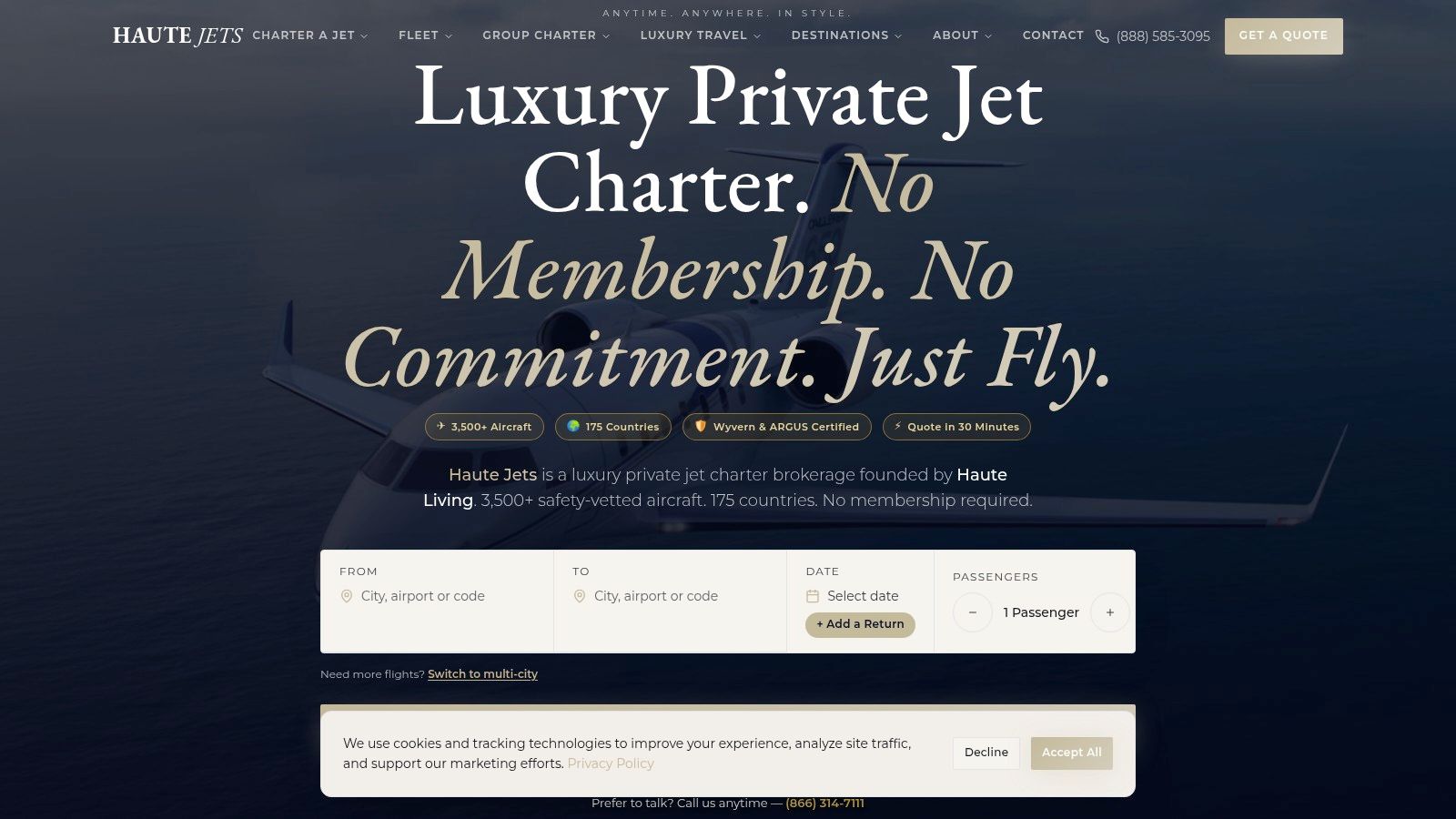
A client approves a quote for a same-day departure, then learns the aircraft is positioning in from another region and the invoice climbs fast. That is one of the most common charter mistakes, and it is exactly the kind of issue Haute Jets is built to address.
Haute Jets fits buyers who want on-demand flexibility without paying into a card or membership first. The model is straightforward. Define the mission, source an aircraft that is already a sensible fit for that route, verify the operating carrier, and disclose the aircraft details early enough for the client to make a real decision.
That structure matters because discerning charter clients are rarely buying "light jet" or "midsize jet" in the abstract. They want to know who is operating the flight, what aircraft is being offered, how old it is, how the cabin is configured, and whether the quote is likely to hold once repositioning, airport charges, crew costs, or weather-related variables are addressed. Haute Jets performs well on that front because it keeps the conversation tied to the trip, not to a prepaid program.
Where Haute Jets stands out
The strongest part of the Haute Jets proposition is pricing discipline at the sourcing stage. Instead of leading with membership incentives or broad fleet language, it focuses on finding lift near the point of departure, which can help reduce empty-leg positioning and avoid preventable cost creep. Clients comparing quotes should pay attention here. A lower initial number can lose its appeal quickly if the aircraft has to be moved a long distance before pickup.
For readers who want a clearer view of how charter quotes are built, this private jet charter pricing breakdown is useful background before requesting proposals.
The second advantage is aircraft-level transparency. Buyers can press for the exact tail, operator credentials, aircraft age, interior layout, and trip-specific availability before wiring funds. In practice, that is how experienced clients separate a real option from a placeholder quote.
Best fit and practical trade-offs
Haute Jets is a strong fit for travelers booking on demand, executive assistants handling complex itineraries, luxury travel advisors, and clients who want close support without committing capital upfront. It also suits buyers who move between trip profiles. One week may call for a short domestic hop. The next may require a larger cabin aircraft, international range, or a last-minute airport change. On-demand brokerage handles that variability better than many fixed-program structures.
The trade-off is clear. Clients who fly often enough to prioritize preset terms, fixed hourly frameworks, or guaranteed peak-day access may still prefer a jet card or fractional model. Those programs can make sense for very specific usage patterns, but they are not automatically the better buy. For many travelers, route-by-route sourcing produces better value, especially when the provider is disciplined about operator vetting and honest about where the aircraft is coming from.
That is the lens to use when reading private jet charter reviews. Haute Jets scores well because it aligns with how informed buyers book. Safety verification comes first. Aircraft disclosure is specific. Pricing is discussed as a trip variable, not a marketing promise.
2. Stratos Jet Charters
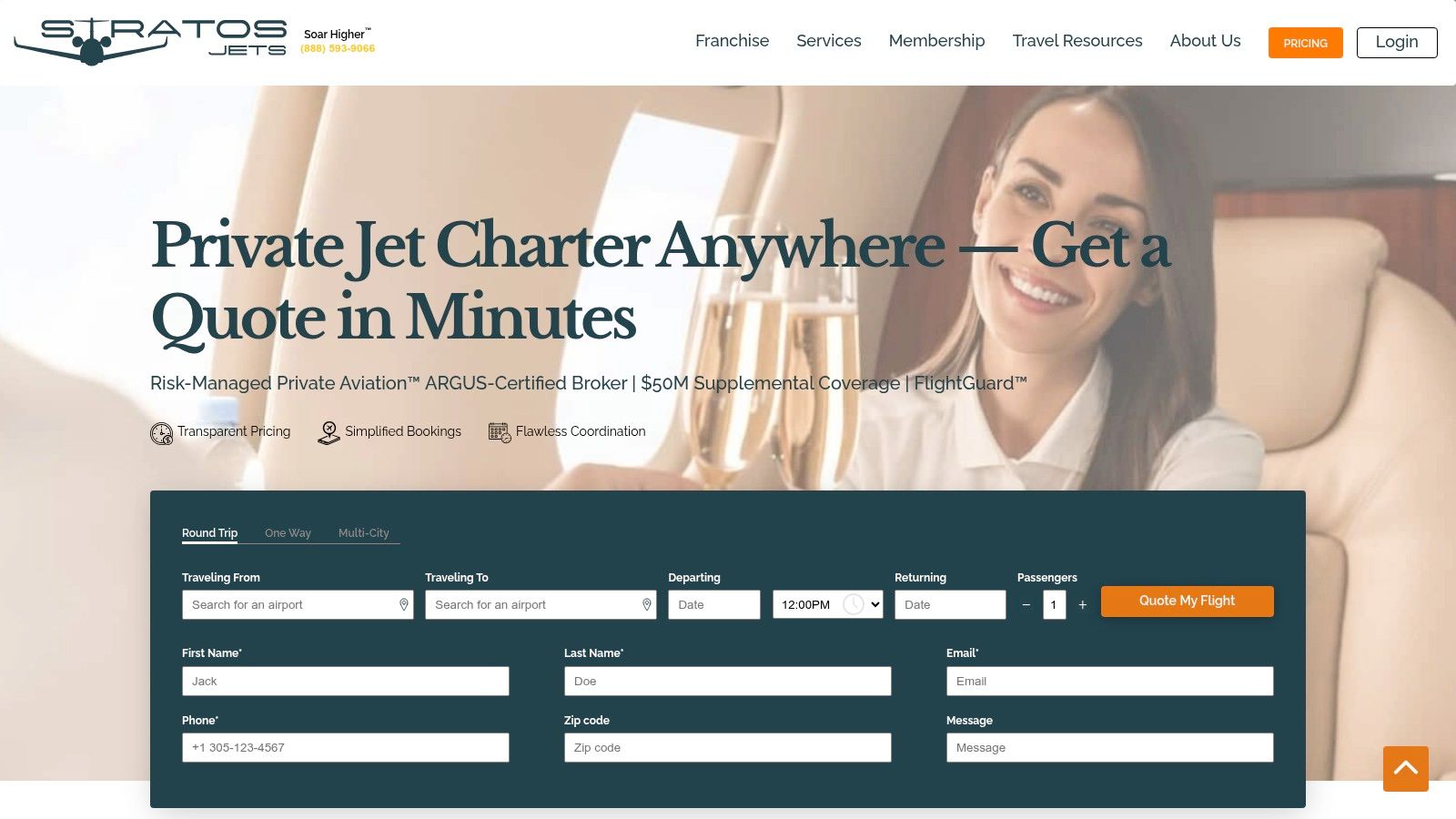
A client calls on a Thursday afternoon for a Monday departure. The route is straightforward, but the key question is not whether an aircraft can be found. It is whether the broker can verify the operator, explain the quote clearly, and stay responsive if the trip shifts over the weekend. Stratos Jet Charters fits that type of booking well.
Stratos operates in the classic on-demand brokerage model, and it presents that clearly. That matters. Discerning charter clients should know whether they are dealing with a direct operator, a membership platform, or a broker sourcing across the market, because each model carries different trade-offs on pricing, flexibility, and control.
Where Stratos stands out
Stratos appeals to clients who still want an advisor in the loop. Some travelers prefer a digital interface and self-service comparisons. Others want a knowledgeable broker to pressure-test aircraft options, confirm operator credentials, and manage changes in real time. Stratos is built for the second group.
The company also puts visible emphasis on safety process. It references ARGUS and Wyvern-based screening, which is the right starting point, though experienced buyers should always ask the next question: which operator is flying this specific trip, and what current certifications, audit history, and insurance details support the recommendation? Clients who want a clearer explanation of those standards should review this guide to Wyvern and ARGUS safety ratings before approving a charter.
Its review presentation is useful for a practical reason. Route-specific client feedback gives buyers more context than generic praise. A review has more value when it shows how a broker handled a late departure, an airport change, or an aircraft substitution.
Good private jet charter reviews show how the broker performed when the trip stopped being simple.
Pricing is where clients need discipline. Stratos, like other on-demand brokers, works in a market where aircraft positioning, peak-day demand, and short lead times can move the quote materially. The headline rate is only part of the cost. Repositioning can be the hidden line item that changes the economics of the trip, especially on thinner routes or one-way bookings. The earlier pricing primer linked in this article is worth revisiting before you compare offers.
Another point matters here. Brokerage access to the charter market is broad, but supply is fragmented and uneven. That means the quality of the result depends less on how many aircraft a broker says it can access and more on how carefully it filters operators, matches aircraft to mission, and explains why one option costs more than another.
Best fit
Stratos is a credible option for travelers who want hands-on broker support, visible client feedback, and a traditional charter process with human guidance. It is a weaker fit for buyers who want fixed program pricing, guaranteed peak access through a prepaid structure, or a highly app-driven booking experience.
For clients evaluating private jet charter reviews through a decision lens, Stratos scores best as a service-oriented on-demand broker. The value is not just finding an airplane. The value is getting clear operator vetting, responsive trip management, and honest explanation of what is driving the quote.
3. Victor
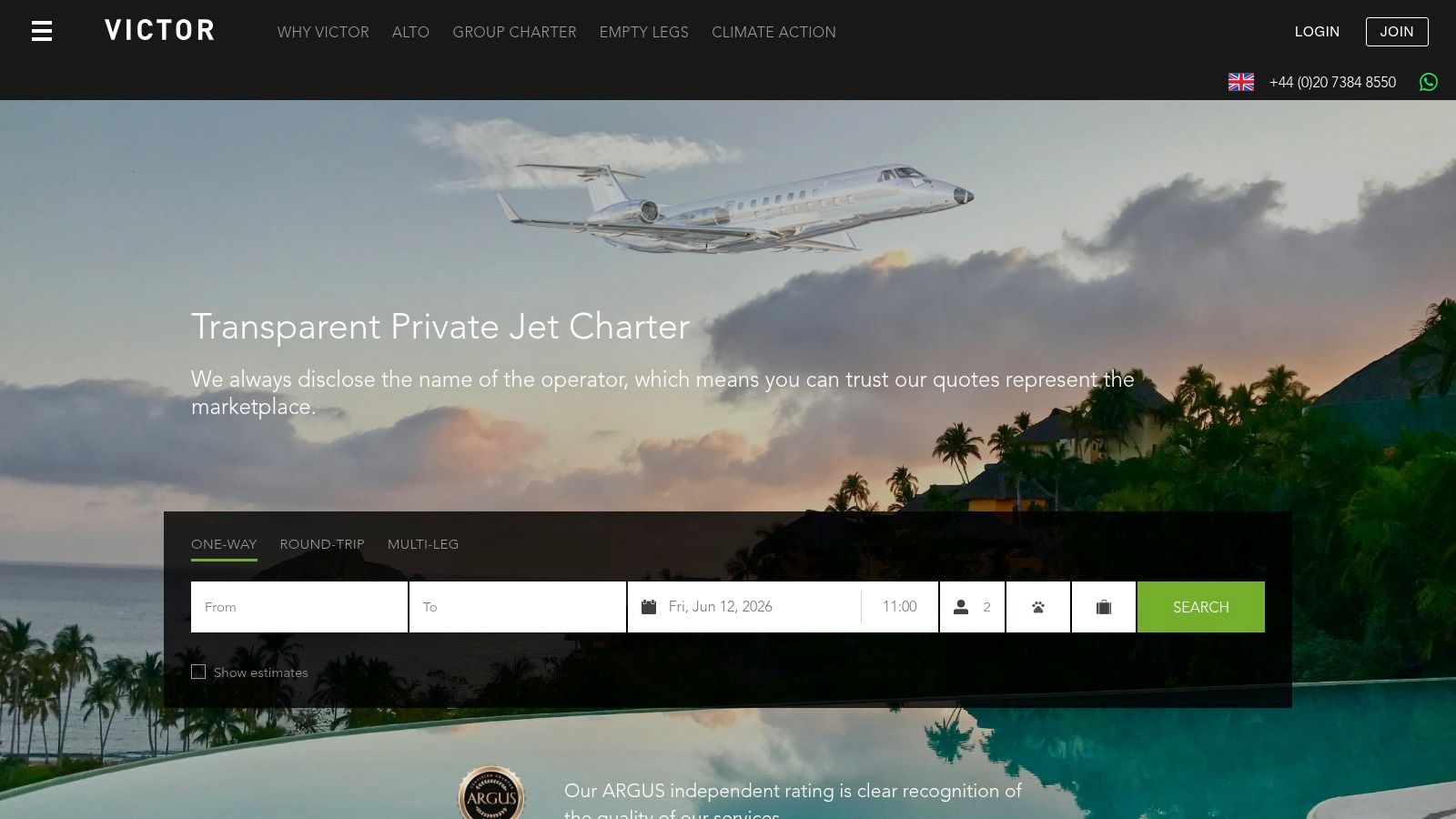
Victor has long appealed to buyers who want more visibility at the quoting stage. That's its edge. Instead of making the process feel opaque until the paperwork arrives, it leans into side-by-side aircraft comparisons, operator disclosure, and app-based booking.
For first-time charter clients, that transparency can reduce a lot of friction. For repeat fliers, it speeds up filtering. You can assess aircraft options, cancellation terms, and operator details without as much back-and-forth as you'd get from a more phone-driven broker.
What Victor does better than many peers
Victor's workflow is useful because it gives clients enough information to compare not just price, but terms. That's a meaningful distinction. A lower quote isn't automatically better if the cancellation window is tighter, the aircraft is older than expected, or the sourcing logic is weak.
It also helps that Victor is an ARGUS-certified broker and highlights preferred operators. If you're sorting through safety frameworks and trying to understand what those designations mean in practice, this primer on Wyvern and ARGUS safety ratings is worth reviewing before you commit.
Publicly visible feedback on third-party platforms is another plus. I generally put more weight on review ecosystems that sit outside the provider's own website, even if that also means you'll see mixed experiences. That's not a flaw by itself. It's often a more realistic picture of life in on-demand charter.
Best fit
Victor is strongest for travelers who want digital convenience but still care about operator-level detail. The trade-off is that public reviews suggest some clients have run into pricing or availability changes, along with disputed fee concerns. That doesn't make Victor unusual. It makes it representative of what can happen when fast-moving supply meets dynamic charter pricing.
If you value quote transparency and mobile-first access, Victor deserves a place on the shortlist. If you want a more relationship-heavy broker experience, another provider may feel more reassuring.
Visit Victor.
4. LunaJets
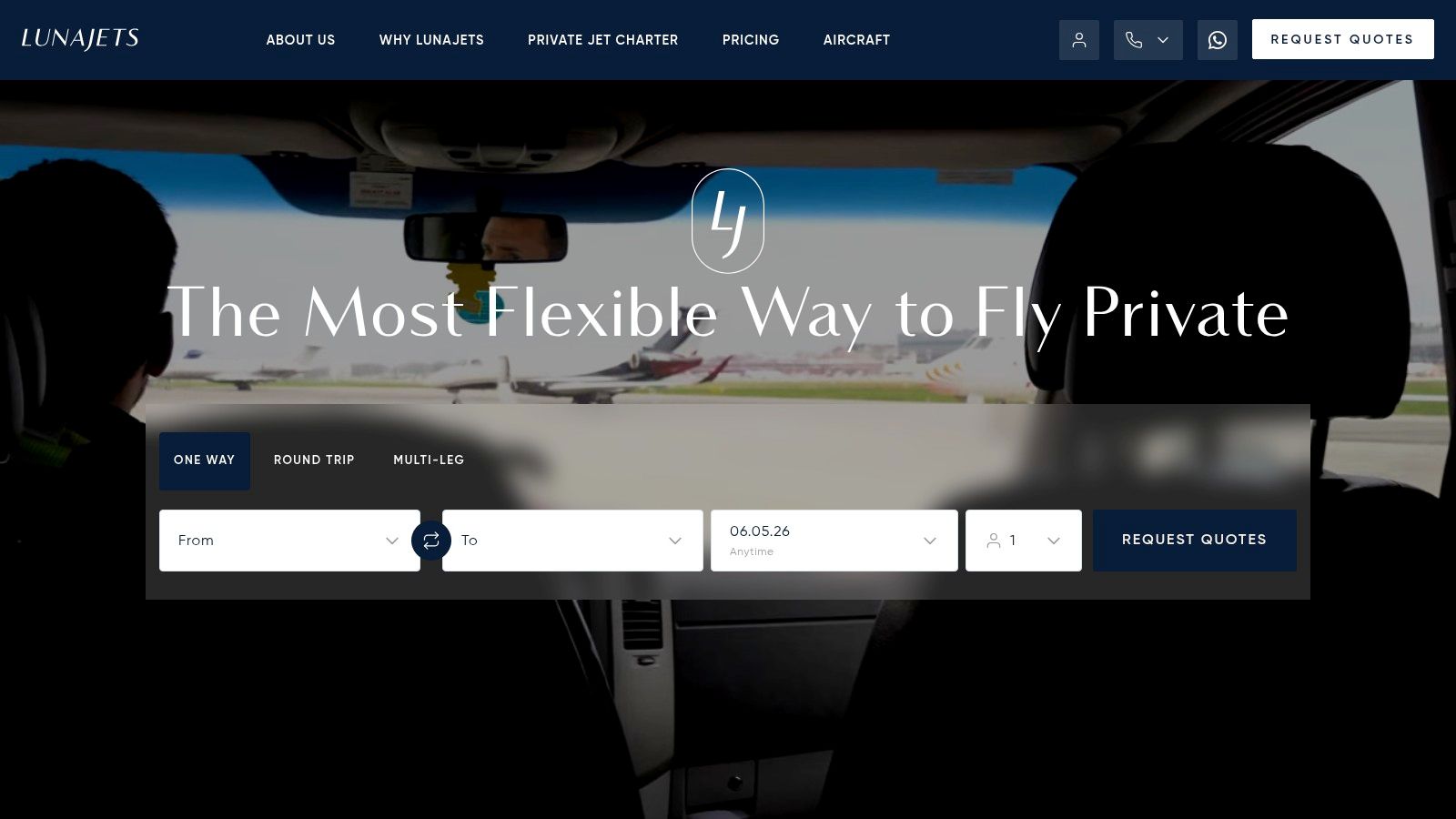
LunaJets is a good example of a broker that has built a modern, digital-first buying experience without eliminating human support. That hybrid matters. Some clients want to move quickly online, but still want an experienced desk available when an itinerary gets complicated.
Its global footprint is a practical advantage for international routing. For U.S. travelers booking domestic segments, Europe, or multi-country itineraries under one umbrella, that reach can simplify planning.
Why LunaJets earns consideration
The strongest case for LunaJets is usability. Its online quoting experience is fast, and its broad operator access gives clients a wide pool of aircraft options across cabin categories. That matters because not every trip should default to the same jet class. A short regional flight and an overnight international mission require very different aircraft decisions.
If you're sorting through cabin size trade-offs before requesting quotes, this guide to light, midsize, and heavy private jets helps frame the decision more realistically than marketing labels alone.
LunaJets also has a substantial third-party review footprint, which gives buyers more material for due diligence than they'll find with some firms that rely mainly on internal testimonials. In private jet charter reviews, volume isn't everything, but it does help reveal patterns in responsiveness, billing clarity, and trip management.
A large review footprint won't guarantee a perfect flight. It does make it easier to spot whether complaints are random or repeatable.
Best fit
LunaJets is well suited to travelers who prefer digital speed, broad global access, and visible social proof. The main trade-off is cultural and operational preference. Some U.S.-based clients still prefer a broker team centered primarily in the United States, especially for domestic repeat flying or highly localized support expectations.
That doesn't make LunaJets weaker. It means its style may feel more international than local. For buyers comfortable with that, it's one of the more polished brokerage experiences in the market.
Visit LunaJets.
5. Paramount Business Jets
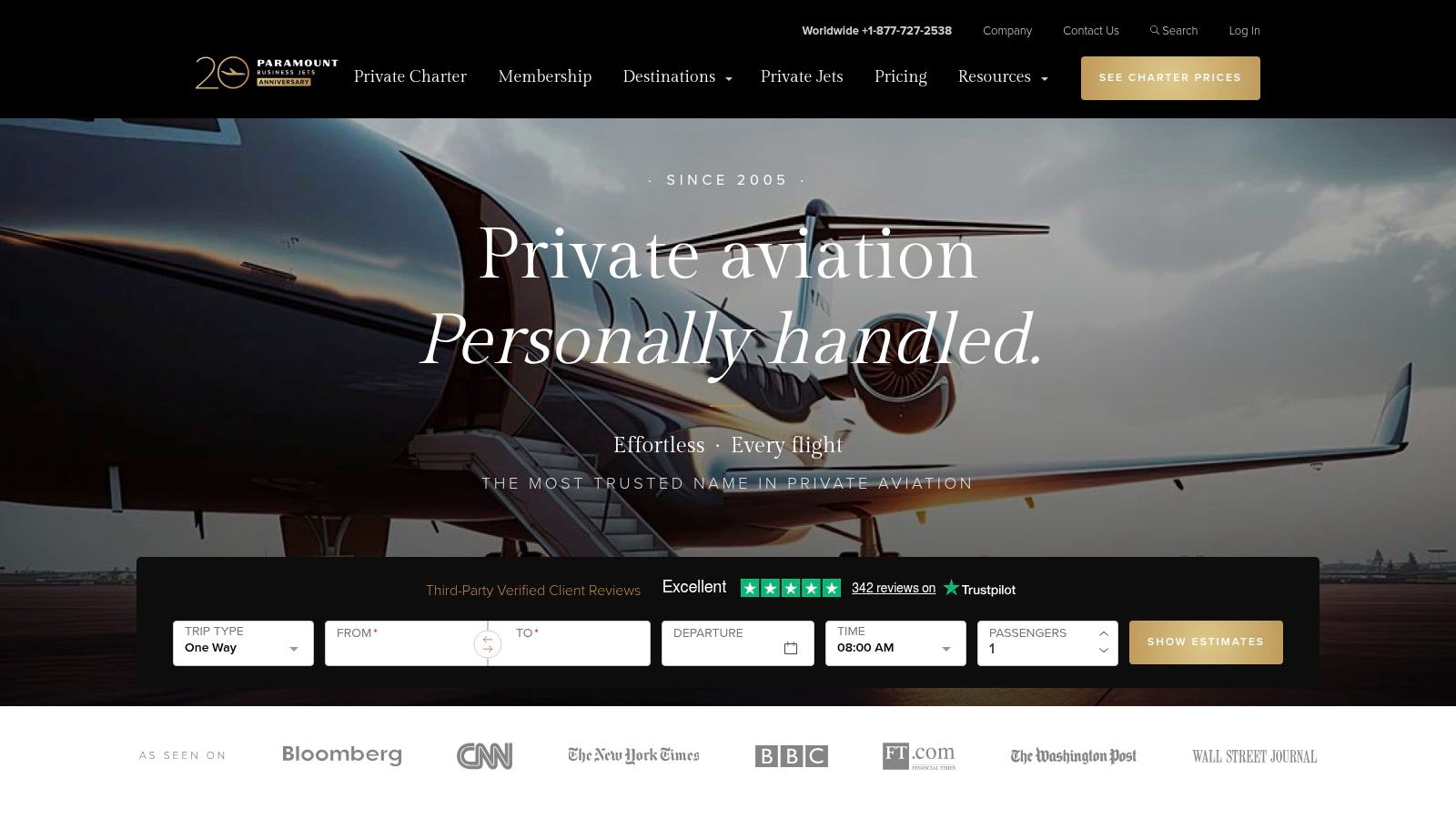
A client asks for a midsize jet from New York to South Florida, then adds golf bags, a later departure, and a return leg that may shift by half a day. That trip is no longer a simple quote comparison. It becomes a sourcing and terms exercise, and that is where Paramount Business Jets tends to perform well.
Paramount is a broker, so the value is not ownership or a closed fleet. The value is how the team sources aircraft, explains options, and helps clients compare proposals that may look similar on the surface but carry different cost and service implications. For buyers who want context before they commit, that matters.
What stands out
The company has built much of its reputation around education. That is more useful than it sounds. In private jet charter reviews, a polished booking experience gets attention, but many charter mistakes happen earlier. Buyers approve the wrong cabin class, overlook repositioning charges, or miss the difference between a flexible quote and a firm operator commitment.
Paramount's model suits clients who want a broker to walk through those variables with them. A good broker should verify the operator, aircraft, crew, and trip terms before the wire goes out. The trade-off is straightforward. Results still depend on the quality of the available operator and the clarity of the quote structure on that specific trip.
This also puts Paramount in the middle of a real buying decision that discerning clients face. On-demand brokerage gives wider sourcing flexibility and can work well for irregular flying. Membership and card programs can provide more predictable terms for repeat travelers, but they may limit aircraft options or tie value to a specific network. Paramount is strongest for travelers who want the market checked carefully each time rather than committing to a program first.
Best fit
Paramount Business Jets fits travelers who want a U.S.-based broker, direct human support, and more guidance than an app-first platform usually provides. It is less compelling for buyers who prefer instant digital booking or who want the structure of a membership model with preset rules and benefits.
Visit Paramount Business Jets.
6. XO
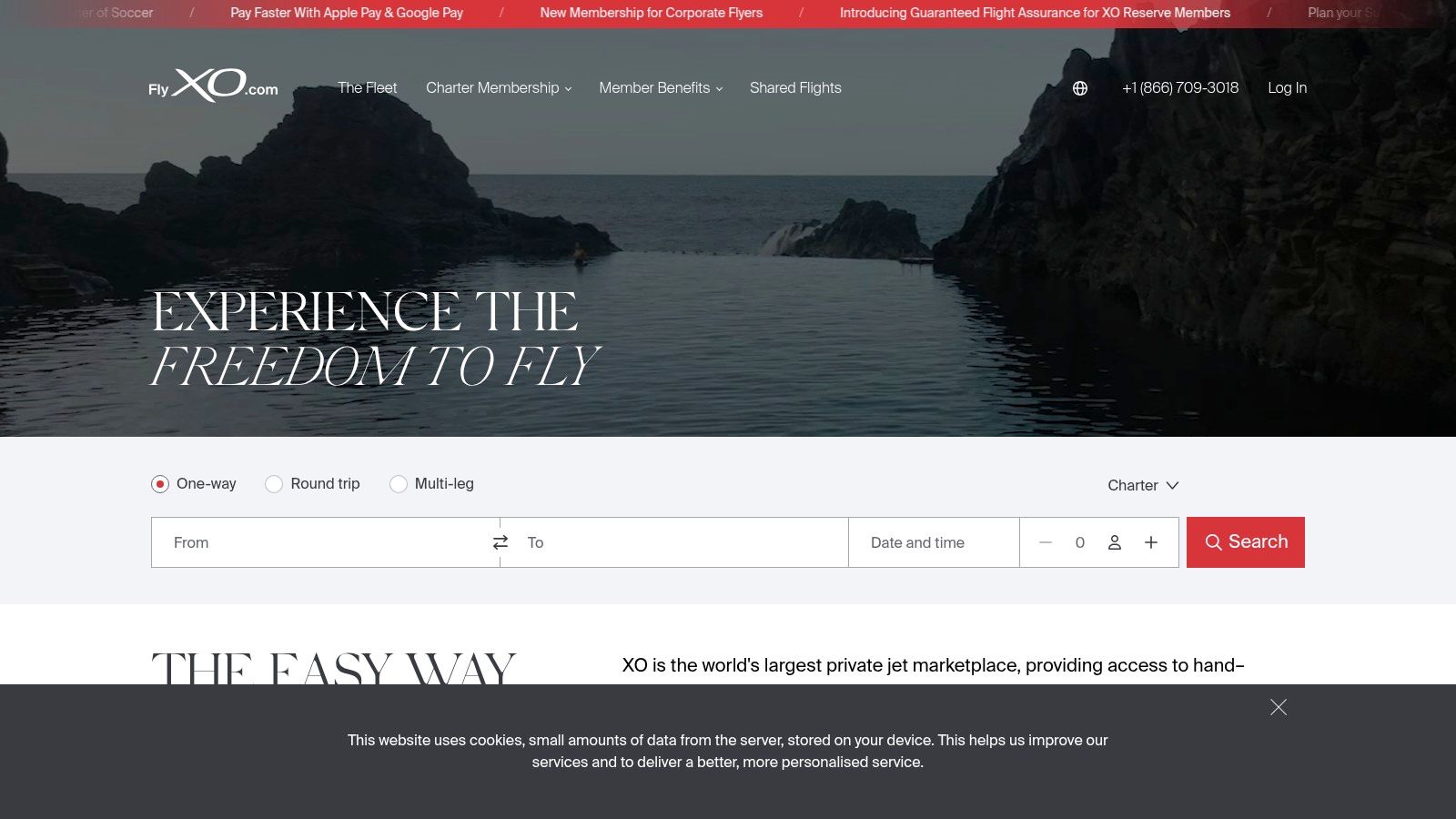
XO is one of the more interesting options because it doesn't force a single way of buying private aviation. You can book whole-aircraft charter on demand, explore shared-seat opportunities on eligible routes, or step into a membership structure if that model suits your travel pattern.
That flexibility is real value for buyers who aren't sure yet whether they need a broker relationship, app marketplace, or a more programmatic solution. XO tries to sit across those categories instead of choosing one.
Where XO is strongest
The app-first experience is the main attraction. Clients who want quick search, visible availability, and fast booking will generally find XO more intuitive than traditional concierge-heavy workflows. It also benefits from access to a large partner network and Vista-affiliated resources, which helps when buyers need broad geographic reach.
Membership is optional, and that matters. Too many private aviation products become difficult to compare because the headline experience changes once you're inside a paid tier. XO lets non-members access market-rate charter while keeping program options open for those who decide they fly often enough to justify them.
Still, this is not the simplest product in the category. Membership layers, benefit differences, and cancellation rules can create complexity, especially for occasional fliers who just want one clean transaction.
Best fit
XO is a strong choice for travelers who like technology, want self-service speed, and may value the option to blend whole charter with shared private flying. It's less appealing for buyers who want a highly curated advisor relationship or the simplest possible contract path.
Public review sentiment appears mixed, which isn't surprising for a platform operating across multiple booking models. The lesson isn't to avoid it. It's to read carefully and understand which service layer people are reviewing. In private jet charter reviews, platform complexity often explains mixed feedback more than aircraft quality does.
Visit XO.
7. Air Charter Service
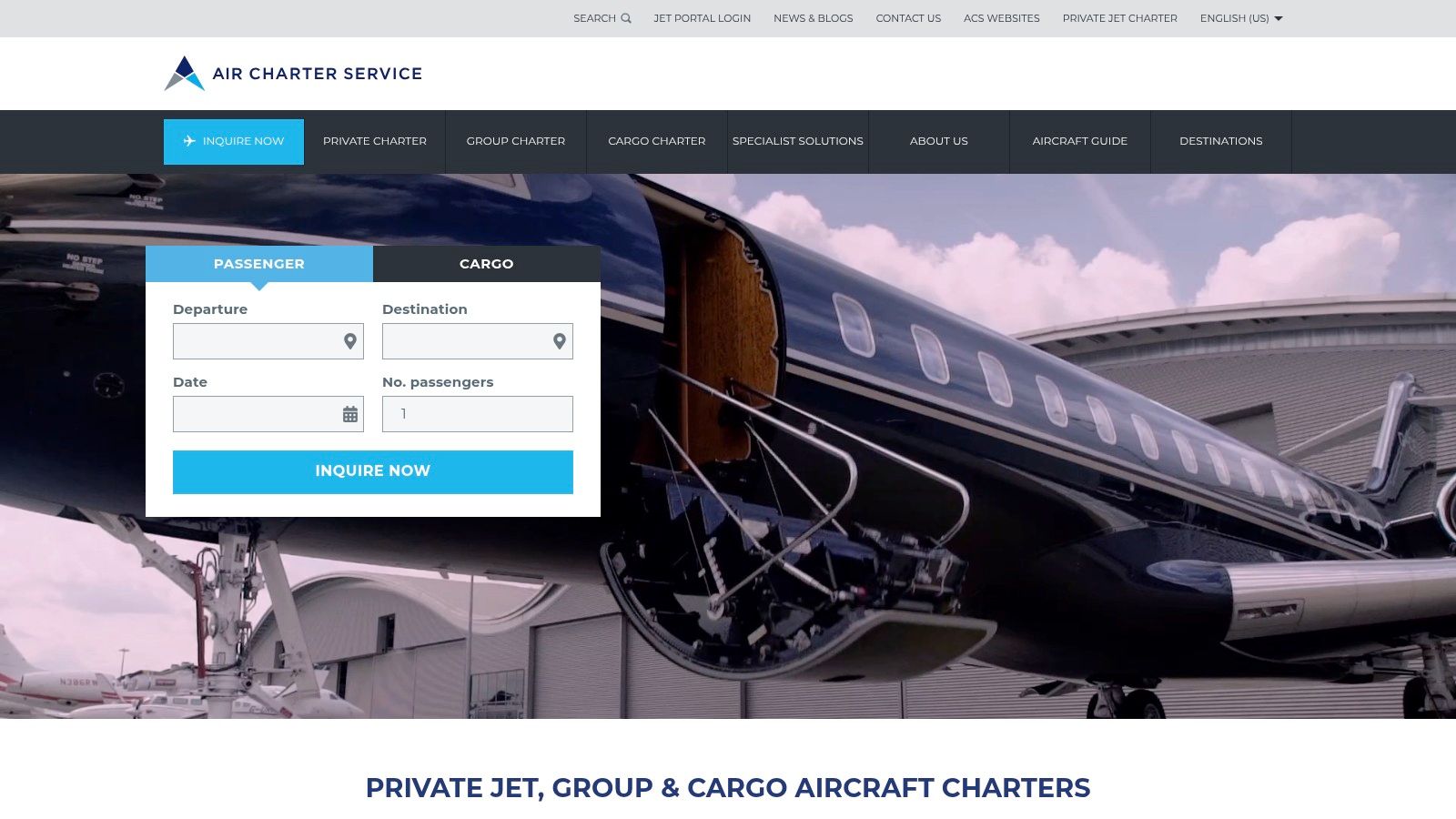
Air Charter Service is the large-scale broker on this list. If your needs extend beyond a single executive charter and into group movements, corporate programs, or cargo alongside passenger flying, ACS becomes a serious contender quickly.
Its scale is the point. Some brokers are best when the mission is a single family trip or a direct business shuttle. ACS is often more compelling when logistics become more layered and the client needs one organization that can coordinate across charter types.
What ACS does particularly well
ACS has multiple U.S. offices and a broad international footprint, which gives it practical reach for both domestic and global planning. It also runs around-the-clock operations support, which matters more than many buyers realize. Charter trips don't go wrong on schedule. When weather shifts, airport slots move, or passenger manifests change late, support infrastructure becomes part of the product.
The company's breadth also makes it useful for organizations that may need to scale from private jets to larger aircraft movements. Corporate travel managers, entertainment teams, and event planners often value that continuity more than they value a boutique feel.
When a trip involves executives, staff, equipment, or multiple cities, operational depth often matters more than brand glamour.
Best fit
Air Charter Service is best for clients who want a large, experienced brokerage with the ability to handle more than standard private jet missions. The trade-off is consistency at the consumer-review level. Public feedback tends to be less centralized, and the experience can vary depending on the office or specific agent handling the trip.
That's not unusual in a global broker with local teams. It just means the buyer should diligence the desk, not only the brand. If your charter needs are complex, ACS deserves serious consideration.
Visit Air Charter Service.
Top 7 Private Jet Charter Comparison
| Service | Implementation complexity | Resource requirements | Expected outcomes | Ideal use cases | Key advantages | Pricing / Booking model |
|---|---|---|---|---|---|---|
| Haute Jets | Low, concierge-led quotes in 30–60 min | No membership; pay-per-flight; accepts crypto (1% fee) | Near‑wholesale pricing, full tail selection, high safety vetting | HNWIs, celebrities, execs, time-critical or last‑minute charters | Large vetted global fleet (3,500+), reduces repositioning fees, full transparency | On‑demand brokerage with sample hourly rates; quick concierge quotes |
| Stratos Jet Charters | Low, dedicated flight advisors and concierge | No membership; pay-per-flight; ARGUS/Wyvern vetting | High service responsiveness and safety‑vetted operators | US travelers seeking concierge support and verified reviews | ARGUS‑certified broker, centralized verified client reviews | On‑demand dynamic pricing; no fixed-rate jet card |
| Victor | Low–Medium, app-enabled self-service + broker support | App access; pay-per-flight; ARGUS certification; optional SAF | Transparent operator disclosure and side‑by‑side aircraft comparisons | Tech-savvy users wanting mobile booking and clear operator details | App convenience, operator disclosure at quote, curated preferred operators | App-based on‑demand quotes/bookings; mixed public feedback on fees |
| LunaJets | Low, digital-first self-service with 24/7 team support | Online account or agent-assisted quoting; global offices | Fast online quotes, broad aircraft access, strong third‑party reviews | International travelers wanting quick self‑service and wide network | Strong digital UX, fast quoting, large Trustpilot footprint | On‑demand digital broker serving global routes |
| Paramount Business Jets | Low, broker-curated sourcing with bespoke support | US-based team; pay-per-flight; educational resources | Curated operators, safety emphasis, extensive public reviews | US clients seeking vetted operators and educational guidance | Depth of public reviews, US support, educational content | On‑demand brokerage; pricing varies by market and operator availability |
| XO (Vista ecosystem) | Low–Medium, app marketplace; membership options add complexity | App required; optional membership tiers; shared‑seat capability | Fast self‑service booking, shared‑seat flexibility, marketplace scale | Frequent flyers or those wanting shared seats or membership perks | Large partner network, shared‑seat marketplace, Vista fleet access | App marketplace: market rates for non‑members; optional memberships with benefits |
| Air Charter Service | Medium, supports complex/group/cargo operations | Corporate coordination; multiple offices; 24/7 ops support | Scalable solutions from private jets to airliners and cargo movements | Corporates, large group moves, complex logistics or cargo charters | Deep network, extensive industry experience, scalable offerings | Broker model for diverse charter types; pricing varies by office and scale |
Your Pre-Flight Checklist for Booking the Perfect Charter
A client approves a quote for a one-way flight, then calls back an hour later asking why the total changed. The answer is usually simple. The first number looked competitive, but the trip was carrying repositioning cost, airport fees, tax exposure, or a different operator than the one discussed on the phone.
That is why private jet charter reviews only help if they lead to better questions.
The decision is not picking a brand name from a list. It is choosing the booking model that fits your trip pattern, service expectations, and tolerance for price variability. On-demand charter suits travelers who want flexibility and no long-term commitment. Memberships can work for frequent flyers who value speed and fixed benefits, but the economics need scrutiny. Brokerage models often give the widest sourcing reach, yet the quality of the experience depends on how carefully the broker verifies operators, aircraft availability, and final trip cost.
Start with safety verification. A serious charter advisor should identify the actual FAA-certificated or foreign equivalent operator, confirm who is flying the trip, and explain the operator's third-party safety status if one applies. Ask for the operator name before you wire funds, not after. Ask whether the provider reviewed recent operating history, insurance, and crew legality for that specific mission.
Then review the quote like a buyer, not a browser.
A strong quote should answer four practical questions:
- Who is the operator? Get the legal operator name and confirm it matches the trip paperwork.
- Is the aircraft already in position? If not, ask whether repositioning is included and how that affects your total.
- What exactly is included? Confirm taxes, handling, deicing if relevant, overnight crew charges, catering, and ground transport assumptions.
- Are you approving a specific tail or only an aircraft category? Category pricing can be useful for a fast estimate, but exact aircraft approval gives better control over cabin, age, connectivity, and baggage fit.
One more point matters more than many clients expect. Ask what happens if the quoted aircraft becomes unavailable. Some providers present a low initial option, then substitute a more expensive aircraft later under time pressure. The better firms explain replacement terms up front and keep the approval process clear.
Reviews become useful when you read them through this lens. Ignore generic praise about luxury and convenience. Look for signs of disciplined execution: clear operator disclosure, stable quoting, accurate aircraft matching, and calm handling when weather or airport restrictions force a change.
If your priority is on-demand access without membership pressure, with close attention to operator quality, exact aircraft selection, and pricing discipline around repositioning, Haute Jets is a strong place to start. That approach fits clients who want charter advice tied to the actual trip, not a sales structure built around deposits or vague inventory promises.