A private jet party is not a bigger-jet problem. It's a mission-fit problem, and this gets misjudged from the start. If you pick the cabin because it looks impressive in photos, you usually pay for empty seats, higher hourly rates, and positioning you didn't need in the first place.
The better approach is blunt: match the aircraft to the guest count, route, and service level you'll use. That's how experienced planners keep the event sharp without turning it into an expensive vanity project. When the plan is disciplined, the cabin feels intentional, the budget stays under control, and the flight works for the people on board, not for the camera.
Why Most Private Jet Parties Start With the Wrong Assumption
The usual mistake is assuming a private jet party has to begin with the biggest aircraft available. That mindset wastes money fast. One industry benchmark puts the average party size at 4.1 passengers per flight, even though charter aircraft typically seat 4 to 19 passengers depending on cabin layout and class, which means many hosts pay for space they never use (Ventura Jet capacity insights).
Right sizing beats impressing
That mismatch matters because charter pricing rises quickly with aircraft size and duration. The same source notes charter pricing can range from $1,200 to over $10,000 per flight hour, and gives a sample 4-hour midsize jet charter at about $20,000 total if the aircraft costs $5,000 per hour (Ventura Jet capacity insights). If your group is four, five, or six people, a light or midsize cabin is usually the right call. A larger jet may look better, but it often adds cost without giving your group more usable comfort.
Practical rule: start with headcount and luggage, not aircraft prestige.
Experienced planners treat the cabin like a venue with hard limits, not a status symbol. A four-person anniversary flight, a six-person birthday hop, or a small executive celebration can all feel premium in a compact jet if the layout fits the mission. The value comes from direct routing, privacy, and a clean service plan, not from booking a cabin that sits half empty.
For readers who want a sharper planning framework for bigger groups, private jets for large groups is worth reading because it ties aircraft choice to passenger needs instead of image.
If you want a more tactile planning cue, treat the cabin the way you would treat dinner service. A tight, well-run space with the right menu can feel more luxurious than a room that is oversized and underused. Even a visual reference like the car chocolate dark and milk image can help planners think about presentation and pairing, but the aircraft still has to fit the mission first.
Choosing the Right Aircraft for Your Guest Count and Route
Aircraft selection is a practical decision tree, not a luxury mood board. Start with guest count, then confirm route distance, then check cabin layout, luggage volume, and airport access. That order matters because the same group can be comfortable in a compact jet on one route and completely mismatched on another.
Match the cabin to the mission
Nearly half of private flights are short-haul, with 47.4% under 500 km and an average distance of 865.7 km, so most event hops do not need a huge cabin (Market.us private aircraft market). For those shorter runs, a light jet or midsize jet is usually the right answer. You get speed, privacy, and a cleaner cost structure without paying for range and size you won't use.
Here's the rule I use with clients. If the group is 4 to 6 guests, a light jet is often enough. If you're closer to 7 to 9 guests, a midsize or super-midsize jet usually gives the best balance of space and value. Once the group becomes larger or the route gets long, you move into heavy-jet or VIP-airliner territory because cabin comfort, range, and baggage volume start to matter more than hourly thrift.
| Aircraft Category | Passenger Capacity | Typical Range | Best For |
|---|---|---|---|
| Light Jet | Small groups | Short regional hops | Fast celebratory trips with minimal luggage |
| Midsize Jet | Moderate groups | Regional and mid-distance routes | Dinners, birthdays, and executive outings |
| Heavy Jet | Larger groups | Longer routes | Bigger parties, more baggage, stronger cabin comfort |
| VIP Airliner | Very large groups | Long-haul, complex itineraries | High-capacity event travel and premium group movement |
Verify the aircraft before you commit
A good booking goes beyond category. Check the exact cabin layout, baggage hold, runway performance, and onboard amenities before you sign anything. A jet with enough seats can still be a bad fit if the baggage compartment is tight, the airport is awkward, or the cabin doesn't support the experience you want. That's why serious planners look at the specific year, make, model, and interior configuration, not just the marketing label.
The route itself should influence the choice too. A quick birthday hop should not be priced like a transcontinental celebration. If you overspec the aircraft, you pay for prestige you don't use. If you underspec it, you get compromised comfort and a harder flight. The right answer is almost always in the middle, where the cabin feels polished and the numbers still make sense.
Understanding the Real Cost of a Private Jet Party
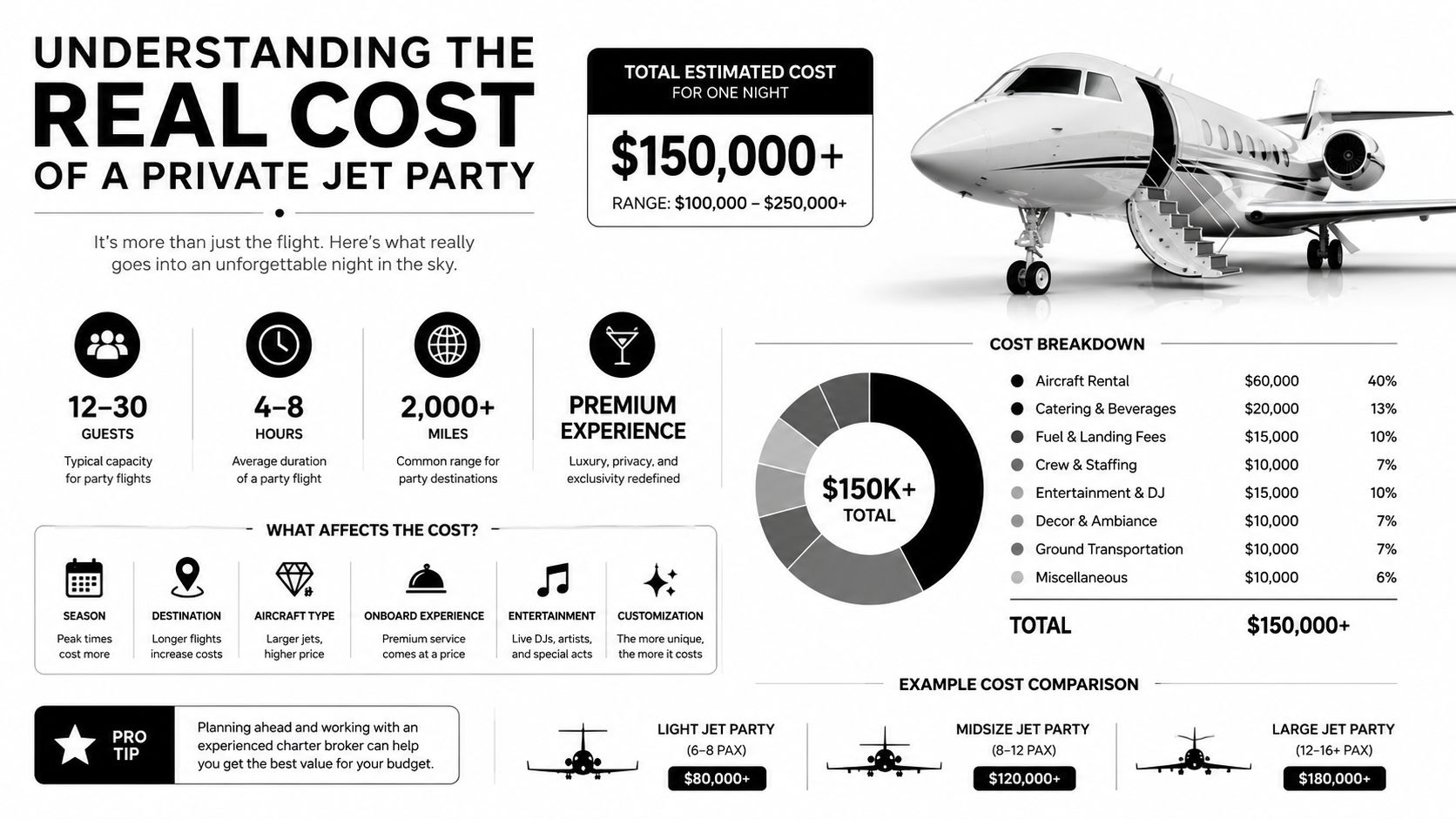
Headline hourly rates tell you almost nothing by themselves. The budget is built from aircraft type, route structure, timing, and the add-ons that show up after the first quote. For a private jet party, that means you need to think like a buyer, not a guest.
What the quote usually hides
One industry estimate says private jet charter ranges from $1,200 to over $10,000 per flight hour, and a four-hour midsize jet trip at about $5,000 per hour lands around $20,000 before extras (Oreate AI cost guide). That number is useful because it anchors the conversation. Once you understand the hourly baseline, you can ask the right questions about what's included and what isn't.
The hidden charges that usually matter are landing fees, crew hotels, repositioning flights, and event-date surcharges. A separate industry note says event-season pricing can rise 20 to 40 percent, and a business-context source says repositioning can inflate charter prices by 20 to 40 percent when aircraft can't be sourced locally (BlackJet demand update). Those are not small adjustments. They can turn a quote that looked workable into one that's bloated for no good reason.
Budget like a pro, not a guest
Here's the cleanest way to control spend.
- Source locally: ask for aircraft based near your departure city so you're not paying to move the jet first.
- Keep the route tight: if the flight is short, don't insist on a large-cabin aircraft just because it feels grand.
- Ask for line items: make the operator spell out catering, landing fees, overnight crew costs, and any repositioning exposure.
- Choose timing carefully: peak events and high-demand weekends are where pricing gets distorted fastest.
For a deeper look at charter pricing structure, the private jet charter cost guide is worth reading before you sign anything.
The biggest mistake is assuming a beautiful cabin quote equals the final bill. It rarely does. If you want the event to feel premium without wasting money, insist on a local aircraft, a clear inclusions list, and a route that doesn't force unnecessary logistics into the price.
Designing the Onboard Experience Within Safety Constraints
A good onboard setup feels effortless because the planning behind it is strict. Catering, lighting, entertainment, and décor all have to work inside aviation limits. If you ignore those limits, the cabin crew will start removing things before departure, and your “bespoke” celebration turns into a compromised one.
Build the cabin around weight and balance
The first rule is simple. Everything on board has weight, and weight changes how the aircraft performs. That means your table décor, floral pieces, bottles, gift bags, and entertainment gear all need to fit the operator's safety and weight-and-balance rules. The prettiest setup on the ground can become a bad idea in the air if it's too heavy, too loose, or poorly secured.
Catering should come from a team that understands aircraft galley limitations. On a jet, the kitchen is not a hotel prep space. Menus need to be compact, easy to service, and realistic for the route. If you want a full tasting menu, get a catering partner who has done it on aircraft before, not one who is improvising for the first time.
Keep the celebration elegant, not chaotic
Sound levels matter more than most hosts expect. Cabin acoustics can make music feel louder than it does in a restaurant, and a rowdy group can turn a premium flight into a tense one fast. The same is true for décor. LED lighting, fixed floral arrangements, and restrained branding usually work better than loose items and anything that can shift during taxi or takeoff.
For event planners handling sensitive itineraries, the guidance in sensitive event transport considerations is useful because it reinforces the same principle, control the environment first, then add the celebration.
Keep the cabin polished, secure, and easy for the crew to manage.
Alcohol service needs the same discipline. Don't assume you can bring anything you want and let everyone pour freely. The operator will have rules, and the crew will expect you to follow them. If you want the experience to feel smooth, pre-approve beverages, assign service through the crew, and keep the setup minimal.
The best onboard experience is controlled, not crowded. A small number of high-quality elements, a clean layout, and a crew that knows the plan will always outperform a cabin packed with loose décor and last-minute ideas.
Legal and Operational Rules That Can Derail Your Event
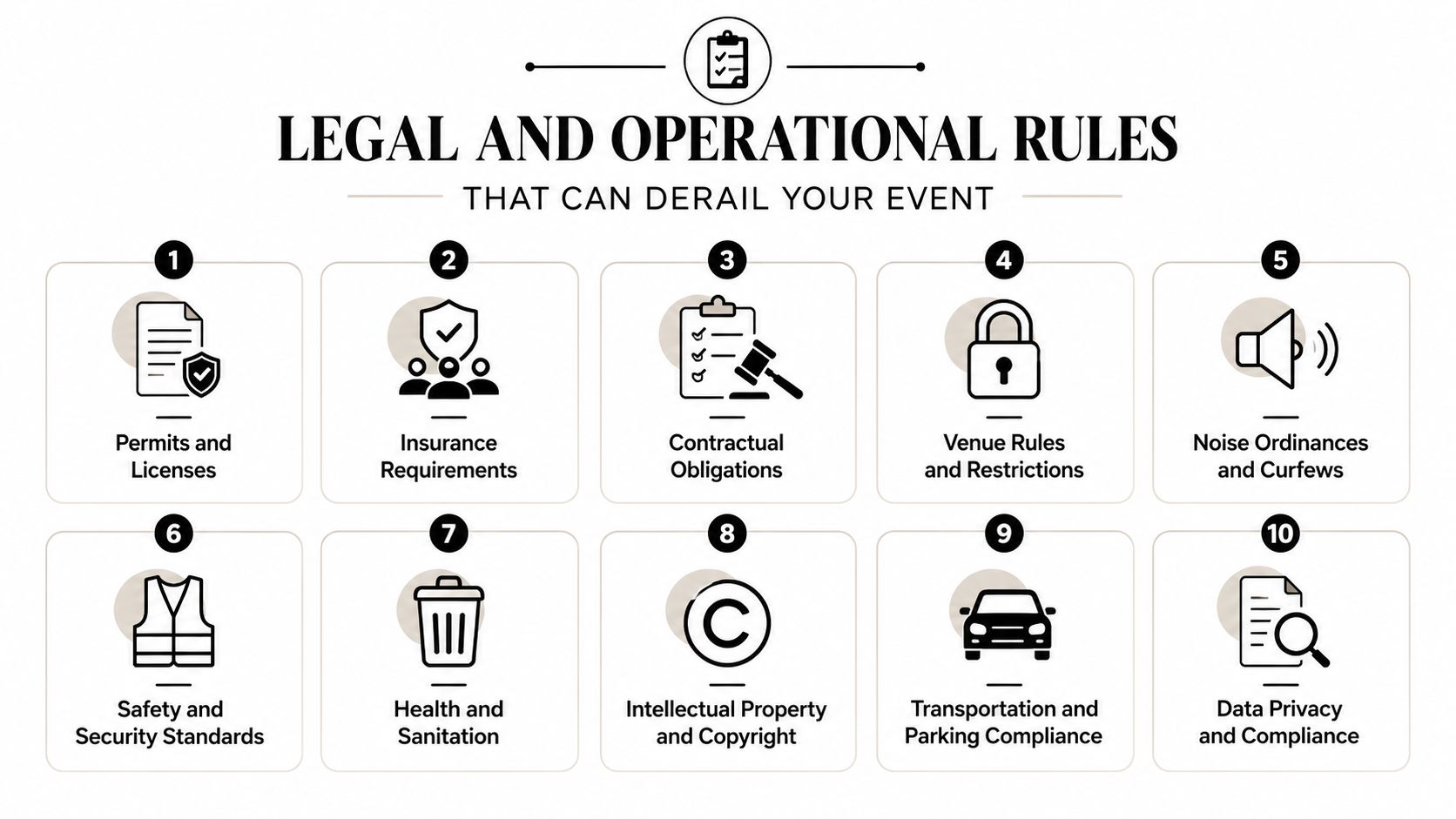
Most private jet party planning goes sideways here. People think in terms of celebration, but the operator is thinking in terms of compliance, cabin safety, and passenger limits. If those two mental models don't match, the flight gets harder than it needs to be.
Alcohol rules are specific, not flexible
FAA alcohol rules relevant to private-jet parties are precise. Alcoholic beverages brought onboard must be unopened, in their original retail packaging, must be between 24% and 70% alcohol by volume, and are limited to 5 liters per package and 5 total liters per passenger (Stratos Jets alcohol rules). That means the casual “bring what you want” mindset is wrong from the start.
A host once tried to treat the cabin like a private lounge and showed up with drinks that didn't meet the packaging requirement. The crew didn't negotiate. They removed the bottles, the service plan changed, and the mood dropped before departure. That's the lesson. On private aviation, the crew and operator set the rules, not the guest list.
Passenger limits and cabin setup have to align
Passenger count is not just a social question. It's a safety and configuration question. The aircraft class, cabin layout, baggage, and service setup all have to fit together. If you add too many people, the cabin can feel cramped. If you add too much equipment, the load plan changes. If the layout doesn't match the mission, the operator may push back or reschedule.
Noise and behavior matter too. A private jet party is still a flight, and crew instructions are not optional. If guests get loud, move around too much, or ignore safety guidance, you create risk. The cleanest events are the ones where the host sets the tone early. Crew service, clear expectations, and respect for the cabin keep everything moving.
The right mindset is to book a flight, not a floating nightclub. The party can absolutely be fun, but it has to stay inside the operator's safety frame. If you want an enjoyable experience, clear the alcohol plan, confirm the passenger count, and make sure the cabin setup fits the aircraft before anyone boards.
Booking Your Private Jet Party With Haute Jets
The smartest charter booking process is the one that removes guesswork before departure. That means selecting the exact aircraft, confirming the operator's safety rating, and locking the logistics early enough that no one is improvising on departure day. It also means avoiding the traditional broker habit of pushing whatever's available instead of what fits.
Ask for the exact aircraft, not a category
The best booking starts with specificity. You should know the year, make, model, and cabin layout before you commit, along with Wi-Fi, catering, pet policy, and ground transport confirmation. That level of detail is what keeps the experience aligned with the event, because a category label alone can hide real differences in cabin feel and service flow.
Haute Jets' model is built around sourcing from 3,500+ owner-operators across 175 countries, which gives the team room to find aircraft near the departure city instead of defaulting to a repositioned option. That matters because repositioning is one of the fastest ways for costs to climb. The company's booking model is designed to reduce that friction, not hide it.
Confirm the flight before the day of departure
One of the most useful operational habits is the 24-hour pre-flight confirmation. You should receive the tail number, crew bios, weather briefing, and passenger manifest before departure, so nothing feels vague when it's time to leave. That kind of confirmation is how you avoid awkward surprises at the terminal.
A strong booking process also respects the difference between a one-off celebration and a recurring flying habit. If you want flexibility without locking into a membership structure, an on-demand charter model is cleaner. It lets you book the exact flight you want, when you want it, without carrying the overhead of a program you may not use often.
For a fuller look at the workflow, booking a private jet with Haute Jets is the right place to start.
The winning move is simple. Book with enough specificity that the operator can build the flight around your actual event, not around a generic charter template. That is how you get the right aircraft, the right cabin, and the right day-of execution.
Your Private Jet Party Planning Timeline and Checklist
The timeline matters because aviation is not a last-minute consumer purchase when the date is important. The earlier you define the mission, the less likely you are to overpay, scramble for the wrong aircraft, or lose control of the onboard experience. If you're planning around a major event window, the calendar becomes even more important because availability tightens.
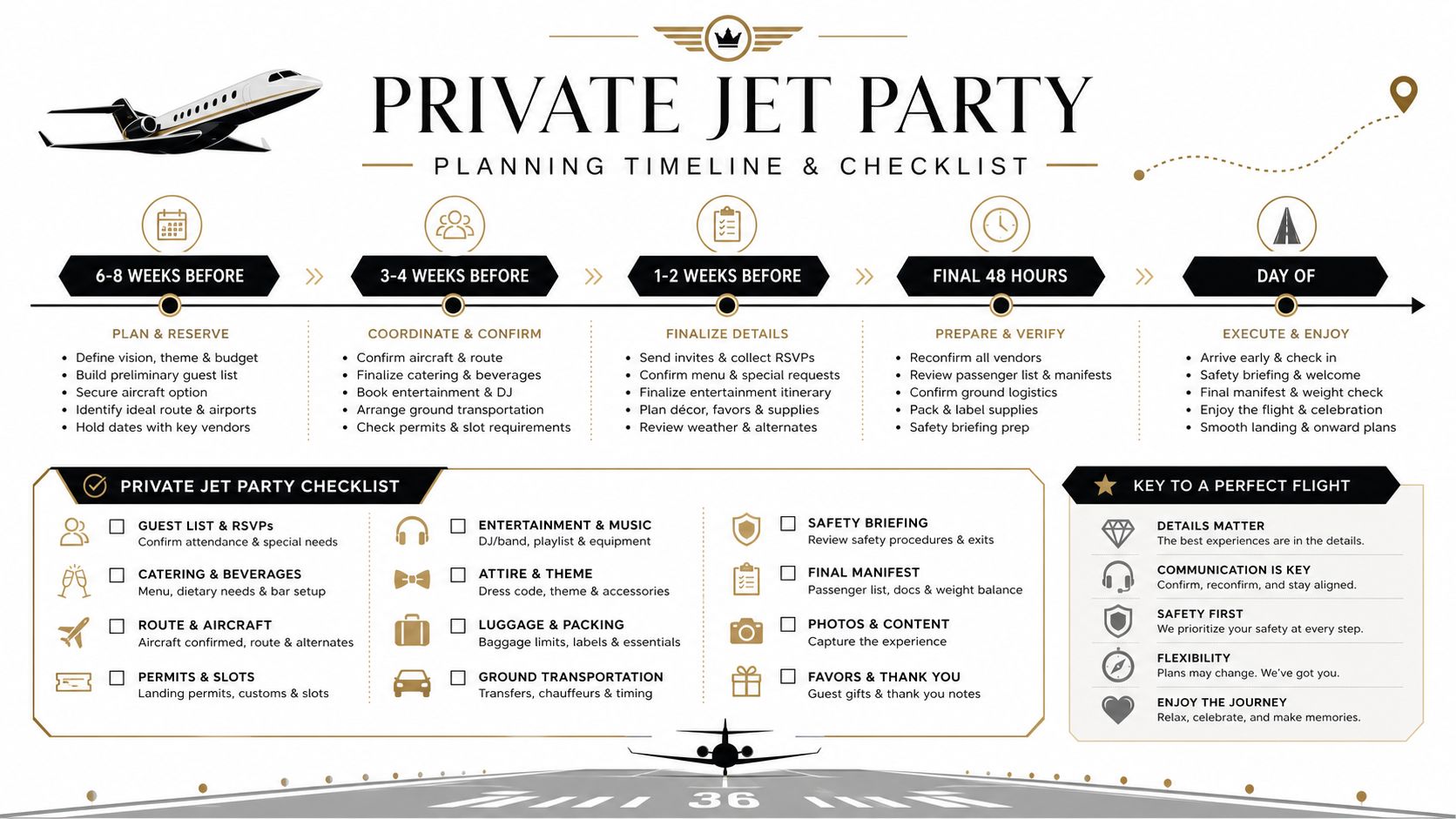
The clean planning sequence
- Define the mission early: finalize guest count, route, and the kind of experience you want before you ask for quotes.
- Hold aircraft options: request nearby aircraft choices so you can compare the actual cabin and not just the category.
- Lock the route details: confirm departure airport, arrival airport, and any luggage or service constraints.
- Approve catering and service: choose menu items that fit the galley and the flight length.
- Set ground transport: coordinate pickup and drop-off so the event stays smooth at both ends.
- Reconfirm 24 hours out: verify the tail number, crew, weather, and passenger manifest before departure.
For planners building broader hospitality experiences around flights, unforgettable corporate event ideas can be useful because the best airborne events borrow the same discipline as the best ground events, clear objectives, tight logistics, and no loose ends.
What to verify before wheels up
The final check should be brutally practical. Confirm the exact guest list, luggage count, alcohol plan, and service timing. If the date sits near a major event or peak travel window, don't wait to sort the aircraft after everyone else does. You'll end up with fewer choices and a weaker price.
The best flights are usually the ones where the host makes every decision before the crew has to ask.
After the flight, review what worked. Did the cabin size fit the group? Did the catering land correctly? Was the ground transport clean on both ends? That feedback makes the next booking faster and better.
A private jet party should feel exclusive, but it should also feel controlled. If you use the timeline seriously, you get both.
Haute Jets arranges on-demand private jet charter with the aircraft, crew, and routing aligned to the trip you want, not the one a broker is trying to move. If you're planning a private jet party and want the right cabin, the right timing, and a clean booking process, visit Haute Jets and start with a quote that's built around your event, not around guesswork.