On Haute Jets Journal, one fact changes the entire conversation around private jet pet travel: 78% of high-net-worth travelers now refuse to fly if it means separating from their pets during the journey, according to industry data cited here. That isn't a niche preference anymore. It's a booking condition.
I see the same pattern constantly. Clients don't call asking whether a jet is “pet-friendly.” They ask whether their dog can stay beside them, whether customs will clear smoothly, whether the operator will spring a cleaning charge after the trip, and whether a so-called shared pet flight means a carrier is still required. Those are the questions that decide whether the trip feels effortless or turns into a mess.
Most guides stay shallow. They tell you to bring paperwork, notify the operator, and pack a blanket. Fine. But the trips that go wrong usually fail on the details that generic advice skips: fee disclosure, operator-specific cabin rules, microchip timing, UK treatment windows, and the difference between a full charter and a shared pet charter. That's where this guide stays focused.
Why Pet Travel Is No Longer an Option It's a Priority
Seventy-eight percent of high-net-worth travelers now refuse to fly if it means being separated from their pets. That figure, cited earlier in the article, explains why pet travel now drives aircraft choice, operator choice, and trip design.
I see the same thing on live bookings every week. Clients are not asking for a nice extra. They are setting a travel requirement. If the dog cannot stay in the cabin, if the cat must be crated under stricter shared-flight rules, or if the operator cannot confirm pet fees in writing, the booking stalls.
Commercial travel fails on control. Private aviation solves that, but only if you book the right structure. A full charter gives you the highest level of flexibility on cabin setup, movement, and pet handling. A shared charter can still work well, but it often comes with tighter rules around carriers, seating, breed acceptance, and how freely the animal can remain out during flight. Many guides blur that distinction. That is a mistake.
The other issue clients underestimate is cost leakage. The flight quote is not always the final pet cost. Cleaning charges, deep-clean fees, upholstery damage assessments, and pet-related handling surcharges can appear after confirmation or after the trip if you do not pin them down early. Anyone comparing pet travel options should start with the same discipline used for any other high-value itinerary. Review the key factors to check before booking a private jet, then push further on pet-specific terms.
Why commercial breaks down fast
A primary concern with commercial flying is separation and loss of oversight.
Once your animal leaves your side, you lose visibility on handling, temperature swings, delays on the ramp, and the condition your pet arrives in. That risk matters far more than any airline marketing about pet programs. Serious pet owners know it, especially those traveling with older dogs, anxious animals, brachycephalic breeds, or pets on medication.
Private aviation keeps the owner and pet together in the cabin. That changes everything operationally. You can monitor breathing, stress, hydration, and behavior in real time, and you can respond immediately if something is off.
A calm pet beside the owner is easier to manage than a stressed pet handed back after a public-terminal process you never controlled.
The emotional case is obvious. The operational case closes the deal
Yes, pets are family. That is not the part that needs explaining.
What matters in practice is that in-cabin travel reduces avoidable problems. Boarding is quieter. Security exposure is lower. The environment is more predictable. Arrival is faster and more controlled. For clients who are used to precision in every part of travel, that level of control is the standard.
Dogs are driving much of this demand, especially large dogs that fit poorly into commercial airline rules. Owners do not want a pet to be merely accepted. They want documented approval, clear cabin rules, and written confirmation of every fee before funds are wired.
That is why private jet pet travel has shifted from preference to priority. The decision is no longer whether a flight allows pets. The decision is whether the operator can handle the animal properly, disclose the true cost, and match the right charter format to the trip.
Your Booking Strategy Beyond 'Pet-Friendly'
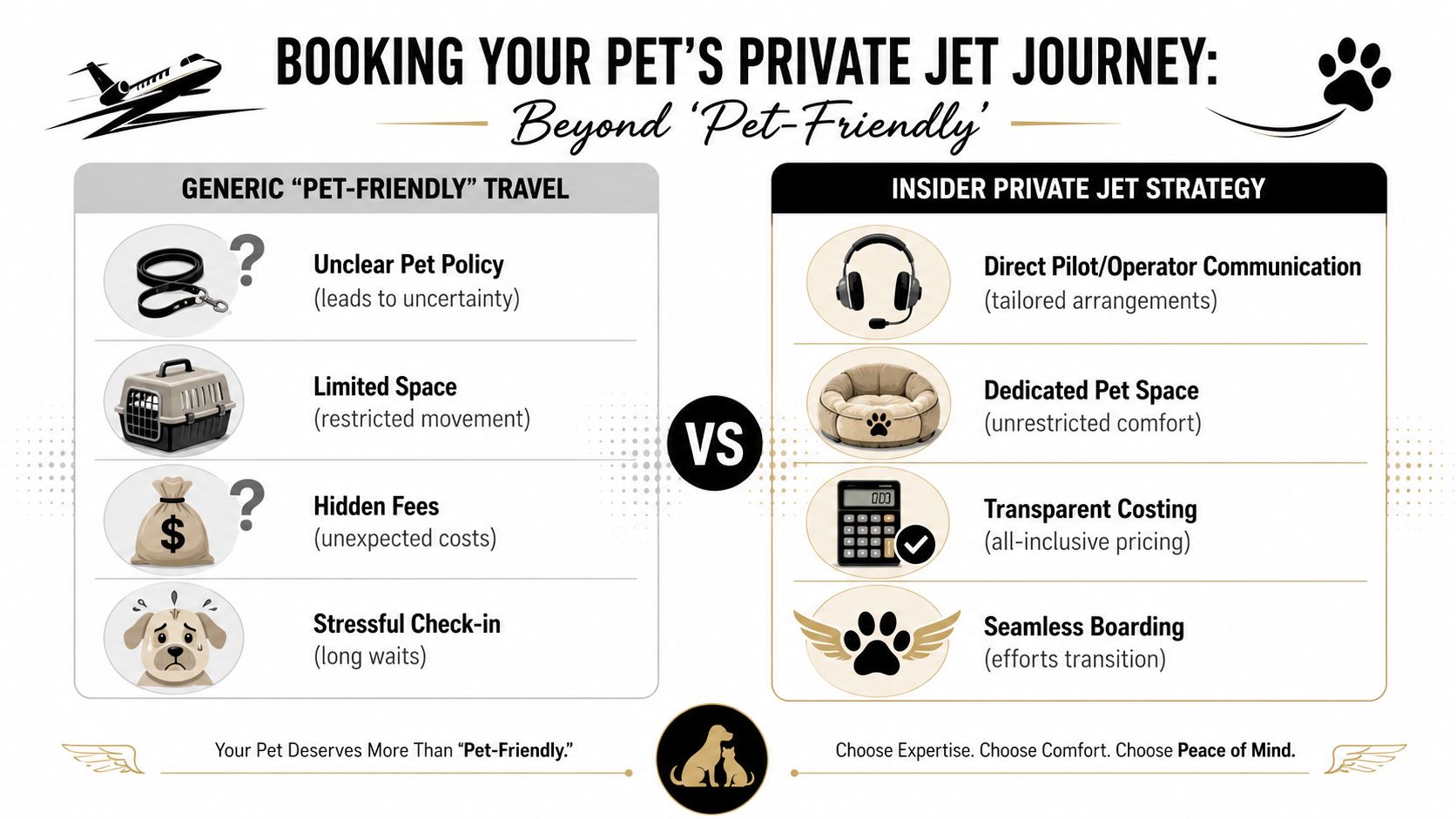
“Pet-friendly” is weak language. It does not tell you whether your dog can stay out of a carrier, whether the aircraft owner has separate restrictions, or whether a cleaning bill will appear after you approve the quote.
The booking risk is rarely the dog. It is vague paperwork, undisclosed charges, and the wrong charter format for the trip.
The hidden cost problem starts before wheels up
Cleaning fees cause more client frustration than almost any other pet line item. Some operators treat them as routine. Others add them only if there is shedding, an accident, or heavy odor. Some hold a deposit and decide after the flight. If that fee structure is not written into the quote and charter agreement, you are accepting an unknown number.
A published pet travel fee breakdown makes the same point. Pet-related charges often surprise travelers because operators disclose them inconsistently.
Ask for these terms in writing before funds move:
- All pet-related charges. That means pet surcharges, standard cleaning, deep cleaning, damage deposits, and the conditions for any non-refundable amount.
- Cabin handling rules. Confirm whether your pet may sit beside you, stay on the floor, or must be restrained during taxi, takeoff, and landing.
- Aircraft-specific restrictions. The operator may approve pets while the aircraft owner limits breed, size, quantity, or cabin placement.
- Late-disclosure consequences. Declaring a pet after the quote is issued can trigger an aircraft swap, a repriced trip, or a rejected booking.
If you want a broader framework for screening operators, review these things to consider before booking a private jet.
Booking rule: If the pet terms are not written into the charter agreement, they are not agreed.
Full charter and shared pet charter solve different problems
A full charter gives you control. You book the whole aircraft, control the passenger list, and work within one set of operating rules. That is usually the right choice for large dogs, multiple pets, older animals, or clients who do not want strangers, schedule shifts, or carrier rules complicating the trip.
A shared pet charter is a different product. It can lower the entry cost on some routes, but it usually comes with tighter compliance standards and less flexibility. Shared operators often fix the departure date, set stricter carrier requirements, and apply group rules that do not change because one owner wants more cabin freedom.
A recent analysis of private and shared pet charter rules highlights the main friction points. Carrier requirements and compliance misunderstandings are still common on shared bookings.
| Booking type | What you usually get | Main risk |
|---|---|---|
| Full charter | Greater control over timing, cabin use, and pet handling | Higher total trip cost |
| Shared pet charter | Lower cost on select routes | Carrier rules, tighter compliance, less control |
My advice is simple. Book a full charter for international trips, large dogs, senior pets, anxious animals, or any itinerary where timing and privacy matter. Use a shared pet charter only when the route is established, the operator's rules are clear, and your pet already travels calmly in a compliant carrier.
One more point smart clients handle early. Keep digital copies of pet vaccinations ready before you request final trip documents. Brokers and operators often ask for them while confirming pet approval, and delays at that stage waste time you do not have.
Mastering Pre-Flight Paperwork and Health Prep
Most international pet trips don't fail in the air. They fail on paper.
The biggest mistake is getting the sequence wrong. Owners focus on vaccines, then discover the microchip timeline invalidated the record for border purposes. At that point, no premium cabin fixes the problem.
The order that matters
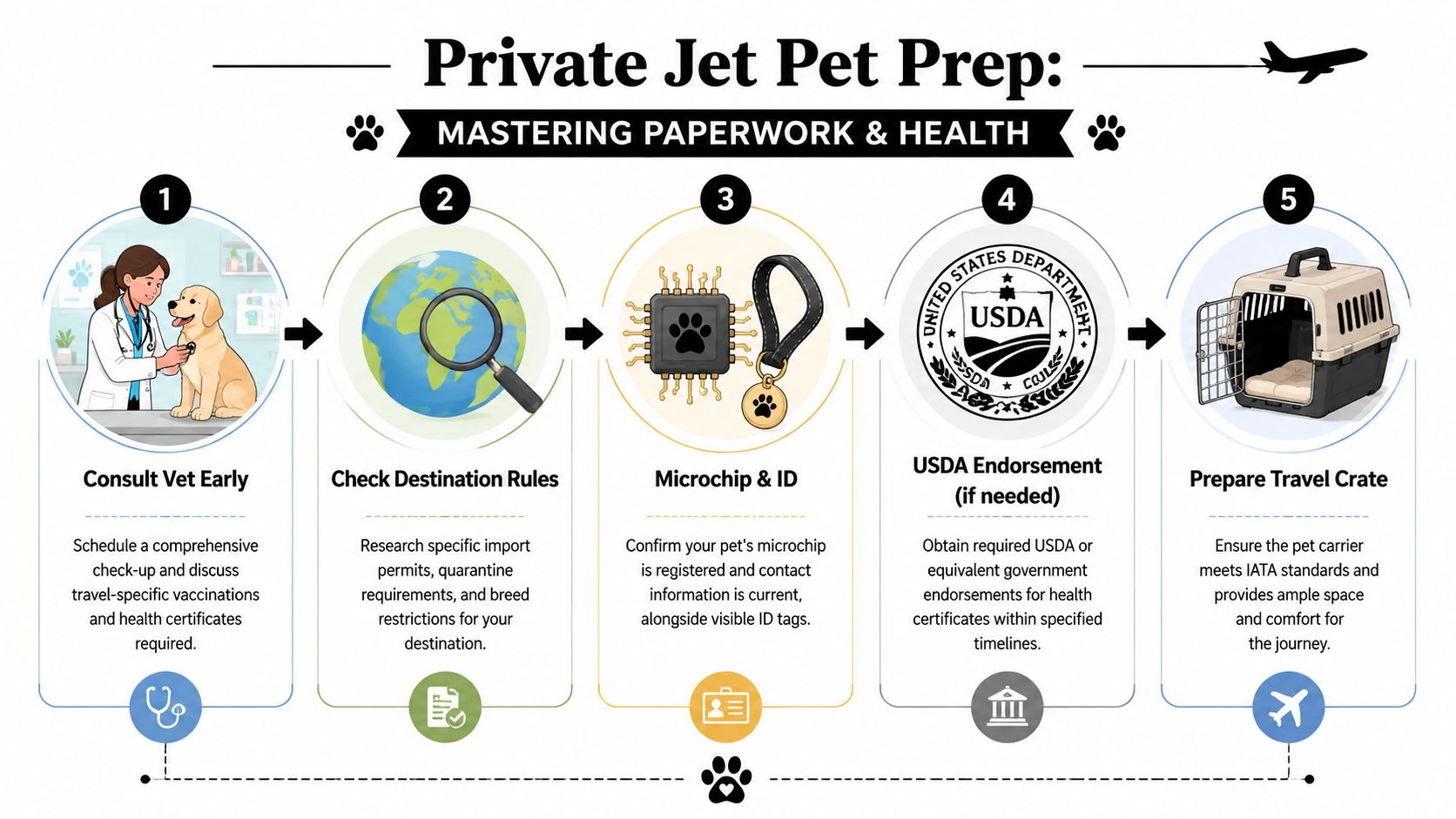
For EU and UK travel, the microchip isn't just an ID tool. It's part of legal compliance. According to this private jet pet documentation guide, the process starts with an ISO-compliant 15-digit microchip implanted before the primary rabies vaccination. Reverse that order and you can run into 24–48 hour delays or outright entry denial.
That one point causes more preventable stress than almost anything else in private jet pet travel.
What I tell clients to do first
Don't build this backward from the flight date. Build it from the veterinary timeline.
Confirm microchip status Check that the chip is ISO-compliant, readable, and correctly registered. If there's any doubt, fix it before revisiting vaccination records.
Review the rabies record Make sure the primary rabies vaccination was administered after microchipping, not before.
Match documents to destination The destination decides the form. Some routes call for an EU pet passport. Others require an animal health certificate issued inside a strict window.
Pre-verify before travel day Send scans to the operator or handling team early. Last-minute paperwork review is how people end up arguing at the terminal.
UK arrivals require precision
The UK is unforgiving on timing. The same source states that tapeworm treatment must be administered 24–120 hours before arrival, and that an EU pet passport or a UK animal health certificate issued within 10 days is mandatory. When those documents are correct, Border Force clearance typically takes about 5 minutes after landing.
That's the standard to aim for. Not “probably fine.” Correct and pre-checked.
If your vet is excellent clinically but unfamiliar with cross-border pet travel, bring in a specialist travel vet early.
The documents I want in two formats
I tell clients to carry paper originals and maintain clean digital backups. If you need a simple way to organize those records, keep digital copies of pet vaccinations in a format that's easy to pull up on the ramp, in the car, or at border control.
Use a simple stack:
- Original health documents
- Vaccination records
- Microchip registration details
- Treatment confirmations
- Backup digital copies on your phone and email
The administrative side of private jet pet travel isn't glamorous. It is decisive. Get the order right, verify early, and most of the stress disappears before the aircraft is even selected.
Navigating International Arrivals and Customs
Arrival failures usually happen on the ground, not in the air. The aircraft can be perfect, the crew can be perfect, and the trip still goes sideways because customs finds one mismatch, one late treatment, or one document in the wrong format.
Private aviation gives you control. It does not give you exceptions.
What actually happens after landing
A good arrival is quiet and fast. The handler meets the aircraft, escorts the paperwork to the right desk, confirms the pet details against the chip and certificate, and gets you to onward transport without the public-terminal circus that commercial travelers deal with.
That outcome depends on two decisions clients often get wrong. First, whether you booked a full charter or a shared charter. Second, whether the arrival team was briefed on the animal before departure.
With a full charter, you control timing, routing, and who is on the aircraft. That matters if your pet needs a specific arrival window, a direct handoff to a veterinary officer, or extra time on the ramp. Shared charter is less forgiving. Another passenger's delay, a last-minute stop, or a stricter operator rule can create ground-time problems you cannot fix after takeoff. If you are flying internationally with a larger dog, an older pet, or a country with tighter entry rules, book the whole aircraft and remove variables.
Where trips get expensive
Clients focus on charter price and forget the arrival-side charges that appear later.
The expensive mistakes are predictable. Extra handling because the pet was not properly pre-advised. Cleaning fees if the animal is stressed after a long sector or a delay on arrival. Overtime charges if customs clearance runs outside standard hours. Transport surcharges if the car arranged to meet the aircraft cannot legally or safely take the pet setup you need. None of these fees are shocking to people who do this every day. They are very shocking to first-time private flyers.
Quarantine is not the only bad outcome. A long hold on the ground, re-inspection, or denied release to the owner can be just as disruptive, especially if you have staff, security, and connecting ground plans waiting.
The handoff needs to be coordinated, not assumed
I want three parties aligned before wheels up. The operator. The ground handler. The customs or veterinary contact, if the destination uses one.
Send the pet details early, not on the morning of departure. That means species, breed, weight, microchip number, document packet, owner details, and the exact arrival airport. Some airports are easy for pet arrivals. Others are technically possible but operationally clumsy. Choose the airport for clearance quality, not just proximity to the villa or yacht.
A specialist pet shipper helps on complex itineraries, especially relocations and multi-country entries. For that level of coordination, Precious Pets Transport for global pet moves is a useful benchmark for the kind of support structure serious owners should expect.
What I insist clients confirm before departure
- The arrival airport can process the pet type and paperwork you are carrying
- The handler has been told an animal is onboard and has the document set in advance
- The owner name, microchip number, and certificate details match exactly
- Onward ground transport is pet-safe, legal, and booked for the arrival time
- You understand operator charges for cleaning, delays, and after-hours handling
If you want the passenger-side process laid out clearly, this guide to the customs and immigration process when flying overseas in a private jet is a useful reference.
Boring paperwork wins here. Correct paperwork wins faster.
Do not try to solve customs at the aircraft door
Arrival day is the worst time to discover your vet used the wrong owner name, your handler never received the chip record, or your shared charter operator has tighter pet procedures than you were told by a broker. Those are booking and planning failures.
The cleanest international pet arrivals look effortless because the hard work was done early, the right airport was selected, and the trip was structured around the animal instead of forcing the animal into a generic flight plan.
The In-Flight Experience Your Pet Deserves
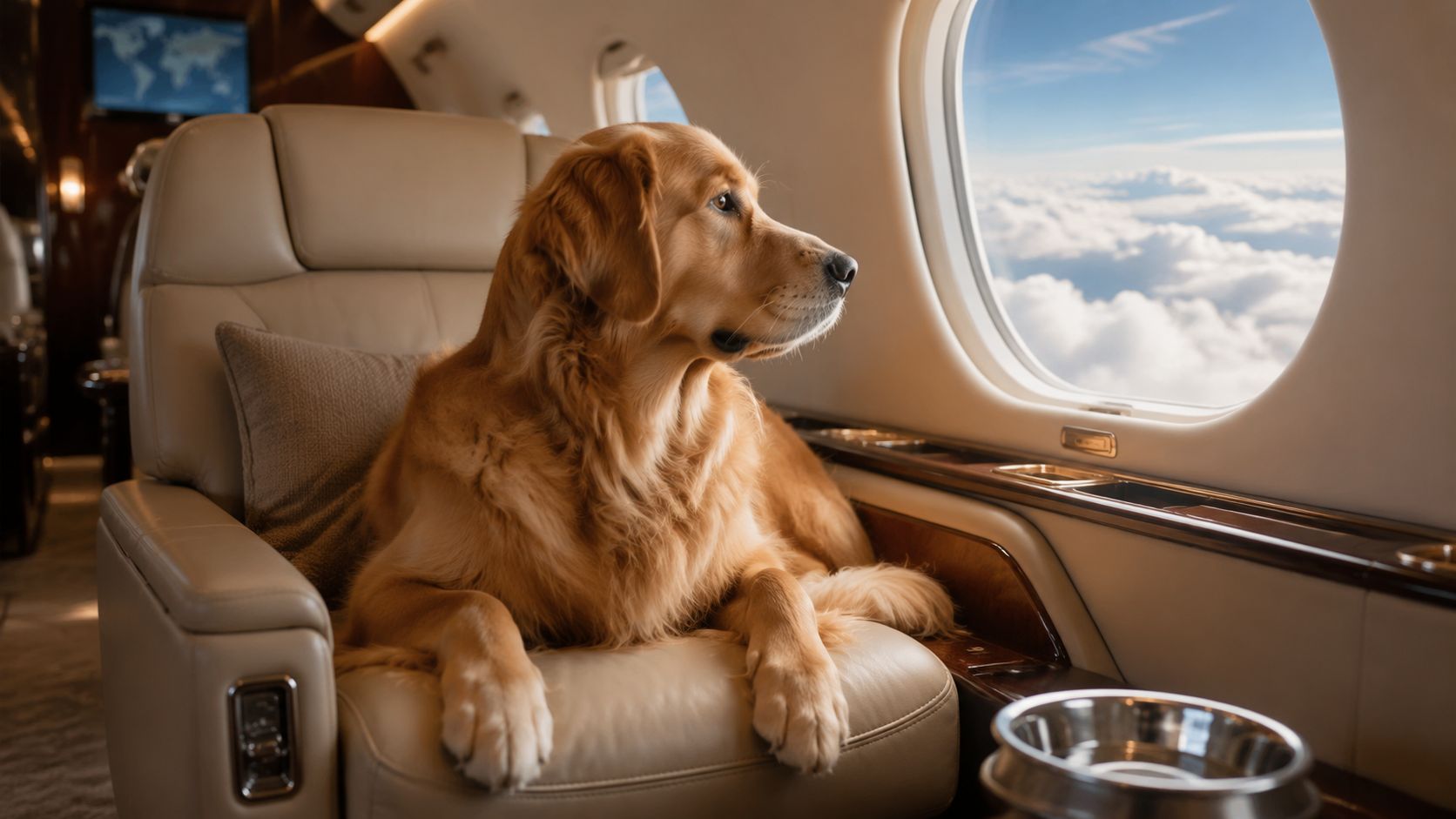
A calm cabin changes the trip more than any luxury feature on the aircraft. For pets, the difference between riding beside you and being separated from you is the difference between manageable stress and preventable trouble.
Cabin access is only half the story
Owners fixate on whether a pet is allowed in the cabin. I care just as much about how that access works in practice. Full charter gives you control over cabin setup, timing, noise, and movement. Shared charter can still work well, but it comes with tighter rules around where the pet sits, how it is restrained, how other passengers feel about animals onboard, and what happens if your dog is vocal or unsettled.
That distinction matters. A Labrador on a full charter can usually stretch out at your feet with familiar bedding and a simple routine. The same dog on a shared flight may need a more controlled setup and much better behavior. If your pet needs space, predictability, or quiet, book the whole aircraft and stop trying to save money in the wrong place.
Large dogs also expose the gap between marketing language and real operating policy. Some operators do accommodate very large breeds in the cabin without pushing them toward cargo handling. Others say "pet-friendly" until you ask about weight, breed, or whether the dog can remain outside a carrier for the full trip. Ask for the actual rule set before you sign.
What I tell clients to bring onboard
Pack for regulation, not indulgence. The goal is a settled animal and a clean cabin.
- A familiar blanket or bed pad: Scent and texture help the pet settle quickly.
- One proven toy or chew: Bring the item your pet already uses at home.
- Water bowl and absorbent wipes: Hydration is simple. Cleanup needs to be immediate.
- Leash and backup lead: Ramp transitions are where control matters most.
- Any required carrier or restraint: Some operators require one for taxi, takeoff, landing, or shared-cabin positioning.
- A small cleanup kit: Pads, waste bags, and towels help you avoid avoidable cabin charges.
For owners who want a practical primer on cabin routines, these tips for flying on private jets with pets are worth reviewing before departure.
Comfort affects safety and cost
I do not treat in-cabin pet travel as a vanity upgrade. It is operational risk management.
You can spot stress early when your pet is beside you. You can correct pacing, whining, overheating, or agitation before it turns into a bigger problem. You also reduce the chance of accidents that trigger post-flight cleaning fees, detailing charges, or claims for cabin damage. Those costs are rarely highlighted in glossy pet travel guides, but they show up on invoices all the time.
A smooth flight usually looks boring. The pet lies down quickly, drinks a little water, ignores the novelty, and stays in a controlled part of the cabin.
Freedom requires boundaries
Do not confuse cabin access with total freedom. A pet that jumps on seats, crowds the aisle, reacts to crew movement, or refuses restraint creates a problem for everyone onboard. Tell the operator exactly how your animal behaves in enclosed spaces, especially on a shared charter. If the dog is young, anxious, reactive, or flying for the first time, set up the cabin around those facts instead of hoping the pet will "figure it out."
The best in-flight experience is controlled, quiet, and predictable. That is what protects your pet, your schedule, and your final invoice.
Your Essential Pre-Travel Checklist and FAQs
Pet travel demand keeps rising. Execution still breaks down on the same avoidable details: unclear fee language, the wrong charter format, and paperwork reviewed too late to fix.
That is the part many pet travel guides skip. The flight itself is rarely the hardest part. The expensive mistakes usually show up before departure or after landing, when an owner learns that a "pet-friendly" quote did not include a cleaning surcharge, a deep-detail fee after an accident, extra ground handling, or the tighter rules that come with a shared charter.
Treat this final review like a risk check. If any point below is still vague 48 hours before wheels up, fix it then, not at the airport.
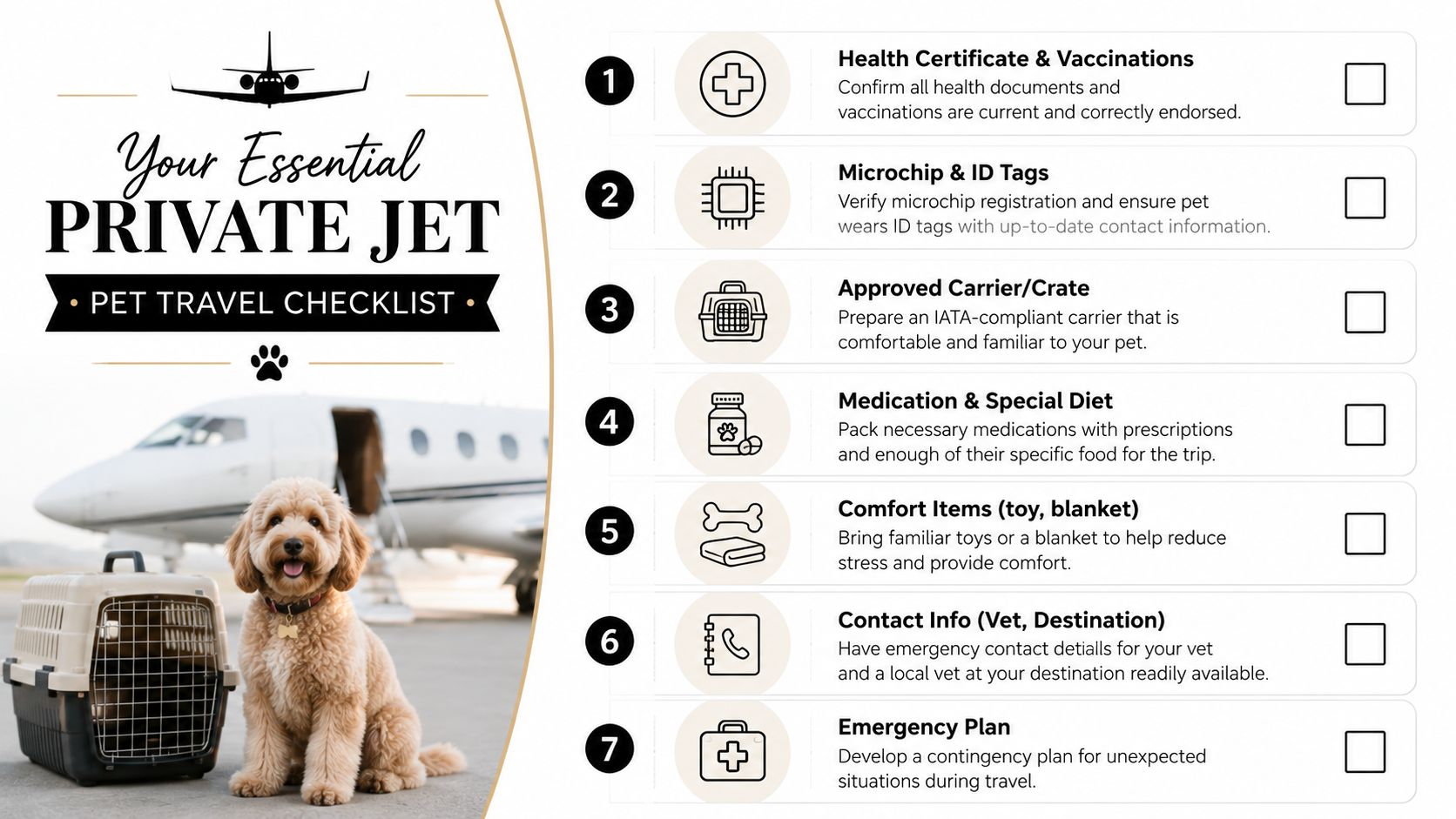
The checklist I'd use myself
- Disclose the pet in the first message: State species, breed, weight, age, temperament, and whether the animal will sit calmly at your feet or needs a carrier setup.
- Get every pet-related charge in writing: Ask specifically about cleaning fees, odor treatment, stain removal, damage claims, de-icing delays with pets onboard, and extra handling on arrival.
- Confirm the charter format: Full charter gives you control. Shared charter gives you a lower entry price and less flexibility. Do not book one while expecting the standards of the other.
- Match the aircraft to the animal: Large dogs, senior pets, short-nosed breeds, and anxious first-time travelers need the right cabin layout and boarding plan before the aircraft is confirmed.
- Verify the paperwork order: On some routes, microchip date, rabies date, health certificate date, and parasite treatment timing must line up exactly.
- Send documents for pre-clearance: Have the operator or pet travel specialist review scans before departure day.
- Pack for operations: Leash, harness, absorbent pads, wipes, food, water bowl, medication, crate or restraint if required, and printed backups of all documents.
- Confirm the arrival chain: The car, driver, handler, hotel, villa, or yacht transfer must all be briefed that an animal is arriving.
Quick answers to the questions clients usually ask last
Can my dog roam freely during turbulence
Only when the crew allows it and the dog can stay settled. On a full charter, you usually have more flexibility. On a shared charter, expect tighter control because other passengers, crew workflow, and cabin rules matter more.
Are shared pet charters a smart option
Yes, for the right client. They work well when the route is established, the pet is calm, and you accept stricter handling rules. They are the wrong choice if you want full control over boarding pace, cabin setup, noise exposure, or last-minute schedule changes.
What about very large dogs
Private aviation is often the better option for them, but only if the aircraft door, aisle space, and cabin footprint actually fit the dog. Ask that question before you approve the quote.
Should I sedate my pet for the flight
Use your veterinarian's guidance, based on the route, duration, breed, age, and health profile. Sedation is not a shortcut for poor planning or an unsuitable charter setup.
Are cats and other pets possible
Yes, in many cases. They need their own handling plan. Cats often require stricter containment, quieter boarding, and a more deliberate cabin setup than dog owners expect.
My final view
Private jet pet travel runs well when you treat it like an aviation operation with an animal onboard, not a luxury extra. The clients who avoid problems do three things early. They lock down the actual cost, including post-flight cleaning exposure. They choose the correct charter model instead of chasing a cheaper quote. They clear paperwork before anyone drives to the airport.
If you want help planning a pet-inclusive itinerary without the usual booking ambiguity, Haute Jets can source from a large network of owner-operators, confirm aircraft-specific pet policies before you commit, and coordinate the exact flight details that matter when an animal is traveling with you.