
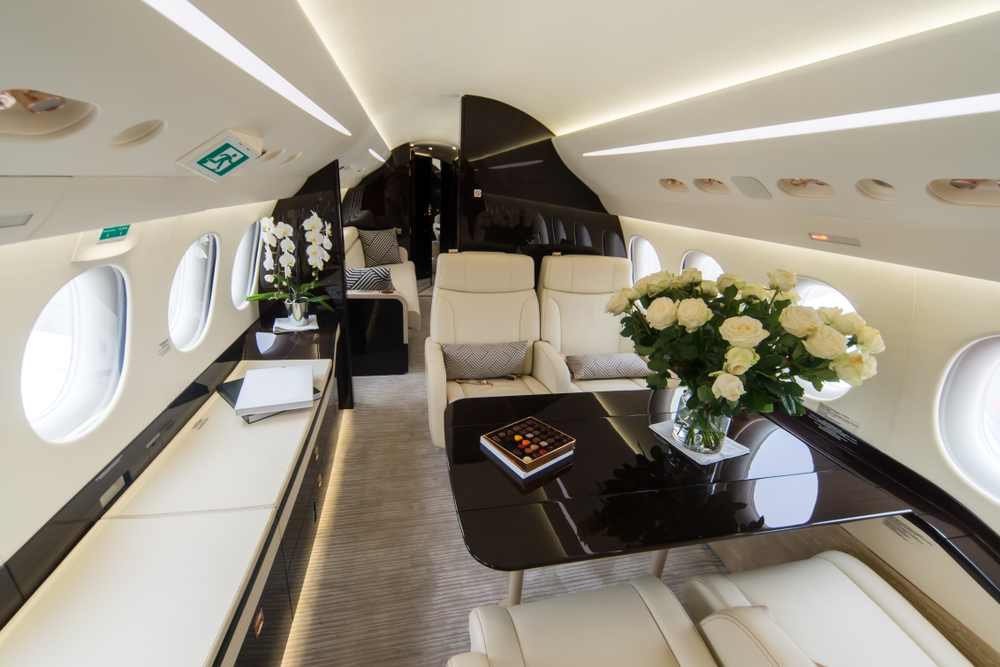
Booking a private flight is much simpler than most people think. It's really about knowing what you want and working with a charter provider who can deliver it. Gone are the days of rigid, expensive programs; today, services like Haute Jets offer direct access to a worldwide fleet of safety-vetted aircraft at wholesale prices, all without locking you into a costly membership.
On-Demand Charter Is the New Standard
The old way of flying private—think fractional ownership and restrictive jet cards—is quickly becoming a thing of the past. Smart travelers, whether they’re executives on a tight schedule or families heading on vacation, now expect more flexibility, transparency, and genuine value. This guide is your inside track to navigating the modern world of on-demand private flights.
This isn't about committing to a single fleet or paying massive upfront fees anymore. It's about using a tech-focused, on-demand approach that puts a global network of aircraft at your fingertips. The goal is simple: get the right jet for your specific trip, every time, without paying for more than you need.
The numbers don't lie. In 2025, private jet charter and fractional flights hit a record 2,010,143 departures worldwide. That’s a staggering 36% jump from pre-pandemic levels in 2019. This explosive growth shows just how many high-net-worth individuals and business leaders are choosing the freedom of on-demand travel. You can dig deeper into these trends by reviewing the full 2025 private jet flight analysis.
The graphic below breaks down the modern booking philosophy, which centers on giving you control over flexibility, cost, and your choice of aircraft.
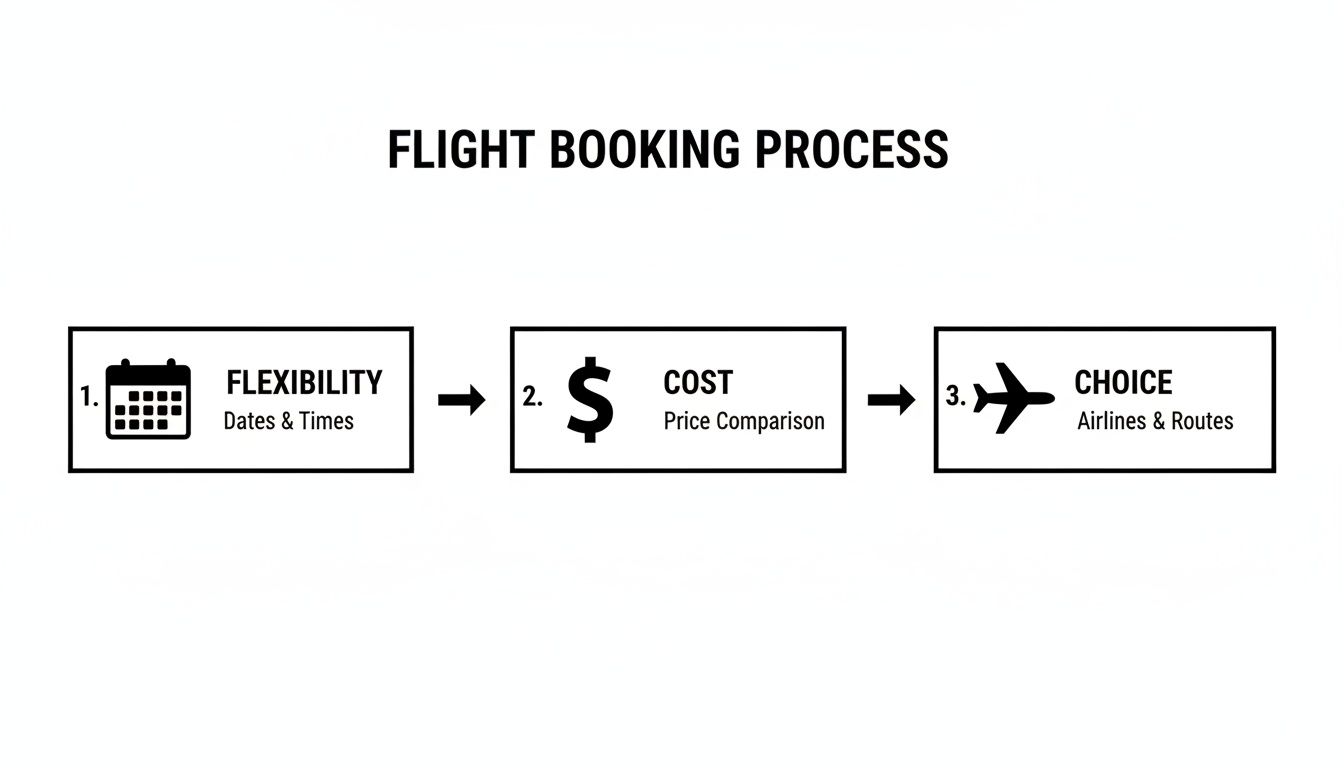
As you can see, it’s a client-first model, designed to free you from the limitations of traditional private aviation programs.
Why On-Demand Is Winning
So, what’s driving this shift away from the legacy systems? It really comes down to a few powerful advantages that solve the classic headaches of older booking methods. On-demand charter simply puts you in the driver's seat.
If you’re new to private charters, it helps to see how the different models stack up.
Private Flight Booking Models at a Glance
| Booking Model | Flexibility | Cost Structure | Aircraft Choice |
|---|---|---|---|
| On-Demand Charter | High; book flights as needed with no long-term ties. | Pay-per-flight; wholesale pricing with no upfront investment. | Vast; choose the exact make, model, and year from a global market. |
| Jet Cards | Moderate; fixed hours on specific aircraft categories. | Large upfront deposit for a set number of flight hours. | Limited to the provider's fleet or a predetermined category. |
| Fractional Ownership | Low; requires a multi-year commitment and shared ownership. | High upfront capital, plus ongoing monthly management fees. | Very limited; access to a specific aircraft type you co-own. |
Ultimately, the on-demand model is designed for maximum efficiency and choice, which is why it's become the preferred option for so many.
Here’s a quick rundown of what makes it so appealing:
- No Long-Term Commitment: You pay for each flight individually, as you need it. There are no huge upfront deposits or annual membership fees tying up your capital.
- Transparent Pricing: You see the real market price. At Haute Jets, we specialize in sourcing aircraft based near you to eliminate repositioning fees, which can otherwise inflate your quote by 20-40%.
- Total Aircraft Selection: Instead of being slotted into a generic jet from a limited fleet, you get to choose the exact make, model, and even the year of the aircraft you want to fly on.
The core benefit is straightforward: you get the advantages of a worldwide fleet without the financial weight and operational constraints of ownership or a jet card. It's simply the smartest way to fly private.
This guide will walk you through exactly how to book your flight like a seasoned pro, helping you sidestep common traps like hidden fees and limited aircraft choices. We'll show you how Haute Jets taps into a network of over 3,500 owner-operators in 175 countries to find the perfect aircraft for your mission.
Matching the Right Aircraft to Your Mission
 Getting the aircraft right is everything. The real art of booking a private flight isn't just about getting from point A to point B; it’s about selecting the perfect aircraft for the specific trip, or "mission," as we call it in the industry.
Think about it this way: you wouldn't take a two-seater sports car on a family camping trip. The same logic applies here. Every detail of your journey helps narrow down the ideal jet, ensuring you're not overpaying for space you don't need or, worse, running out of room for luggage.
Define Your Flight Mission
Before you can even think about specific aircraft, you have to get clear on your own requirements. I always tell my clients to start with these four questions. The answers give us a blueprint for finding the most efficient and comfortable option.
- How many passengers? This is the first and most obvious filter. A trip for two has completely different cabin needs than one for a full board of directors.
- What's the flight distance? A quick hop from Miami to Nassau is easy for a turboprop or light jet. Flying from New York to Los Angeles, however, requires a midsize or super-midsize jet with the legs to make it non-stop.
- How much luggage? Are we talking about a briefcase for an overnight meeting, or are you bringing skis, golf clubs, and a week's worth of suitcases? Luggage capacity varies wildly between jet classes.
- What amenities are essential? Do you need high-speed Wi-Fi to work? A fully enclosed lavatory? A proper galley for meal service? Is your pet coming along for the ride?
These details are the foundation. For a closer look at what different models offer, you can learn more about private jet types and their unique features in our detailed guide.
Going Beyond the Generic Category
This is where a modern, transparent service like Haute Jets really shines compared to old-school brokerage. Many traditional outfits will just promise you an aircraft from a generic category, like a "light jet." You often won't know the exact make, model, or even its age until just before you fly.
That’s a huge gamble. A 2005 model light jet and a 2022 model in the same category are worlds apart in terms of cabin noise, technology, and interior quality. You shouldn't have to leave those critical details to chance.
A modern, transparent platform lets you get granular. You should be able to review and hand-pick the specific aircraft for your flight.
Instead of just "a midsize jet," imagine being shown three distinct, available options:
- A 2018 Citation Latitude: Great for its spacious, flat-floor cabin and ability to access shorter runways.
- A 2020 Praetor 500: The go-to for its best-in-class range and top-tier tech, including high-speed Ka-band Wi-Fi.
- A 2016 Challenger 350: Known for an extra-wide cabin that’s perfect for larger groups, delivering a quiet, smooth ride.
This puts the control back in your hands, so you can choose based on what truly matters to you—be it cabin comfort, Wi-Fi speed, or simply the age of the aircraft.
Matching the Aircraft to the Airport
Your mission isn't just about passengers and bags; it also involves the airports themselves. Some airports have unique operational challenges that restrict which aircraft can safely fly in and out.
Aspen-Pitkin County Airport (ASE) is a classic example. Its high altitude, surrounding mountains, and tricky weather patterns make it one of the most demanding airfields in the United States. Not every jet has the performance or certification to operate there.
For a trip to Aspen, an aircraft like a Cessna Citation Sovereign, with its powerful climb rate and short-field capabilities, is a much smarter choice than other jets in its class that just can't handle the conditions.
When you book your flight, your provider should automatically factor this in, presenting you with options that are not only right for your group but also perfectly suited for the demands of your entire route.
Understanding Charter Prices and How to Avoid Hidden Costs

Trying to understand the price of a private flight can feel overwhelming at first. But once you know what you’re looking at, it’s actually pretty simple. A charter quote isn’t just an hourly rate; it's a complete breakdown of your trip’s cost, and learning to read it is the mark of a savvy flyer.
The private jet market has seen explosive growth, jumping from $25.87 billion in 2021 to an estimated $39.84 billion by 2025. Why? Because the time-saving benefits are undeniable. For our clients at Haute Jets, this translates to direct access to over 3,500 safety-vetted aircraft around the globe, all without the sticker shock that comes from repositioning fees.
Let's break down what actually goes into the price when you book a private flight.
What's Inside Your Charter Quote
When you get a quote, transparency is everything. A good provider will lay out every line item clearly so you know exactly what you’re paying for.
Here’s a look at the standard charges you'll see:
- Aircraft Hourly Rate: This is the base cost for every hour the engines are running. It changes dramatically depending on the jet’s size, age, and capabilities.
- Federal Excise Tax (FET): This is a non-negotiable 7.5% tax on domestic flights and any travel within 225 miles of the U.S. border.
- Fuel Surcharge: Sometimes this is rolled into the hourly rate, but it's often listed separately to account for fluctuating fuel prices.
- Landing and Handling Fees: Airports charge for landing, parking, and using the private terminal (FBO). Fees at major hubs like Teterboro (TEB) will naturally be higher than at smaller, regional airports.
- Crew Overnight Fees: If your trip requires the pilots to stay overnight, this covers their lodging and daily expenses.
While these charges are standard, the one cost that can quietly inflate your bill is the repositioning fee. It’s the biggest "gotcha" in the industry.
The Hidden Cost You Need to Watch: Repositioning Fees
So, what is a repositioning fee? Simply put, it's the cost of flying the aircraft empty to pick you up and then flying it empty back to its home base after your trip. Many brokers work with a limited network, so they might have to pull a jet from hundreds of miles away to service your flight.
You end up paying for those "empty leg" hours. I’ve seen this add a staggering 20-40% to a final bill—a huge premium for what is essentially a logistical hiccup.
Let’s put it into a real-world context.
Cost Scenario: New York to Miami
Say you want to fly from New York (TEB) to Miami (OPF) on a super-midsize jet. Here’s how the numbers can change dramatically based on where the aircraft is sourced from.
| Cost Component | Traditional Broker (with Repositioning) | Haute Jets (Local Sourcing) |
|---|---|---|
| Aircraft Location | Boston (BOS) | White Plains (HPN) |
| Live Flight Time | 2.5 hours | 2.5 hours |
| Repositioning Time | 1.5 hours (BOS-TEB & OPF-BOS) | 0.2 hours (HPN-TEB) |
| Total Billable Hours | 4.0 hours | 2.7 hours |
| Hourly Rate | $8,500 | $8,500 |
| Estimated Flight Cost | $34,000 | $22,950 |
By sourcing an aircraft already near the departure airport, the client in this example saves $11,050. The entire Haute Jets model is built on this principle: our vast network of locally-based aircraft means you don't pay for someone else's plane to commute.
Flexible Payments for a Modern World
The way you pay for your charter should be just as seamless as the flight itself. While wire transfers and credit cards are standard, the best providers are adapting to how modern clients manage their finances.
At Haute Jets, for example, we accept cryptocurrency. It’s a secure, discreet, and efficient payment option that appeals to a growing number of individuals and businesses. It's one of the many ways we focus on a client-first experience, from initial quote to final payment.
If you want to get even deeper into the details, you can read our complete guide to unraveling private jet charter costs. This is the level of transparency you should expect every time you fly private.
How to Verify Your Operator’s Safety Credentials
Beyond the leather seats and champagne, the single most important element of any private flight is something you’ll never see: the operator's safety culture. When you book a jet, you’re not just chartering a plane; you are placing your trust in the hands of the company that owns, maintains, and flies it.
Learning how to look behind the curtain and verify an operator's commitment to safety is the most valuable skill you can have as a private flyer. It’s about ensuring their standards aren’t just good—they're exceptional.
The skies are more crowded than ever. With global business jet flights hitting a record 3.9 million departures in 2025—a 5% increase from the year before—and North America seeing over 236,000 monthly flights, you can’t afford to make assumptions. This is exactly why at Haute Jets, we made a non-negotiable rule: we only work with operators who have passed the industry's most rigorous third-party safety audits.
The Gold Standard: Wyvern and ARGUS Audits
In the world of private aviation, two names stand above all others when it comes to safety verification: Wyvern and ARGUS. Think of them as independent investigators for the private jet industry. They conduct exhaustive, top-to-bottom reviews of an operator’s entire business, from pilot training protocols to the company's financial stability.
An operator can say they’re safe, but a Wyvern Wingman or ARGUS Platinum rating proves it. These audits are completely voluntary and incredibly demanding, so operators who earn them are actively investing in a culture of excellence that goes far beyond minimum government requirements.
This is a filter we apply to every single flight. Our commitment is simple: we exclusively charter from operators holding a Wyvern Wingman or ARGUS Gold/Platinum rating. It’s how we guarantee that every flight arranged through Haute Jets is backed by the highest safety standards in the business.
What Do These Safety Ratings Actually Mean?
So, what does it take for an operator to earn a top-tier rating? It’s far more than just checking a few boxes. These audits confirm a deep, company-wide obsession with safety.
You can explore our complete guide to Wyvern and ARGUS safety audits for a deeper look, but here’s a snapshot of what these elite ratings verify:
- A Proven Safety Management System (SMS): This isn't just a manual on a shelf. It's a proactive, formal process for identifying and mitigating risks before they ever become a problem.
- Intensive, Continuous Pilot Training: Pilots must undergo frequent, challenging simulator training that prepares them for scenarios far outside the scope of basic FAA requirements.
- Impeccable Maintenance Records: Every aircraft's entire history is scrutinized to ensure every inspection, repair, and directive has been perfectly documented and completed on time.
- Strict Pilot Experience Minimums: The audits verify that every crew member meets high thresholds for total flight hours and time in the specific aircraft type, along with passing comprehensive background checks.
- Operational and Financial Integrity: Wyvern and ARGUS also evaluate the operator's organizational structure and financial health to ensure they can sustain their high safety standards for the long haul.
Understanding Private Aviation Safety Ratings
To make sense of it all, here is a quick breakdown of what the industry's top third-party safety audits look for and why it’s critical for your peace of mind.
| Safety Rating | What It Verifies | Why It Matters for Your Flight |
|---|---|---|
| Wyvern Wingman | A comprehensive audit of the operator's SMS, maintenance practices, company culture, and pilot records. | Confirms the operator has a proven, proactive safety culture and isn't just meeting the bare minimum. |
| ARGUS Platinum | The highest ARGUS rating, resulting from an on-site audit that examines every aspect of flight operations, maintenance, and the SMS. | This is the pinnacle of verification, proving an operator has a well-developed safety culture and a flawless operational history. |
| ARGUS Gold | A detailed evaluation of the operator's historical safety record, aircraft, and pilot background qualifications. | Provides a strong, data-driven assurance that the operator, crew, and aircraft all have a clean and verified history. |
Ultimately, these ratings remove the guesswork from choosing a safe operator.
When you're ready to book, there’s one question that cuts through all the noise: "Is the operator Wyvern Wingman or ARGUS Platinum rated?" If your provider hesitates, can't answer, or says no, that’s your signal to walk away. When it comes to your safety, there is simply no room for compromise.
From Confirmation to Takeoff: What to Expect Next
The ink is dry on your charter agreement. You've picked the perfect jet and locked in your schedule. So, what happens between now and wheels-up? This is where the real white-glove service kicks in, turning the usual pre-travel scramble into a remarkably smooth and controlled experience.
Once you’ve booked with us, our work is just getting started. Behind the scenes, our flight operations team is in constant motion, coordinating every last detail to make sure your trip goes off without a hitch. It’s all about meticulous preparation and clear communication, so you can relax knowing everything is handled.
Your Pre-Flight Briefing: The 24-Hour Countdown
About 24 hours before your departure, you’ll receive a comprehensive pre-flight briefing. Think of this as your complete flight dossier, not just a quick confirmation email. It’s designed to answer every question before you even think to ask it, leaving no room for last-minute surprises.
Your briefing from Haute Jets will lay out everything clearly:
- Your Aircraft’s Tail Number: The specific registration of the jet dedicated solely to your trip.
- Meet Your Crew: We provide professional bios for your pilots, so you know exactly who is in command.
- Complete Weather Outlook: A detailed weather report for your departure and arrival cities, so you’re prepared for the conditions on the ground.
- Final Passenger Manifest: A final check to confirm everyone traveling with you.
This level of detail is a core part of the private charter experience. It replaces the anxiety of the unknown—so common in commercial travel—with the confidence of knowing every aspect of your journey is confirmed and professionally managed.
Departure Day: Welcome to the FBO
This is where you really feel the difference. On the day of your flight, you get to skip the chaos of the main airport terminal entirely. Forget long security lines and crowded gates. Instead, your driver will take you straight to a private terminal, known in the industry as a Fixed-Base Operator (FBO).
These are discrete, standalone facilities right at the airport but worlds away from the public hustle. You can often pull your car up right to the door, where you’ll be greeted personally and your luggage will be handled for you. The FBO itself feels more like a luxury hotel lobby than an airport—it’s quiet, comfortable, and exclusive.
While most FBOs have beautiful lounges with Wi-Fi and refreshments, you probably won't be there for long. One of the biggest perks is that you only need to arrive 15-20 minutes before your flight. You'll clear a quick, private security screening and can often walk directly onto the tarmac where your jet and crew are waiting to welcome you aboard.
A True Door-to-Door Journey
The premium service doesn’t stop at the airport. At its best, private aviation is about creating a seamless door-to-door journey. This is something we specialize in—arranging every leg of your ground transportation so your trip is truly effortless.
Picture this:
A pre-arranged black car picks you up from your office and brings you to the FBO’s front door. When you land, another car is already waiting on the tarmac, just feet from the aircraft stairs. You can step from the jet directly into your waiting vehicle and be on your way to your hotel or meeting in minutes, without ever setting foot inside the destination terminal.
This integrated approach is what makes private travel so incredibly efficient. It's not just about saving time in the air; it's about optimizing every single moment of your journey from the second you book until you arrive at your final destination.
Frequently Asked Questions About Booking a Private Flight

Even if you’ve flown private before, the booking process can raise a few questions. From timing and pricing to choosing the right jet, we get asked about it all. Here are some straightforward answers to the questions we hear most often, based on years of experience chartering flights around the globe.
How Far in Advance Should I Book a Private Flight?
Timing is everything. For the best blend of aircraft availability and pricing, we’ve found the sweet spot is booking one to two weeks in advance. This gives us enough time to find the perfect, locally-based aircraft for your trip, which is key to avoiding unnecessary costs.
That said, the beauty of an on-demand charter is its flexibility. We arrange same-day flights all the time, especially out of major hubs like New York, Los Angeles, and London. It’s entirely possible when you have access to a live, global inventory of available aircraft.
However, if your travel plans involve a major event like the Super Bowl, Art Basel, or a holiday weekend, you'll want to plan further ahead.
- Peak Season Travel: Book four to six weeks out. This helps you lock in a great aircraft before demand—and prices—skyrocket.
- Standard Travel: A 7-14 day window is usually the perfect amount of time.
- Last-Minute Needs: On-demand services can get you in the air with just a few hours' notice, something most jet card programs simply can't handle.
Are Jet Cards Cheaper Than On-Demand Charters?
It’s a persistent myth that jet cards save you money. While they're often marketed for their simplicity, they almost never end up being the more economical choice. The truth is, their business model has a lot of hidden costs baked right in.
First, jet cards require a massive upfront payment—often six figures or more—just to buy a block of hours. Then you have to factor in annual fees, surcharges for flying on peak days, and the biggest one: repositioning fees, which are cleverly bundled into your hourly rate.
On-demand charter is a true pay-as-you-fly model. We find aircraft at wholesale rates from operators who are already near your departure city. This simple step completely eliminates the 20-40% markup that comes from hidden repositioning fees. You only pay for your flight, not the cost of moving a plane across the country for you.
What Information Do I Need to Get a Quote?
Getting a fast, accurate quote is incredibly simple. All we need to get started are the basics, and from there we can pull real, available options from our network of safety-audited operators.
To get the ball rolling, just tell us:
- Your Itinerary: Simply where you're leaving from and where you're headed.
- Travel Dates: Even a target date is perfect if you have some flexibility.
- Number of Passengers: This is the main factor that helps us determine the right size jet for your group.
While it’s not required for an initial quote, giving us a heads-up on any specific needs helps us zero in on the perfect aircraft much faster. Mentioning things like extra luggage for ski or golf trips, needing high-speed Wi-Fi for work, or traveling with pets lets us tailor the options right from the start.
Can I Really Choose My Exact Aircraft?
Absolutely—and you should always insist on it. The old-school way of booking a generic "midsize jet" is outdated and leaves far too much to chance. The difference in age, quality, and amenities between two aircraft in the same category can be night and day.
A modern charter service should put the choice in your hands. When you book with Haute Jets, you’ll see a selection of specific, named aircraft for your route. That means you can review:
- The exact year, make, and model of the jet.
- High-resolution photos of the actual cabin you will be flying in.
- A confirmed list of onboard amenities, like Wi-Fi, entertainment systems, and galley features.
This transparency ensures the aircraft meets your standards and that there are no surprises on the day of your flight. It's a non-negotiable part of a premium charter experience and a standard you should expect every single time.
Ready to see how simple and transparent private aviation can be? The team at Haute Jets is ready to find the perfect aircraft for your next trip, with no memberships or upfront commitments. Book your flight today and discover a smarter way to fly.