

You're reviewing a charter quote for a group trip, and one line item stops you cold: CRJ 200. If you've flown regionally in the past, that name may bring back memories of a tight cabin, small bins, and a flight that felt longer than it was. That reaction is understandable.
What matters in private aviation, though, isn't just the aircraft model. It's the actual cabin configuration you're booking, how the operator has outfitted it, and whether the mission fits the airplane. That's where many buyers get tripped up. They see a former regional airliner and assume compromise, when in reality the CRJ 200 can be a smart charter tool for the right passenger count, route, and luggage profile.
This guide appears on Haute Jets Journal for one reason: clients deserve an honest explanation of what CRJ 200 aircraft seating really means in charter. Not brochure language. Not airline nostalgia. Just the practical implications that affect comfort, logistics, and value.
Why the CRJ 200 Deserves a Closer Look for Charter
A client planning a golf trip, executive shuttle, or event movement often starts with the same question: why is a former regional jet showing up next to more traditional private aircraft? The short answer is simple. The CRJ 200 was built to move a meaningful number of passengers efficiently, and that basic strength still matters in charter.
The commercial history is real. The Bombardier CRJ-200 became a fixture of regional aviation with a standard 50-passenger design, and it remained a defining aircraft in that market for years, as outlined in this CRJ-200 overview from SeatMaps. For many travelers, that legacy still shapes first impressions.
But charter buyers should look at the aircraft differently. In private service, the CRJ 200 often works best as a group aircraft with flexibility, not as a substitute for a large-cabin long-range jet. It can be the right answer when you need more seats than a typical business jet offers, want to keep your party together, and don't need the cabin volume of a much larger airliner.
What changed in the charter market
A major shift came as airlines began retiring older 50-seat regional jets from scheduled service. That opened the door for more specialized charter use. Some aircraft remain close to airline layout. Others are reworked for fewer passengers, more legroom, and a more executive feel.
Practical rule: Never judge a CRJ 200 by the airline version you remember. Judge the exact tail, exact interior, and exact mission.
That distinction matters. A tightly packed shuttle for a sports movement has very different value than a VIP conversion moving a smaller group in far more space. Same platform. Very different client experience.
Where it works well
The CRJ 200 tends to make sense in a few specific situations:
- Corporate groups: When a team wants one aircraft instead of splitting across multiple smaller jets.
- Event and production movements: When schedule control matters more than ultra-premium cabin theatrics.
- Regional missions: When the route suits a jet originally designed for short-haul connectivity.
It's not the aircraft I'd pick for every luxury traveler. It is, however, an aircraft I'd take seriously when the seating layout aligns with the trip. That's the key story behind CRJ 200 aircraft seating in charter.
The Baseline Standard CRJ 200 Seating Configuration
A client books a CRJ 200 expecting "private jet" space because the flight is chartered, then boards an aircraft built around an airline cabin plan. That gap between expectation and reality usually starts here, with the baseline layout the airframe was originally designed to carry.
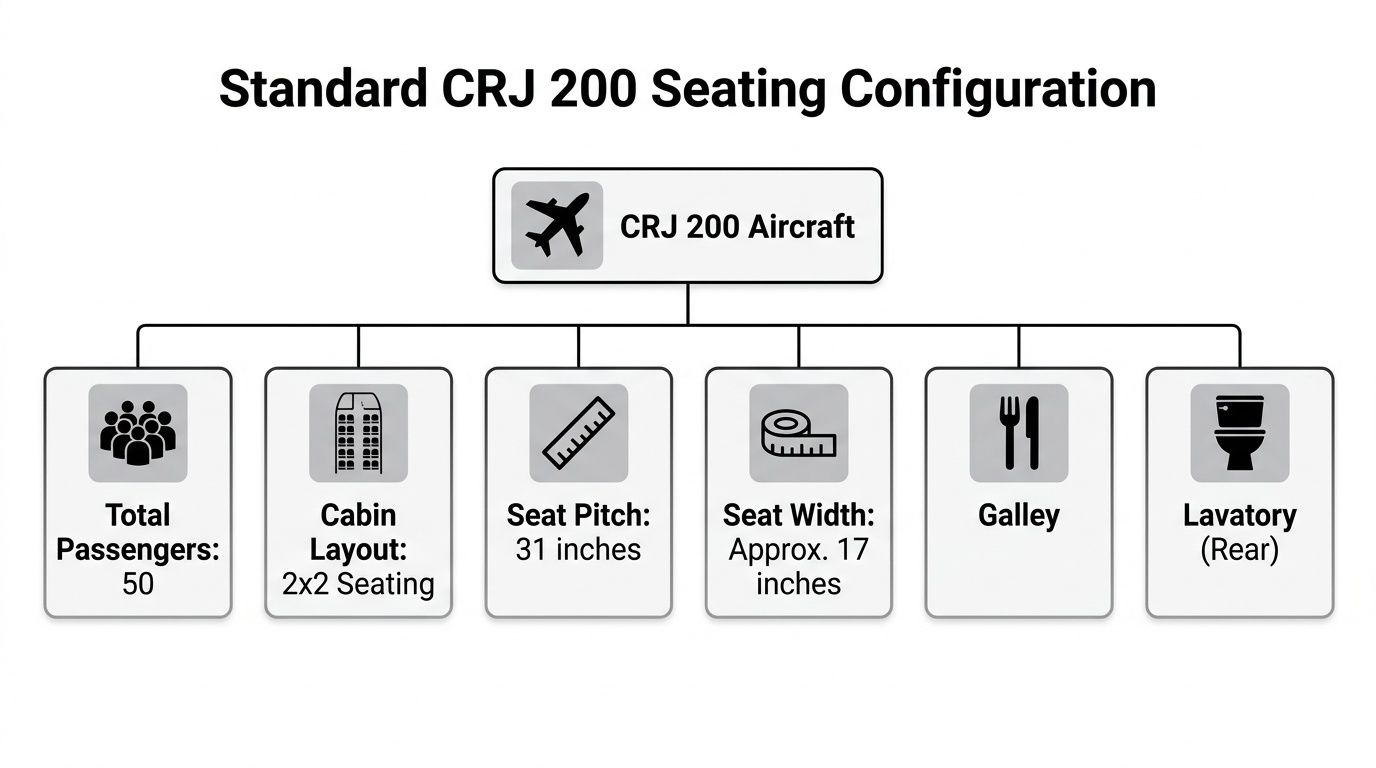
In standard airline form, the CRJ 200 is a 50-passenger aircraft with a single-class, 2-2 seating arrangement. For charter buyers, that matters less as a trivia point and more as the reference line for every quote you review. If an operator offers the aircraft with fewer seats, more pitch, or a club-style section, you need to know what was changed from the original and what was not. A good private jet seating guide for comparing cabin layouts helps frame those differences quickly.
What the 2-2 layout actually means
The first advantage is simple. There are no middle seats.
That is a real plus for group charter. Every passenger gets either a window or an aisle, which is easier to sell internally when you are moving executives, a family office party, a sports staff, or production personnel. Boarding also feels more orderly than on a larger narrowbody because nobody is climbing over a center-seat passenger.
The trade-off is that the cabin was laid out for efficient regional airline service, not for the open feel luxury clients often associate with private aviation. Four seats across sounds reasonable on paper. In practice, the narrow cross-section makes each row feel compact, especially once coats, laptops, and personal items are in use.
A practical snapshot of the standard cabin:
| Cabin element | Standard CRJ 200 baseline |
|---|---|
| Passenger count | 50 |
| Main layout | 2-2 single aisle |
| Typical use | Regional airline service |
How to read the baseline as a charter buyer
Seat maps can give false comfort if you read them like a spec sheet instead of a buying tool. What matters is how the original airliner layout affects the mission you are planning.
On a short group hop, the standard arrangement can work well. You keep everyone on one aircraft, avoid splitting the party across multiple light or midsize jets, and usually do it at a more sensible cost per seat. For a shuttle-style trip, that is often the point.
For a VIP-heavy movement, the same baseline raises different questions. How many seats were removed. Was pitch increased. Are there divans, conference groupings, or airline seats with better spacing. I always tell clients to ask for the actual interior photos and the current seat count, not just the aircraft type.
Why this baseline matters more than the headline aircraft name
The CRJ 200's value in charter comes from conversion. The airframe began life as a 50-seat regional airliner. What you are really buying is how far a specific operator has taken that platform toward a private, executive, or shuttle mission.
That is why two CRJ 200 quotes can look similar and feel completely different once you step onboard. One may still function like a practical people-mover. Another may give a smaller group a much more comfortable setup with extra personal space and a calmer cabin flow.
Use the standard configuration as your benchmark. Then judge the charter version against it, seat by seat.
Decoding the Dimensions Cabin Comfort and Constraints
Specs by themselves don't help much unless you know what they feel like. The CRJ 200's cabin tells a very specific story once you translate dimensions into passenger experience.
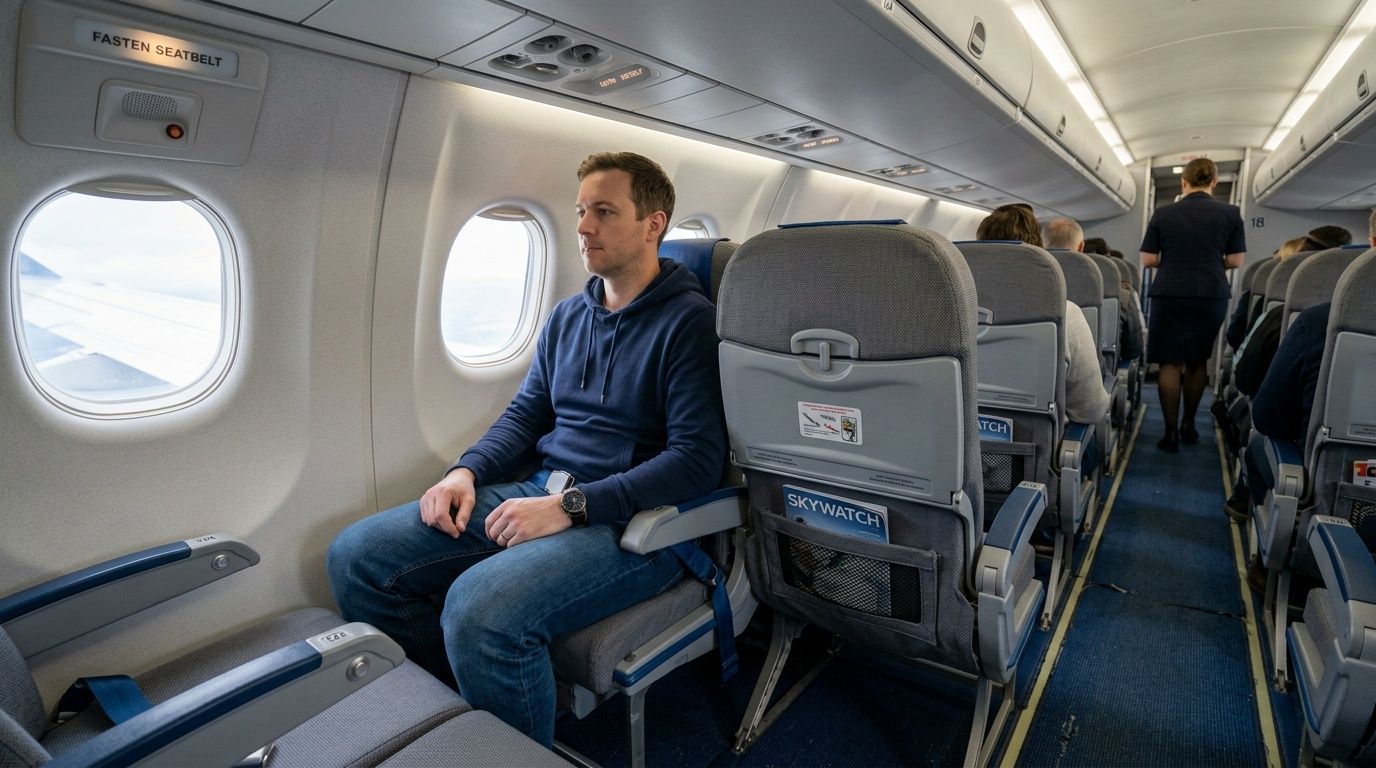
The airframe's cabin measures 8.43 feet wide and 6.1 feet high, and paired with its 31-inch seat pitch, that creates a tighter envelope than larger narrowbody cabins. It also limits recline to 3 inches, and the aircraft's 3,500-pound baggage capacity can be a pinch point on full flights, according to Ready for Takeoff's CRJ 200 cabin summary.
What passengers notice first
The sidewalls and ceiling are often noticed before pitch is considered. The cabin isn't unusable. It's just compact in a way that feels unmistakably regional.
If you're average height, you can sit comfortably for a short mission. If you're tall, broad-shouldered, or traveling in formalwear with a laptop bag, the cabin starts to feel more restrictive. That's especially true if you're comparing it to a super-midsize jet or a large-cabin business aircraft.
The key difference is that the CRJ 200 was designed to seat many people efficiently. Comfort exists within that design brief, but it isn't the same comfort philosophy as an executive jet built around fewer passengers.
The seat itself versus the cabin around it
A lot of buyers focus on the seat dimensions and miss the larger issue. The seat may be acceptable on paper. The surrounding space is what shapes the experience.
Here's how that usually plays out:
- Legroom: The 31-inch pitch is manageable on shorter legs.
- Shoulder room: The narrow cabin makes the seat feel tighter than the width number alone suggests.
- Recline: A 3-inch recline limit gives only modest relief in flight.
- Movement: Standing, turning, and passing other passengers takes more care than in a roomier cabin.
For a broader comparison of how cabin layout changes onboard comfort across categories, this private jet seating guide is a useful reference.
If your group values space to move as much as space to sit, the CRJ 200's dimensions matter more than its seat count.
The baggage reality
Luggage is where many first-time CRJ 200 charter clients get surprised. A cabin can work for the passenger count and still become operationally awkward if everyone arrives with bulky bags, garment carriers, or equipment.
On a lighter group movement, that's manageable. On a ski trip, production run, or executive movement with heavy personal luggage, it needs close planning. The aircraft can still work, but the trip coordinator has to think ahead about what's being loaded and how much space the operator has available.
A quick cabin comfort snapshot helps frame it:
| Comfort factor | What it means onboard |
|---|---|
| 6.1-foot cabin height | Most passengers can stand briefly, but it won't feel spacious |
| 8.43-foot cabin width | The cabin feels narrow, especially when boarding |
| 3-inch recline | Fine for short sectors, limited for rest |
| 3,500-pound baggage capacity | Needs scrutiny for full groups with substantial luggage |
A short cabin walk-through helps clients set expectations before they book:
When the constraints matter most
The CRJ 200's cabin limitations become more noticeable under three conditions. First, when the route gets longer and passengers expect more room to settle in. Second, when the group travels with substantial baggage. Third, when the buyers think they're getting a traditional private jet experience instead of a private chartered regional jet adapted for their mission.
That doesn't make the aircraft a poor choice. It means the aircraft needs to be matched carefully.
Amenities and Practical Layout Onboard the CRJ 200
A seating chart tells only part of the story. Day-of-flight experience depends just as much on aisle width, storage, lavatory placement, and what the galley can realistically support.
On the standard all-economy CRJ 200, the 2-2 layout removes middle seats, but the aisle is only 0.41 meters wide. That narrow aisle slows movement and makes larger carry-ons awkward to handle, and standard roller bags often need to be checked because overhead bin volume is limited, according to United's CRJ-200 aircraft page.
The aisle changes everything
Clients often ask whether a narrow-body group charter still feels private. On a CRJ 200, the answer depends a lot on how many people are onboard and how quickly they need to move.
A 0.41-meter aisle doesn't leave much room for passing, pivoting, or stopping to organize bags. If your party boards in business attire with briefcases and garment bags, you'll feel that immediately. If the group is casual and lightly packed, the process is smoother.
That's why I advise clients to think operationally, not just cosmetically. Cabin photos may look tidy. Boarding flow is what reveals the aircraft's practical limits.
Lavatory and galley expectations
Most CRJ 200 layouts place the lavatory at the rear. It serves the mission, but nobody should expect a spacious washroom or a wide service area. The galley is similarly compact.
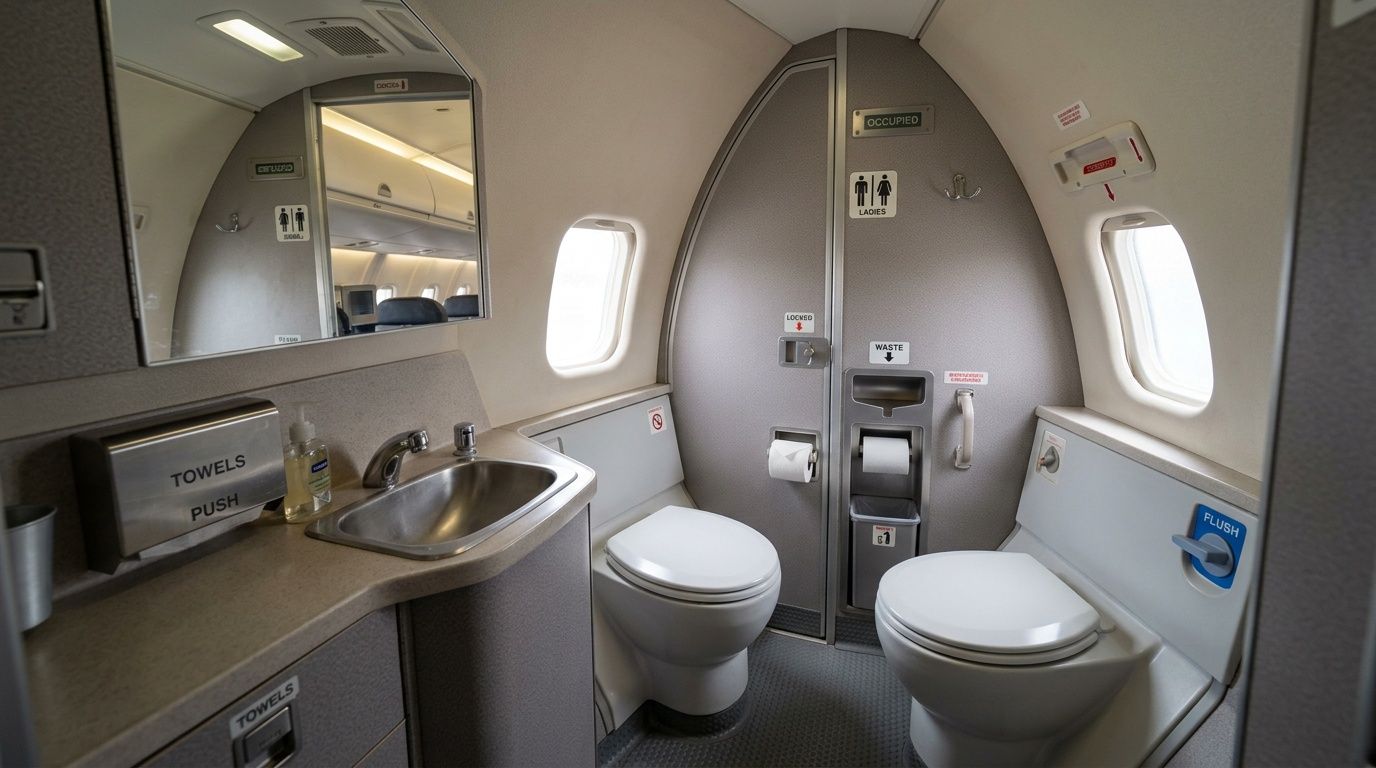
For catering, that means planning matters. The aircraft can support practical onboard service, but it isn't the platform I'd choose for an elaborate multi-course presentation. For most regional charter missions, thoughtful cold catering, premium snacks, and efficient beverage service fit the airplane well.
A CRJ 200 works best when the service plan respects the cabin's size instead of fighting it.
What to brief your group before departure
This is the part that saves headaches. If you're organizing a multi-passenger charter, set expectations before anyone arrives at the terminal.
Use a pre-flight checklist like this:
- Bag size discipline: Ask passengers to avoid assuming their standard roller will stay with them in the cabin.
- Boarding order: Load passengers who need extra time first, especially if the group includes older travelers.
- Seat assignment planning: Put travelers who may get up more often on aisle positions.
- Catering realism: Choose service that's easy to distribute and easy to clear.
What works and what doesn't
A CRJ 200 is good at moving a group efficiently. It's less good at pretending to be a wide, lounge-like cabin.
What works:
- Short to moderate sectors
- Corporate shuttles
- Event transport
- Groups with coordinated packing
What doesn't work as well:
- Loose baggage planning
- Oversized cabin bag expectations
- Travelers expecting expansive in-cabin movement
- Service concepts built for much larger jets
Those details matter because practical comfort often depends less on the seat and more on how cleanly the entire trip is run.
From Airliner to Executive Jet Operator-Specific Variations
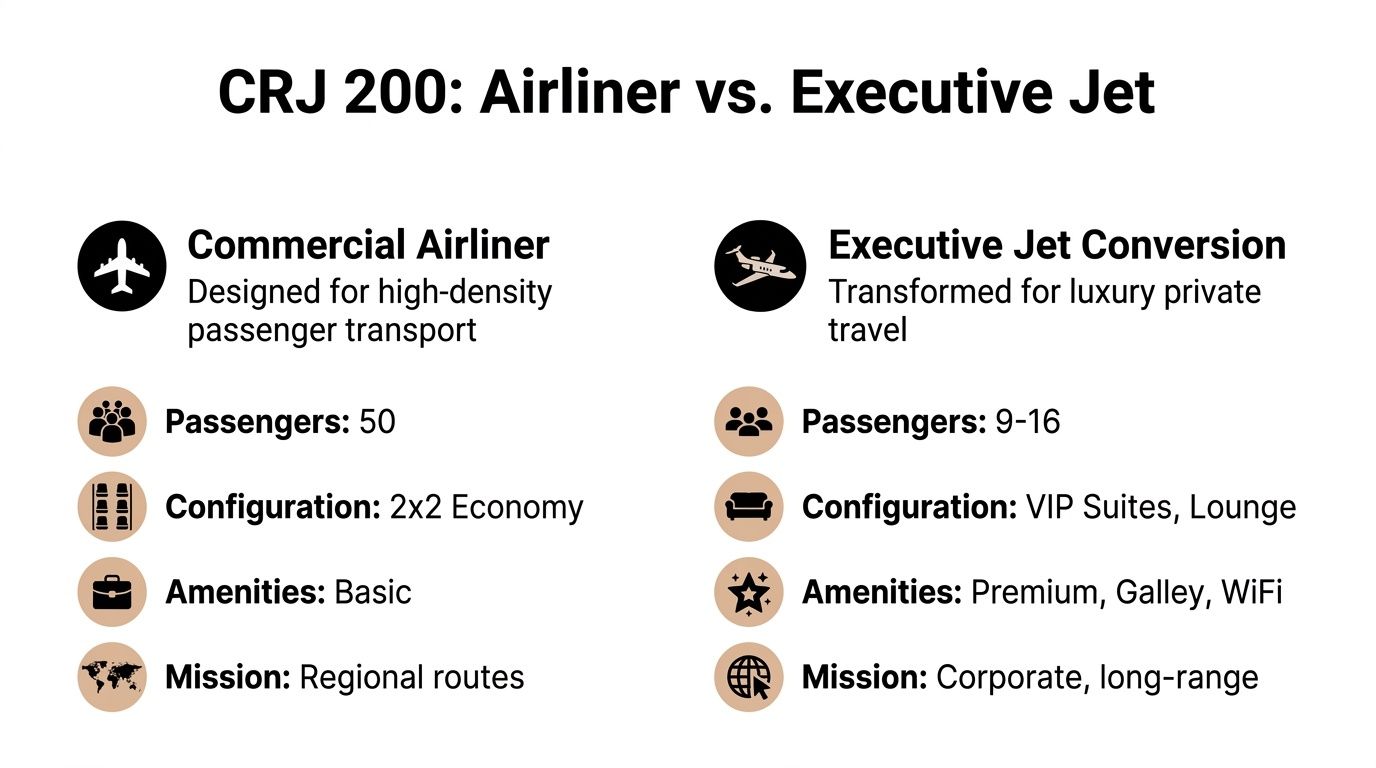
CRJ 200 aircraft seating becomes particularly interesting. The same aircraft that once carried 50 passengers in regional service is often reconfigured in private use for far fewer people. That single change alters the entire feel of the cabin.
According to Stratos Jets' CRJ-200 guide, the aircraft is frequently adapted for private charter with a typical seating capacity of 19 passengers, and Delta officially phased out its CRJ-200 fleet in November 2023. That retirement trend matters because it has helped shift the aircraft from scheduled airline utility toward more specialized charter roles.
Why fewer seats change the whole experience
A 50-seat airliner asks one question: how do we transport as many people as this platform was designed to carry? A 19-seat private charter version asks a different one: how do we use this airframe's size to give each traveler more personal space?
That difference affects almost every touchpoint:
| Version | Passenger experience |
|---|---|
| Commercial-style layout | High density, efficient, utilitarian |
| Reduced-density private layout | More elbow room, less traffic, calmer cabin |
| VIP-oriented conversion | Better spacing, upgraded seating, more executive feel |
Lower-density layouts don't magically turn the CRJ 200 into a long-range flagship jet. They do, however, solve the biggest issue many clients associate with the aircraft: compression.
What private operators tend to improve
When a CRJ 200 is converted for executive use, the biggest upgrade is simple. There are fewer people onboard. That alone changes noise, movement, boarding pace, and the sense of personal territory.
You'll also often see changes such as:
- More generous seat spacing: The cabin breathes better when operators stop chasing airline density.
- Upgraded finishes: Seating, trim, and soft goods usually feel more polished than the legacy airline version.
- Mission-specific interiors: Some aircraft are better suited to executive shuttle work, while others lean toward VIP use.
For clients comparing aircraft types, this private airliner guide helps frame where a converted regional jet fits in the broader charter market.
The smart buyer doesn't ask, “Is a CRJ 200 private?” The smart buyer asks, “Which CRJ 200 interior am I actually getting?”
The charter decision is configuration-specific
This is the biggest mistake I see. A client hears “CRJ 200” and assumes every example of that aircraft delivers the same cabin experience. That's not how the market works.
One operator may keep a practical, higher-density group layout aimed at moving more passengers cost-effectively. Another may strip the density back sharply and present the aircraft as a semi-VIP or executive shuttle product. Both are valid. They serve different clients.
Here's the useful comparison in plain terms.
A commercial-style CRJ 200 can be attractive for:
- Larger corporate movements
- Athletic or event groups
- Cost-conscious private shuttle flying
A VIP-style CRJ 200 can make sense for:
- Executive delegations
- Entertainment or production teams
- Clients who want group lift without airline-style crowding
The airline phaseout matters to buyers
Delta's fleet exit in November 2023 is worth noting because it reflects a broader repositioning of the aircraft. Major airline demand has shifted toward more efficient regional equipment. In charter, that can create opportunity.
It means more CRJ 200s find second lives where the economics and cabin use case are different. Instead of competing as front-line scheduled regional workhorses, they can be adapted to missions where cabin density is optional and schedule control is the true premium.
That's why I rarely treat the CRJ 200 as a category judgment. I treat it as a platform. The client outcome depends on whether the operator has preserved the limitations of the airliner version or solved them through a better private layout.
Booking a CRJ 200 Best Seats and Charter Tips
By the time a CRJ 200 appears on your shortlist, the right move isn't to accept or reject it on instinct. The right move is to tighten the brief.
The FAA requires a minimum of one flight attendant for the 50-seat CRJ-200, a distinction that helps place it in the regional group-travel category rather than the typical small private jet profile, as noted in this CRJ-200 operational discussion on YouTube. That's one more reminder that this aircraft sits in a different lane from a light jet or midsize cabin.
The best seats depend on the version
In a standard airliner-style arrangement, the best seats are usually the ones that reduce friction. Aisle seats help if a passenger may get up during flight. Seats farther from the busiest service points usually feel calmer.
In a reduced-density or VIP layout, “best” becomes more specific to the floor plan. You may want the most private row, the pair with easiest boarding access, or the section best suited for conversation. There is no universal answer, which is exactly why a generic aircraft label isn't enough.
Questions worth asking before you sign
This is the booking checklist I'd use for any CRJ 200 charter:
- Exact seat count: Don't book a “CRJ 200.” Book a specific configuration.
- Interior photos from the actual operator: Ask for current cabin imagery, not library shots.
- Baggage plan: Confirm what the aircraft can realistically accept for your group's trip type.
- Galley setup: Make sure catering expectations match the onboard service area.
- Cabin attendant details: Verify service staffing and onboard support.
- Passenger profile fit: Consider age, height, attire, and how much in-cabin movement your group will want.
For a broader booking framework, this guide to chartering a private jet in 2026 is a helpful starting point.
Don't let the model name make the decision for you. On a CRJ 200, the interior and mission match decide whether the trip feels efficient or cramped.
My bottom line on chartering one
If you need a sleek lounge in the sky for a small VIP party, there are better options. If you need to move a larger group privately, keep everyone on one schedule, and secure a practical jet that can be configured intelligently, the CRJ 200 deserves serious consideration.
It's a useful aircraft when the buyer goes in with open eyes. That means understanding the cabin, respecting the baggage limitations, and insisting on the precise layout before funds are committed.
Haute Jets helps clients book the exact aircraft, not just a category on a quote. With access to 3,500+ aircraft across 175 countries, direct sourcing from owner-operators, and service limited to Wyvern Wingman and Argus Gold/Platinum-rated operators, the team can match a CRJ 200 configuration to the mission instead of forcing the mission onto the wrong cabin. If you're evaluating group charter options and want clear answers on layout, baggage, operator quality, and total trip fit, start with Haute Jets.