

You've got the house, the dinner reservations, and the ferry backup plan, but the flight still needs to work on the island's terms. That's where Nantucket gets tricky. Flying into Nantucket looks simple on paper, yet the airport's seasonal pressure, operating windows, and aircraft limits can turn a polished itinerary into a scramble if you don't plan it like a dispatcher.
For a client heading there in peak season, the smart move is to treat Nantucket Memorial Airport as a constrained, high-demand destination, not a routine regional stop. That mindset changes everything, from aircraft choice to parking, fuel, and ground timing. On Haute Jets Journal, that's the difference between a smooth arrival and an avoidable headache.
The Allure and Challenge of a Nantucket Arrival
A Nantucket arrival looks straightforward from the cabin window. You land, clear the airport, and step onto an island known for cobblestones, waterfront homes, and a pace that feels far from the mainland. For many travelers, that is the entire point, arrive without friction and get into vacation mode fast.
The first mistake is assuming a private jet removes every constraint. Nantucket Memorial Airport is the island's only public commercial airport, and it serves as the main air gateway for nearly everyone flying in, which concentrates demand into one small field about 3 miles, or 5 km, southeast of Nantucket town center (Nantucket Memorial Airport overview). In 2024, the airport handled 149,176 commercial passengers, up from 133,915 in 2023, about 11% year over year, and that traffic is compressed into a short season. For a client planning peak-season flying into nantucket, that changes the job before takeoff. Use the airport page for Nantucket Memorial Airport details when you want the operational basics in one place.

The island arrival isn't the hard part
The runway is only one piece of the trip. The harder part is making sure the aircraft, the parking, the fuel, and the arrival timing all line up with the airport's local operating environment. ACK runs through a single, tightly managed airport system, so dispatch planning matters here more than it does at a larger metro airport.
Practical rule: On Nantucket, build the flight around airport procedures first, passenger comfort second.
That order is the right one because this field behaves like a seasonal bottleneck, not a wide-open destination. If you want a clean arrival, you need to plan before wheels-up, not after the cabin door closes. Peak-season demand, limited flexibility, and short ground windows can turn a polished itinerary into a delay if your team treats ACK like a routine stop.
Understanding Nantucket's Unique Aviation Environment
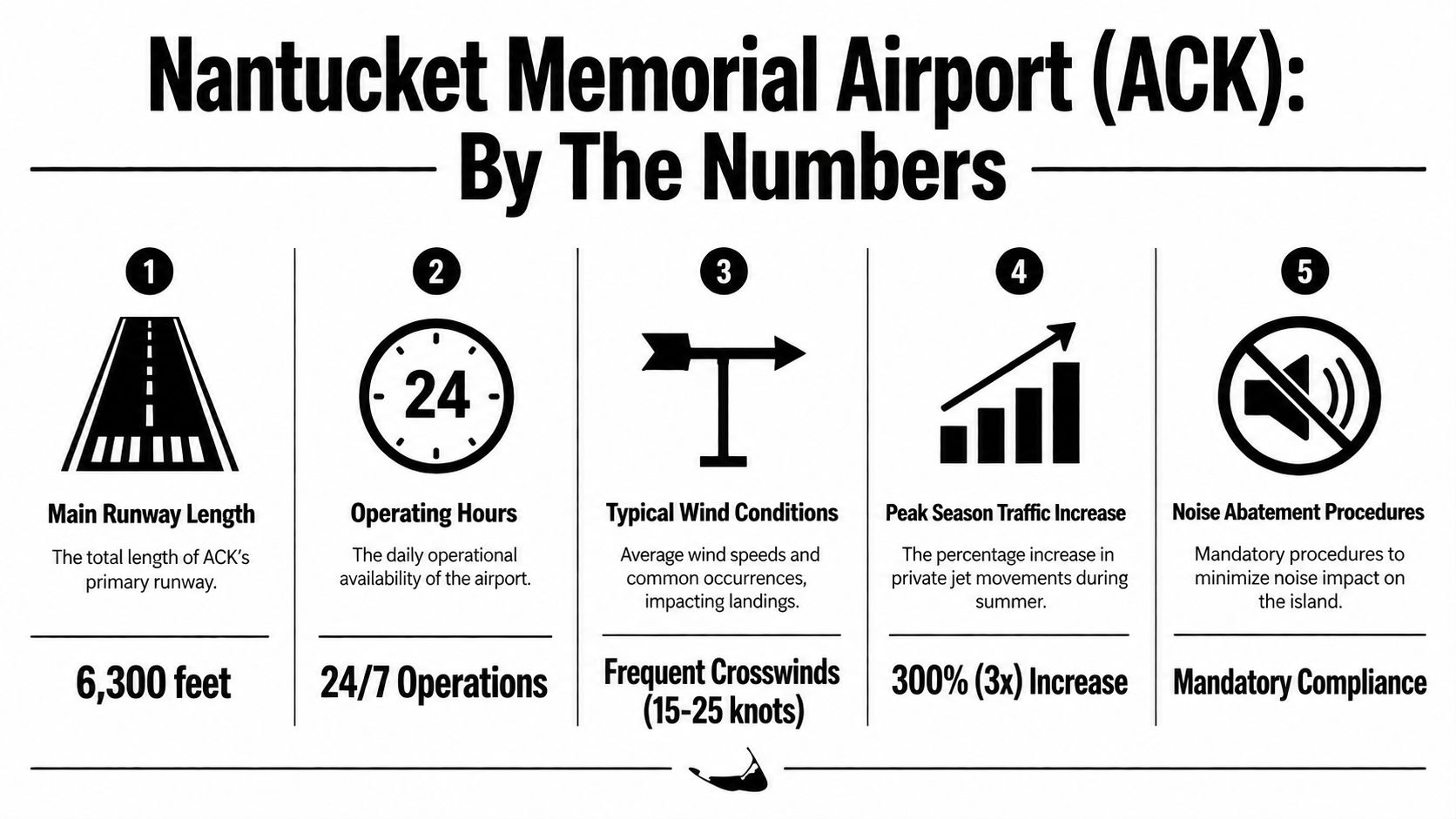
Nantucket Memorial Airport sits in a narrow operating reality. It serves a seasonal island market, so demand rises quickly and service windows matter more than they do at larger mainland airports. That is why the same trip can feel straightforward in one month and tightly controlled in another.
Peak-season pressure is the part many travelers underestimate. The airport page and the Haute Jets Nantucket airport reference are useful starting points, but the practical issue is how quickly the field fills up when island traffic surges. In that kind of environment, slot timing, parking, and ground turnaround all matter more than they would at a year-round hub.
Why seasonal hours matter
For private aviation, the FBO clock matters as much as the runway. Nantucket Memorial Airport's FBO and lounge hours run from 6:00 am to 10:00 pm between May 15 and September 30, then 6:00 am to 9:00 pm for the rest of the year (FBO services). Those hours set the outer edge of what is workable on the ground.
That matters for late arrivals, quick turns, and weather delays. If the aircraft lands near the end of the service window, your crew has less room for error, especially if there is baggage, catering, or a same-day departure. A careful planner books against the airport's real service calendar, not just the ideal arrival time.
The live-information habit
The airport also publishes tower, ATIS, ASOS, and operating information, which shows how much the field depends on real-time coordination rather than generic assumptions (ACUWKIK airport information). That is the clue many travelers miss. Flying into Nantucket works best when the dispatch plan is updated immediately before descent, not based on weather you checked hours earlier on the mainland.
Useful mindset: stale planning causes more trouble here than distance ever will.
For a fuller operational reference, Haute Jets' Nantucket airport page helps put the moving parts in one place. The takeaway is simple. Nantucket rewards preparation, and it punishes assumptions.
Selecting the Right Aircraft for ACK Constraints
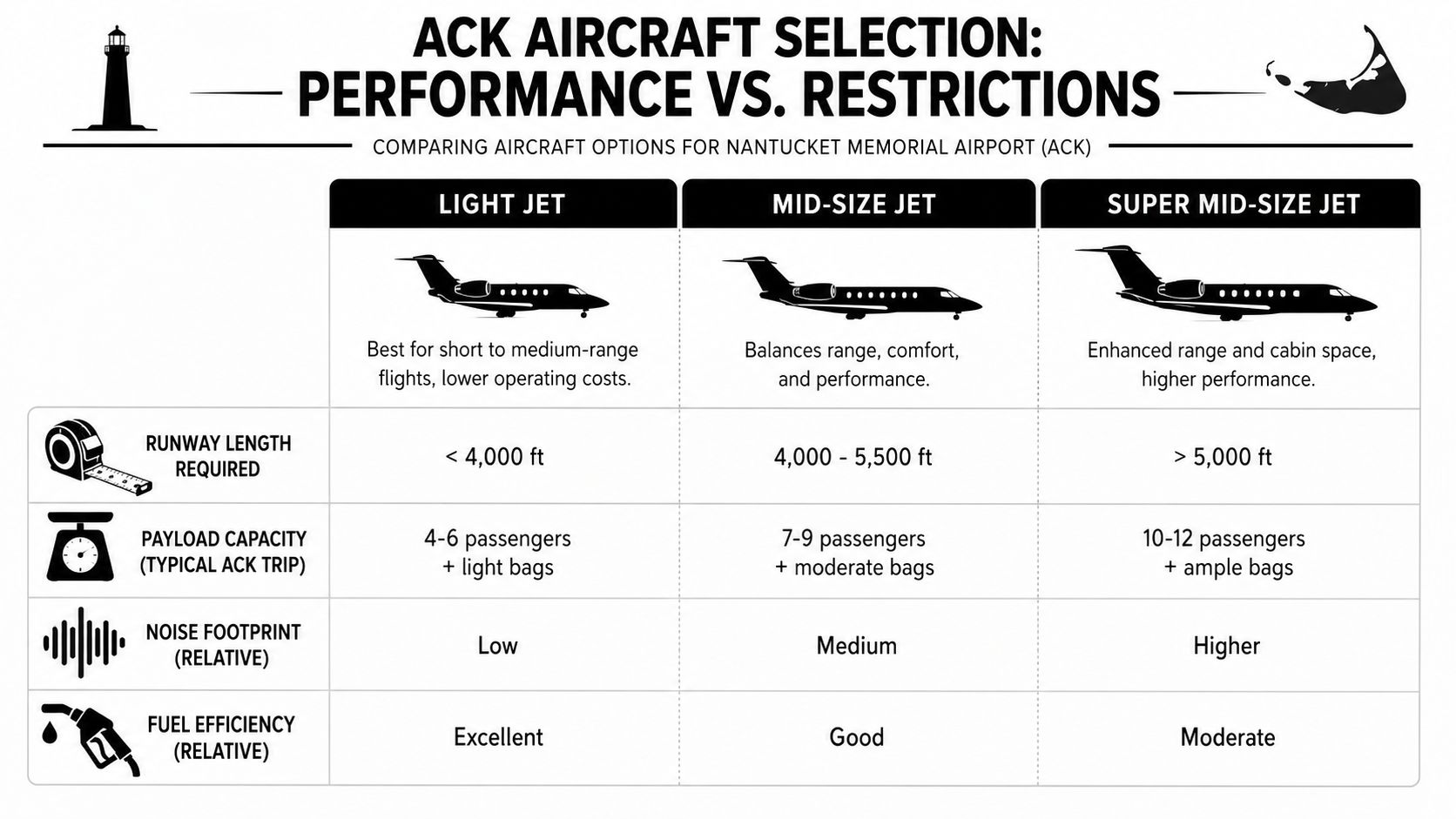
Aircraft choice on Nantucket isn't about cabin prestige alone. It's about whether the aircraft can fit the airport's current operating conditions, handle the ground constraints, and complete the trip without surprises. That's why the right jet for ACK is the one that matches the airport, not the one that merely looks impressive on a quote.
Start with the airport's physical and operational limits
The FAA's July 2026 procedure briefing noted a transient-ramp closure for aircraft with wingspans over 79 feet and a daily jet-A cap of 300 gallons for non-tenant aircraft (FAA briefing). That single update changes the planning logic for larger private jets.
A larger cabin can be the wrong answer if the aircraft can't park where you need it or can't take on enough fuel for the next leg. A trip that looked efficient on paper can become awkward on the ramp if fuel planning and aircraft size weren't checked against the airport's current restrictions. For Nantucket, the right question is not only “does it fit the mission,” but also “does it fit today's field conditions.”
Match aircraft to mission, not aspiration
A light jet can be a clean solution for short hops, especially when passenger count and baggage stay modest. A mid-size jet adds more cabin comfort and flexibility, but you still need to confirm that the airport-side constraints won't complicate parking or servicing. A super mid-size aircraft may offer more range and space, yet the July 2026 ramp restriction is exactly the kind of rule that can make a larger aircraft less practical than expected.
For dispatch planning, use a simple filter:
- Confirm wingspan first: If the aircraft is near the field's transient limit, validate access before the booking moves forward.
- Check fuel needs early: The 300-gallon daily cap for non-tenant aircraft can affect onward travel, especially if the aircraft isn't staying on the island.
- Review baggage and passengers together: A roomy cabin doesn't help if the airframe is operationally constrained.
- Ask about seasonal availability: Bigger aircraft can be harder to place when demand tightens.
Rule of thumb: On Nantucket, a technically capable jet can still be a poor operational fit.
That's why route planning for short-haul private flights should stay grounded in actual airport constraints, not marketing categories. If you want a broader selection framework, this short-haul aircraft guide is a useful companion reference. The practical result is simple, choose the aircraft that gets approved, serviced, and out again without delay.
Securing Airport Access Slots and Parking
On Nantucket, the traveler who asks early is the traveler who gets in cleanly. The airport runs tight, the summer schedule fills fast, and a “we'll handle it on arrival” plan usually creates avoidable friction. A confirmed flight without a parking plan still leaves the trip incomplete.
Lock in access before the crew rolls
Start with airport coordination, not passenger preferences. Nantucket Memorial Airport expects crews to review current ATIS and ASOS information, follow the airport's noise-abatement procedures, and work through the right contacts for handling and ground support, as noted in the airport operating guidance. The crew should not arrive hoping to sort out access on the fly.
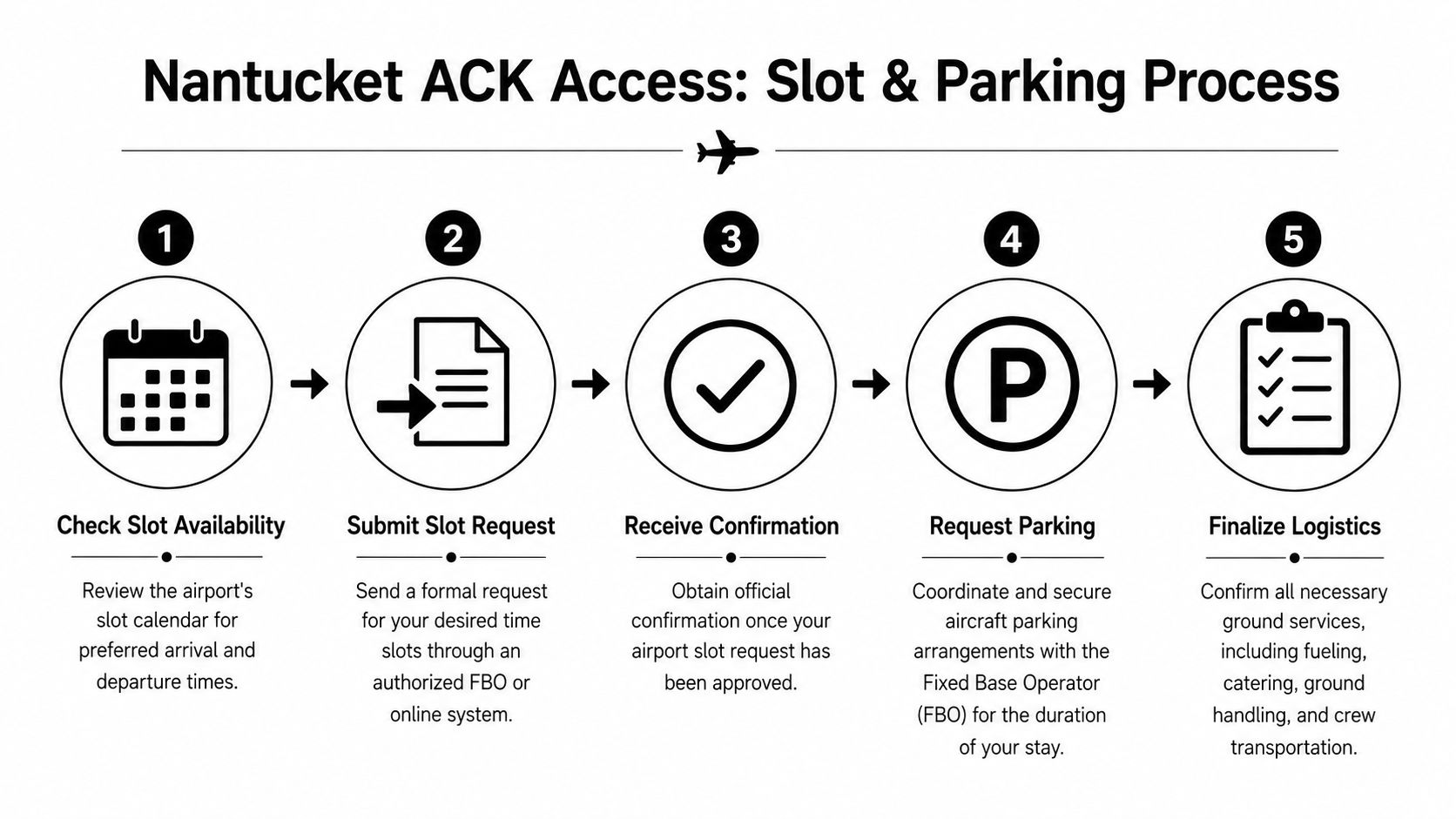
A clean workflow usually looks like this:
- Check availability early through the airport-side coordination channel.
- Request the arrival and departure window before you lock the itinerary.
- Confirm parking, because access without a parking plan creates a second problem.
- Coordinate handling for baggage, fuel, and crew transport.
- Recheck airport conditions close to departure, because stale details create avoidable delays.
That order matters more at ACK than at many leisure airports. A slot without parking does not help, and a parking plan without current conditions can still fall apart if the field changes.
Noise and ground handling are part of the trip, not side notes
Local procedure matters because the airport actively enforces noise-abatement compliance. That is not paperwork for the file. If the crew misses the procedure notes or skips the live weather updates, taxi timing, parking, or arrival handling can slow down.
Keep the FBO looped in early, and keep it looped in often.
That advice holds especially well on summer weekends, when airport-side resources tighten fast and small mistakes become expensive in time. The primary value of a charter partner is coordination, not presentation. A useful planning reference is Haute Jets' private jet airport guide, which fits naturally into pre-trip preparation because the work here is about timing, access, and parking discipline.
Booking Timeline and On-Demand Cost Expectations
Nantucket pricing and availability behave like a seasonal market, not a steady one. When demand is compressed into a short window, the cost conversation changes because the biggest driver isn't just flight time, it's whether the aircraft and timing are available at all. That's why the best booking strategy depends on the trip purpose.
For travelers who need last-minute arrivals, luggage control, or pet transport, private charter is often the only reliable option for Nantucket, because peak-season scarcity and weather constraints can overwhelm the limited commercial flight schedule (Magellan Jets Nantucket guide). That's the tradeoff. Scheduled service can work when your timing is flexible, but private aviation becomes the dependable choice when the island calendar is crowded and the itinerary can't move.
What to book early and what can stay flexible
Peak summer travel should be treated like a high-demand event. If the trip lines up with a holiday weekend, a wedding, or another island peak, don't wait until the last minute to sort aircraft, parking, and ground transport. In shoulder periods, you may have more room to shape the itinerary, but even then, the aircraft and FBO hours should be confirmed before you lock in the rest of the plan.
The cost side is best understood as a blend of aircraft type, schedule pressure, and service expectations. A smaller aircraft can be a better value if it's the right fit for the mission, while a larger cabin may create extra operational complications without improving the island arrival. On-demand charter matters here because it lets you tailor the trip instead of paying for a broader package you don't need.
Haute Jets is one option in that on-demand model, with access to aircraft sourced from owner-operators rather than a membership structure. That matters when the goal is to match the aircraft to the trip, especially on a destination like Nantucket where availability can narrow quickly.
Practical takeaway: book the mission first, then match the aircraft, then confirm the airport-side details.
That order helps keep the trip efficient and reduces the chance of paying for flexibility you never use. It also keeps the decision grounded in access and timing, which is where Nantucket trips are won or lost.
From Touchdown to Town Seamless Arrival Logistics
The flight doesn't end at touchdown. On Nantucket, the last mile is part of the trip, and it's often where good planning becomes visible. If the car, the catering, and the luggage handling are already arranged, the island feels effortless. If they aren't, the arrival starts to feel like a series of small fixes.
Nantucket Memorial Airport's FBO hours set the outer limit for that handoff. Between May 15 and September 30, the facilities operate from 6:00 am to 10:00 pm, and for the rest of the year from 6:00 am to 9:00 pm (FBO services). That schedule matters for pickups, late bags, crew coordination, and any same-day repositioning you're counting on.
Ground transport and cabin details
Book ground transport before the aircraft departs the mainland. Island vehicles go quickly during busy travel periods, and a smooth handoff depends on someone waiting when the door opens. If you're traveling with pets, bring the paperwork, the carrier, and the plan for how the animal will move from cabin to car without friction.
The same kind of preparation helps with in-flight details. Catering should be simple, climate-safe, and sized to the passenger count, especially on shorter flights where waste just creates clutter. For travelers who pack fragrance or cosmetics, a practical reference like packing fragrance for flights is useful because small cabin items can still cause unnecessary mess if they're not packed right.
Weather and timing still control the day
Nantucket weather can change the feel of an arrival quickly, which is why a buffer matters even when the trip looks straightforward. The smartest charter setups assume that a clean landing still needs a clean exit from the airport. That means confirming where the vehicle meets the aircraft, who handles bags, and how fast the crew can move if the schedule shifts.
A good operator makes the transition look easy because the work happened earlier. The airport rules were checked, the right jet was chosen, and the local service window was respected. That combination is what turns flying into Nantucket from a logistics exercise into a real arrival.
A CTA for Haute Jets.