
You step out of the car, walk through a quiet private terminal, and board an aircraft that looks ready down to the last detail. Bags are already loaded. Catering is in place. The cabin temperature is right. Fueling is done. The crew isn't waiting on paperwork, ice, transport, or a missing lavatory service truck. To most passengers, that feels effortless.
It isn't.
That smooth experience depends on a chain of ground handling decisions that starts well before you arrive at the airport and continues until the aircraft is airborne. If you charter often, this is one of the few backstage subjects worth understanding. Not because you need to manage it yourself, but because ground handling services are often the single biggest variable in whether your trip runs exactly as planned or falls apart on the ramp.
The Invisible Architecture of a Perfect Flight
The polished part of private aviation is visible. The critical part usually isn't.
A flawless departure means several teams got dozens of details right in sequence. The handler parked and secured the aircraft correctly. Fueling happened on time. Catering was accepted and checked. Baggage was loaded without confusion. Passenger access was coordinated with the FBO. Crew transport, permits, and special requests were aligned. If any one of those handoffs breaks, your “simple” departure stops being simple.

Why this matters more than most clients realize
Ground handling isn't some small support layer inside aviation. The International Civil Aviation Organization reported that the sector generated US$64 billion in revenue in 2023, supported nearly 3 million jobs worldwide, and is tied to substantial value creation across the broader aviation chain in its ICAO industry paper. That scale tells you something important. Serious money, trained labor, equipment, certification, and operational discipline sit behind what passengers experience as “boarding.”
Forecasts also point one way. Ground handling is a growing market, with one industry estimate projecting it could reach US$90.8 billion by 2035 according to market growth coverage of the sector. For charter clients, the takeaway isn't abstract. As demand grows, the difference between organized and mediocre ground coordination becomes even more visible.
Luxury starts before the cabin door
Clients often judge a flight by the aircraft. I don't. I judge it by how the ground side performs. If the terminal handoff is sloppy, if the bags lag behind the passengers, if the crew is chasing a fuel slip, the aircraft can still be beautiful and the experience can still feel second-rate.
That's one reason private terminals matter. If you want context on how that front-of-house environment shapes the trip, this look at the world's most exclusive private jet terminals is worth reading.
Cleanliness matters too, and not only inside the cabin. A client notices the state of the lounge, the vehicle area, the washrooms, and the path to the aircraft long before takeoff. These terminal cleaning insights capture something many operators underestimate. The first and last impression of a trip is often made on the ground.
Ground handling is where private aviation either keeps its promise or exposes its weaknesses.
Deconstructing the Ground Handling Service Menu
Many hear “ground handling” and picture a fuel truck, bags, and maybe a set of stairs. That's too narrow. A better comparison is a pit crew for your jet, except the work is split across passenger services, ramp activity, aircraft servicing, cargo support, and security coordination.
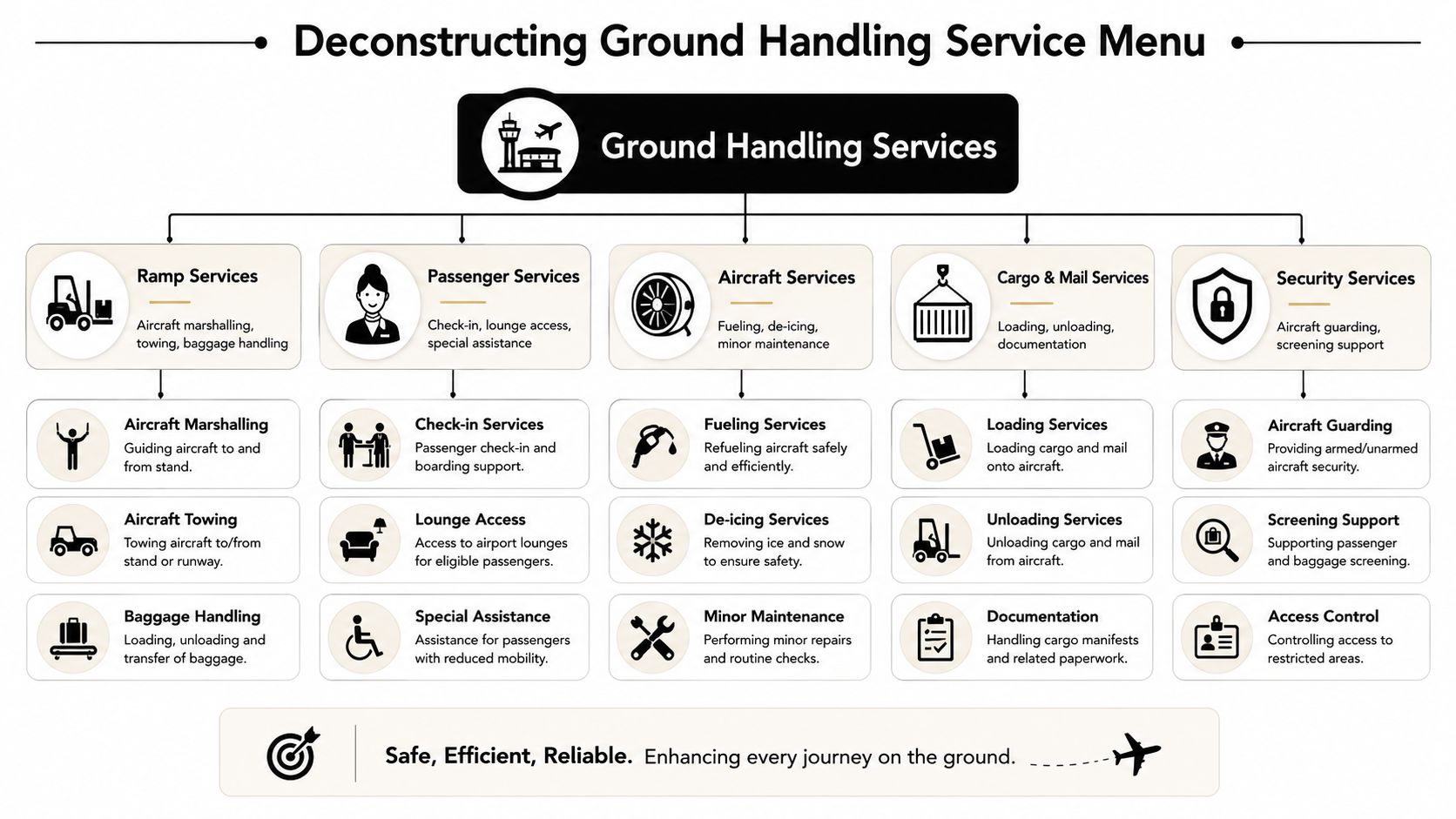
Above the wing
This is the part you feel directly as a passenger.
- Passenger reception and lounge coordination. The FBO or terminal team manages access, check-in formalities where required, privacy, and timing to the aircraft.
- Ground transportation interface. Cars need to arrive at the right entrance, under the right name, at the right time. A missed handoff here makes a premium charter feel amateur. If you're comparing car-side logistics standards, this practical UK airport transfer guide is useful because it shows how much timing and pickup clarity matter before a traveler even reaches the terminal.
- Customs and international coordination. On international sectors, passenger documentation and sequencing matter. Delays often start here, not at the aircraft.
- Special assistance and concierge requests. Pets, family travel, close-protection teams, medical support, flowers, gifts, and specific cabin-stock preferences all begin on the ground.
For many travelers, the benefits of a properly run private terminal are inseparable from handling quality. This is why private FBO terminal advantages aren't just about comfort. They're about control.
Below the wing
This is the aircraft service layer. Clients don't always see it, but they absolutely feel the result.
| Service area | What happens | Why it matters |
|---|---|---|
| Fueling | Jet fuel is delivered, confirmed, and coordinated with schedule | Late fueling becomes departure delay immediately |
| Baggage handling | Bags are offloaded and reloaded in sequence | Errors here create lost time and onboard frustration |
| Lavatory and water service | Waste is serviced, potable water is replenished | This affects hygiene, cabin readiness, and flight suitability |
| Cabin support | Ice, stocking items, catering transfer | Precision matters because requests are often highly specific |
A premium catering order isn't premium because it's expensive. It's premium because it arrives correctly, at temperature, with the right service items, and gets loaded without disrupting the turn.
On the ramp
Ramp work is where the margin for error gets thin.
The handler may be responsible for marshalling the aircraft into position, securing it, attaching approved support equipment, coordinating towing, arranging de-icing when needed, and making sure the aircraft can push or taxi out without conflict. This is procedural work, not improvised work.
Operational reality: The most expensive delay is often the smallest missed step. One truck in the wrong place or one late authorization can hold the whole departure.
Security and cargo support
Not every charter flight is passenger-only. Some carry business-critical documents, production equipment, or high-value cargo. Ground handling can include:
- Cargo and mail loading support
- Ramp-side screening coordination
- Aircraft guarding or access control
- Documentation handling for special items
This matters even on passenger charters because a complex movement with luggage, pets, security staff, and sensitive equipment behaves more like a coordinated operation than a simple pickup.
Ground handling services aren't a menu in the hospitality sense. They're an operational stack. If one layer is weak, the whole trip feels it.
How Ground Services Directly Impact Your Charter Experience
Clients care about three things on the day of departure. Time, comfort, and safety. Ground handling touches all three more directly than the aircraft brochure ever will.
Time is usually won or lost on the ramp
An on-time departure often comes down to whether fueling, paperwork, catering acceptance, and baggage loading happen in the right sequence. If one supplier arrives late, or the handler doesn't control the order of work, the aircraft sits ready while the clock keeps moving.
That pressure is getting worse in some markets. Independent market coverage says the sector is dealing with wage inflation of 7 to 12 percent annually in key markets since 2022, along with high capital requirements and resulting capacity scarcity during peak periods, according to industry market analysis on labor and equipment pressures. For charter clients, that means availability can tighten even when an airport looks calm from the lounge window.
Comfort is a coordination issue, not a décor issue
Most comfort failures aren't dramatic. They're annoying.
Your requested catering is missing one dietary item. The cabin hasn't been restocked correctly. The car-side pickup isn't where your assistant expected. The aircraft is ready, but the bags aren't. None of those problems come from the airframe. They come from weak coordination on the ground.
A discerning client should read these details correctly. They aren't minor service misses. They're warning signs that no one is effectively running the operation.
Safety lives in the routine tasks
De-icing, towing, airside vehicle movement, fueling, and loading aren't “support” jobs. They're safety-critical tasks. Private aviation can feel relaxed at the passenger level because someone else is enforcing discipline at the operational level.
Here's the blunt version:
- If the handler is rushed, risk rises
- If equipment is unavailable, delays spread
- If staffing is thin, small mistakes become visible fast
- If communication is weak, handoff points become the danger zone
The best charter experiences feel calm because the ground team is disciplined, not because the operation is simple.
When clients ask what separates a premium flight from an expensive one, this is my answer. Premium means the ground side works without excuses.
Understanding the Price of Precision on Your Invoice
Most charter clients look at one line on the quote. Aircraft cost. They should look harder.
Ground handling charges can be perfectly fair, badly structured, or padded by weak planning. If you don't understand what belongs on the invoice, you won't know the difference.
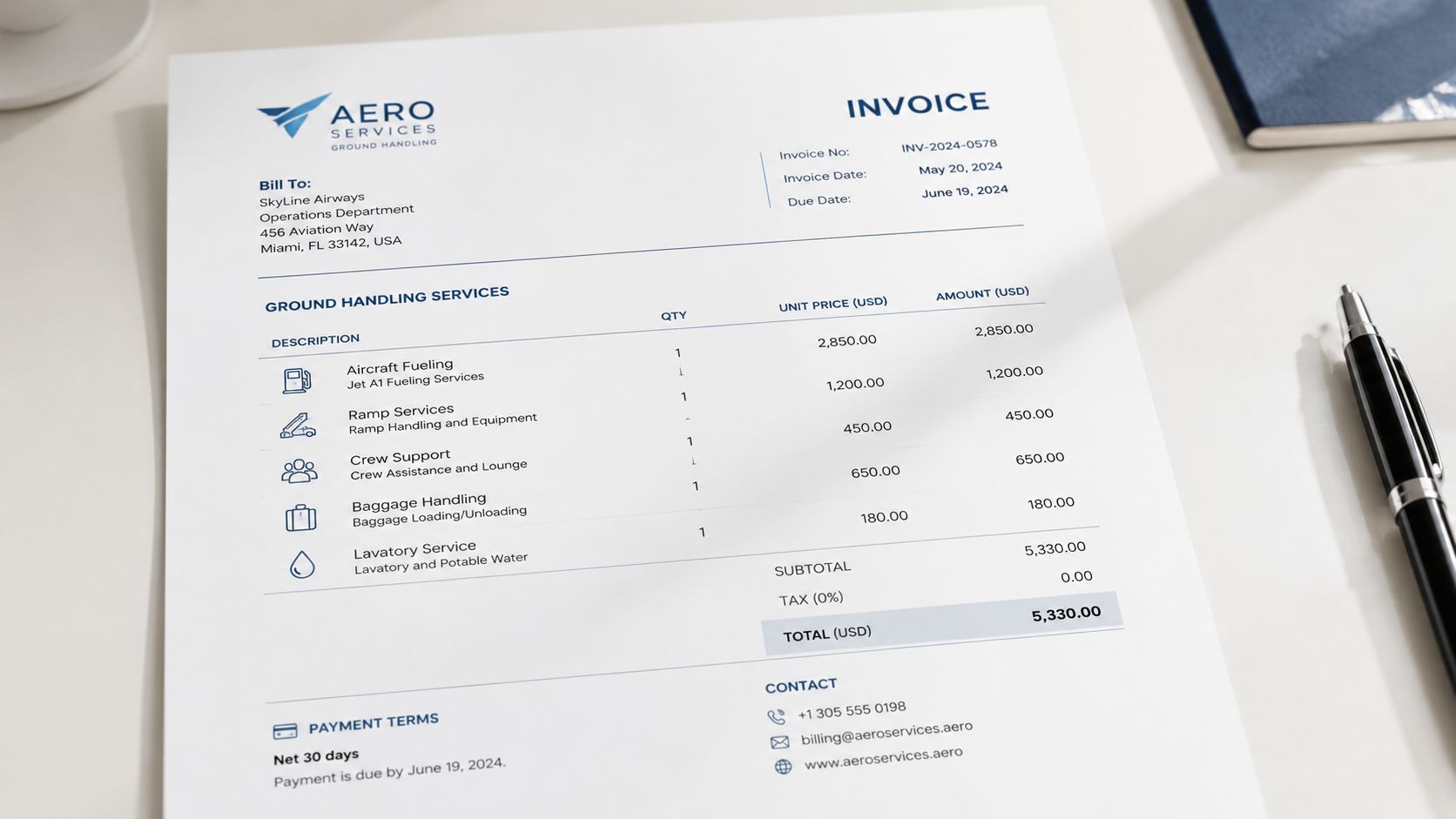
What you're usually paying for
A typical handling invoice can include a mix of bundled and itemized services:
- Base handling fee. This may cover standard arrival and departure support, ramp coordination, and basic passenger interface.
- Airport or ramp charges. These are often levied by the airport or facility rather than the handler.
- Parking or hangar charges. Overnight aircraft storage is rarely the same thing as standard handling.
- Specific service items. Fuel coordination, lavatory service, water service, de-icing, GPU use, towing, and security support may appear separately.
- Passenger-driven extras. Catering, premium ground transport, short-notice requests, and after-hours support often sit outside the base fee.
The mistake clients make is assuming every “handling” line means the same thing at every airport. It doesn't. Scope varies by destination, by FBO, and by whether the airport uses an in-house setup or licensed third-party handlers.
Read the quote like a buyer, not a passenger
Ask these questions before approving a flight:
| Invoice question | Why it matters |
|---|---|
| Is this a bundled handling charge or a base fee plus extras? | It tells you how exposed you are to add-ons |
| Are airport fees included or passed through separately? | Prevents surprise charges after the trip |
| What services are outside normal handling? | De-icing, towing, security, and after-hours support are common traps |
| Who controls third-party items such as catering and transport? | Accountability disappears fast when no single party owns the result |
A clear quote should tell you what is included, what is conditional, and what is airport-driven.
For a practical visual on how handling gets operationalized on the ramp, this short clip is useful:
My recommendation on fees
Don't chase the cheapest handling line. Chase the cleanest scope.
A low quote can mean the basics are stripped out and reintroduced later as extras. A strong charter advisor or flight department should tell you where the true cost risk sits before the trip, not after the invoice lands. Predictability matters more than cosmetic savings, especially on short-notice movements and peak-airport departures.
Vetting Providers The Hallmarks of Safety and Quality
If you're careful about aircraft and crew, you should be just as careful about the handler. The industry still treats ground handling as a commodity too often. That's lazy thinking.
A weak handler can compromise a strong charter. A strong handler can protect one.
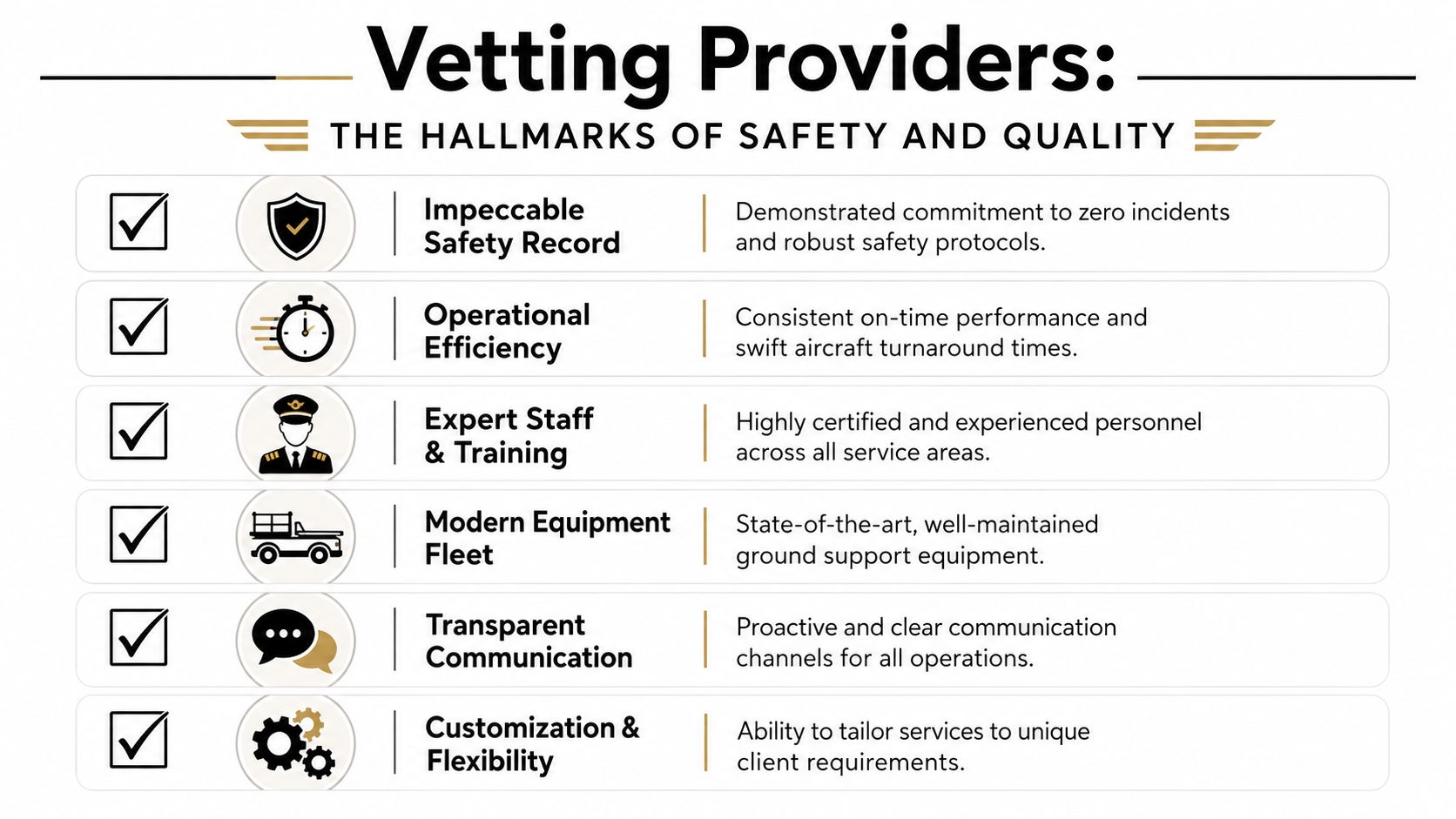
Regulation tells you what serious operators must have
Ground handling is a high-interface environment. Passenger services, ramp operations, fueling, loading, and aircraft servicing all overlap. In Europe, the regulatory framework described in this overview of EASA ground handling rules requires a Safety Management System, documented hazard identification, recurrent training, and clear interface management between the operator, aerodrome, and handler. That matters because many incidents happen where responsibility changes hands.
ICAO's framework goes further on authorization and competence. Providers must hold an operating certificate within an approved scope, show qualified personnel, maintain approved manuals, and ensure platform drivers are licensed for the equipment they operate, as laid out in ICAO ground handling regulation guidance.
What I would verify before accepting a handler
Some signs of quality are visible. Others need to be asked for directly.
- Certified scope of service. Don't assume a handler approved for basic ramp work is equally equipped for refueling coordination, towing, or complex airside support.
- Training currency. Recurrent training matters. A team that was trained once isn't the same as a team that trains continuously.
- Equipment suitability. The right tug, GPU, de-icing access, and airside vehicle authorizations matter more than a polished lounge.
- Interface discipline. Ask who owns each handoff. Airport, operator, fueler, caterer, handler. If the answer is fuzzy, expect problems.
- Communication quality. Good handlers confirm specifics. Tail number, ETA changes, special requests, parking position, transport details, and departure sequence.
Buyer's rule: If a provider can't explain who is responsible for each step of the turn, they don't control the turn.
A practical checklist for discerning clients
Use this standard at any destination:
- Who holds operational responsibility on the ground from arrival to departure?
- What certified services are within the handler's approved scope?
- How is recurrent training managed for ramp and passenger-facing staff?
- What happens when the planned sequence breaks?
- Which services are subcontracted, and who manages those vendors?
- What equipment is authorized and immediately available for this aircraft type?
Third-party safety oversight still matters at the operator level too. If you want a sharper framework for reading safety credentials overall, this breakdown of Wyvern and ARGUS safety ratings is useful.
The best clients don't micromanage handlers. They insist on clarity before the wheels ever touch the ground.
The Haute Jets Approach Proactive Service Management
Ground handling isn't one service. It's a multi-vendor coordination problem, and that's exactly where many charter experiences break down. Neutral industry coverage makes this point clearly in its explanation of how responsibility gets fragmented across handlers, fuel suppliers, logisticians, security, and other parties in a buyer-focused discussion of ground handling accountability.
That fragmentation is why I don't judge a charter partner by how confidently they sell the aircraft. I judge them by how tightly they manage the chain around it.
What disciplined coordination looks like
A serious process includes:
- Operator screening tied to recognized safety oversight
- Destination-specific handler selection, not generic assumptions based on airport reputation
- Pre-flight confirmation of every ground-side detail including catering, transport, access, and timing
- Clear ownership of exceptions when weather, congestion, or vendor changes affect the turn
Haute Jets fits into that model in a straightforward way. It sources from Wyvern and ARGUS-rated operators, confirms aircraft-specific details in advance, and provides a 24-hour pre-flight confirmation process that helps lock down the ground side before departure. That's useful because clients shouldn't have to discover on the day of travel that no one verified the transfer, catering note, or handling sequence.
A premium charter isn't defined by the leather or the cabin finish. It's defined by whether the operation stays controlled when multiple vendors touch the trip.
If your advisor can't tell you who owns the ground plan, you don't have a ground plan. You have hope.
Conclusion Beyond the Flight A Commitment to Excellence
The aircraft gets the attention. The ground operation earns the trust.
If you understand one thing about private charter, make it this. Ground handling services are not a background detail. They are the mechanism that protects schedule integrity, passenger comfort, and operational safety. When they're managed well, the trip feels smooth. When they're managed poorly, every weakness becomes visible fast.
You don't need to become a ramp specialist to use this knowledge well. You just need to ask better questions. Who is handling the aircraft? What services are included? Who owns the handoffs? What happens if the sequence breaks? Those questions separate informed buyers from passengers who hope everything works.
Luxury in private aviation isn't only privacy or cabin finish. It's reliability without friction. It's knowing the car, terminal, crew, handler, caterer, and aircraft are all working from the same playbook.
That standard doesn't happen by accident. It comes from planning, certification, training, communication, and relentless follow-through on the ground.
If you want a charter experience where the ground side is managed with the same attention as the flight itself, talk to Haute Jets. The right aircraft matters. The right coordination behind it matters just as much.