

You're comparing two Gulfstream G550 quotes, both carrying the same model name, both presented as premium, and both with cabin photos that look polished enough to close the deal. That's exactly where buyers get misled. The Gulfstream 550 interior is not one fixed cabin, it's a platform with real variation in completion year, retrofit status, layout, and systems, and those differences change the flight you get.
A smart charter buyer doesn't ask, “Is it a G550?” The right question is, “Which G550, and what condition is the cabin in today?” That's the standard Haute Jets Journal should apply to this aircraft, because the model stayed in production from 2003 to 2021 and the fleet includes everything from early completions to later factory examples, plus retrofits layered in between Jetcraft overview of the G550's production run. If you know how to read the cabin, you can separate a tired mid-2000s interior from a refreshed, mission-ready jet before you ever sign off on the trip.
Why Two G550 Cabins Can Feel Completely Different
You can see the difference in two charter listings that both say G550, both promise long-range comfort, and both show a polished leather cabin. One feels like a mobile boardroom with sleeping space tucked neatly aft. The other feels older, darker, and less considered, even when the photos try to hide it.
The model name is only the starting point
The G550 was delivered green for completion to customer specifications, and independent coverage notes up to 12 floor-plan configurations with typical seating from 14 to 19 passengers Flying Magazine coverage of G550 completions. That is why the phrase gulfstream 550 interior should never be treated like a fixed product description. It can mean a forward-galley executive cabin, a more private aft-stateroom setup, or a highly customized interior that has been refreshed after years of use.
Practical rule: if the broker cannot identify the exact tail number and cabin status, you are not comparing aircraft, you are comparing marketing photos.
The fleet history matters too. The G550 stayed in production for nearly two decades, so the market includes early airframes, late deliveries, and cabins that have been refit at different times. One aircraft may still carry the original soft goods and older cabin controls, while another has had the cabin management, lighting, seats, and trim brought forward to a much more current standard.
What you are really buying
The decision is not the badge on the exterior. It is whether the aircraft has the layout, privacy, and systems to support your trip without compromise. A Gulfstream 550 interior can be configured for work, sleep, family travel, or nonstop transatlantic use, but only if the specific aircraft supports that mission.
Use the aircraft profile on Haute Jets' Gulfstream 550 page as the baseline, then verify the actual tail number you are being offered. That is the only way to avoid paying for the model and getting a cabin that does not match the photos.
Cabin Dimensions and What 1,669 Cubic Feet Actually Means
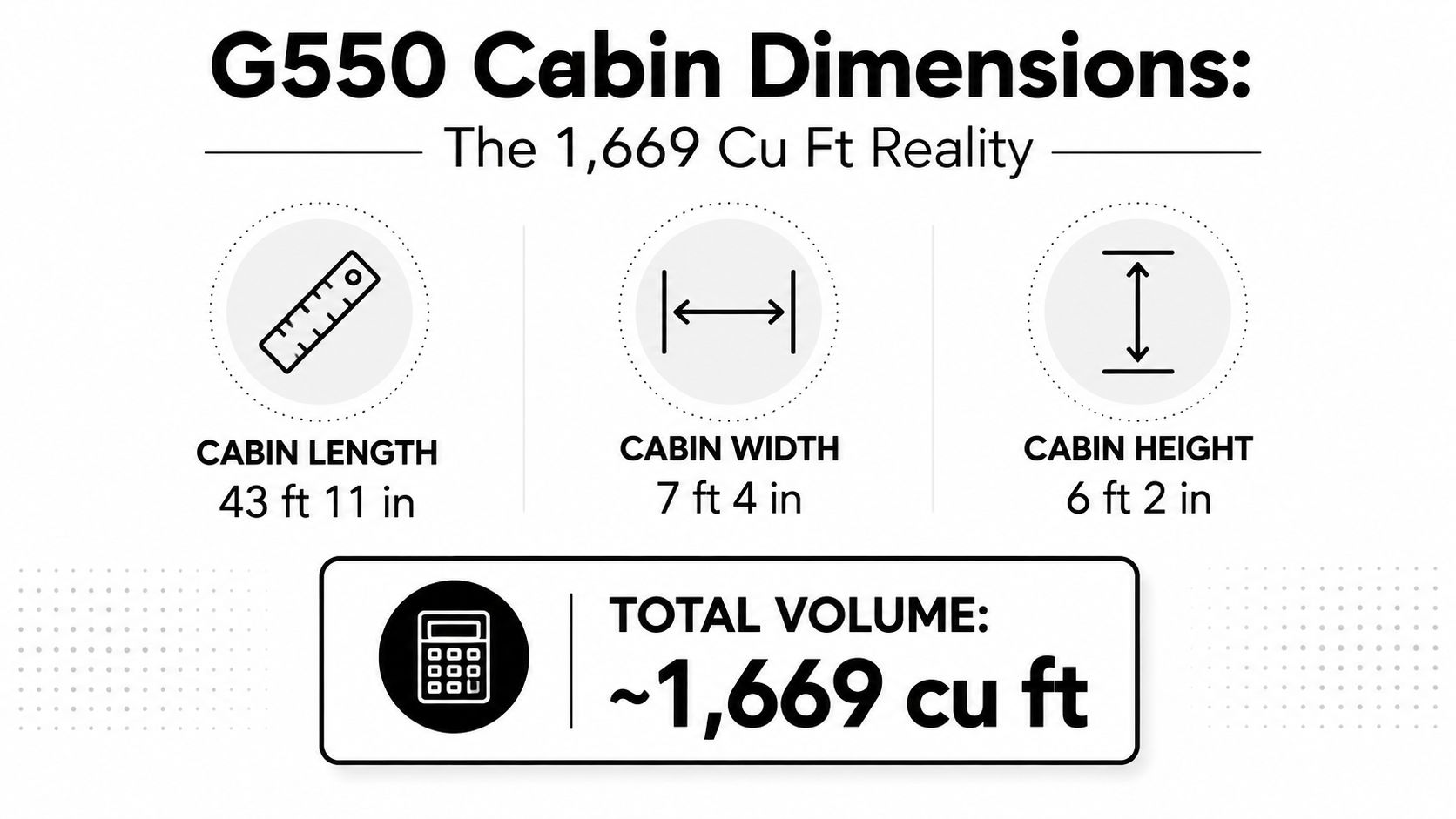
The cabin numbers are what buyers notice first, but they only matter if you translate them into usable space. The G550's cabin measures 43 ft 11 in in usable length, 7 ft 4 in in width, 6 ft 2 in in height, and about 1,669 cu ft in volume GlobalAir specifications. Those figures explain why the aircraft feels like a true long-range cabin instead of an expanded executive shuttle.
What the cabin size actually gives you
Start with height. 6 ft 2 in of cabin height is enough that most passengers will not feel cramped standing or moving through the aisle, and that matters on long sectors where people get up repeatedly. The width matters just as much. At 7 ft 4 in, the cabin supports a proper aisle alongside club seating without making every movement feel tight.
That geometry is why the aircraft can support up to 19 passengers in some configurations, while many luxury layouts deliberately stop at 16 or fewer so the cabin still feels like a lounge rather than a shuttle GlobalAir specifications, Gulfstream cabin overview. I would rather book a well-planned 14-seat cabin than a crowded 19-seat one every single time.
The cabin is also where the Haute Jets G550 listing becomes useful, because it gives you a starting point before you confirm the exact tail number and interior condition you are getting. Treat that as the baseline, then verify the aircraft in front of you.
The right cabin width does not just create comfort, it preserves dignity on a long-haul flight.
The baggage space is part of the interior value
The usable baggage compartment adds another 170 cu ft, which is unusually generous for this class. That gives you more room for luggage to stay with the aircraft instead of moving through external cargo handling, which is a real advantage when you are carrying wardrobe bags, sports gear, or fragile items.
The cabin also benefits from 14 oval windows, which make the interior feel brighter and more open Jetcraft overview of the G550 interior. On a night departure, that is a visual detail. On a day mission, it changes how expensive the cabin feels.
How the Three- to Four-Zone Cabin Layout Works
On a G550 charter, the cabin plan matters as much as the tail number. Two aircraft can both be labeled Gulfstream 550 interior examples and still feel completely different because the layout may be set up for meetings, dining, sleeping, or a mix of all three. The right aircraft is the one whose cabin order matches your mission, not the one that looks good in a listing.
A cabin that separates work, service, and rest
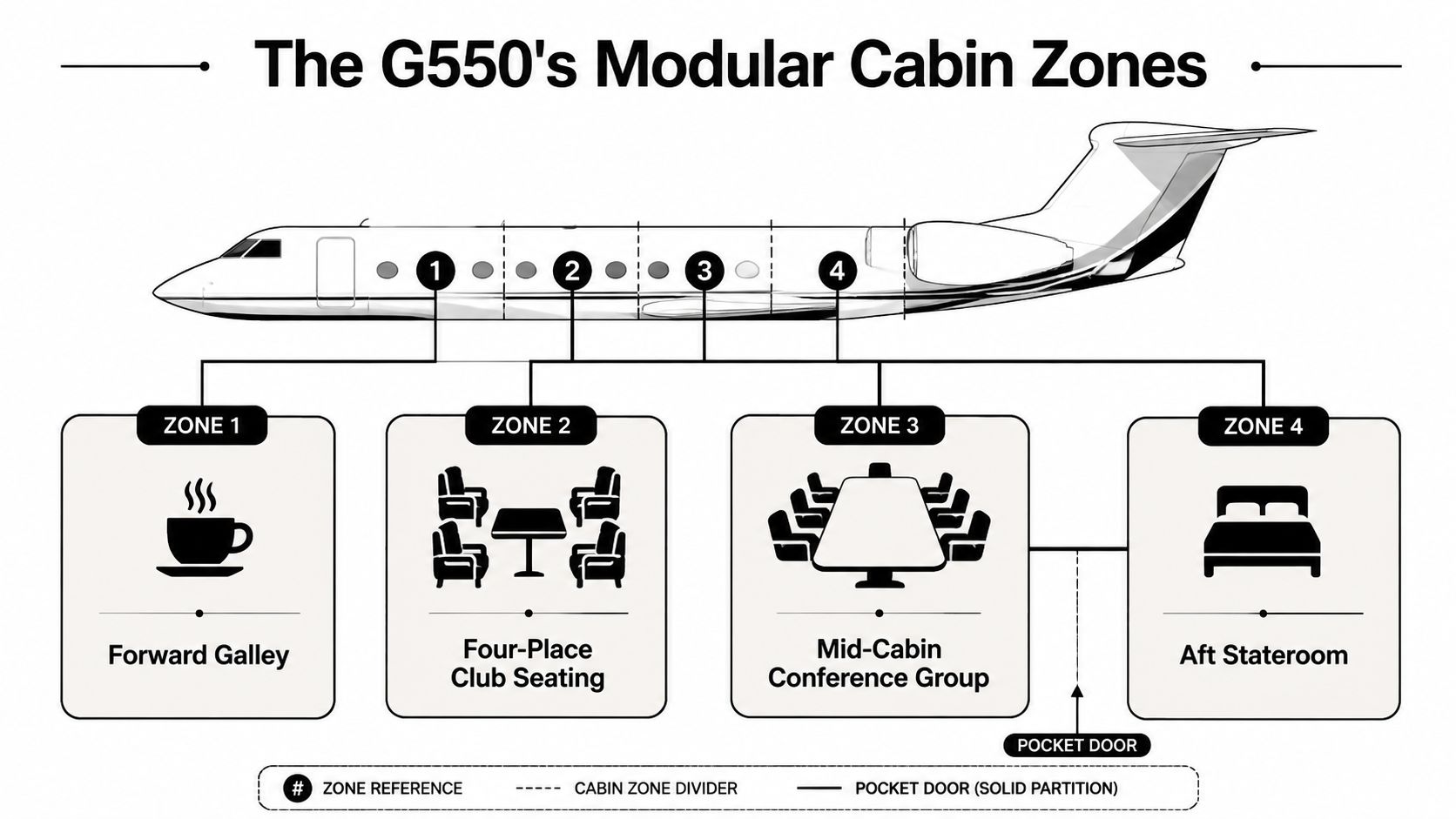
A strong G550 layout usually starts with a forward galley, then a four-place club, a mid-cabin conference grouping, and an aft stateroom closed off by a solid pocket door for privacy Air Charter Service G550 guide. That split lets the cabin do real work. One passenger group can handle business up front, another can dine or meet in the middle, and someone else can sleep behind a closed door without the whole aircraft feeling compromised.
Some aircraft are finished with a rear galley instead of a forward one, and the mood changes immediately. A forward galley keeps service near boarding and leaves the front cabin feeling more like a lounge. A rear galley gives the forward cabin more privacy, but it also changes how the crew moves through the aircraft, especially on overnight sectors.
Crew rest and lavatory placement matter more than buyers think
Several G550 interiors also include a forward crew rest and an aft lavatory and crew rest, plus dual vacuum toilets with outside servicing capability Gulfstream G550 technical interior example. That is not a cosmetic detail. On a long mission, those features reduce interruptions, keep service flowing, and make the cabin behave more like a private space than a transport cabin.
The cabin can be arranged to sleep up to eight passengers, which is why it stays relevant for transatlantic corporate trips and overnight celebrity charters Silver Air G550 fleet page. Treat that sleeping figure as a ceiling, not a target. If you are flying overnight with more than a few principal passengers, ask how the seats convert, whether the divans are set up for sleeping, and review a proper private jet interior guide before you approve the cabin plan.
What the zones really change in practice
The three- to four-zone layout is what makes the aircraft feel flexible instead of fixed. A client can take a call in one area, hold a meal in another, and leave the aft cabin untouched for rest. That separation is also why a G550 can work well for mixed groups, because the cabin does not force everyone into the same rhythm.
The layout only works if the interior is kept in good condition. Seat leather, trim panels, and cabin touchpoints show age fast on a high-use charter aircraft, so operators that keep the cabin fresh usually look more credible on board and in photos. If you want a practical benchmark for finish care, the basics covered in this interior leather protection guide are the kind of maintenance standards worth asking about before you book.
Finishes, Lighting, and the Pre-Elite vs Elite Retrofit Gap
A polished G550 photo can hide a tired cabin fast. The divide is between aircraft that were finished earlier and aircraft that have been brought up to a newer standard. Early cabins often carry older soft goods, older lighting, and cabin controls that feel dated the moment you sit down. Later refurbishments and Elite-style retrofits usually change the whole impression, and you notice it immediately when you step aboard.
What changes when a cabin has been refreshed
G550 interiors are not uniform, because the airframe was delivered as a completion platform and then updated in different ways. A pre-Elite cabin can still show older materials, simpler cabin tech, and a more worn visual tone. An Elite-retrofit or newer completion usually brings updated cabin management, LED lighting, stainless-trim galley accents, and newer seat finishes. The aircraft may be the same model on paper, but the passenger experience is not the same.
You feel the difference as much as you see it. Older interiors can look acceptable in a listing, yet the cabin feels flatter, the controls are less intuitive, and the overall finish does not project the same standard as a newer refurb. That gap matters when you are boarding after a long day and want the jet to feel current, quiet, and deliberate.
Rule of thumb: year matters, but refurbishment date matters more.
A cabin refreshed in 2022 will usually feel meaningfully different from one last refreshed in 2009, even if both are marketed as “G550 interiors.” The airframe year only tells part of the story. What matters is what got replaced, what stayed original, and whether the completion center or refurb shop updated the details passengers touch.
Check the leather and soft goods before you assume the cabin will photograph the way it looks in person. Charter use ages armrests, seat bolsters, and divan surfaces quickly, so fresh finishes only stay fresh if the operator keeps them protected. A practical reference point is the interior leather protection guide, because it shows the kind of care standard that helps a cabin keep its edge.
For a broader framework on how cabins age and what to inspect before you commit, the private jet interior guide is the right companion reading before you book.
Comfort Systems That Define the Long-Haul Experience
A G550 only feels right on a long sector if the cabin systems hold up after the novelty wears off. The exterior may be the same, but the onboard experience changes fast once you start comparing cabin pressure, lighting, connectivity, and how well the crew can split the cabin into usable zones. That is where the spread between aircraft shows up.
The systems that matter in flight
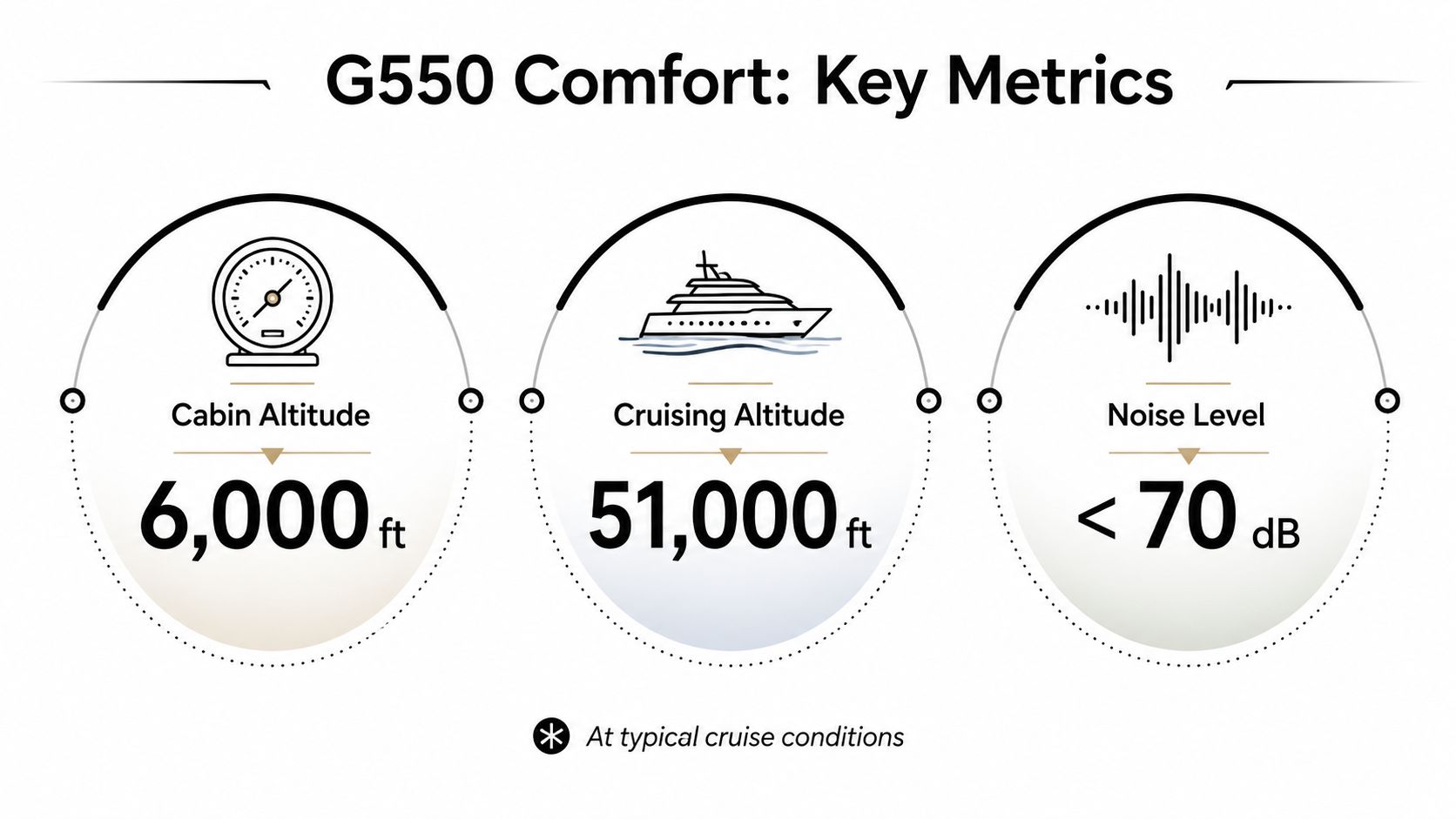
The G550 is widely described with a cabin altitude of 6,000 ft even when cruising at 51,000 ft. That lower cabin altitude helps on long-haul missions because passengers step off feeling less drained than they would in a cabin that runs higher. If the aircraft is carrying you straight into a meeting or a same-day connection, that comfort difference is obvious.
The other question is whether the jet behaves like a working office or just a moving seat bank. A detailed interior example lists JetConnex Ka-band high-speed data, SATCOM, Airshow 4000, electric window shades, LED lighting, and a galley with a microwave, high-temp oven, and refrigerator. That combination supports calls, cabin entertainment, and quiet rest without making the passenger fight the aircraft to get basic tasks done.
Practical takeaway: if you need to work inflight, confirm the exact Wi-Fi system before you book, not after you board.
Passenger expectations also matter once the door closes. The Splash Access user experience guide is useful because it points to the same thing you see in a good charter cabin, consistency beats flash. Temperature, lighting, connectivity, and service need to work together, or the cabin stops feeling premium very quickly.
The gulfstream 550 interior earns its reputation when the zones work as zones. One passenger can sleep, another can take a call, and someone else can eat without the whole cabin turning into one shared noise field. That is what separates a cabin that looks good from one that holds up on a real long-haul trip.
What to Confirm Before You Book a G550 Charter
This is the checklist that saves you from a bad match. If you're spending serious money on a G550, don't let anyone sell you the category. Demand the exact aircraft and the exact cabin history.
Ask for the details that change the flight
First, confirm the specific tail number. That tells you which cabin you're booking, not just which model family. Then ask for the year of completion and the refurbishment date, because those two facts tell you more about the cabin feel than the marketing description ever will.
Next, ask whether the aircraft is pre-Elite, Elite-retrofit, or original. If the answer is vague, assume the cabin may not match the polished images you saw online. I'd also ask for the seat count and layout type, because a 14-seat conference cabin and a 16-seat lounge cabin do not serve the same mission.
Don't skip the operational questions
Wi-Fi needs a direct answer, not a vague promise. Ask for the connectivity system, whether it's been tested recently, and what throughput you should expect on your route. If you're planning to work, this is not optional.
You should also confirm the catering capability of the galley, because a forward galley and an aft galley don't support service the same way. Add the pet policy, smoking policy, and ground transport at both ends to the list. Those sound small until they disrupt a smooth arrival.
Ask for the maintenance log summary too. A well-kept cabin almost always travels with a well-kept aircraft.
If you want to see how a broker should handle this level of detail, Haute Jets says it confirms the exact year, make, model, and cabin layout, along with Wi-Fi, catering, pet policies, and ground transport on each booking. That's the standard worth insisting on, because cabin photos alone never tell the whole story. For context on how this compares with other G-series cabins, the Gulfstream G550 and G650 private jets guide is a useful comparison point.
Choosing the Exact Aircraft Instead of the Category
The biggest mistake in G550 charter is buying by name instead of by tail number. Two aircraft can both be clean, well-maintained, and technically premium, but still deliver very different passenger experiences because the cabin age, layout, and retrofit history aren't the same. If you care about the result, you need to choose the exact aircraft.
Why the tail number matters more than the listing title
A cabin with newer soft goods, updated lighting, and modern cabin controls feels like a different airplane from one that hasn't been refreshed in years. That's why the gulfstream 550 interior should be sourced as an exact asset, not a category placeholder. The same model can swing between executive boardroom, family cabin, or older charter workhorse depending on who completed it and when it was last updated.
Sourcing strategy matters. Haute Jets' model is built around matching clients to specific aircraft from a broad operator network, which is useful because it lets you verify the tail number, cabin layout, and service details before you pay. That approach fits this aircraft perfectly, because the G550 only works as promised when the cabin profile matches the mission.
What serious buyers should insist on
I'd make three demands every time. First, see the cabin configuration in writing. Second, verify the refurbishment date and connectivity package. Third, make sure the soft goods and service layout match the trip, especially if you need sleeping space or a productive meeting cabin.
You do not want to board a long-range jet and discover that the photos were from a different aircraft in the fleet. You also do not want to find out after departure that the cabin can't support the work, sleep, or privacy you paid for. The G550 remains a benchmark cabin, but only the right G550 delivers the experience the marketing photos promise.
If you're comparing G550 options and want the cabin matched to your mission, not just the model name, visit Haute Jets and request the exact tail number, layout, and cabin details before you book. Their team can source the aircraft, confirm the interior configuration, and help you avoid the cabin mismatch that ruins otherwise strong charter plans.