How to Book a Private Jet for the First Time: A Step-by-Step Guide
Flying private for the first time feels like joining a club nobody told you about. There are no posted rules, no obvious signs, no gate agent to ask. The process seems wrapped in unspoken knowledge that experienced flyers take for granted. The result is that a lot of people who could afford to charter a private jet — and would genuinely love the experience — never do, simply because nobody explained how it works.
Consider this your orientation. By the time you finish reading, the entire process will feel straightforward, because it is. Private aviation's complexity is more myth than reality. Here's how it actually works, from the first phone call to wheels down at your destination.
Ready to fly? Request your first charter quote from Haute Jets — our team walks you through the process from start to finish, and responds in under 2 hours.
Step 1: Deciding If Charter Is Right for Your Trip
Private jet charter isn't always the obvious answer — but it's the right answer more often than people expect. Before you book, a quick self-assessment helps:
Group size matters most. The economics of private aviation improve dramatically with each additional passenger. Solo travelers and couples pay the full aircraft cost, which makes per-seat math steep. Groups of 4–8 passengers frequently find private charter competitive with, or even cheaper than, the combined cost of premium commercial tickets.
Route length matters for value. The two places where private aviation delivers its greatest premium over commercial are: short-haul routes to airports commercial airlines don't serve well (islands, mountain airports, small markets), and long-haul routes where the time savings and privacy justify the cost for time-sensitive executives.
How often will you use it? If you're planning one trip, on-demand charter requires no commitment — pay for the flight, nothing more. If you're already thinking about multiple trips this year, it's worth exploring the Haute Jets Jet Card for frequent flyers, which locks in hourly rates and provides priority booking.
Step 2: Requesting a Quote
The quote process is simpler than it looks. When you contact Haute Jets — by calling (800) 257-5661, emailing flights@hautejets.com, or submitting a request at hautejets.com/request-a-quote — here's what to have ready:
- Origin and destination — city or specific airport
- Date and approximate departure time
- Number of passengers — including children
- Any pets — size and breed
- One-way or round-trip
- Catering preferences — standard or upgraded
- Any special requirements
Haute Jets responds in under two hours with aircraft options and pricing. There's no commitment required to receive a quote.
Step 3: Choosing the Right Aircraft
First-time charter clients often assume bigger is better. This is understandable — but wrong. A heavy jet for four passengers on a two-hour domestic flight is expensive, unnecessary, and actually less comfortable per person than a properly sized light or midsize jet.
The right aircraft matches group size to cabin capacity, route length to range, and cabin requirements to available features. Browse aircraft options to understand what's available in each category. Your Haute Jets specialist will make a specific recommendation — lean on their expertise.
Step 4: Understanding the Charter Agreement
Before signing, verify: the specific aircraft type and tail number, departure FBO name (not just airport code), catering specifications if you've requested anything beyond standard, cancellation policy terms, and the total all-in price including fuel surcharges and handling fees.
Haute Jets provides transparent all-in pricing before any commitment. If a quote from any provider seems to be missing line items, ask specifically about fuel surcharges, repositioning fees, and international handling costs.
Step 5: What to Expect on Arrival at the FBO
This is the moment private aviation earns its reputation.
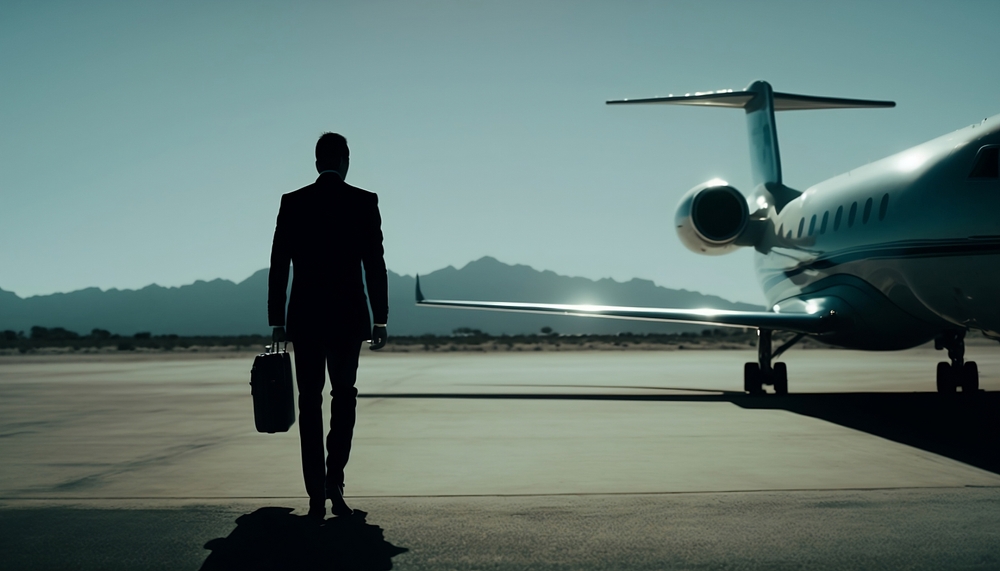
You drive up to the FBO building — not a terminal, not a parking garage. An FBO agent greets you at the curb, often by name. Your bags are tagged and taken directly to the aircraft. You enter the private lounge: leather seating, complimentary coffee, quiet atmosphere. No queues, no announcements, no security theater.
Roughly 10–15 minutes before departure, you're escorted across the tarmac directly to your aircraft. There is no TSA security line for domestic flights. You'll show identification — a quick, discreet check by your crew. From car door to aircraft door: typically 10–20 minutes.
Step 6: The On-Board Experience
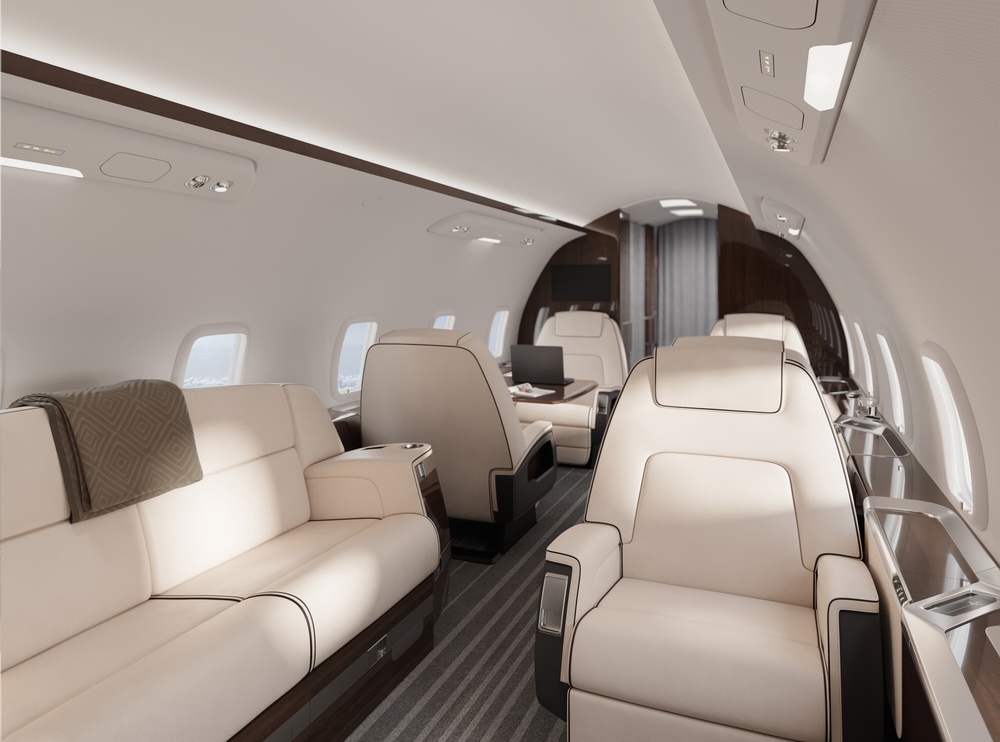
Standard on every charter: Leather seating, noise insulation significantly better than commercial cabins, individual climate control, a quiet environment for work or rest.
Standard on most aircraft: A small galley with refrigerator, catering delivered by your crew, complimentary beverages.
Variable by aircraft: Full hot meal service (midsize and larger), premium spirits bar, in-flight entertainment, WiFi. WiFi in particular varies — it's standard on some aircraft and optional on others. Ask specifically when booking.
Luggage: What to Expect by Aircraft Category
| Aircraft Category | Standard Bag Capacity | Notes |
|---|---|---|
| Very Light Jet (HondaJet, Phenom 100) | 2–4 standard bags | External baggage compartment |
| Light Jet (Phenom 300E, CJ4) | 4–6 standard bags | Rear baggage compartment |
| Midsize Jet (Challenger 350, Latitude) | 8–12 standard bags | Comfortable for most groups |
| Heavy Jet (G550) | 14+ standard bags | 169 cu ft of dedicated space |
| Ultra-Long-Range (G700) | 18+ standard bags | Full trip luggage, no compromise |
Ski equipment, golf bags, and oversized items must be disclosed at booking. Your charter specialist will confirm aircraft suitability before the booking is finalized.
Bringing Pets
One of Haute Jets' genuine differentiators: pets travel in the cabin on every aircraft, with no size or breed restrictions. Your golden retriever sits next to you. Your French bulldog doesn't go in cargo.
For domestic US flights, a health certificate from a licensed vet issued within 10 days of travel is recommended. For international flights, documentation requirements vary by destination — Haute Jets will brief you on exactly what's needed.
Practical tips: bring a familiar blanket and toy, keep the pre-flight meal light, and bring a portable water bowl for longer flights.
Tipping Etiquette
Tipping is not required, always appreciated, and entirely at your discretion.
For a short domestic flight: $20–$50 per crew member is appropriate. For longer flights, international routes, or exceptional service: $50–$100 per crew member. On a multi-day trip, a single tip at the end of the last leg is standard. Cash is traditional.
After Landing
Your bags are unloaded and waiting for you at the FBO — typically by the time you've walked from the aircraft to the building. No baggage claim. No carousel. Ground transportation can be arranged by Haute Jets at booking if you want a car waiting at the destination FBO.
The first private flight surprises almost everyone the same way: it wasn't complicated. The experience was simply better, at every step, than anything commercial offered.
Get your private jet quote in minutes. Haute Jets' charter specialists are available 24/7. Call (800) 257-5661 or email flights@hautejets.com.
Frequently Asked Questions
Do I need a passport to fly on a private jet domestically?
No. A government-issued photo ID — driver's license, state ID, or passport — is sufficient for domestic US flights. Your identification is checked by the crew before departure, discreetly and quickly. For international private jet flights, a valid passport is required, and some destinations require visas, health certificates, or advance passenger information. Haute Jets handles APIS filing for all international departures.
Can I bring my own food and drinks on a private jet?
Yes, in most cases. Private jet charter doesn't have the same restrictions as commercial aviation. If you want a specific wine, a specialty meal, or anything particular, let Haute Jets know at booking — the crew and FBO can ensure proper refrigeration and serving equipment are on board. Your own items supplement the standard catering service, not replace it.
What happens if I'm late to my private jet departure?
The aircraft waits for you — within reason. Unlike commercial airlines with rigid boarding cutoffs, your charter crew will typically hold departure if you're running a few minutes behind and communicate that you're on the way. For significant delays (30+ minutes), the operator may need to adjust the departure time based on crew duty limits and subsequent scheduling. Always communicate directly with your Haute Jets specialist if you're running late — we'll coordinate with the operator on your behalf.
How much luggage can I bring on a private jet?
Light jets accommodate 4–6 standard bags, midsize jets 8–12, and heavy jets 14 or more. Unlike commercial travel, there are no bag fees — the question is purely one of physical space. Oversized items (golf clubs, ski bags, pet crates) should be disclosed at booking so the operator can confirm the aircraft handles them. On most light jets, the baggage compartment is exterior and accessed before boarding; bags won't be available in flight, so keep any items you need during the flight in the cabin.
Is it safe to fly on a private jet charter?
Yes — when booked through a properly vetted operator. Haute Jets works exclusively with Wyvern and ARGUS-rated operators, which have been independently audited for pilot qualifications, aircraft maintenance, and safety management systems. All operators in our network hold FAA Part 135 certification. The critical safety variable in private aviation is the quality of the operator — which is exactly why independent safety ratings like Wyvern and ARGUS exist, and why Haute Jets requires them from every aircraft on our platform.