A lot of first-time pet charter clients reach out when they're already carrying two kinds of stress at once. They're planning an important trip, and they're trying to protect the one traveler who can't explain discomfort, fear, heat, noise, or confusion. Usually the trigger is the same. A commercial airline itinerary looked workable on paper, then the fine print started to unravel it: cargo concerns, breed limitations, airport handoffs, paperwork uncertainty, or the quiet realization that a pet can be treated like an exception instead of a passenger.
That concern is justified. Pet travel gets difficult when too many moving parts sit outside your control. The aircraft may be suitable, but the policy may not be. The route may be available, but the ground handling may be rushed. The quote may look clean, but the pet-related fees may surface later.
On Haute Jets Journal, the better way to think about pet air charter is simple. Remove the unknowns early. Confirm where the animal will ride, verify the operator's safety standards, map the paperwork against the destination's timeline, and ask for an all-in cost before you approve anything. When those four pieces are handled properly, the trip usually becomes far calmer for both owner and pet.
The Private Alternative to Commercial Pet Travel
A new client recently described the commercial option the way many owners do. The ticket was booked. The route was direct. The airline website made pet travel sound manageable. Then came the restrictions. The dog couldn't stay in the cabin on that aircraft type. The connecting airport created uncertainty around handling. The carrier language around weather and operational discretion was broad enough that nobody could say with confidence what would happen if conditions changed on the day.
That's the point where many owners stop asking, "Can we make commercial work?" and start asking, "How do we keep this controlled from start to finish?"
Private charter changes the structure of the trip. You aren't fitting your pet into an airline's generalized process. You're selecting an aircraft and operator around the requirements of your itinerary, your animal, and your comfort threshold. That matters for large dogs, anxious animals, senior pets, and international trips where one small documentation error can create a costly problem at arrival.
The wider market reflects that shift. The global private jet charter services market, which includes pet air charter as a specialized segment, is projected to grow to $27.38 billion in 2026 at a CAGR of 13.5%, driven by travelers who want to avoid commercial restrictions and the 20 to 40% price inflation tied to repositioning fees in less efficient booking models, according to private jet charter market projections from The Business Research Company.
What owners are really buying
Most clients think they're buying a flight. In practice, they're buying control.
That control usually comes down to a few concrete outcomes:
- Cabin certainty: You know whether your pet is with you, not somewhere else in the operation.
- Policy certainty: Pet acceptance is confirmed before departure, not argued at check-in.
- Timing certainty: You aren't building the day around crowded terminals and airline handoffs.
- Documentation certainty: The trip is planned around entry rules, not assumptions.
Commercial pet travel often fails in the margins. A missed endorsement, a vague carrier rule, or a last-minute aircraft swap can turn a workable itinerary into a bad one.
What works and what doesn't
What works is early planning with exact details. Breed, size, age, route, destination rules, crate needs, and ground handling should all be discussed before an aircraft is proposed.
What doesn't work is treating pet travel like a standard charter request with one extra note in the manifest. Pets change aircraft suitability, timing, and operational prep. The smoother trips are the ones built around that reality from the first call.
Choosing Your Pet Charter Model
The first decision isn't aircraft type. It's charter model.
Some clients assume every private option works the same way. It doesn't. The welfare implications are very different depending on whether you're booking a full private aircraft for your own party or placing your animal into a pet-focused transport arrangement that may involve separate handling, shared logistics, or less direct oversight.
Full aircraft charter with the owner on board
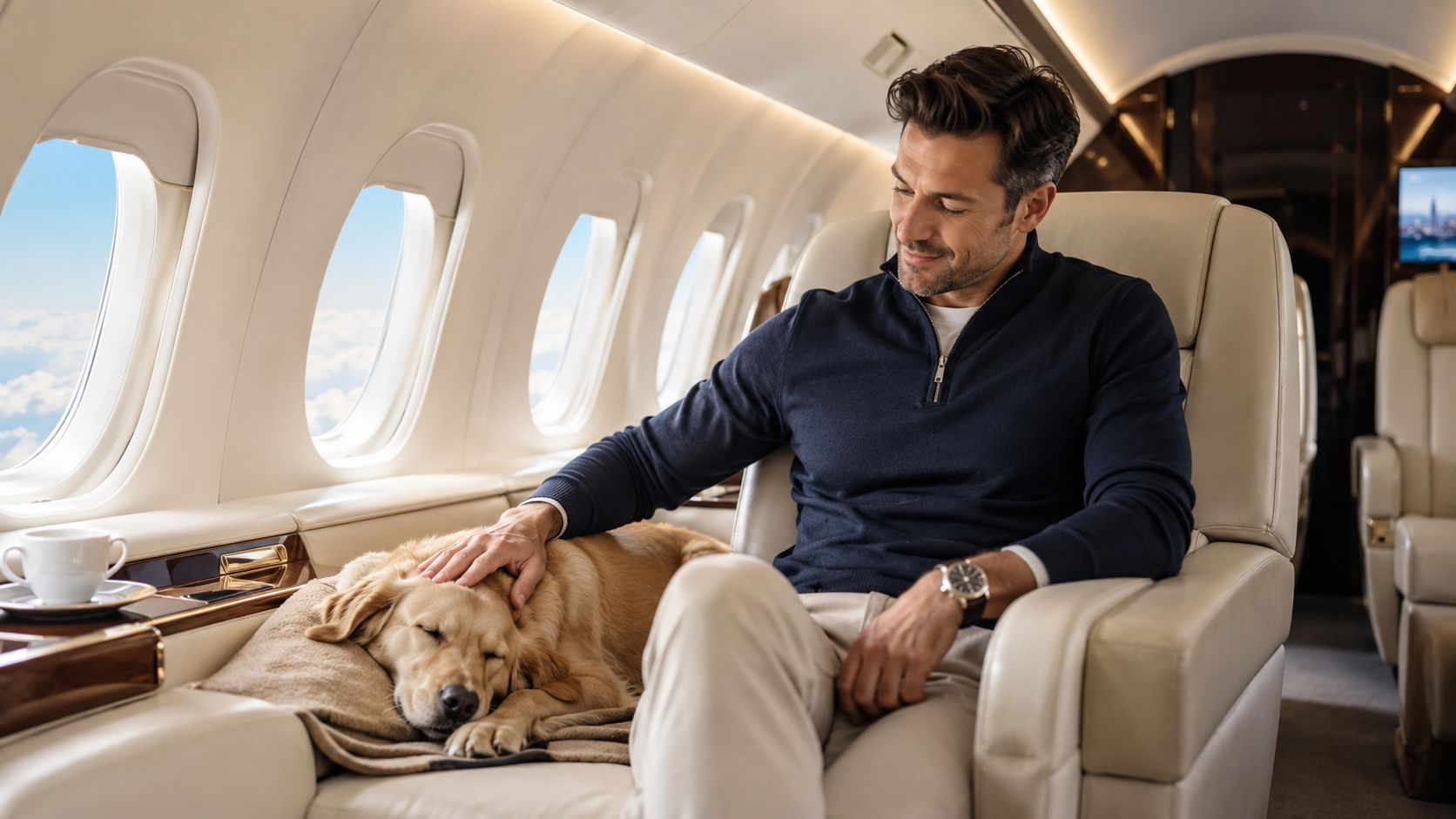
For most high-net-worth owners, this is the preferred structure. It keeps the pet with the family, simplifies supervision, and reduces handoffs. With a service like Haute Jets, pets are guaranteed to travel in the cabin with their owners for the entire flight, never in a separate cargo hold, as outlined on Haute Jets' pet travel policy.
That detail is more important than many first-time clients realize. "Pet-friendly" can mean different things in the market. It can mean accepted on the trip. It can mean accepted only under certain cabin rules. It can mean accepted, but subject to carrier use during portions of the flight. You want the exact arrangement stated clearly before booking.
A full charter also gives you direct control over schedule. If your veterinarian wants a tighter pre-flight window, or your dog does better with a quiet morning departure, you're not trying to fit your animal into a public timetable.
Pet-only transport services
These can be useful in limited situations, especially when an owner can't travel with the animal. But they require more scrutiny.
Some operate with strong animal-handling procedures. Others rely on a chain of vendors and handlers that creates more separation than many owners expect. Even when the service is professional, the owner's visibility is lower. That can be acceptable for some relocations. It isn't the right fit for every family pet.
Here's the practical comparison I give new clients:
| Model | Strongest advantage | Main trade-off |
|---|---|---|
| Full private charter | Owner oversight and in-cabin travel | Higher total trip cost |
| Pet-focused transport service | Useful when the owner can't travel | Less direct control over handling and timing |
Which model fits your trip
Choose full charter when your priorities are calm handling, cabin access, privacy, and schedule control. That includes large dogs, elderly pets, nervous animals, and any itinerary where you want to monitor the trip personally.
Choose a transport-only model only after you've asked exactly who handles the animal on the ground, whether the route involves transfers, and what the operator's fallback plan is if a document issue appears at departure or arrival.
If an operator can't explain the pet handoff process in plain language, keep looking.
Navigating Health and Documentation Requirements
The paperwork side of pet air charter is where otherwise solid trips break down. Not because owners are careless, but because international pet entry rules are narrow on timing and unforgiving on sequence. A healthy pet can still be delayed, denied, or quarantined if the documentation chain isn't exact.
Domestic trips versus international trips
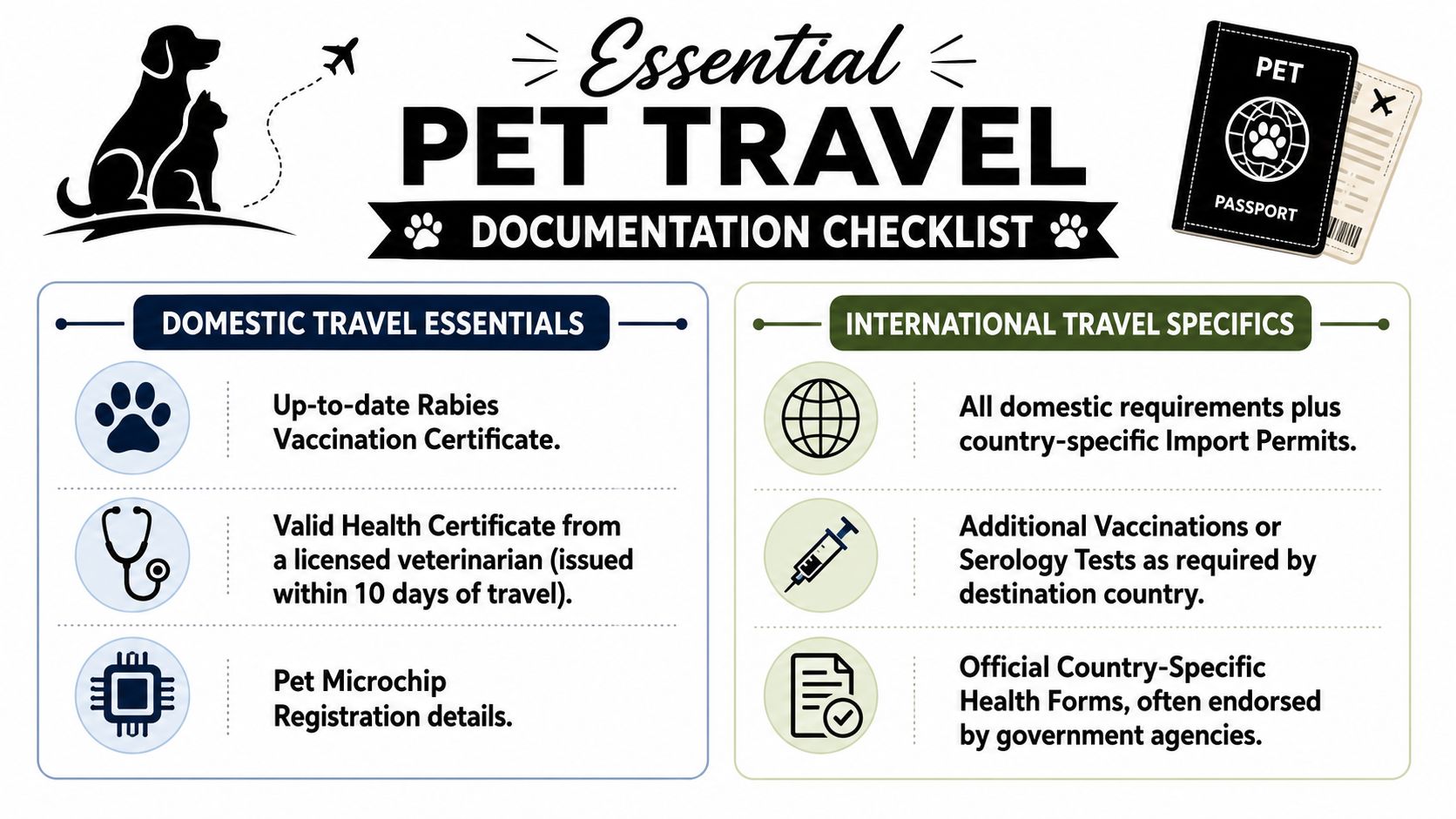
Domestic travel is usually more manageable, but "simpler" doesn't mean casual. You still need current veterinary records, proof of rabies vaccination where required, and a valid health certificate. For many owners traveling with a puppy or a pet that doesn't visit the vet often, basic preparation habits matter more than people think. If you're organizing records from scratch, this practical piece on first vet visit advice for pet parents is a useful reminder of what to gather early and what veterinarians typically want to review.
International travel is different. The documents need to be correct, complete, and timed to the destination's import window. For EU entries, success often hinges on a USDA-endorsed health certificate signed within 48 hours of arrival, and 30% of international shipment rejections are due to documentation timing errors rather than the animal's health, according to IATA pet container and transport guidance.
The sequence matters
Owners often focus on getting every document. The more important issue is getting them in the right order.
Use this sequence as your working checklist:
- Confirm destination rules early. Don't rely on a previous trip or a friend's experience. Requirements can differ by country, transit point, and pet type.
- Verify microchip compliance before final paperwork. International authorities can be strict about ISO-compliant microchipping and matching identity records.
- Schedule the veterinary exam around the entry window. Too early can be just as bad as too late.
- Secure endorsements without leaving slack. Government sign-off often introduces timing pressure.
- Review customs procedures alongside the pet file. For owners crossing borders on private aircraft, Haute Jets' private jet customs guide is a practical reference for the broader arrival process.
Breed-specific medical issues owners should ask about
Many generic guides often lack detail on this point. Flat-faced dogs and cats need special scrutiny even in private aviation. A private aircraft removes many commercial airline problems, but it doesn't erase respiratory risk. You still need to ask how the operator manages ground temperature exposure, boarding pace, and cabin conditions for a brachycephalic animal.
Cats create a different issue. They may be calm at home and highly reactive in motion. The smoother solutions usually involve a familiar carrier, a quiet pre-boarding flow, and a realistic conversation with your veterinarian about travel stress.
The right question isn't "Can my pet fly private?" It's "What medical or regulatory detail could still make this trip a poor fit unless we plan around it?"
Crates still matter, even for in-cabin travel
Owners are often surprised by this. Even when the pet will be in the cabin, a compliant crate or carrier can still matter during FBO transit, ramp movement, and contingency planning.
IATA methodology includes detailed specifications for container construction, ventilation, and animal separation. You may never need the crate in flight the way a commercial cargo booking would, but having the correct setup available is part of disciplined planning. It also makes day-of-travel handling calmer if an airport or ground team needs a secure moment of containment.
Budgeting Beyond the Base Charter Rate
The biggest pricing mistake in pet air charter is believing the first quote is the whole quote.
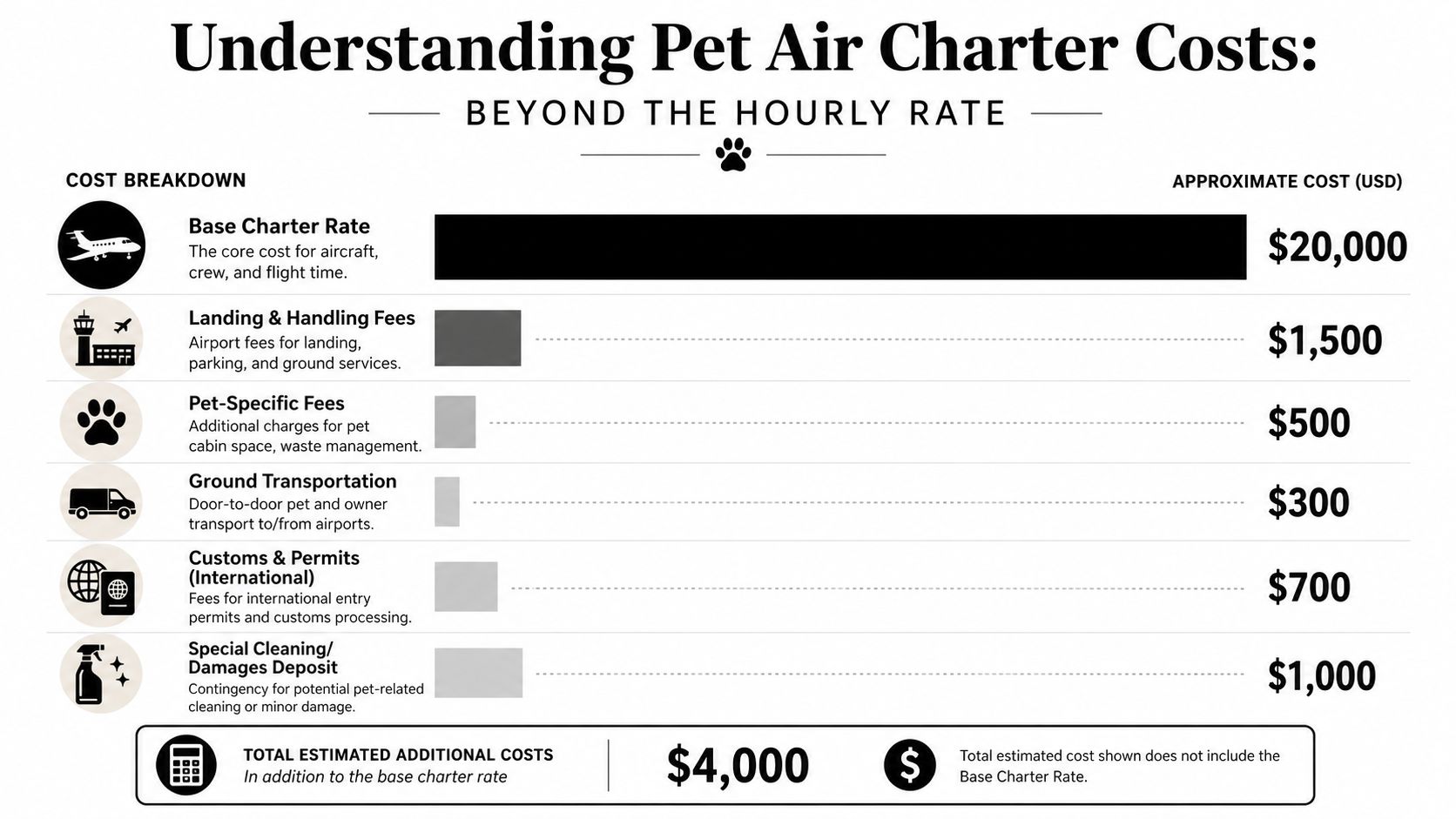
Clients hear "no pet fee" and assume the animal won't materially affect cost. Sometimes that's true. Sometimes it isn't. The issue isn't always a labeled pet surcharge. It's the collection of smaller operator-specific charges that appear later under cleaning, handling, document processing, or special preparation.
Where quote creep starts
A base quote usually covers aircraft, crew, and the flight itself. It may also include standard handling, but that varies. What often gets missed are pet-related incidentals that aren't standardized across operators.
According to Fly Elite Jets' pricing guide for private jets with pets, operators frequently impose cleaning fees of $500 to $2,000 and documentation processing fees of $200 to $500 that aren't always itemized up front. That same pricing pattern can push a $25,000 transcontinental quote up by 8 to 12%.
Those numbers matter less as standalone figures than as a warning about process. If the quote doesn't clearly separate base charter from extras, you aren't comparing offers accurately.
Ask for an all-in figure in writing
This is the simplest way to avoid surprises. Ask the broker or operator to break the trip into categories and confirm which charges are fixed, which are conditional, and which depend on the pet.
Use questions like these:
- Is the quoted total all-in? Ask whether cleaning, pet handling, and document review are already included.
- What triggers a cleaning charge? Light shedding and normal pet presence shouldn't be treated the same way as damage or a major accident.
- Who handles international paperwork review? If there is a processing fee, ask what specific service you're receiving.
- Are any airport or permit items still estimated? Estimated charges are common, but they should be identified as such.
- What would change this final number? Good operators can answer this directly.
For owners comparing broader charter economics, Haute Jets' guide to private jet charter cost is a useful framework for understanding how charter pricing is generally built before pet-specific variables are layered in.
What transparent pricing looks like
A transparent quote doesn't need to be cheap. It needs to be clear.
Practical rule: If a provider says "there are no pet fees," ask whether there are pet-related cleaning, handling, or documentation charges under different names.
What works is a written quote that distinguishes aircraft cost from everything else. What doesn't work is a vague total with verbal reassurance that "we'll sort it out later." By the time "later" arrives, you're often too close to departure to switch providers cleanly.
The Vetting and Booking Process
A polished website doesn't tell you whether an operator runs a disciplined pet trip. Instead, the key test is operational detail. Can they confirm the aircraft's pet policy without hesitation? Do they understand destination paperwork? Can they explain how the FBO handoff works? Do they fly under third-party safety standards that you'd trust for your family?
Safety ratings are not optional
For pet charters, I treat Wyvern and Argus ratings as essential. They don't replace planning, but they do tell you the operator has been audited to a meaningful standard. That matters for every passenger on board, and it matters even more when your pet's welfare depends on careful ground handling and a stable cabin environment.
A common pitfall leading to quarantine delays is the failure to verify ISO-compliant microchipping. At the same time, smooth transit rates exceed 95% when operators use Wyvern or Argus-rated aircraft that allow pets in the cabin, according to Fly Air Trek's pet-friendly private jet charter guidance.
What to verify before you sign
I tell new clients to vet the booking the same way they would vet a property purchase or yacht charter. Ask for specifics, not reassurance.
A strong review process should include:
- Operator rating check: Confirm Wyvern Wingman or Argus Gold or Platinum status.
- Aircraft confirmation: Make sure the exact aircraft can accommodate your pet's size and in-cabin plan.
- Policy confirmation: Ask how the pet is handled during boarding, taxi, cruise, and arrival.
- Ground process review: Clarify the route from vehicle to FBO lounge to aircraft stairs.
- Documentation cross-check: Have someone review the pet file against the destination's actual entry rule set.
How the timeline usually unfolds
The booking itself is often straightforward. The quality is in the follow-through.
A typical process starts with itinerary and pet details. Then comes aircraft matching, operator review, and document planning. After that, the ground handling side gets coordinated with the departure and arrival FBOs. The strongest operators keep the handoff short and calm, especially for pets that don't do well with noise or unfamiliar waiting areas.
One detail clients appreciate is concrete final confirmation. Haute Jets provides a 24-hour pre-flight confirmation that includes the tail number, crew bios, and weather briefing, as described in its pet-friendly private jet charter journal article. That kind of specificity helps owners verify the final setup before they leave for the airport.
A good booking call should leave you with fewer unknowns, not better marketing language.
A Pre-Flight Checklist for a Smooth Departure
The final stretch matters. Most avoidable day-of-travel problems come from rushing the last two or three days, not from the flight itself. Your objective is to keep the pet's routine recognizable while tightening every operational loose end.
In the final 72 hours
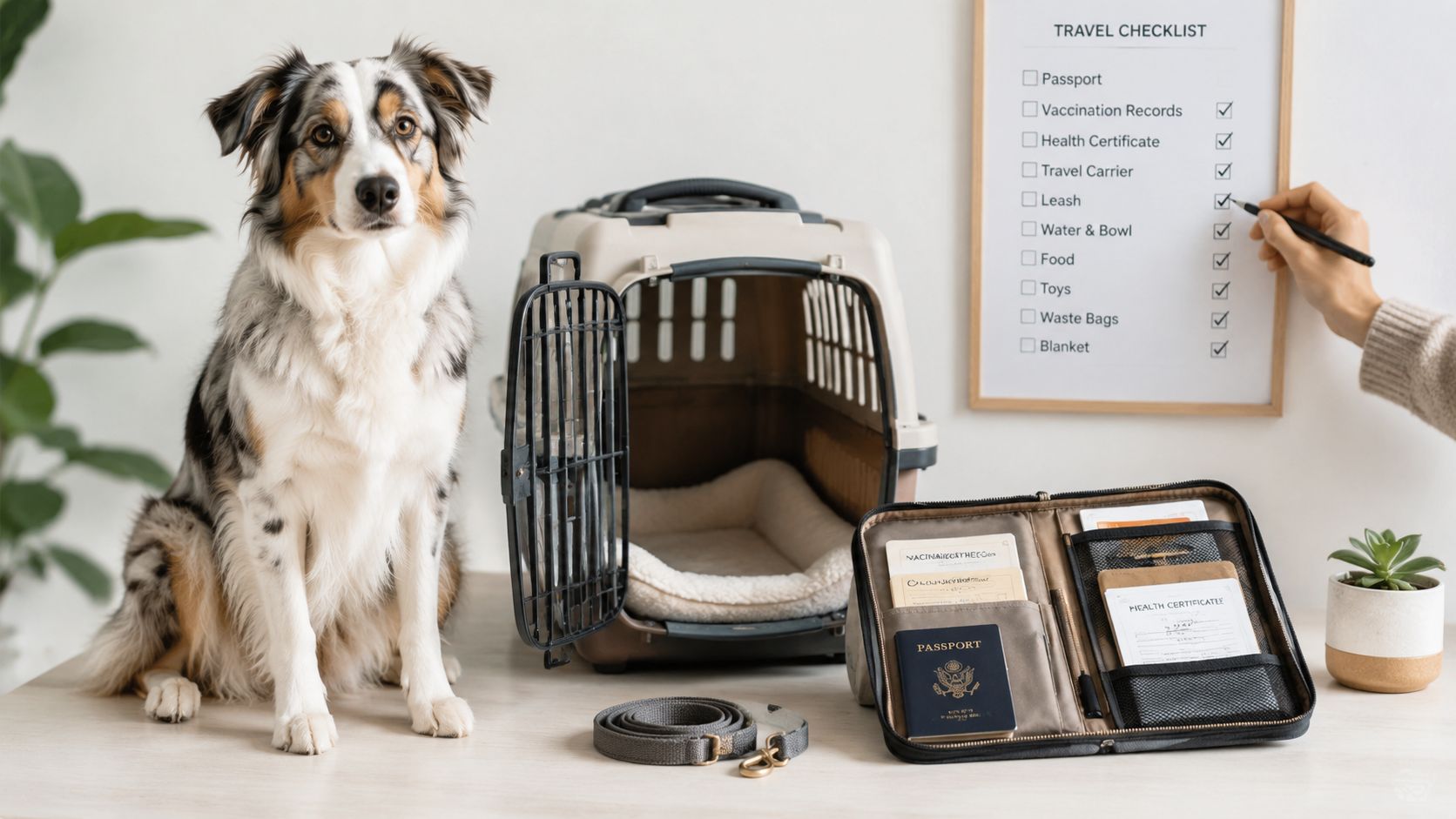
Start by consolidating everything into one travel folder. That means vaccination records, health certificate, endorsements if applicable, microchip details, and arrival contact information. Don't assume digital access alone is enough. Have printed copies ready.
Then focus on the pet's physical routine. IATA guidance calls for feeding to stop at least 2 hours prior to dispatch. That doesn't mean withholding normal care. It means avoiding a full pre-flight meal that can create discomfort during movement and pressurization.
Use this short preparation list:
- Reconfirm paperwork: Match names, dates, microchip information, and destination details exactly.
- Pack a pet bag: Include leash, waste bags, water, wipes, a familiar blanket, and any veterinarian-approved essentials.
- Refresh crate familiarity: Even if the pet will ride in the cabin, a calm relationship with the crate or carrier makes transitions easier.
- Review ground transport: Confirm who is driving, where the vehicle will stop, and how long the pet will wait before boarding.
- Protect routine where possible: A walk, quiet rest, and familiar objects often do more than last-minute "calming" gimmicks.
What owners often overlook
Clothing and comfort matter for the people traveling too, especially when early departures, varying ramp temperatures, and quick terminal-to-aircraft transitions are involved. For practical layering that travels well without feeling bulky, this guide from Pandemonium Millinery is a sensible read.
For the pet, the missed details are usually small. The collar tag isn't updated. The water bowl is packed but inaccessible. The favorite blanket gets forgotten. The arrival-side car service hasn't been told there's a large dog coming off the aircraft.
A more detailed owner checklist is available in Haute Jets' guide to flying on private jets with pets, which is a useful final review before departure.
On the day of departure
Keep the morning quiet. Give yourself more time than you think you'll need, even though private terminals are faster and calmer than commercial ones. Pets read owner tension quickly.
Dogs may be able to settle beside you or on your lap after takeoff depending on the agreed arrangement, while cats generally do best remaining in carriers. If you're traveling with a very large dog, make sure everyone has already aligned on where the animal will rest in the cabin and how boarding will be handled.
This short walkthrough is worth watching before a first trip:
The smoothest departures feel almost uneventful. That isn't luck. It comes from planning the pet's experience with the same care you give the aircraft, the route, and the arrival.
If you want a pet air charter planned around exact aircraft availability, in-cabin pet travel, documented safety standards, and a clear all-in quote, Haute Jets can coordinate the trip from operator selection through final pre-flight confirmation.