

You’re probably in one of two situations right now. Either you’re planning a Hawaii trip and don’t want the airport chaos that comes with a commercial premium cabin, or you’ve already asked for a charter quote and can tell something in the price doesn’t add up.
That instinct is usually right.
Private flights to hawaii are straightforward only when the aircraft, routing, and sourcing strategy are right from the start. Most first-time charter clients focus on cabin photos and hourly rates. I’d focus first on range, operator quality, and whether you’re unknowingly paying for an aircraft to reposition before you ever step on board.
Hawaii is no niche market anymore. In 2024, Hawaii recorded 23,508 private jet departures, up 7.03% year over year, and that gain ranked third nationwide for absolute growth according to state private jet departure data from Private Jet Card Comparisons. Demand is there. The good aircraft are moving. The way you book matters.
Your Gateway to Paradise The Rise of Private Flights to Hawaii
You leave your house, arrive at the private terminal, hand off your bags, and board within minutes. That part is easy. The expensive mistake usually happened hours earlier, when someone built your quote around the wrong aircraft in the wrong city.
That is why private flights to Hawaii deserve a different standard than a short domestic charter. The real divide is not private versus commercial. It is well-sourced versus badly sourced. A polished cabin and a quick quote mean very little if the jet has to fly in empty before your trip starts.
Hawaii draws buyers who want control for good reason. Family travel is simpler. Pets, staff, and extra baggage stop being a negotiation. Business owners can protect time and privacy instead of burning a day inside the airline system. But the clients who book Hawaii well are usually focused on one thing first. They want to know where the aircraft is coming from.
Why demand keeps building
Private travel to Hawaii has become routine for affluent leisure travelers, second-home owners, and executives combining work with a longer island stay. More aircraft are flying these missions than a few years ago, and stronger demand has created a wider charter market.
It has also created more overpriced quotes.
The problem is predictable. As Hawaii demand rises, some brokers stop shopping intelligently and start filling trips with whatever long-range aircraft they can grab fastest. If that jet is sitting on the mainland, far from your departure airport, you absorb the ferry cost. In practice, repositioning can add 20 to 40% to the total trip price, a cost many first-time buyers do not catch because the quote is presented as one neat number.
The smarter move is local aircraft sourcing whenever possible. If the operator already has the right aircraft in Hawaii or on the West Coast in the correct rotation, you can get much closer to true wholesale pricing instead of paying for empty legs disguised as convenience.
A Hawaii charter should be built around aircraft position first, cabin second. Get that order wrong and you pay more before the trip even begins.
The first questions worth asking
Before you approve any quote, get direct answers to these three questions:
- Where is the aircraft based: Ask for the current aircraft position, not just the operator’s home base. That is how you spot hidden repositioning cost.
- Is the aircraft right for the mission: Hawaii requires real range, payload planning, and overwater capability. “Same category” is not an acceptable answer.
- Who is operating the flight: For a Pacific crossing, operator standards, crew experience, and independent safety review matter far more than branding or cabin photos.
Ask those questions early. They will do more for your budget and your trip quality than any glossy fleet presentation.
Deconstructing the Cost of Chartering to Hawaii
A client gets two quotes for the same Los Angeles to Maui trip. Same date. Similar cabin. One is dramatically higher. The difference usually is not the jet. It is the aircraft position, and the ferry cost buried inside the quote.
What actually drives the price
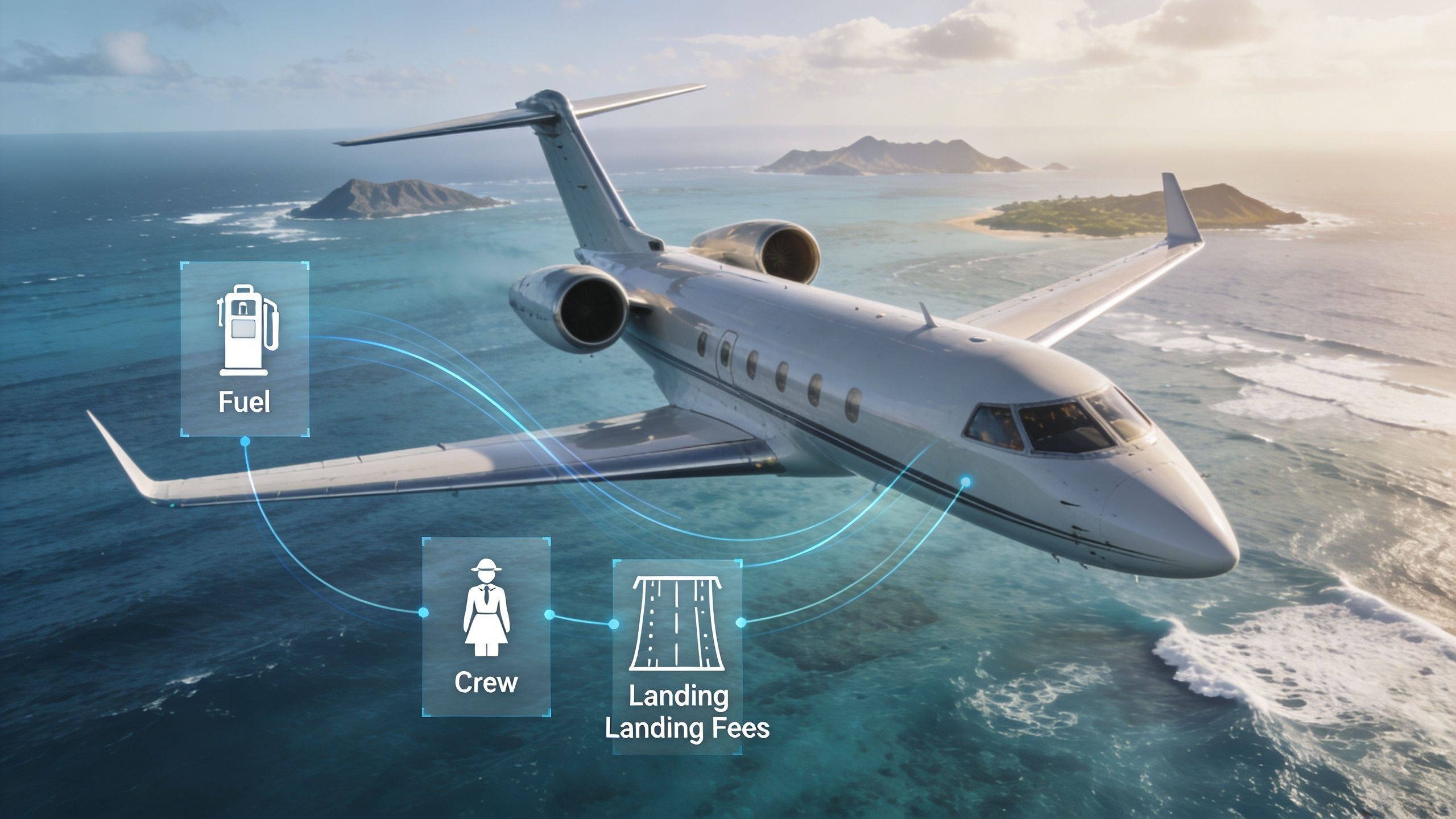
Hourly rate matters less than buyers expect. For Hawaii, total trip cost is driven by a short list of variables, and aircraft position sits near the top.
- Aircraft category: Hawaii often requires a longer-range jet, which raises the base charter rate.
- Block time: Pacific crossings add flight hours quickly, and billable time follows.
- Aircraft position: If the jet has to fly empty to reach you, you pay for that movement one way or another.
- Fuel and island operating costs: Hawaii fuel pricing is high, and island handling costs are rarely cheap, as noted in Beat of Hawaii’s report on private jet activity, which also highlighted Hawaii fuel pricing and empty-leg examples.
- Trip structure: One-way and round-trip pricing can swing sharply depending on where the aircraft needs to end up after your mission.
This is why “all-in” pricing can mislead first-time buyers. An all-in number is only useful after you know whether it includes a sensible routing or an expensive repositioning problem.
The fee that quietly distorts the quote
For Hawaii, repositioning is the cost multiplier clients miss most often. Evojets' analysis of private jet pricing from Los Angeles to Hawaii found that repositioning fees can inflate charter prices by 20 to 40%, while sourcing from nearby owner-operators can reduce total costs on trans-Pacific routes.
That should change how you shop.
If your aircraft is already in Southern California or properly staged in Hawaii, you are paying for your mission. If the aircraft is sitting in Scottsdale, Dallas, or another unrelated market, you are paying for someone else’s empty leg before your trip even begins. Many brokers roll that into one polished quote and leave the client focused on cabin photos instead of routing economics.
True wholesale pricing comes from local aircraft sourcing. That means finding the right tail already near your departure point, or already rotating through Hawaii, instead of forcing a mainland aircraft into your itinerary.
How to read the quote correctly
| Quote type | What it usually means | My recommendation |
|---|---|---|
| Cheap-looking quote | Aircraft fit may be questionable, scope may be incomplete, or details may be thin | Verify the exact aircraft, operator, and routing before you engage |
| Inflated quote | Repositioning is buried in the total and the aircraft is coming from the wrong market | Pass unless there is a clear operational reason |
| Clean local-source quote | Aircraft is already near the mission and the price reflects the trip, not unnecessary ferry flying | Target this structure every time |
If you want a better sense of which aircraft classes make financial and operational sense for long missions, this guide to private aircraft for long-distance travel is a useful reference point.
Empty legs are opportunistic, not a strategy
Empty legs can offer real value. They can also disappear overnight, shift by a day, or land in the wrong airport for your plans. The verified Honolulu to Van Nuys example cited earlier is a good illustration of the upside, but it is not how I would build a fixed family trip, board meeting, or event itinerary.
Use empty legs if the timing already works for you. Do not structure an important Hawaii trip around the hope that one appears.
What to demand before you approve anything
The aircraft’s current location
Ask where the tail is that day. Do not settle for the operator’s headquarters address.A line-item explanation of ferry flying
You want to know what portion of the quote is your trip and what portion is aircraft movement.A one-way versus round-trip comparison
The cheaper structure is not always the one clients expect.
A good advisor answers those questions in plain English. If the quote still feels vague, keep shopping.
Choosing the Right Aircraft for a Pacific Crossing
Not every private jet can fly to Hawaii nonstop from the mainland. That’s the technical reality, and it should drive the booking from day one.
Start with range, not cabin photos
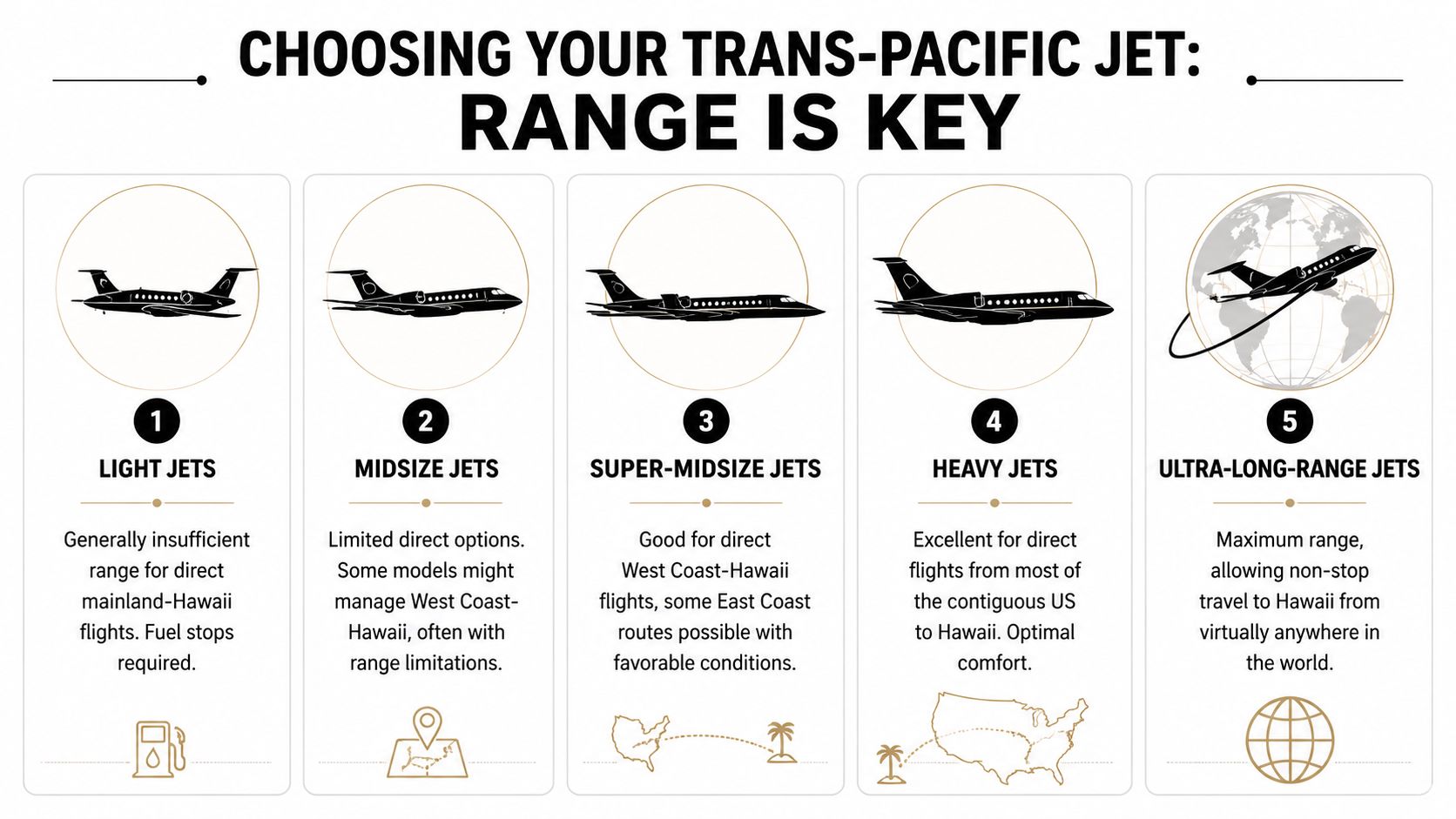
For non-stop flights from the West Coast to Hawaii, super-midsize jets like the Bombardier Challenger 350 are the minimum requirement, offering range over 3,200 nautical miles and avoiding mandated fuel stops for smaller aircraft under FAA oceanic rules, as outlined in VistaJet’s guide to what private jets can fly to Hawaii.
That point matters more than most first-time buyers realize. A light jet may look attractive on price, but if it can’t make the mission correctly, it isn’t a Hawaii solution. It’s a bad fit.
If you want a broader view of aircraft categories before choosing, this long-distance private aircraft guide is useful for comparing mission profiles.
How I’d think about the main jet categories
| Aircraft category | Hawaii suitability | Best use case |
|---|---|---|
| Light jets | Poor fit for direct mainland-Hawaii flying | Short regional trips, not Pacific crossings |
| Midsize jets | Limited applicability | Very specific missions, often not the cleanest solution |
| Super-midsize jets | Strong West Coast to Hawaii option | Efficient nonstop travel with a sensible balance of comfort and cost |
| Heavy jets | Excellent fit | Larger groups, more luggage, more cabin comfort |
| Ultra-long-range jets | Ideal for maximum range and cabin quality | Clients prioritizing nonstop capability, premium cabin, and flexibility |
Why the Challenger 350 keeps coming up
The Bombardier Challenger 350 is often the practical starting point because it sits in the sweet spot for many Hawaii missions from the West Coast. It offers the range profile needed for the route without automatically pushing every client into a larger and more expensive aircraft class.
That said, “minimum capable” doesn’t mean “best for everyone.”
A larger family group, a traveler carrying extensive luggage, or a client who wants a true stand-up cabin for a longer day may be better served by a heavy jet or ultra-long-range platform. The right answer depends on passenger count, departure city, comfort expectations, and whether you want margin in the mission plan.
If an advisor says “any midsize should work,” that’s a warning sign. Hawaii flights need a tail-specific answer, not a category-level guess.
What to confirm before you sign
- Actual aircraft model: “Comparable aircraft” language is weak on a Hawaii trip.
- Nonstop capability for your route: Not just for a generic West Coast departure.
- Cabin layout: Especially if you’re traveling with children, a nanny, security, or colleagues.
- Connectivity: If you need to work in flight, confirm the exact onboard Wi-Fi setup in advance.
Range is the first filter. After that, comfort and onboard features matter. In that order.
Navigating Airports and Flight Paths
Route planning for Hawaii is less about glamour and more about efficiency. The smoothest trips usually start from the right mainland gateway and end at the Hawaiian airport that best matches your final destination, not the one travelers typically recognize by name.
Mainland departures that make sense
Van Nuys is a common choice for Southern California travelers because the market has strong charter activity and good aircraft access. For Hawaii, that matters. A liquid departure market gives you a better chance of finding an aircraft that’s already positioned sensibly.
On the return side, if you’re comparing route structure or planning a reverse itinerary, this Honolulu to Los Angeles private charter route page gives a practical route reference.
For travelers coming from outside California, the question isn’t just where you live. It’s whether you should depart locally or stage through a stronger West Coast charter market to get the right nonstop aircraft at a cleaner price.
Hawaiian airport choice should follow your actual stay
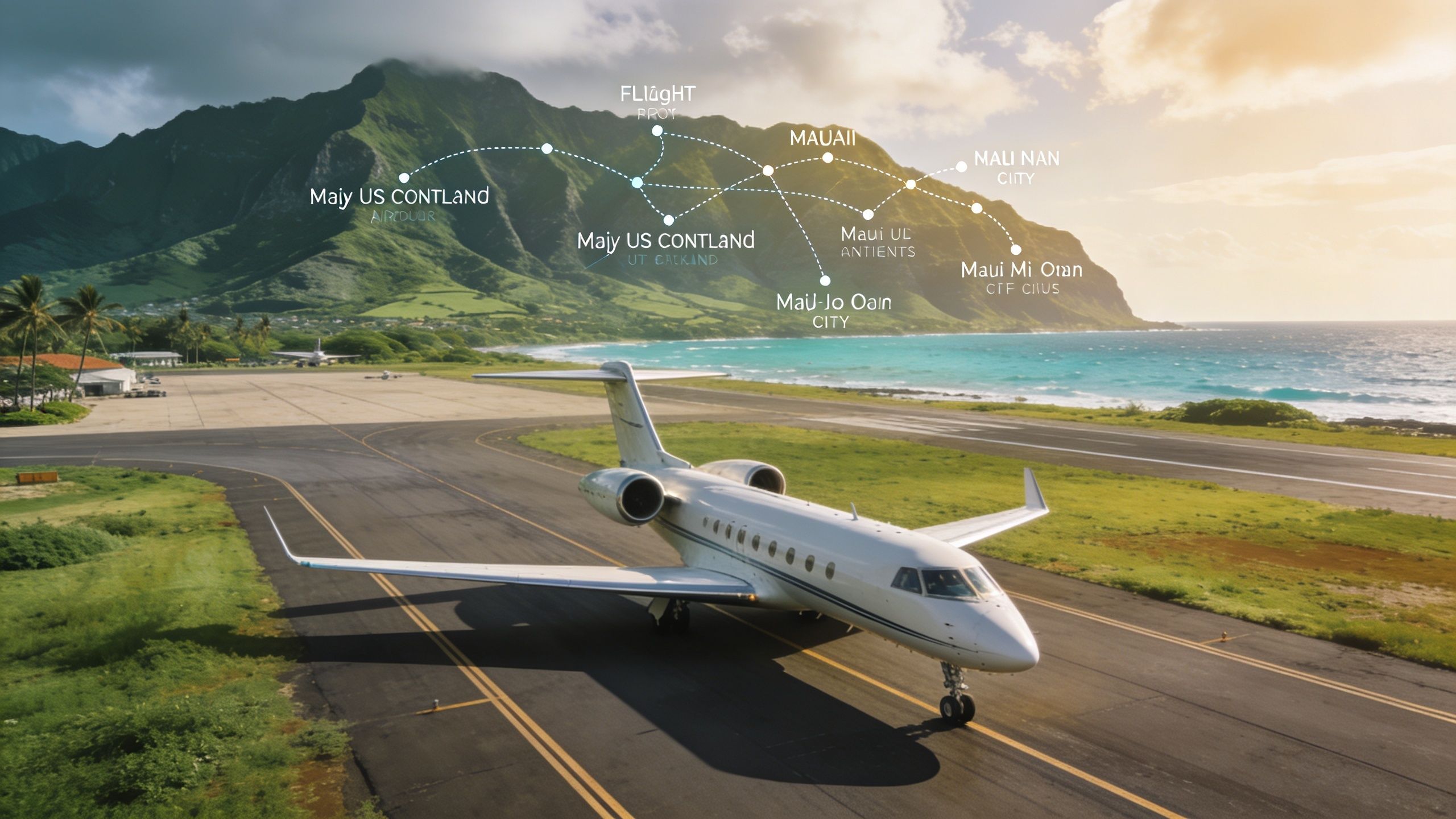
A lot of first-time clients default to Honolulu because it’s the biggest airport. That’s not always right. If you’re staying on Maui, the Big Island, Kauai, or a specific resort area, choose the airport that reduces your ground transfer and fits your arrival plan.
Common charter arrivals include Honolulu, Kona, Kapalua, and Lihue. The right one depends on your island, villa, resort, and onward plans.
A Hawaii flight isn't finished when you land. It’s finished when you reach the property without losing another half day to transfers.
If your trip includes multiple islands, don’t guess your onward moves. This Guide to interisland Hawaii air travel is a practical reference for understanding how island-to-island planning works once you arrive.
Nonstop versus one-stop
Here’s the decision logic I use:
- West Coast departure with the right aircraft: Nonstop is usually the clean answer.
- Midwest or East Coast origin: Sometimes the smartest move is to position into a West Coast gateway and take the correct aircraft from there.
- Tight schedule with family or executives: Fewer moving parts usually wins.
- Price-sensitive client with flexibility: A structured stop can make sense, but only if the mission still feels clean and comfortable.
The private terminal side matters too. You’ll use an FBO rather than a commercial terminal, which is exactly why private flights to hawaii can feel so controlled from curb to cabin. The airport code matters less than whether the routing was chosen intelligently.
Your Pre-Flight Booking and Logistics Checklist
A Hawaii charter goes smoothly when the details are locked early. This isn’t the route to leave half the trip “to be confirmed” a day before departure.
Book the aircraft, then build the trip around it
For Hawaii, I’d rather secure the right aircraft first and then finalize the softer details than do it the other way around. Good lift for a Pacific mission doesn’t stay open forever, especially on popular departure days.
Start with these essentials:
Passenger list accuracy
Make sure names and travel documents are correct from the start.Baggage profile
Say exactly what you’re bringing. Golf clubs, surf gear, pet equipment, and oversized luggage change the aircraft conversation quickly.Ground transport plan
Confirm who is meeting you, where, and with what vehicle type.
The pet issue catches people off guard
Many private charters are pet-friendly in the general sense. Hawaii is different. Hawaii has strict USDA quarantine rules requiring microchips and rabies titer tests completed more than four months before arrival, according to Stratos Jets’ Hawaii private jet guidance.
That timeline is not a detail. It can determine whether your pet can travel as planned at all.
If you’re bringing a dog or cat, ask for a Hawaii-specific pet checklist immediately. Don’t accept a generic “pets allowed” answer from a charter seller. That answer is incomplete and potentially expensive.
A useful booking checklist
- Aircraft confirmation: Ask for the exact make and model, not a vague category.
- Tail number timing: You should know when tail details and crew information will be finalized.
- Catering plan: Hawaii flights are long enough that meal quality matters. Order for the actual passengers on board, not a default menu.
- Ground transfer on both ends: For Seattle departures or connections, even details like selecting a premium SeaTac service can improve the day if your trip begins with a chauffeured transfer rather than self-parking and terminal friction.
- Arrival logistics: Confirm whether your villa, resort, or estate manager is coordinating baggage help and vehicle access.
What I’d delegate and what I’d check personally
Delegate catering, car service, baggage handling, and arrival coordination. A good charter team should own those details.
Personally verify these items yourself:
| Item | Why it matters |
|---|---|
| Departure time | The whole value of private aviation is schedule control |
| Passenger manifest | Errors create avoidable friction |
| Pet documentation | Hawaii treats this seriously |
| Arrival ground plan | The trip should stay seamless after landing |
Advisor’s note: First-time clients often focus on the aircraft and ignore the arrival sequence. That’s backwards. The full journey has to work.
The cleanest private flights to hawaii feel effortless because someone handled the details early, not because the trip was simple.
Verifying Safety for Transoceanic Flights
A Hawaii quote can look sharp right up until you ask who is operating the aircraft. That is where weak deals fall apart. A broker can promise a beautiful cabin and still place you on an operator with limited overwater experience, unclear procedures, or a last-minute aircraft swap that changes the risk profile and the price.
Start with independent safety screening
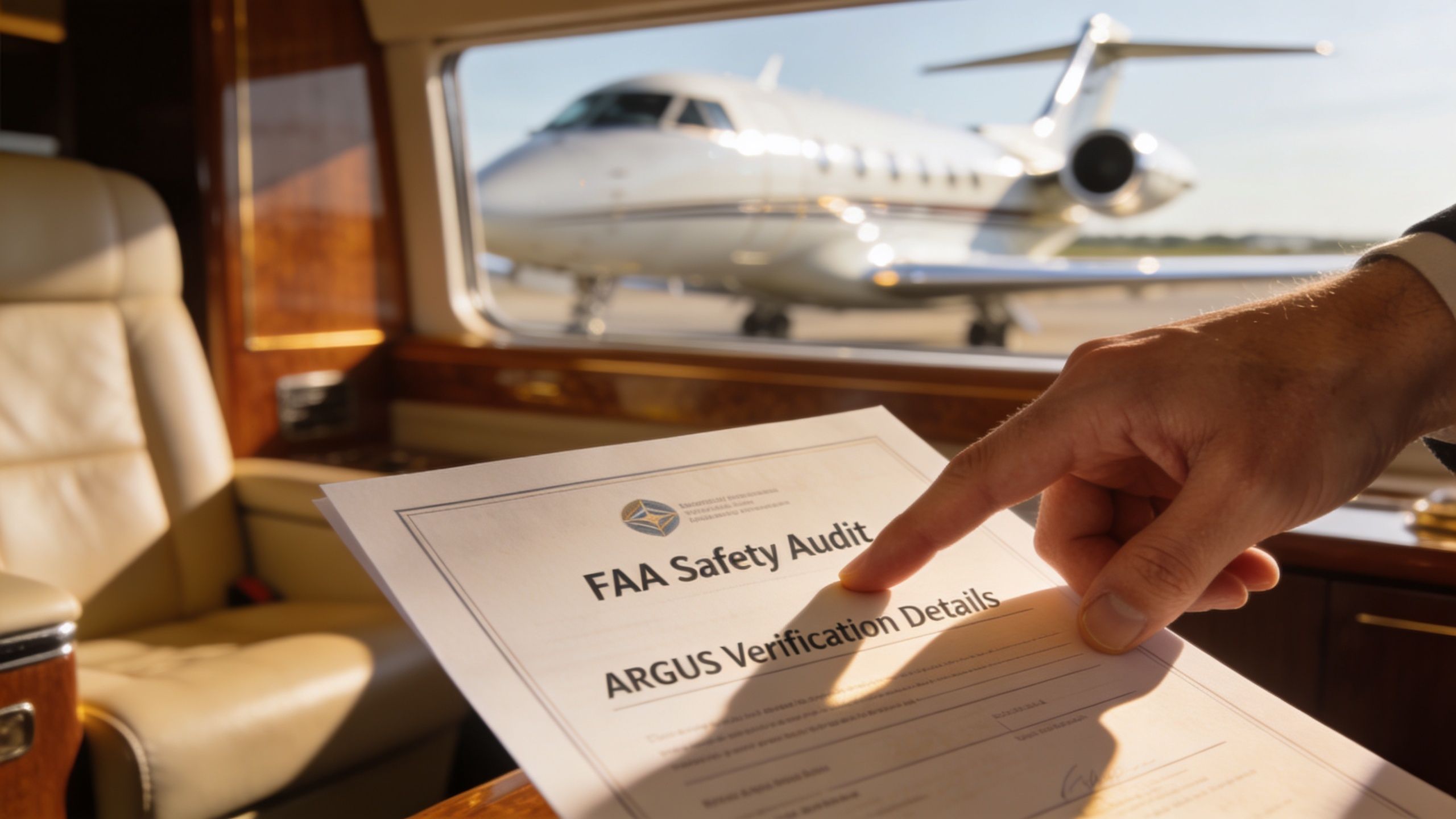
For a Pacific crossing, I’d approve operators with Wyvern Wingman or ARGUS Gold/Platinum recognition first. Those third-party audits give you a real screening standard. Marketing copy does not.
If you want a clearer explanation of those benchmarks, read this analysis of Wyvern and ARGUS safety ratings before you sign off on the trip.
Route experience matters more on Hawaii than on shorter charters
A good domestic operator is not automatically a good Hawaii operator. Overwater flying demands stricter planning, stronger dispatch discipline, and crews who are comfortable with the specific mission profile.
I also pay attention to sourcing. If the aircraft has to be brought in from far outside your departure region, you are not just taking on extra repositioning cost. You are increasing the odds of schedule friction, crew timing issues, and aircraft changes. For Hawaii, local or regional aircraft sourcing is usually the smarter play. It keeps pricing closer to true wholesale levels and reduces the moving parts that create problems on departure day.
What I want confirmed before approval
Ask for the operator name, the safety rating, and the aircraft tail number tied to your trip. Ask when crew details will be provided. Ask how often that operator flies Hawaii missions, not just long domestic routes.
Then ask one more question that many first-time buyers miss. Is this the aircraft that starts near my departure point, or am I paying to reposition it from somewhere else? That answer affects both cost and trip reliability.
For Hawaii charters, safety screening and aircraft sourcing should be checked together. If the operator is qualified but the aircraft is being dragged in from another market, you may still be overpaying and accepting avoidable risk.
That is the standard I recommend. Clear operator identity, recognized third-party vetting, Hawaii route experience, and minimal repositioning exposure. If any of those are fuzzy, keep shopping.
The On-Demand Advantage for Hawaii Charters
You get three Hawaii quotes. All look competitive at first glance. Then one is 30 to 40 percent higher once the routing is finalized, and the difference is not the cabin, the operator, or the service level. It is the ferry flight you were never shown clearly at the start.
That is why on-demand charter works better for Hawaii than prepaid programs or fixed-rate promises. This route punishes lazy sourcing. If the aircraft is not already near your departure point, you are paying to bring it to you, and that cost can erase any headline rate that looked attractive on page one.
Why the flexible model fits Hawaii better
Hawaii charter pricing is won or lost before your trip even departs. A key advantage of an on-demand booking is not flexibility for its own sake. It is the ability to source an aircraft that is already positioned in the right region, with the right range, crew legality, and Hawaii mission history.
Empty legs can still be useful, especially if your schedule is loose and your airport options are wide. But they are opportunistic, not a booking strategy. A better plan is to avoid unnecessary repositioning in the first place. That is how you get closer to true wholesale pricing.
For Hawaii, I would choose a sourcing model that starts local, not one that starts with a sales desk pushing inventory from another market.
What I recommend instead
Book through an advisor or platform that can show you the exact aircraft, the operator, the home base, and whether the plane is already near your departure airport. If they cannot answer those points quickly, move on.
Haute Jets is one example of the model I mean. The company says it sources from a large network of owner-operators, focuses on local aircraft sourcing to cut repositioning expense, and works with operators that hold recognized third-party safety vetting such as Wyvern Wingman or ARGUS Gold or Platinum. For Hawaii, that structure makes sense because it puts aircraft location and operator quality ahead of membership packaging.
The logo on the quote matters less than the sourcing method behind it.
My bottom-line advice
Buy Hawaii charter by mission, not by program. Start with the route, range requirement, passenger count, and departure airport. Then confirm where the aircraft is based. Then approve the quote.
That order protects your budget and cuts down the avoidable problems that show up when a broker has to drag in an aircraft from far outside your market.
If you want help comparing aircraft, checking whether a quote hides repositioning, or sourcing a properly vetted jet for Hawaii, speak with Haute Jets. Ask for the exact aircraft, the operator’s safety rating, and where the jet is based before you approve anything. That is how you book Hawaii intelligently.