
Most advice about private jet rental companies starts in the wrong place. It tells you to pick an aircraft category, compare cabin photos, and ask about amenities. That's backwards.
Your first decision isn't the jet. It's the business model behind the quote.
Two clients can book the same route on the same aircraft type and get very different pricing, flexibility, and service because one quote came from a layered broker setup and the other came from a direct sourcing model. If you don't understand that distinction, you're shopping blind. That's why so many first-time charter clients think private aviation pricing feels arbitrary. It isn't arbitrary. It's structural.
The Real Choice in Private Aviation
Private aviation has become a larger, more complex market than most buyers realize. The global private jet charter services market is valued at $27.38 billion in 2026 and is projected to reach $45.43 billion by 2030, according to The Business Research Company's private jet charter services market report. That size brings more options, but it also brings more confusion.
The popular advice says, "Choose the right jet for your mission." That's only half true. A light jet for a short hop and a large cabin aircraft for a long-range trip still matter. But those are downstream choices. The upstream choice is who is arranging, operating, or sourcing the aircraft.
If you care about price, focus on the structure.
If you care about reliability, focus on the structure.
If you care about transparency, focus on the structure.
Practical rule: When evaluating private jet rental companies, ask "How do you source aircraft?" before you ask "What jet can I get?"
A glossy brand doesn't tell you whether you're paying for convenience, for inventory limitations, or for someone else's margin. A big fleet doesn't tell you whether the aircraft is well positioned for your route. A prepaid program doesn't tell you whether you'll get the exact jet you expected when demand spikes.
Most charter mistakes happen before a passenger ever sees the cabin. They happen when buyers accept a quote without understanding who controls the aircraft, who marks it up, and who eats the operational friction. That's the essential choice in private aviation.
Understanding Traditional Charter Company Models
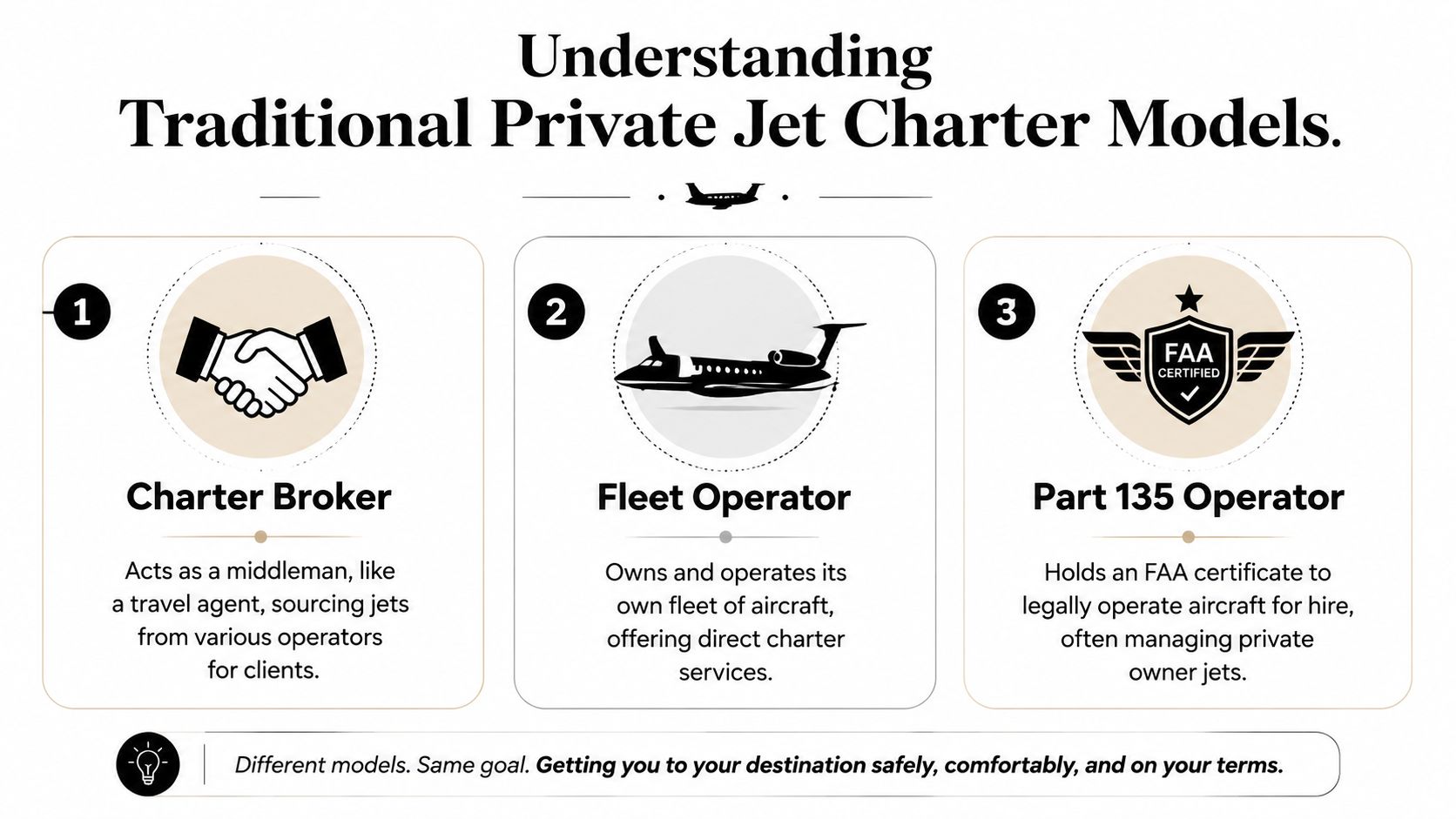
Three legacy models dominate this market. If you can identify which one you're dealing with, you'll understand most of the trade-offs immediately.
Charter brokers
A charter broker is the private aviation version of a travel intermediary. The broker doesn't usually own the aircraft. Instead, the broker searches for lift through operators and presents options to the client.
That model can be useful. Brokers often have broad market access, especially for unusual routes, last-minute trips, or aircraft-specific requests. But broad access comes with a familiar problem. Another layer can mean another margin, another communication handoff, and another chance for details to get lost.
The broker model works best when you need market reach and don't mind paying for someone to coordinate it. It works worst when the quote is opaque and the client never learns where the aircraft is coming from.
Fleet operators and certified operators
A fleet operator controls its own aircraft or manages a defined fleet. A Part 135 operator holds the certificate required to legally operate charter flights for hire, and many manage aircraft on behalf of owners.
This model gives clients something brokers can't always offer. Direct operational control. That's valuable. The company knows its crews, maintenance standards, dispatch procedures, and cabin setup. When the aircraft is a good fit for your route, the process can be efficient.
The weakness is reach. A fleet operator can only sell what it controls or manages. If its aircraft are based far from your departure point, or if its fleet doesn't match your mission well, your options narrow quickly.
A good operator gives you control over execution. A limited operator can still give you a bad economic fit.
The top end of the market is concentrated. In 2025, NetJets logged 719,086 flight hours and Flexjet logged 284,533 flight hours, putting them far ahead of other operators, according to Private Jet Card Comparisons' 2025 ranking of the biggest charter and fractional companies. That same source shows how unusual that scale is compared with the rest of the market, where thousands of smaller operators compete in on-demand charter.
Jet cards and membership programs
Jet cards and memberships sell convenience in exchange for commitment. You prepay or commit to a program, then book flights under a set of terms tied to aircraft categories, service areas, and program rules.
That structure appeals to frequent flyers who want a repeatable process. It can reduce decision fatigue. It can also create a false sense of simplicity. Category access is not the same thing as full aircraft choice, and convenience isn't the same thing as pricing efficiency.
Typical trade-offs include:
- Prepaid commitment: You're tying up capital before every mission is known.
- Category-based booking: You may get an aircraft class, not a specific tail.
- Program restrictions: Peak periods, service rules, and substitution policies can affect what you receive.
Private Aviation Models Compared
| Model | Pricing Structure | Aircraft Choice | Best For |
|---|---|---|---|
| Broker | Quote-based, often with intermediary margin | Broad access across many operators | Buyers who want many options and route flexibility |
| Fleet operator | Direct pricing on controlled fleet | Limited to owned or managed aircraft | Clients who value operational consistency |
| Jet card or membership | Prepaid hours or program commitment | Usually category-based, not exact aircraft-specific | Frequent flyers prioritizing convenience and repeatability |
The mistake isn't using one of these models. The mistake is using one without knowing its limits.
The Direct-to-Owner Sourcing Advantage
A smarter model has emerged because the old ones leave obvious gaps. Buyers want broad access without stacked layers, and they want operational quality without being trapped inside one fleet.
That's where direct-to-owner sourcing earns attention.
What this model actually changes
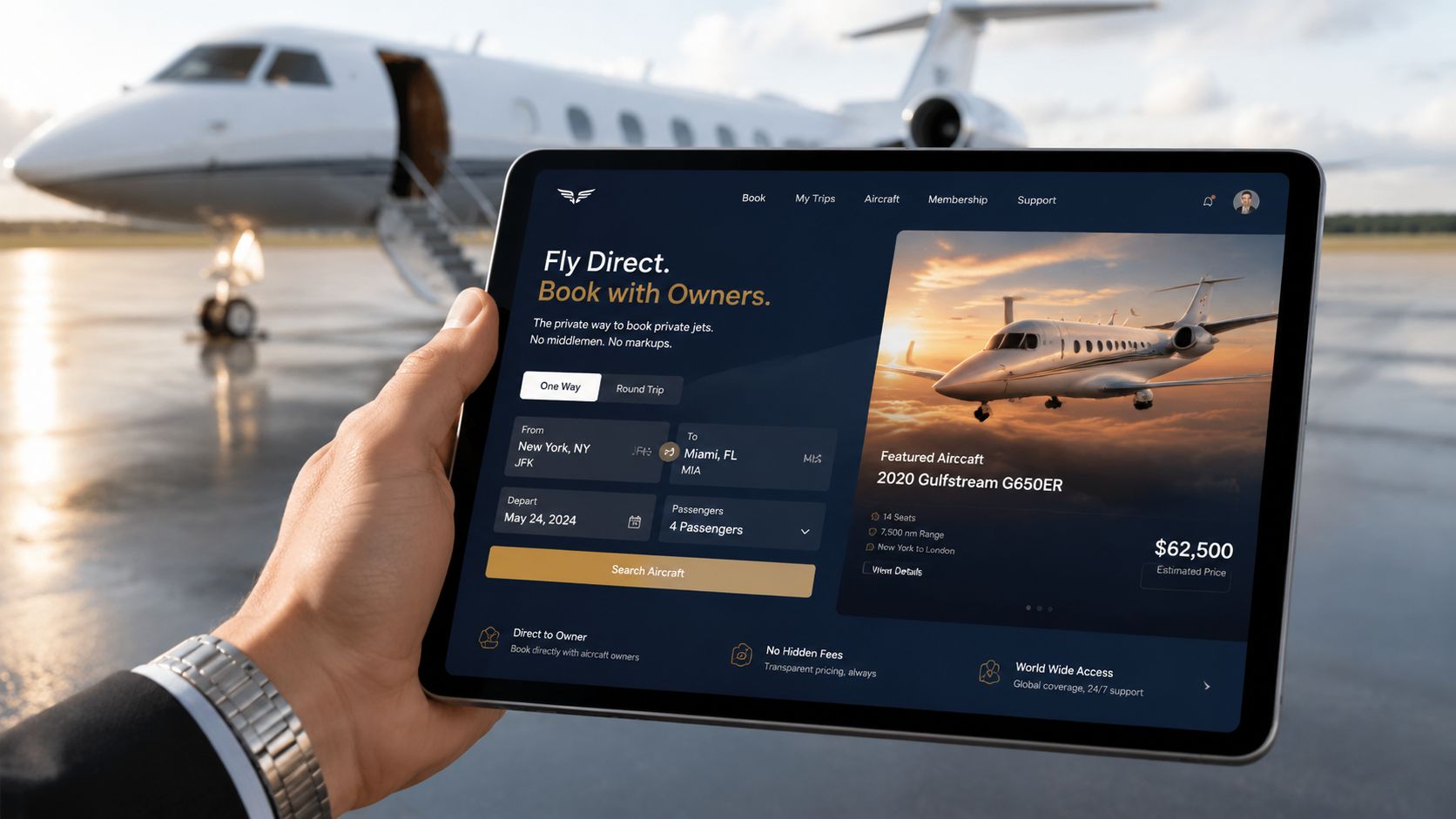
A direct-sourcing platform doesn't rely on the narrow inventory logic of a single fleet, and it doesn't need the same degree of intermediary layering as a traditional broker chain. It connects client demand to available aircraft closer to the point of departure and makes aircraft positioning a central part of the sourcing decision, not an afterthought.
That matters more than most first-time buyers realize. In private aviation, the jet that's nearest and properly vetted is often the better commercial answer than the jet with the louder branding.
One example is Haute Jets, which sources from 3,500+ owner-operators across 175+ countries, a structure built around local matching rather than forced fleet placement. That model is particularly relevant if you're comparing on-demand options and want to understand how empty leg private jet charter flights fit into a broader sourcing strategy.
Why clients feel the difference
The advantage isn't theoretical. It shows up in three practical ways:
- Better aircraft matching: You're not limited to what's inside one operator's hangar map.
- Cleaner pricing logic: The sourcing process starts with available local lift, not with selling the inventory someone already needs to move.
- More exact selection: You can focus on a specific aircraft and mission fit instead of settling for a category label.
The right direct model gives you the access of a marketplace and the discipline of a procurement process.
This approach doesn't eliminate the need for judgment. You still need proper operator vetting, clear paperwork, and flight-specific verification. But as a business model, it's closer to what informed charter clients want. Fewer layers, wider access, and pricing tied to aircraft reality instead of program architecture.
Decoding Private Jet Pricing and Hidden Fees
Most buyers ask the wrong pricing question. They ask, "What's the hourly rate?" That's not useless, but it doesn't tell you what you'll ultimately pay.
The right question is, "What am I being billed for besides passenger flight time?"
Repositioning is where many quotes go wrong
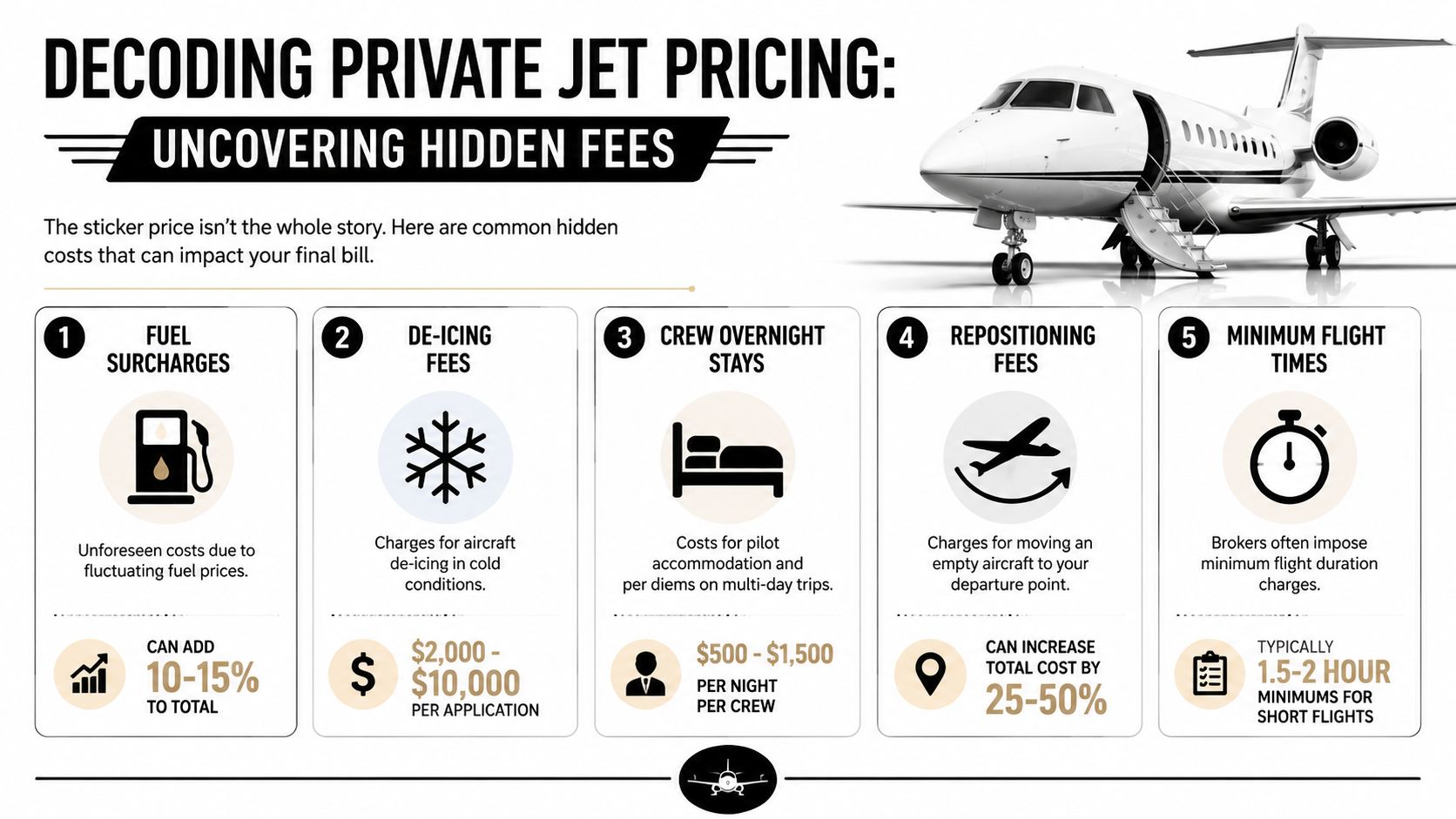
The biggest hidden driver is aircraft repositioning. If the aircraft isn't already near your departure airport, someone has to move it there empty. That ferry segment doesn't carry you, but you may still pay for it.
Industry analysis shows that traditional brokers and jet card programs often add 20 to 40 percent in repositioning fees when the aircraft isn't based near the departure city, as noted in BlackJet's analysis of top private jet charter companies. That's not a minor line item. On the wrong route, it can define the quote.
A one-way trip is where this issue often becomes obvious. You're evaluating the passenger leg, but the provider may be evaluating an operational problem: how to get the aircraft to you and then where to send it next.
What to examine in every quote
A serious buyer should review a charter proposal like a procurement document, not a luxury brochure.
Use this checklist:
- Aircraft position: Ask where the aircraft is based before your trip begins.
- Billable flight time: Confirm whether the quote includes only your segment or also ferry segments.
- Daily minimums: Some structures can make short trips look less efficient than they first appear.
- Specific aircraft details: Request the exact aircraft, not just a category.
- Route logic: For one-ways and short-hauls, ask why this aircraft is being assigned instead of a closer one.
For a deeper client-side breakdown of quote structure, this guide to unraveling private jet charter pricing costs breakdown is worth reviewing before you approve any proposal.
What matters most in a quote: not the advertised aircraft class, but whether you're paying for someone else's empty flight.
The practical way to think about price
Don't compare private jet rental companies by headline rates alone. Compare them by positioning logic.
If an aircraft is sourced near your departure city, the quote has a chance to be efficient. If the provider has to drag lift in from elsewhere, your "good deal" may only look good because the fee structure is hard to parse.
This is why two quotes can differ so sharply even when the cabin photos look similar. One is built around your trip. The other is built around the provider's operational inconvenience.
Verifying Safety Standards Beyond the Brochure
Safety claims in private aviation are cheap. Every website says safety comes first. That statement means almost nothing unless the operator's standards are verified by an independent third party.
For private jet rental companies, basic FAA compliance is the floor, not the standard you should use to make a buying decision. The meaningful distinction is whether the operator holds a recognized third-party safety rating and whether that rating is required for every flight.
What to demand before you book
Top-tier safety is verified by independent audits, and the strongest charter standards require ratings such as ARGUS Gold or Platinum or Wyvern Wingman for each flight, as outlined by VistaJet's discussion of private aviation safety standards. Those ratings go beyond baseline legality. They examine areas clients can't realistically audit on their own, including operational controls, training discipline, and maintenance oversight.
If a provider gets vague when you ask about operator ratings, stop there.
Ask these questions directly:
- Which operator is flying my trip? You need the actual operator, not just the sales company.
- Is the operator ARGUS rated or Wyvern Wingman approved? Ask for confirmation tied to your flight.
- Can you provide the tail number before departure? No tail number, no real transparency.
- Who verifies the operator independently? If the answer is only internal, that isn't enough.
What a serious client should ignore
Ignore generic phrases like "we use only the highest standards" unless the company can tie them to recognized audits. Ignore branding that implies safety through luxury. Ignore fleet glamour shots. None of that tells you who is flying the aircraft and under what controls.
A useful companion resource is PilotGPT for safe flying, which helps travelers think more clearly about operational safety questions before departure. And if you want a tighter explanation of what these audit systems mean, this breakdown of Wyvern and Argus private aviation safety ratings gives you the language to challenge vague answers.
If a provider can't explain its safety filters in plain English, you shouldn't trust its sourcing process in the first place.
Safety isn't the soft side of the purchase. It's the hard side. Treat it that way.
The Modern Booking Workflow from Quote to Wheels Up
Once you understand the model, the booking process gets much easier. Good chartering isn't mysterious. It's disciplined.
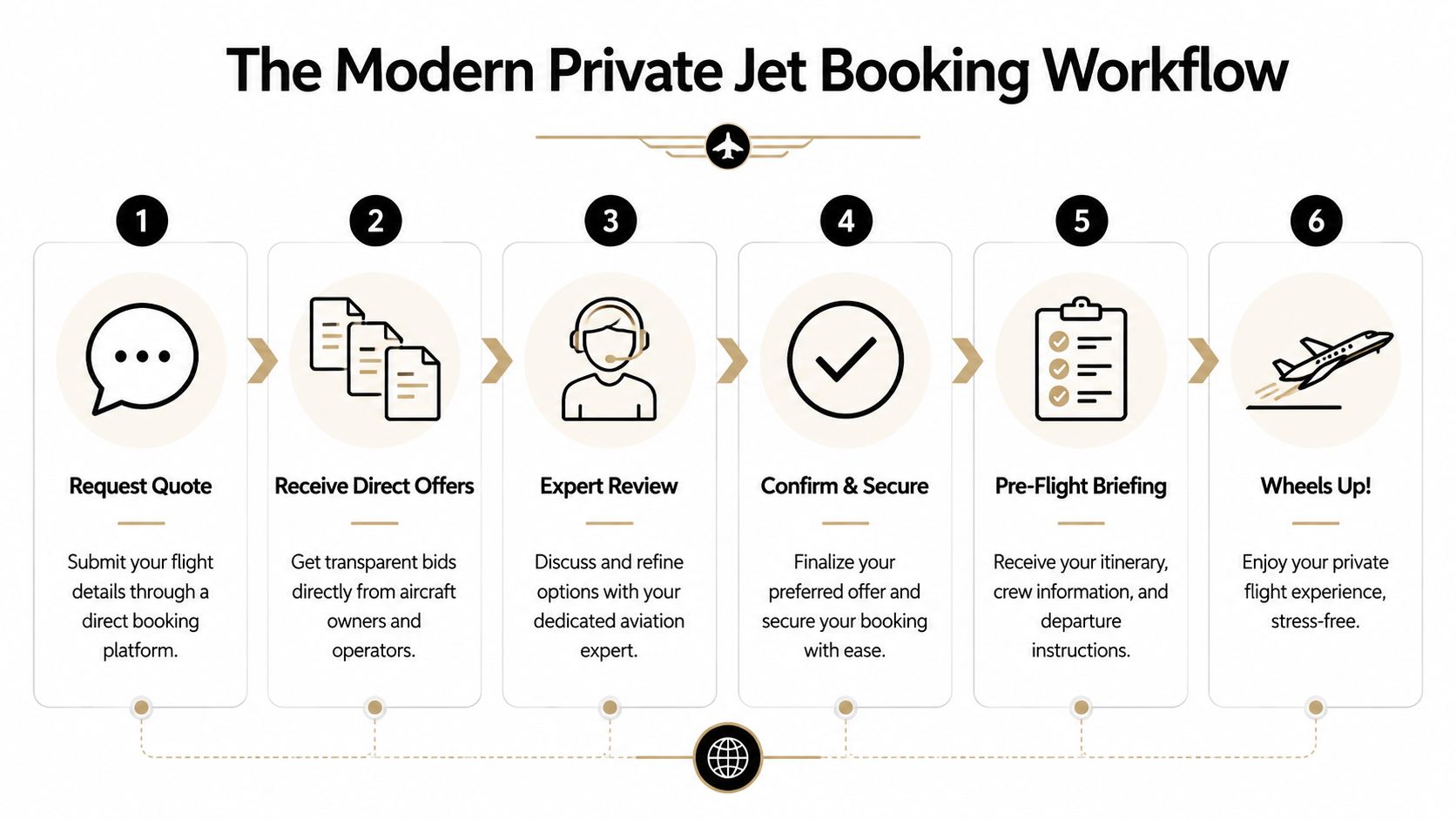
Step one to step three
Start with a precise request. Give your departure airport, destination, dates, preferred schedule, passenger count, baggage profile, and any essential requirements such as Wi-Fi, pets, or cabin layout. Vague requests produce messy quotes.
Then review offers critically. You're not just choosing a price. You're choosing an aircraft, an operator, and a service level. Ask for the exact tail if available, ask whether the aircraft is locally positioned, and ask what is included in the price.
After that, speak with a real charter advisor or operator representative. This conversation should clean up every operational variable before money moves.
Use these questions:
- Which exact aircraft am I getting? Year, make, model, and cabin configuration matter.
- Is onboard Wi-Fi confirmed? Don't assume.
- What is the pet policy? Approval should be explicit, not implied.
- Can I pay with cryptocurrency? If that's relevant, ask before documentation is issued.
- What happens if the aircraft changes? You want substitution rules in writing.
A short explainer can help first-time buyers visualize the process:
Step four to departure day
Once you select the offer, confirm the paperwork carefully. Review the operator identity, cancellation terms, passenger manifest requirements, and any special handling details. If you're moving on a one-way or event-driven schedule, timing precision matters.
Next comes the pre-flight brief. During this stage, weak providers tend to get sloppy. You should receive a clear itinerary, departure instructions, FBO details, and confirmed flight specifics before the trip. A strong standard is a 24-hour pre-flight confirmation with the tail number, crew bios, weather briefing, and passenger details verified.
Good booking workflows remove uncertainty before departure. They don't ask the client to discover details at the terminal.
A practical booking checklist
Before wheels up, confirm all of this:
- Terminal details: Know the exact FBO, not just the airport.
- Passenger documents: International trips and some domestic situations require advance precision.
- Ground transport: Arrange pickup on both ends if timing matters.
- Cabin requests: Catering, child seating needs, golf clubs, skis, and pets should be on the record.
- Backup communication: Have a live operations contact, not just a generic booking email.
The smoothest private jet experience usually looks uneventful. That's because the extensive work happened during sourcing, vetting, and confirmation.
Conclusion Chartering with Confidence in 2026
The private jet industry doesn't need more vague advice. It needs cleaner buying standards.
When you evaluate private jet rental companies, stop leading with aircraft category alone. Start with the company model. Then inspect the quote for positioning logic. Then verify safety through independent ratings, not marketing language. Those three moves will eliminate most of the bad decisions clients make in charter.
The buyers who get the best outcomes usually aren't aviation insiders. They're disciplined buyers. They ask who controls the aircraft, where the aircraft is coming from, and which third-party safety standard applies to the actual trip. That's how you turn a confusing market into a manageable one.
If you want one clear takeaway, it's this: the best charter decisions come from aligning business model, pricing transparency, and safety verification. When those three line up, the rest of the experience tends to follow.
If you're comparing private jet rental companies and want a cleaner way to source aircraft, Haute Jets is one option to review. It offers on-demand charter access through a direct-to-owner network, with no memberships or jet cards, and focuses on exact aircraft selection, local sourcing, and third-party-rated operators.