

A private jet to Miami typically costs $9,000 to over $95,000 one way, depending on the route and aircraft size. For example, a light jet from New York to Miami usually falls between $9,000 and $20,000, while a larger jet from Los Angeles to Miami can run $55,000 to $95,000 one way.
Most travelers focus on the airplane and the route. That's not enough. The private jet to Miami price often swings because of how the aircraft is sourced, where it's based, and whether you're unknowingly paying for the jet to fly empty before you ever step onboard.
That's why this guide belongs on the Haute Jets Journal. Miami is one of the busiest private aviation markets in the country, and it's also one of the easiest places for a buyer to overpay if they don't understand how charter quotes are built. A quote that looks competitive at first glance can end up being bloated by positioning costs, unnecessary aircraft size, or a pricing model that favors the broker instead of the client.
I'll give you the numbers that matter, explain what drives them, and show you where the hidden markup usually lives.
Demystifying the Cost of Flying Private to Miami
A buyer can overpay for a Miami charter by 20 to 40 percent before the trip even starts. The biggest reason is not the cabin. It is aircraft positioning.
Miami private jet pricing looks messy because many quotes bundle together very different cost layers. You are not just paying for flight time. You may also be paying to bring the aircraft to your departure airport, hold it on the ground, or send it home empty after drop-off. Traditional brokers often present that total as if it were a clean market rate. It is not.

That is why broad hourly ranges only help at the edges. They tell you the general cost difference between a turboprop and a heavy jet, but they do not tell you whether your quote includes an empty-leg reposition, a crew overnight, or a broker spread hidden inside the trip total.
Start with the mission. A short South Florida or Bahamas run should be sourced very differently from a New York departure or a coast-to-coast flight into Miami. Then ask the question many charter buyers forget to ask: where is the aircraft based right now? If the answer is vague, the quote is probably padded.
Practical rule: If a quote does not show the aircraft category, routing logic, and whether the jet is already near your departure airport, you do not have a reliable price.
A disciplined sourcing process beats aggressive negotiation almost every time. Buyers who understand the main private jet charter cost factors usually avoid the expensive mistakes that make a quote look normal when it is inflated.
Pricing levers are straightforward:
- Aircraft category: Turboprop, light, midsize, super midsize, or heavy.
- Trip distance: Regional flying and cross-country flying have different economics.
- Aircraft location: Local lift is cheaper. Repositioned lift is often where the waste starts.
- Demand timing: Major events and peak weekends push rates higher.
- Quote transparency: Clear sourcing usually means better pricing. Opaque sourcing usually means hidden margin.
Understand those levers and Miami pricing stops looking random. More important, you stop judging quotes by the airplane alone and start judging them by how the airplane was sourced.
Sample Private Jet Charter Prices to Miami
About 1 in 3 private charter quotes to Miami carries avoidable ferry cost. That is the pricing distortion serious buyers need to watch first, especially on popular routes where the headline number can look fair and still be inflated.
Use the table below as a starting range for the flight itself, not as a final shopping number. A key factor is whether the aircraft is already near your departure point. If it is not, your quote can jump fast.
Estimated One-Way Private Jet Charter Prices to Miami
| Route | Aircraft Category | Passenger Capacity | Estimated Price (One-Way) |
|---|---|---|---|
| New York to Miami | Light Jet | 8–10 passengers | From $9,000 |
| Los Angeles to Miami | Super Midsize Jet | Not specified | From $28,000 |
| Chicago to Miami | Midsize Jet | 6–8 passengers | From $12,500 |
| Dallas to Miami | Midsize Jet | Not specified | From $13,500 |
| Bahamas to Miami | Turboprop | Not specified | From $2,500 |
Those figures are useful for budgeting. They are not interchangeable. A Bahamas hop on a turboprop and a Los Angeles mission on a super midsize jet sit in completely different operating cost categories.
Read the routes in tiers:
- Short regional access: Bahamas to Miami from $2,500
- High-volume business corridor: New York to Miami from $9,000
- Mid-range domestic flying: Chicago to Miami from $12,500, Dallas to Miami from $13,500
- Long-range cabin demand: Los Angeles to Miami from $28,000
A smart buyer also budgets the trip beyond the aircraft. If you are coordinating airport transfers on arrival, current 2026 personal chauffeur pricing gives a useful reference point for ground cost planning.
How to judge a published Miami charter price
Published route numbers help you set expectations. They do not tell you whether the quote is efficient.
New York to Miami is the best example. You may see one light jet quote start around $9,000 and another land much higher for the same city pair. The gap usually comes from aircraft model, seating layout, operator availability, and whether the jet has to reposition before your trip. Buyers who ignore that last point routinely overpay.
A Miami charter quote only deserves attention when the aircraft class fits the mission and the aircraft is sourced close to the departure airport.
Same route, very different cost
A light jet from New York to Miami can price very differently depending on the specific aircraft offered. A Hawker 400XP and a Learjet 45XR do not carry the same cost profile, even if both are listed as light jets. That is why route guides should be treated as starting markers, not final truth.
My recommendation is simple. Use sample pricing to spot outliers, then ask one direct question before you compare brokers: Is this aircraft already in position for my departure? If the answer is unclear, the quote is probably carrying margin you do not need to pay.
Key Factors That Determine Your Final Charter Quote
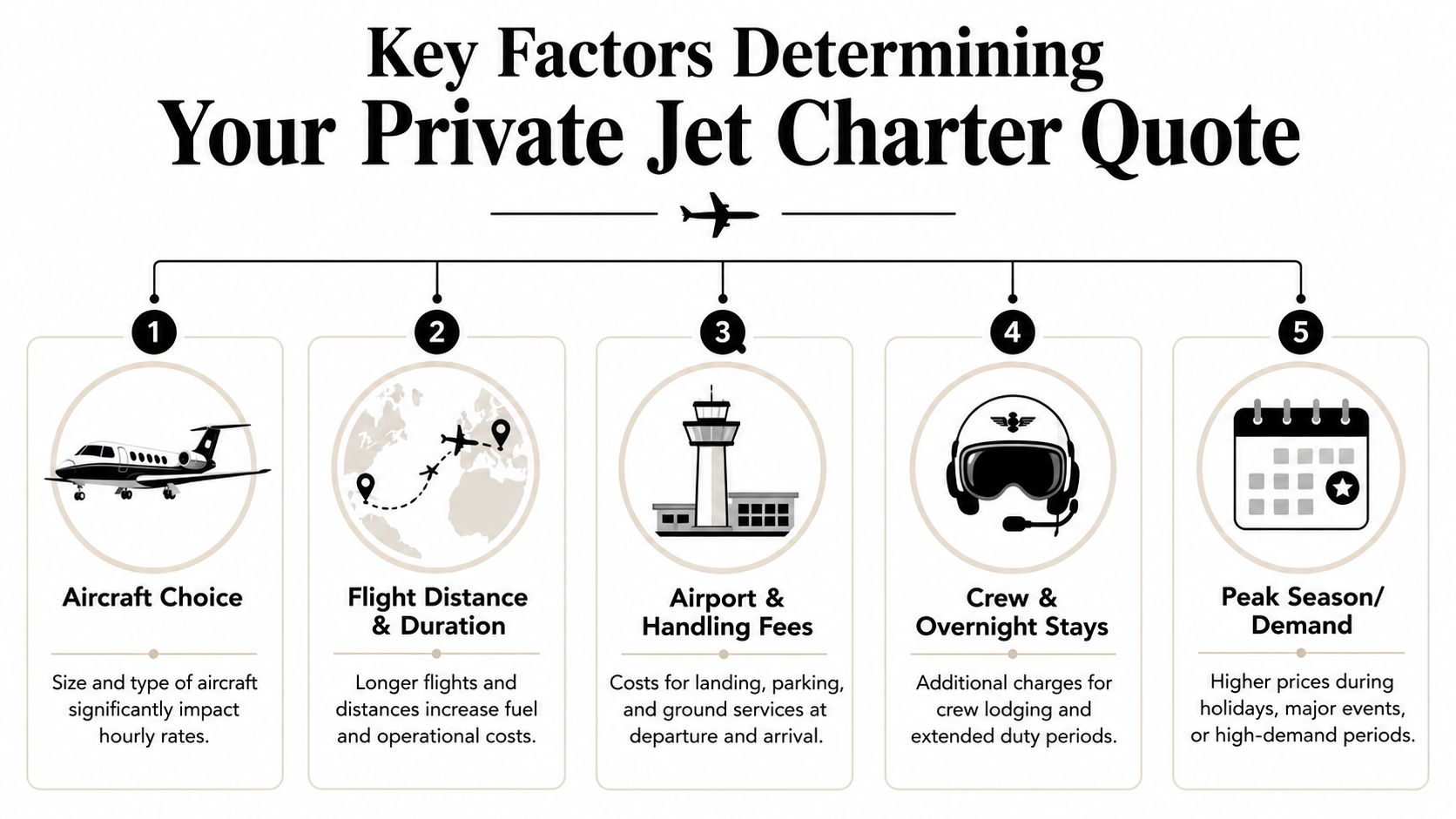
Your Miami charter quote is built from operating math, not brochure pricing. If you do not know what is driving the number, you cannot tell whether the offer is fair.
Aircraft type sets the baseline
Start with the aircraft, but do not stop at the category label. "Light jet" or "midsize jet" is not enough to judge value. The exact aircraft model, cabin layout, baggage capacity, and range profile all affect hourly cost and trip efficiency.
A buyer flying three passengers from the Northeast to Miami does not need to pay for a large-cabin aircraft unless the schedule, luggage load, or nonstop requirement justifies it. That is where weak sourcing gets expensive. Traditional brokers often show the aircraft they can access fastest, not the aircraft that fits the mission best.
Flight hours are only part of the bill
Yes, flight time matters. More hours mean more fuel, more engine reserves, and more crew cost.
But smart buyers know the quote can move just as much because of what surrounds the flight. Departure airport choice, peak-hour congestion, overnight crew needs, parking, deicing on northern departures, and short-notice scheduling all shape the final number. Miami trips during event periods are a good example. The aircraft may be suitable, but the timing can still push pricing up fast.
Ground planning should be priced separately so you can see the aviation cost clearly. If you also need executive transport after landing, current 2026 personal chauffeur pricing is a useful benchmark for the car-service side of the trip.
Positioning drives whether the quote is efficient
This is the factor experienced charter buyers check first. Where is the aircraft right now?
If the jet is already near your departure airport, your quote has a chance to be competitive. If it has to be brought in from another city, your "trip price" may include extra flight time you never intended to buy. That cost is often buried inside the total instead of shown clearly, which is why clients should review a straightforward explanation of how private jet repositioning fees affect charter pricing before approving any Miami quote.
That is also why local sourcing matters so much. Haute Jets looks for aircraft already positioned near the mission, which cuts out avoidable ferry cost and gets you closer to true wholesale pricing.
A serious quote should answer these questions
I would not approve a charter quote to Miami until these points are clear:
- What exact aircraft is being offered?
- Where is that aircraft positioned before departure?
- Does the quote include overnight crew, parking, and handling fees?
- Is the itinerary priced as a one-way, a round-trip, or a live-leg scenario?
- What part of the total is fixed, and what part could change before wheels up?
A clean quote explains the operating logic. A padded quote hides it.
The Hidden 20-40% Cost of Repositioning Fees
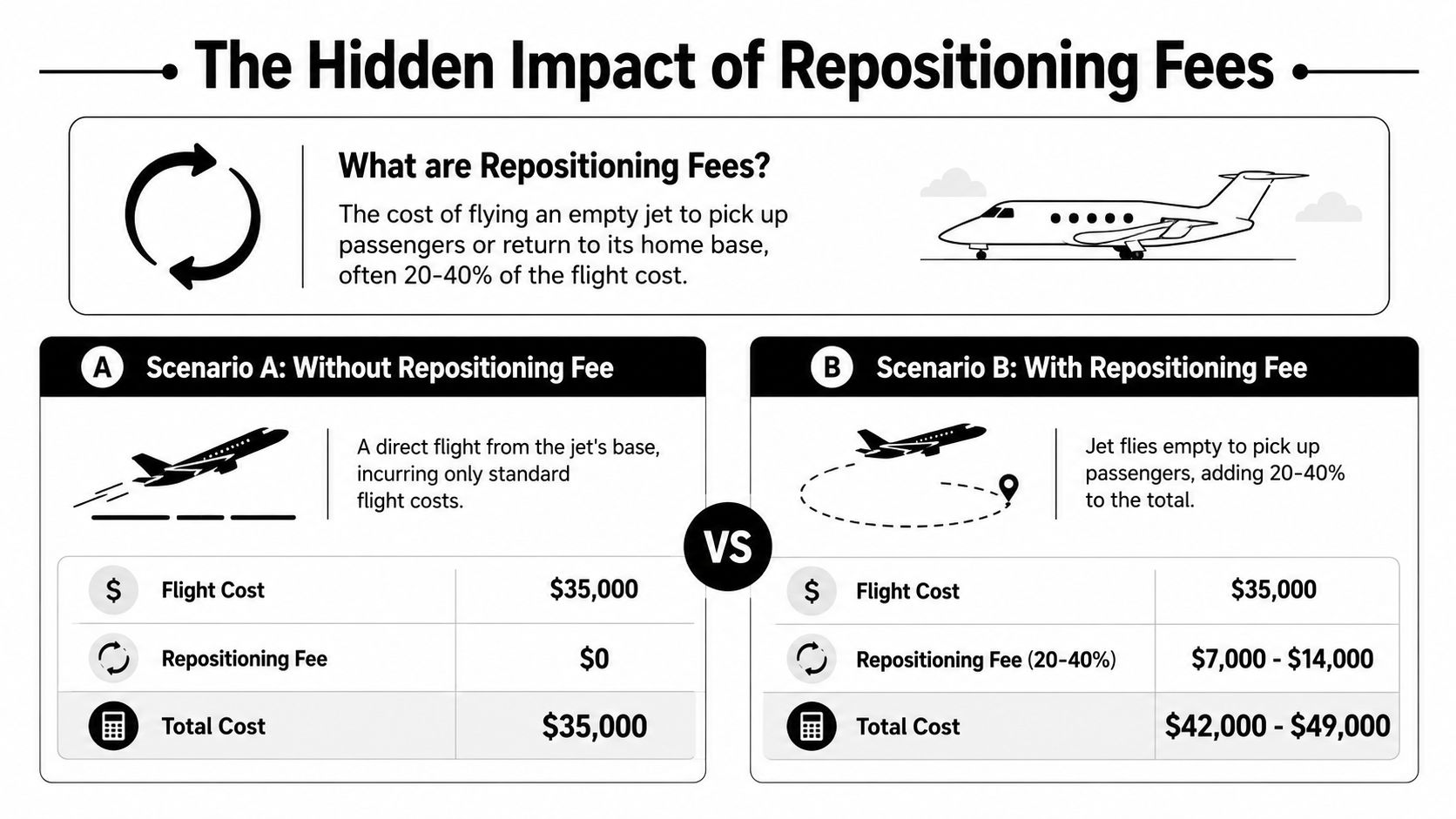
This is the part most charter buyers miss. A jet may not be where you need it when you need it. If the operator has to fly that aircraft empty to your departure airport, you often pay for that movement. That's called a repositioning fee, and it's one of the easiest ways for a quote to get padded without the client realizing it.
What the fee actually means
Think of it this way. You're not only buying your trip. You may also be buying the aircraft's commute.
Traditional brokers and jet card programs often pass that cost through to the traveler. According to Haute Jets' explanation of repositioning fees, these fees can inflate charter prices by 20 to 40 percent, while a locally sourced aircraft can avoid that markup.
That increase isn't theoretical. Paramount Business Jets' charter cost breakdown notes that repositioning can inflate pricing by 20 to 40 percent, and even turns a $15,000 quote into nearly $22,000 in some cases once positioning is added.
Why clients keep missing it
The industry likes clean-looking quotes. A low initial number gets attention. Then the trip gets rebuilt around an aircraft that isn't local, or around a program structure that normalizes ferry costs as part of the transaction.
Clients usually ask, “What's the price to Miami?”
They should ask, “Where is the aircraft coming from?”
If the plane is flying empty before your trip starts, somebody is paying for that leg. Too often, that somebody is you.
Where the smarter economics are
The most effective fix isn't haggling. It's sourcing. If the jet is already based near your departure point, the pricing is cleaner from the start. You're paying for your mission, not someone else's aircraft logistics.
That's why I'm blunt about this issue. A private jet to Miami price without repositioning clarity is incomplete. Sometimes deliberately.
Three Smart Strategies to Reduce Your Charter Price
A smart buyer cuts structural waste first. That means reducing empty ferry time, keeping timing flexible when possible, and treating empty legs as a bonus, not a plan.
Use empty legs selectively
Empty legs can deliver steep discounts because the aircraft is already scheduled to fly without passengers. If your trip is flexible, they can be one of the best values in private aviation.
They also come with real limits. Departure times can shift. Routing can change. The trip can disappear if the original paid mission changes.
That makes empty legs a fit for leisure travelers, short-notice getaways, and buyers who can adapt. They are a poor choice for board meetings, fixed event arrivals, or any trip where timing matters more than price.
If you want the trade-offs spelled out clearly, read this guide to how empty leg flights work before you build your itinerary around one.
Keep your timing flexible
Miami pricing moves fast around holiday weekends, Art Basel, Formula 1, major yacht events, and school breaks. Shift your departure by a few hours, or move the trip by a day, and the quote can improve quickly.
Why? Because flexibility gives sourcing teams more aircraft options. More options usually means a better cabin match, a more efficient routing, and less chance that you get pushed onto an aircraft that has to come in empty from another city.
I advise clients to set a preferred schedule and a backup window. That simple step often saves more than trying to negotiate after the quote is already built.
Source the aircraft locally
This is the strategy I recommend first because it fixes a significant pricing problem. A non-local jet often brings hidden ferry cost with it. A local aircraft usually does not.
That difference matters more than shoppers realize. If a broker starts with an aircraft based somewhere else, your quote can absorb repositioning time before your trip even begins. The number may still look competitive at first glance, but the economics are weak.
Local sourcing is how disciplined buyers avoid that trap. It is the only strategy on this list that consistently attacks the hidden 20 to 40 percent cost inflation discussed earlier. Empty legs are opportunistic. Flexible timing helps. Local aircraft selection changes the math from the start.
My ranking is simple:
- Best for consistent savings: Local sourcing
- Best for opportunistic discounts: Empty legs
- Best for widening your quote options: Flexible timing
Cheap-looking quotes are common. Clean quotes are better. The right aircraft in the right market usually beats a flashy number built on repositioning.
The Haute Jets Model How to Access Wholesale Rates
A traditional charter quote can carry a hidden 20 to 40 percent surcharge before you even compare cabin classes. That surcharge is usually repositioning, and it is exactly where disciplined buyers lose money.
Why direct sourcing changes the math
The standard broker process is simple. A client requests Miami, the broker searches broad inventory, and the quote often ends up including aircraft that are not where the trip starts. That extra movement costs money. You pay for it.
Haute Jets takes the smarter approach. The model centers on finding aircraft near the point of departure and pricing the mission from there, instead of building the trip around a jet that has to fly in empty. That matters because savings in private aviation rarely come from clever negotiation. They come from removing waste before the quote is built.
As noted earlier, Haute Jets also emphasizes access to a large operator network, pay-as-you-fly booking, and vetted operators with recognized safety credentials. For buyers, the practical benefit is straightforward. Cleaner sourcing usually produces a cleaner quote.
What wholesale pricing actually means
“Wholesale” gets abused in private aviation. I use the term narrowly. It means the price is tied closely to the aircraft doing your mission, not padded by unnecessary layers, prepaid programs, or avoidable ferry legs.
That structure is especially attractive for Miami flyers because this market moves fast. Rates change around weekends, major events, school holidays, and short-notice departures. A fixed-product model can leave you overpaying. A locally sourced, trip-by-trip model gives you a better chance of paying for the aircraft you need, not for positioning inefficiency hidden in the background.
The practical advantages are clear:
- No membership buy-in. Your money stays tied to the trip.
- No jet card commitment. You are not locked into pricing that may stop making sense.
- Pay per mission. Each quote can match the route, date, and aircraft requirement.
- Aircraft-level selection. You can evaluate the actual jet, not just a category label.
That last point matters more than many buyers realize. Two aircraft in the same class can deliver very different cabin layouts, baggage capacity, onboard condition, and Wi-Fi performance. Buyers who care about value should want the exact aircraft details before they approve a quote.
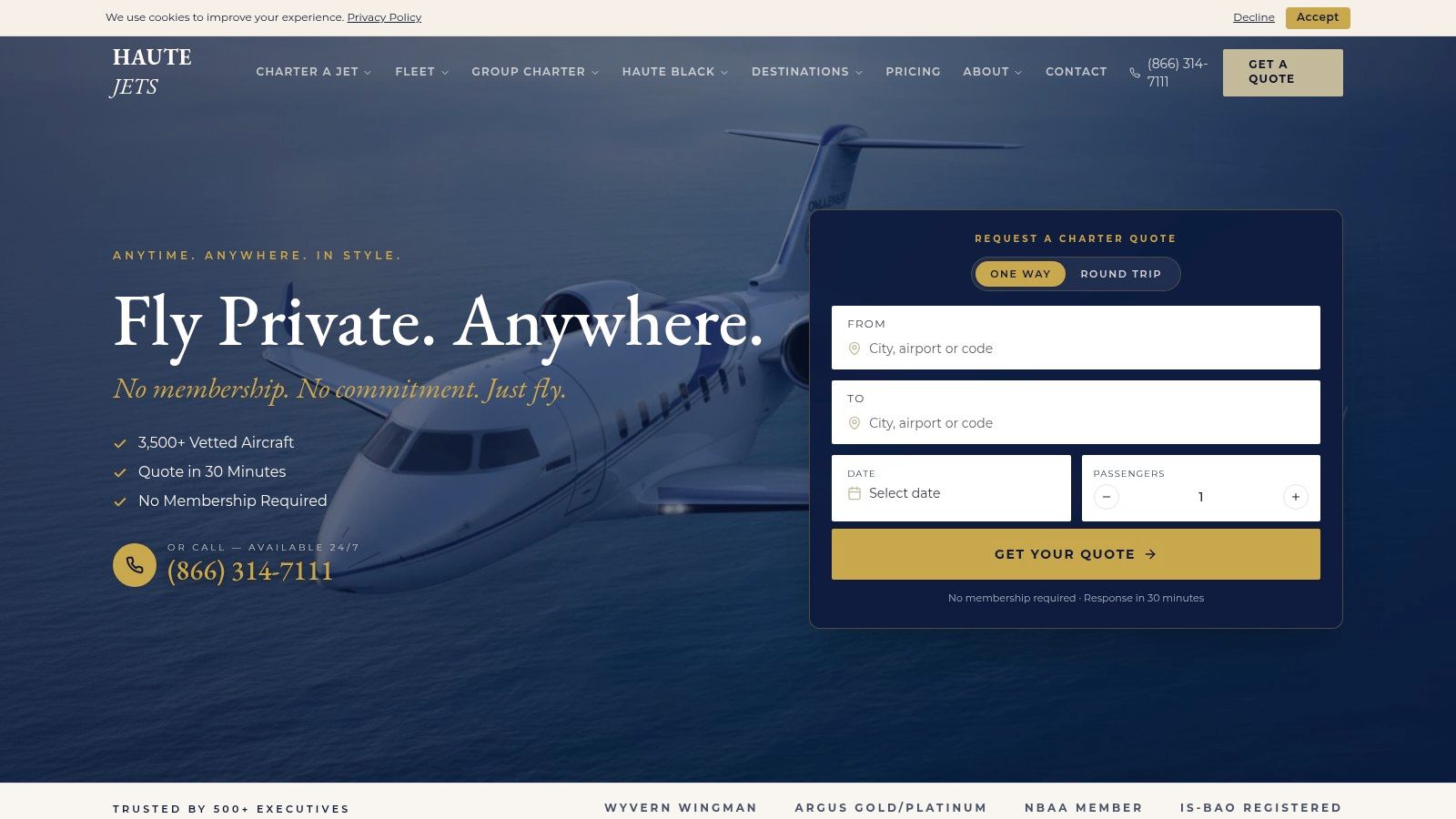
Here's a closer look at how that experience is presented:
Why this model fits Miami especially well
Miami is one of the easiest markets to overpay in. Demand spikes quickly, many trips are booked around narrow time windows, and plenty of quotes look polished while hiding weak sourcing logic.
The right approach is blunt. Start with aircraft already positioned near your departure airport. Ask for the exact operator and aircraft. Strip out empty repositioning whenever possible. That is how buyers get closer to true market pricing.
For Miami, Haute Jets gets this right. The model is built around local sourcing and transparent trip pricing, which is exactly how you avoid paying retail-style charter rates for a flight that should have been quoted at a cleaner wholesale level.
Your Next Steps to Booking a Private Jet to Miami
If you remember one thing, make it this. The private jet to Miami price isn't just about route length or cabin size. It's about whether the quote is built efficiently.
The public numbers give you a strong range. You now know that Miami charters can start around $2,500 on a short turboprop route, sit around $9,000 to $20,000 for common light-jet missions like New York to Miami, and climb to $55,000 to $95,000 on longer coast-to-coast flights in larger aircraft. More important, you know why those numbers move.
Use that knowledge to screen quotes hard. Ask where the aircraft is based. Ask whether the trip requires repositioning. Ask what exact aircraft is being quoted. Ask whether the routing and cabin size fit the mission.
That's how experienced buyers book private aviation. They don't chase labels. They audit the logic.
When the quote is transparent, the trip usually makes sense. When the quote is vague, the cost usually isn't finished.
If you want a cleaner quote for your next Miami flight, start with Haute Jets. Their model is built around local aircraft sourcing, wholesale pricing, no memberships, and access to exact aircraft through Wyvern Wingman and ARGUS Gold/Platinum-rated operators.