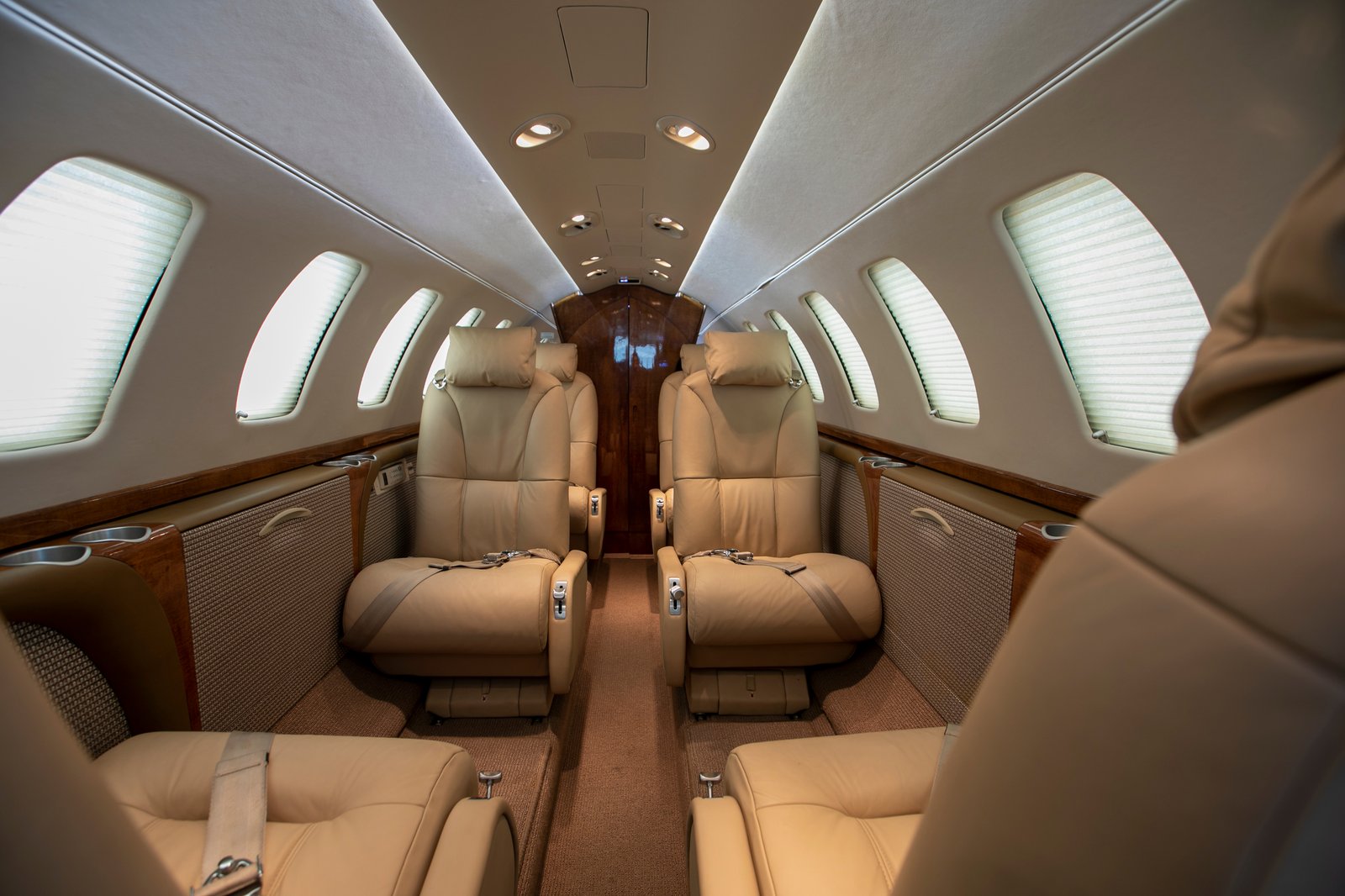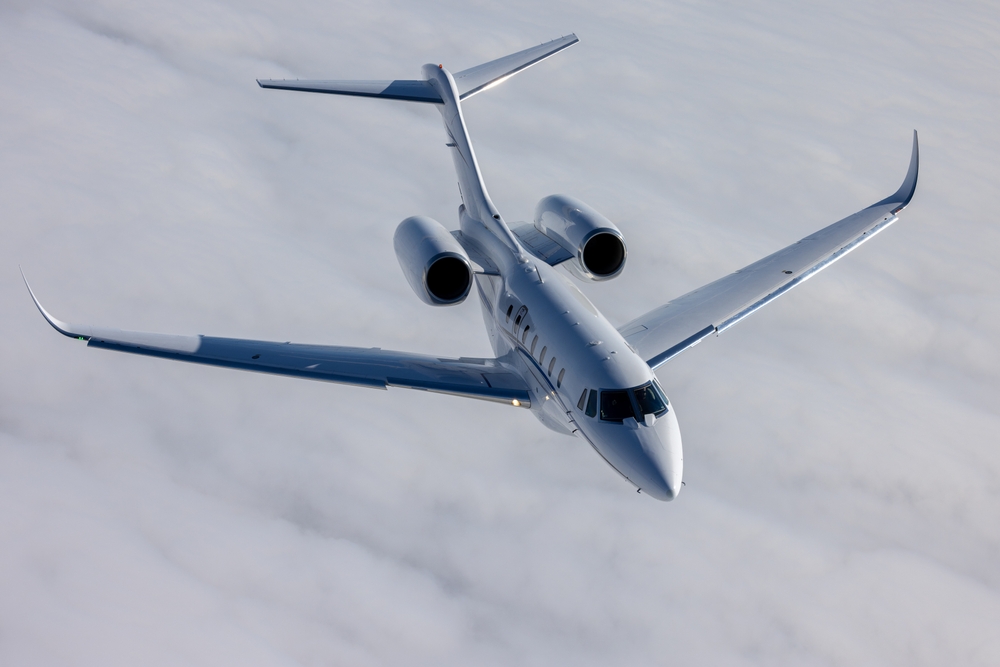
Not all private jets are created equal — and the right aircraft for your trip depends on more than just how much you want to spend. Route length, group size, cabin comfort requirements, and destination airport constraints all play a role in choosing the best aircraft. A Citation CJ4 is a brilliant choice for a group of six flying New York to Miami. It would be the wrong call for fourteen executives crossing the Atlantic.
The full Haute Jets fleet spans more than 3,500 aircraft across every category. To help you understand your options, we've profiled the ten most-requested private jets of 2026 — from a nimble very light jet perfect for weekend escapes to a transcontinental flagship that redefines what a flight can feel like. Browse popular routes alongside this guide to match aircraft to your actual mission.
1. Embraer Phenom 300E — Very Light Jet
The Phenom 300E has been the world's best-selling light business jet for multiple consecutive years — and charter travelers have noticed. For East Coast hops and small groups, it's essentially perfect.
- Passenger capacity: 7 (standard configuration, 6 with club seating)
- Range: 1,971 nautical miles
- Cruise speed: Mach 0.78
Cabin: The Phenom 300E punches above its weight class. The cabin is quiet by light jet standards, finished with genuine leather and genuine craftsmanship. There's a rear private lavatory — notable in a jet this size. Cabin height requires a slight stoop, but seat width and legroom are genuinely comfortable. Bags travel in a rear baggage compartment, keeping the cabin uncluttered. WiFi is optional and available through operators.
Best for: East Coast corridor hops — New York to Miami, Boston to DC, any trip under 3 hours with up to 6 passengers. Couples and small groups who want a polished experience at the lowest reasonable price point.
2. Honda Aircraft HondaJet Elite II — Very Light Jet
The HondaJet is the aviation industry's most unexpected success story. The over-the-wing engine mount — Honda's patented innovation — reduces cabin noise and vibration dramatically, while freeing the fuselage for a surprisingly roomy interior.
- Passenger capacity: 5
- Range: 1,437 nautical miles
- Cruise speed: Mach 0.72
Cabin: The HondaJet's cabin is narrower than the Phenom's, but the over-wing engine mount means the wall space at shoulder height is unobstructed, making it feel more spacious than the numbers suggest. It's a design-forward aircraft — Honda brought its automotive sensibility to every detail, from the ergonomic seats to the advanced avionics display. Rear lavatory included. WiFi optional.
Best for: Weekend getaways for two to four passengers, efficiency-minded travelers who appreciate engineering innovation, short-hop routes where the Phenom's extra range isn't needed. The most cost-effective entry into the very light jet category.
3. Cessna Citation CJ4 Gen2 — Light Jet
The Citation CJ4 Gen2 is Cessna's answer to the question "how much capability can you fit into a light jet?" The answer, it turns out, is quite a lot. Range that reaches well beyond what most light jet competitors offer, combined with reliable, low-maintenance Williams International engines.
- Passenger capacity: 8
- Range: 2,165 nautical miles
- Cruise speed: Mach 0.77
Cabin: Eight passengers is genuinely ambitious for a light jet, and the CJ4 delivers it comfortably in a club-four plus two-plus-two configuration. The cabin isn't stand-up height, but full-length seats, individual climate control, and a well-appointed interior make the experience feel premium. Rear lavatory standard. Baggage capacity of 75 cubic feet is excellent for the category. WiFi through select operators.
Best for: Domestic routes up to 4 hours, groups of 5–8 passengers, itineraries where range and payload are both priorities. The rational choice when you need a light jet to work hard.
4. Bombardier Learjet 75 Liberty — Light Jet
The Learjet name carries more aviation romance than almost any other aircraft in history. The 75 Liberty is the final evolution of that legendary line — and while Bombardier discontinued new production in 2021, the existing charter fleet remains one of the most capable and charismatic light jets available.
- Passenger capacity: 8
- Range: 2,080 nautical miles
- Cruise speed: Mach 0.81
Cabin: The Learjet 75's cabin is narrower than the CJ4's — a characteristic of the original Learjet design — but what it lacks in width it makes up in speed and altitude performance. At Mach 0.81, it's one of the fastest light jets flying. The cabin features eight fully flat seats, a rear lavatory, and a forward galley. The aircraft climbs steeply to cruise altitude, which Learjet loyalists find thrilling.
Best for: Speed-priority travelers on domestic routes, Learjet brand enthusiasts, groups of 6–8 where time to destination matters more than cabin width.
5. Bombardier Challenger 350 — Midsize Jet
The Challenger 350 is arguably the most successful midsize business jet ever built. Wide-body feel, genuine stand-up headroom, and a range that reaches coast-to-coast without compromise — the 350 redefines what the midsize category means.
- Passenger capacity: 10
- Range: 3,200 nautical miles
- Cruise speed: Mach 0.82
Cabin: At 7.2 feet wide and 6 feet tall, the Challenger 350 cabin feels closer to a heavy jet than a midsize. Ten passengers travel in a double-club-four configuration with a divan. The full galley produces genuinely hot meals. A rear private lavatory with vanity is standard. Large oval windows fill the cabin with natural light. This is the cabin that converts first-time charter clients into private aviation devotees.
Best for: Cross-country routes, large groups up to 10 passengers, travelers who want a midsize price with something close to a heavy jet experience. The best-value midsize jet in the charter market.
6. Cessna Citation Latitude — Midsize Jet
While the Challenger 350 wins on raw specs, the Citation Latitude wins on a different metric: the flat-floor cabin. Where most midsize jets have a raised floor section over the wing structure, the Latitude is flat from front to back — a meaningful comfort advantage on longer flights.
- Passenger capacity: 9
- Range: 2,700 nautical miles
- Cruise speed: Mach 0.77
Cabin: Six feet of stand-up headroom throughout a flat-floor cabin that's 5.9 feet wide. Nine passengers in a club-four plus crew-rest/divan configuration. The Pratt & Whitney turbofans run noticeably quietly at cruise power, creating a hushed environment that encourages sleep and conversation equally. Full rear lavatory, forward galley. WiFi through select operators.
Best for: Three-hour-plus domestic routes where cabin comfort is the priority, business travelers who want a stand-up cabin at a midsize price, groups of 7–9 who want quieter, more relaxed travel.
7. Cessna Citation X+ — Super Midsize Jet
The Citation X+ holds a unique distinction: it is the fastest civilian jet aircraft certified for charter. At Mach 0.935, it approaches the speed of sound. If time-to-destination is your only metric, the Citation X+ wins every domestic route comparison.
- Passenger capacity: 12
- Range: 3,460 nautical miles
- Cruise speed: Mach 0.935
Cabin: The Citation X+ trades some cabin width for its extraordinary speed advantage — at 5.6 feet wide, it's narrower than the Challenger 350 or Latitude. What it lacks in width it compensates with 12 seats and a surprising amount of legroom per passenger. Full galley, rear private lavatory with vanity, in-flight entertainment standard. WiFi available through select operators.
Best for: Coast-to-coast speed runs (LA–New York in under 4.5 hours), time-critical executive travel, large groups of 10–12 where arrival time is the top priority. The Citation X+ doesn't just connect cities — it compresses them.
8. Gulfstream G550 — Heavy Jet
The Gulfstream G550 has been the benchmark heavy jet for over 15 years. It's the aircraft that defines what the category means — a 6,750-nautical-mile range that puts London, Frankfurt, and the Middle East within nonstop reach from the US East Coast.
- Passenger capacity: 14 (typical configuration 10–12)
- Range: 6,750 nautical miles
- Cruise speed: Mach 0.80
Cabin: At 46.1 feet long, 7.3 feet wide, and 6.2 feet tall, the G550 cabin accommodates multiple distinct zones — a forward conference area, a mid-cabin lounge, and an aft sleeping compartment with a full divan that converts to a bed. Forward and aft lavatories. Full galley capable of multi-course hot meal service. 14 large oval windows make the cabin feel light and open. Bose noise-canceling audio throughout.
Best for: Transatlantic and long-haul international routes, large executive groups, any trip requiring the reliability and prestige of the world's most proven heavy jet.
9. Bombardier Global 6500 — Ultra-Long-Range Jet
The Global 6500 is Bombardier's answer to the Gulfstream G550 — and in several meaningful ways, it improves on the formula. The cabin is wider (7.9 feet versus 7.3), the avionics are newer, and the interior technology is more current.
- Passenger capacity: 14
- Range: 6,600 nautical miles
- Cruise speed: Mach 0.88
Cabin: The Global 6500 cabin features Bombardier's award-winning Nuage seating — arguably the most ergonomically sophisticated seat in business aviation. The 7.9-foot width creates a noticeably different interior presence, with true aisle space and the feeling of a widebody commercial aircraft at 45,000 feet. Three cabin zones, full galley, two lavatories, and a master stateroom configuration available on some aircraft.
Best for: Transpacific routes (LA to Tokyo is within range with favorable winds), ultra-long-range itineraries where cabin width and comfort matter as much as range, discerning travelers who want the most technologically current heavy aircraft available.
10. Gulfstream G700 — Ultra-Long-Range Jet
The Gulfstream G700 is the flagship of the flagship category. With 7,500 nautical miles of range, it connects virtually any two city pairs on earth without a fuel stop. It's the aircraft that makes the question "can we get there nonstop?" feel almost rhetorical.
- Passenger capacity: 19 (typical configuration 10–14)
- Range: 7,500 nautical miles
- Cruise speed: Mach 0.90
Cabin: The G700 cabin is 56.3 feet long — the longest in Gulfstream's history — with 6.2-foot stand-up height throughout. Up to five living areas can be configured: a forward conference area, main salon, dining area, dedicated master stateroom with full bed, and aft entertainment lounge. The G700 is essentially a flying ultra-luxury hotel suite. Eighteen Gulfstream Panoramic windows flood the cabin with natural light. Full galley with oven, refrigerator, and espresso machine. Dual lavatories. WiFi standard.
Best for: Maximum range requirements, ultra-luxury experiences, VIP and celebrity travel, any trip where only the absolute best will do.