You're probably doing what most first-time charter clients do. You're comparing aircraft, routing, Wi-Fi, catering, and price, then assuming the cabin will be “clean enough” when you arrive. That assumption is a mistake.
The condition of the aircraft you board tells you a lot before the engines ever start. A fresh cabin, spotless windows, odor-free lavatory, lint-free seats, and clean touchpoints signal discipline. Smudged acrylic, crumbs in the seat tracks, sticky galley surfaces, or a chemical-heavy odor signal shortcuts. In private aviation, shortcuts rarely stay confined to aesthetics.
This article appears on Haute Jets Journal because clients need a clearer standard. A proper aircraft cleaning service isn't housekeeping with wings. It's part passenger experience, part asset protection, part operational control.
Beyond First Impressions The Role of Cleaning in Private Aviation
Boarding a properly prepared jet feels different immediately. The air smells neutral. Light reflects evenly off the tables and side ledges. The galley looks reset, not hurriedly wiped. You relax faster because the aircraft feels managed.
That reaction isn't superficial. Cleanliness is one of the first visible signs of whether an operator respects details that passengers can't see. If a crew or vendor is careless with cabin hygiene, clients are right to question how carefully they handle the rest of the operation.
Why cleanliness is a safety signal
A premium cabin should look beautiful, but beauty is the byproduct, not the goal. The goal is control. Good cleaning reduces contamination risk, protects delicate materials, keeps visibility clear at critical surfaces, and gives crew members a better chance of noticing wear, leaks, stains, residue, or damage that would otherwise blend into a neglected environment.
That matters more now because client expectations have changed permanently. The global aircraft cleaning services market is projected to more than double to over $5,060.4 million by 2033, with a CAGR of 6.84%, reflecting a post-pandemic surge in air travel and a permanent shift toward higher hygiene expectations, according to Cognitive Market Research's aircraft cleaning services outlook.
Practical rule: If an aircraft looks meticulously cleaned, that doesn't prove the operator is excellent. But if it looks casually cleaned, that's enough reason to ask harder questions.
Luxury starts where passengers can't see
Most clients focus on surfaces they touch. Forward-thinking operators think further. They care about approved chemicals, cross-contamination controls, cleaning logs, turnaround timing, and how cleaning fits into the flight schedule without compromising dispatch readiness.
If you want a useful benchmark for the in-cabin experience itself, read how fresh and clean private jet cabin air really is. Cabin air quality and surface hygiene should be treated as part of the same conversation, because passengers experience them together.
A clean jet doesn't just look expensive. It feels safe, organized, and intentionally prepared. That's the standard worth paying for.
The Spectrum of Aircraft Cleaning Services
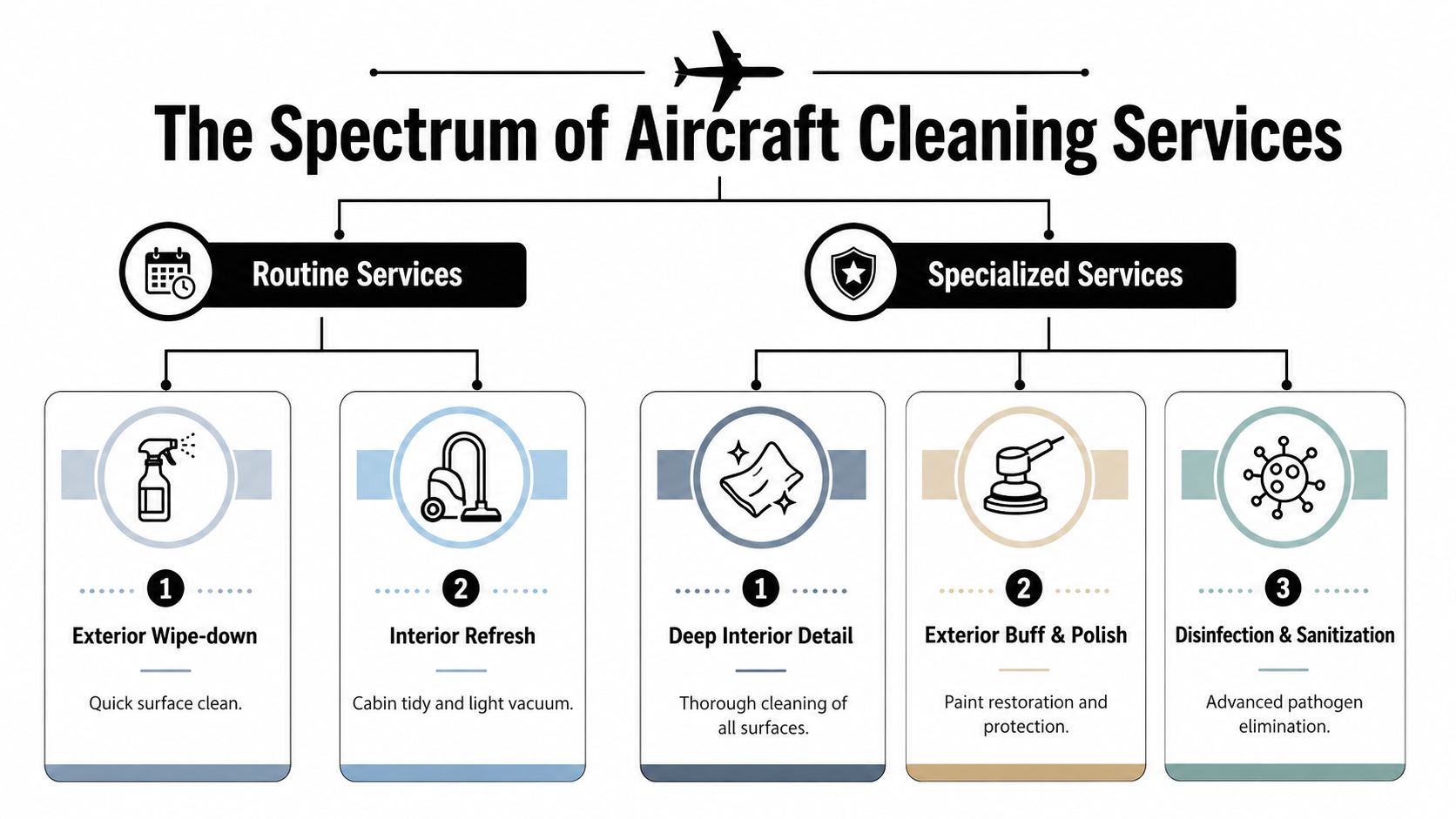
Most clients hear “the plane has been cleaned” and think that answer means something specific. It usually doesn't. Aircraft cleaning service covers several very different scopes of work, and if you don't define the level in advance, you'll end up paying luxury rates for a basic reset.
Routine services
Think of routine cleaning as operational upkeep. It keeps the aircraft presentable and usable between trips, but it won't restore a tired cabin.
The industry generally breaks cabin cleaning into quick transit cleaning for same-day turnaround, overnight cleaning for longer layovers, and deep cleaning for more thorough refurbishment, with documentation recorded in maintenance logs under FAA requirements, as outlined in this aircraft cabin cleaning method guide.
Here's what that usually means in practice:
- Quick transit clean: This is the fast reset between sectors. Trash out, surfaces wiped, visible crumbs removed, pillows straightened, and lavatory checked. It's about readiness, not restoration.
- Overnight clean: With this service, a cabin starts to feel deliberately prepared. Crews or vendors have time to vacuum properly, reset the galley, wipe more surfaces thoroughly, and address obvious smudges, fingerprints, and minor spots.
- Deep clean: This is the definitive correction layer. Carpets, seams, leather, storage compartments, vents, sidewalls, lavatory fixtures, and hard-to-reach zones get detailed attention.
Specialized services
Specialized work is where a standard vendor separates from a premium one. This isn't just more time. It's different skill and product knowledge.
Interior detailing is the most valuable segment in the market for a reason. Interior cleaning commands a 42.3% share of total global revenue in 2025, equating to approximately $760 million, according to Dataintelo's aircraft cleaning and detailing services market report. Clients care most about the space they sit in, and they should.
Specialized services often include:
- Leather treatment and conditioning: Necessary for preserving softness and avoiding drying or discoloration.
- Carpet extraction and spot correction: Especially important after heavy charter use, red wine spills, muddy footwear, or pet transport.
- Post-catering recovery: Galley degreasing, odor removal, and detailed sanitation of service areas.
- Pet-specific sanitation: Hair removal, dander cleanup, and touchpoint disinfection.
- Linen and bedding refresh: Critical on larger cabin aircraft with sleeping configurations.
- Exterior wash and polish: Not cosmetic fluff. It protects finish quality and helps crews spot surface issues.
What each level is really buying you
A useful way to consider it:
| Service level | What it feels like | Best use |
|---|---|---|
| Quick transit | A tidy room before a guest arrives | Same-day turns |
| Overnight clean | A properly serviced suite | Next-morning departures |
| Deep clean | A full property reset | Periodic restoration |
| Detail package | Concierge-level presentation and preservation | VIP trips, high-visibility missions, resale prep |
A rushed wipe-down can make an aircraft look acceptable from six feet away. A proper detail holds up at arm's length.
The right question isn't “Was the plane cleaned?” Ask, “What level of cleaning was done, by whom, using which approved products, and when?”
Decoding Aviation Cleaning Standards and Certifications
The biggest mistake clients make is assuming any luxury cleaning company can clean an aircraft. They can't. A jet isn't a penthouse, a yacht, or a high-end SUV. Aircraft surfaces, seals, windows, sensors, and finishes demand aviation-specific methods.
Approved chemicals are not optional
Exterior cleaning has to follow strict compatibility rules. Aircraft exterior cleaning must adhere to MIL-PRF-85704 Type III specifications to prevent surface damage. The process requires specific low-pressure techniques and approved solutions, especially around sensitive areas like rivets and cockpit windows, as described in Aerospheres' guide to proper aircraft cleaning procedures.
That standard matters because poor technique causes real harm. High pressure near seams can drive moisture where it doesn't belong. The wrong chemical can degrade finishes or affect sensitive areas. The wrong cloth on windows can leave scratches that become expensive and unacceptable fast.
For interior work, the same logic applies. Acrylic windshields and aviation glass require ammonia-free products. Standard automotive glass cleaner is a bad idea on an aircraft. It may look harmless on the shelf, but it can create hazing or fine scratches that compromise visibility over time.
Sanitation is different from random spraying
A professional aircraft cleaning service should know the difference between cleaning, disinfecting, and material-safe sanitation. If you want a simple consumer-friendly explanation of essential virus prevention hygiene, that resource is useful because it separates terms many clients and even some vendors casually blur together.
Clean first, then disinfect where appropriate. Spraying chemicals onto a dirty surface is not a high standard. It's lazy theater.
What to ask for from the provider
Don't ask whether the team is “experienced.” Ask for specifics:
- Product approval: Are all chemicals aviation-approved for the surfaces being treated?
- Material handling: What do they use on leather, acrylic, brightwork, and touchscreen surfaces?
- Documentation: Do they log findings and notify maintenance or crew when they spot irregularities?
- Crew coordination: Do they understand aircraft access limits, departure cutoffs, and ramp procedures?
You should also care whether the operator treats cleanliness as part of its broader private aviation safety standards. The best operations don't separate appearance from airworthiness culture. They connect them.
Understanding the Cost of a Pristine Aircraft
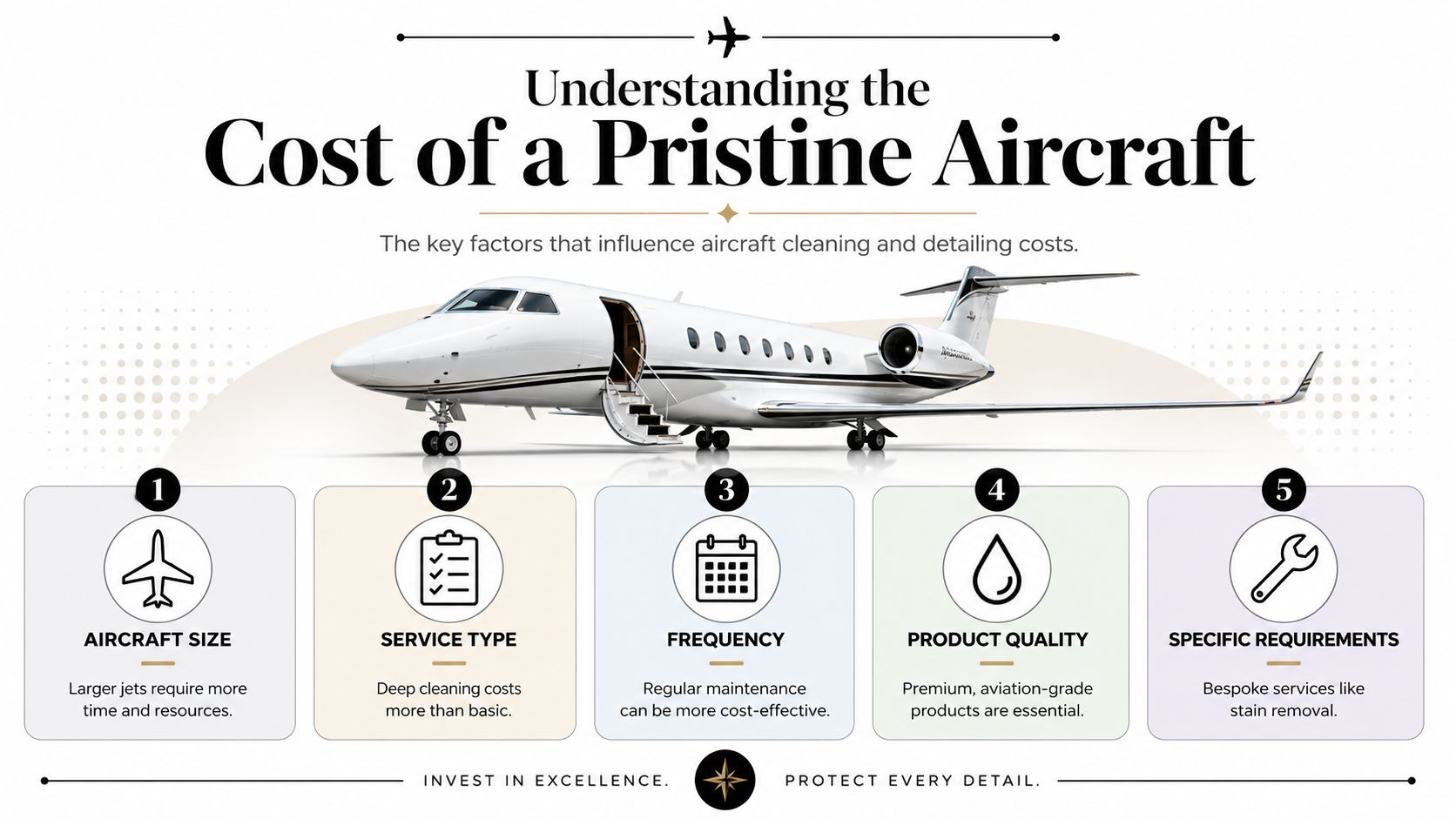
Aircraft cleaning quotes confuse clients because the label stays the same while the scope changes radically. One vendor may price a quick cabin reset. Another may assume leather treatment, stain work, lavatory sanitation, carpet extraction, and exterior wash coordination. If you compare only the final number, you'll make the wrong call.
What drives the bill
The first driver is aircraft size. A light jet cabin is quicker to reset than a long-range aircraft with more seating zones, more cabinetry, a larger galley, and additional lavatory space. The second driver is service depth. A tidy-up is labor-light. A proper detail is labor-heavy.
A third factor is location. Ramp access, local labor conditions, FBO coordination, and after-hours scheduling all affect cost. The fourth is urgency. Overnight or AOG-style mobile service usually carries a premium because the vendor must mobilize people, materials, and access on a tight clock.
Then there are client-specific requests. Red wine stain correction, pet cleanup, odor removal, post-catering grease recovery, leather restoration, and exterior brightwork all move a quote upward.
The number clients should understand
A full aircraft detail can cost around $20,000, and one of the biggest unresolved client questions is the logistics and pricing of mobile detailing services that can work overnight at a departure airport instead of forcing displacement to a maintenance hub, as noted in this discussion of mobile aircraft detailing availability and cost.
That figure shouldn't shock you if the work is extensive, the aircraft is large, or the service includes restoration-level detailing. What should concern you is a suspiciously low quote for premium work. Cheap aircraft detailing often means one of three things: unapproved products, insufficient labor time, or a crew that doesn't understand aircraft materials.
How to think about value
If you've ever looked at marine service pricing, you already know detailing costs rise fast when the asset is large, exposed, and material-sensitive. This primer on understanding boat detailing expenses is useful as a parallel because it shows how labor, finish condition, and treatment scope shape quotes in another premium transport category.
Use that same logic for jets. Ask what's included, what's excluded, and what counts as corrective work rather than routine work.
| Cost factor | Why it matters | What to ask |
|---|---|---|
| Aircraft size | More square footage and surfaces | Is pricing based on model or rough category? |
| Service type | Reset versus restoration | Is this transit, overnight, deep clean, or full detail? |
| Timing | Night work and short notice cost more | Can the job be done within our departure window? |
| Materials | Aviation-grade products cost more for good reason | Which chemicals are being used on windows and leather? |
| Special requests | Stains, pets, odors, and catering create extra labor | What is billed separately? |
Don't negotiate cleaning like a commodity. Negotiate scope, timing, and standards.
If you're budgeting a charter overall, it helps to compare cleaning expectations with the broader private jet pricing factors clients actually pay for. Cleaning is one line item inside a larger operational equation, but it's one of the few passengers directly experience.
Recommended Cleaning Schedules and Client Checklists
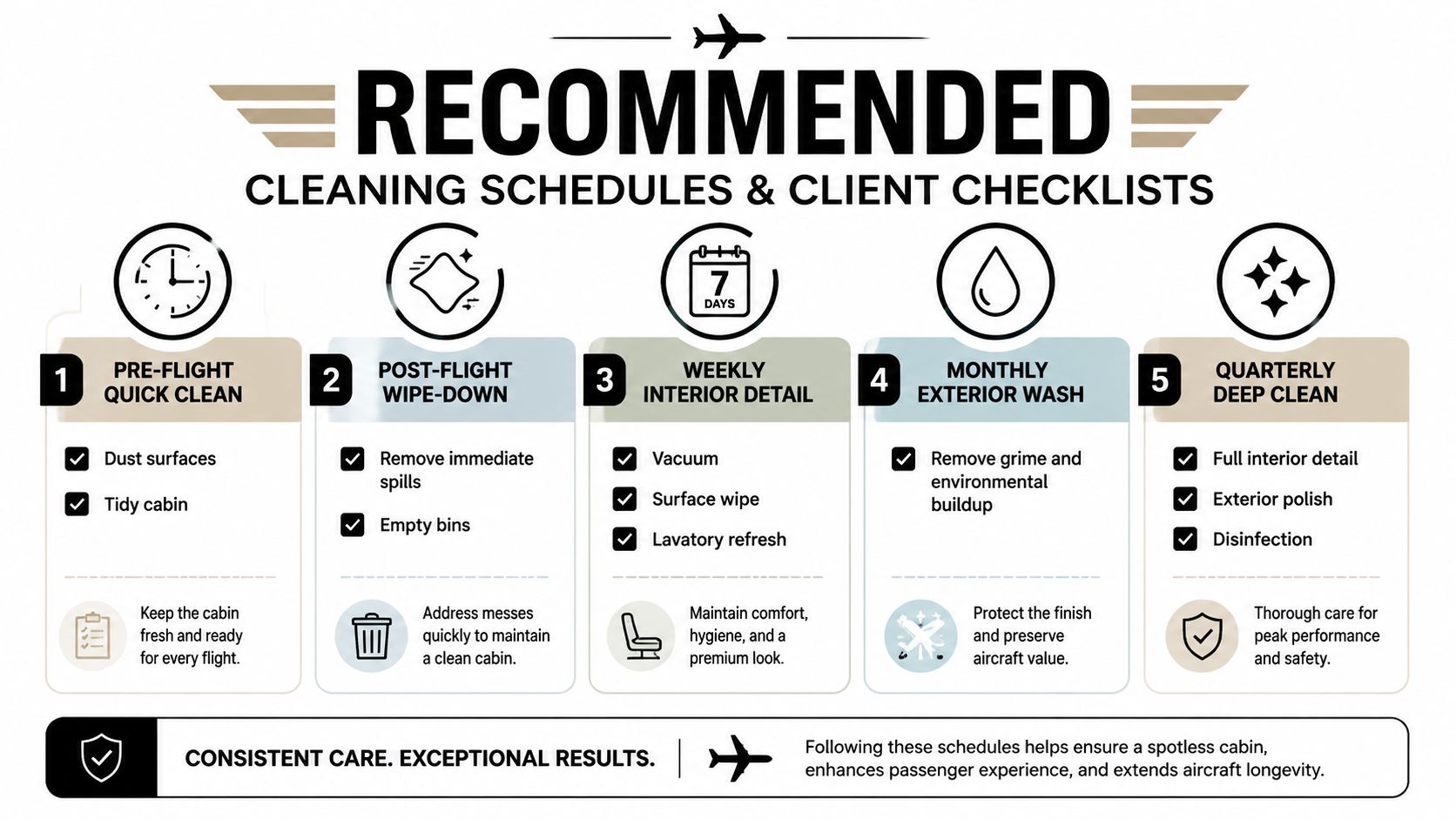
The right cleaning cadence depends on use, passenger profile, catering intensity, pet travel, and storage conditions. But most owners and frequent charter users don't need a complicated formula. They need a baseline that prevents small problems from becoming visible problems.
A sensible operating rhythm
For the exterior, a thorough wash should be performed every 4 to 6 weeks to maintain a private jet's exterior and resale value, with increased frequency for aircraft parked outdoors or in dusty environments, according to Jackson Jet Center's guidance on choosing a reliable aircraft cleaner.
Inside the cabin, the schedule should be tighter than most new clients expect. Quick resets belong after every trip. More deliberate interior attention should happen routinely, especially if passengers eat onboard, travel with pets, or use the aircraft for business roadshow-style missions where image matters.
For carpets, there's one interval worth remembering: professional shampooing every six months, with a weekly pile-lift routine to remove dry dirt commercial vacuums miss, as noted in L33 Jets' interior and exterior private jet cleaning guidance. That's especially relevant on aircraft with light carpeting, where traffic lanes and embedded grit age the cabin quickly.
Client pre-flight checklist
You don't need to inspect the aircraft like a mechanic. You do need to know what “clean enough” looks like before passengers board.
Use this short checklist:
- Cabin air and odor: The cabin should smell neutral. Heavy fragrance often masks a problem rather than solving it.
- High-touch surfaces: Check armrests, tables, seatbelt buckles, switches, and door handles for residue or fingerprints.
- Galley condition: Open the galley area and look for sticky counters, crumbs, or obvious catering remnants.
- Lavatory standard: It should look reset, dry, and fully stocked. If it feels like an afterthought, the cabin probably was too.
- Windows and bright surfaces: Look sideways across acrylic and gloss surfaces. Smears show up at an angle.
- Flooring and seat tracks: Dirt gathers at edges first. A clean aisle with dirty edges means the job was rushed.
If the aircraft looks polished only where your eyes land first, the vendor cleaned for photos, not for passengers.
When to escalate from routine to deep cleaning
Move up to a deeper service after heavy use, pet travel, multiple catering legs, family holiday flying, or any trip where odors, stains, or visible wear remain after normal reset cleaning. Also escalate before high-visibility guest flights, music tours, executive roadshows, and resale photography.
The best cabins don't become luxurious by accident. Someone maintains a schedule and checks the work.
Vetting Providers and Coordinating with Flight Operations
A good aircraft cleaning service should feel invisible to the client. The aircraft is ready. The timing works. Nothing delays departure. That only happens when the cleaning provider understands flight operations, FBO access, crew communication, and hard stop times.
What professional coordination looks like
The cleaning team should work from the flight schedule, not against it. They need arrival timing, passenger offload timing, catering plans, crew access, and the exact departure cutoff. On overnight turns, they should know when fueling, stocking, and any maintenance tasks are happening so they don't interfere with each other.
When this coordination is poor, everyone feels it. The cabin gets cleaned before catering arrives and then gets dirtied again. Lavatory supplies are replaced, then moved. Exterior work overlaps with other ramp activity. None of that is luxury. It's disorganization.
Red flags clients should treat seriously
Don't overcomplicate this. A few warning signs tell you enough.
- They can't specify products: If a provider says “we use premium cleaners” but can't name approved aviation products or window-safe methods, move on.
- They avoid operational questions: A professional asks about aircraft type, time on ground, FBO constraints, and sensitive surfaces.
- They promise everything instantly: Fast is valuable. Unrealistic is dangerous.
- They don't mention documentation: Serious providers log issues and communicate findings when they spot damage, wear, or maintenance concerns.
- They clean aircraft like cars: That mindset ruins finishes, windows, and trust.
Questions worth asking your charter broker or operator
Ask concise questions and listen for direct answers:
- Who performs the cleaning, in-house staff or a specialist vendor?
- Are the products aviation-approved for acrylics, leather, and exterior surfaces?
- What service level is scheduled before my flight?
- If the aircraft is at a remote FBO, can the team still execute to standard?
- Who signs off that the cabin is ready for passengers?
The best providers don't sound defensive when you ask detailed questions. They sound prepared.
If your broker has already vetted the operator network well, most of this work happens in the background. That's the ideal arrangement. Clients should enjoy the result, not chase the process.
The Haute Jets Commitment to Cleanliness and Safety
The easiest way to avoid preventable cleaning problems is to start with operators that already run disciplined systems. That's the shortcut. Not cutting standards, but choosing networks where standards are already built into day-to-day operations.
A superior aircraft cleaning service does four things well. It protects materials, supports safety, respects schedule integrity, and enhances the passenger experience. Miss any one of those and the result feels incomplete, no matter how attractive the cabin looks in photos.
That's why operator quality matters so much. Haute Jets sources exclusively from Wyvern Wingman and ARGUS Gold/Platinum-rated operators, which means clients aren't relying on guesswork regarding operational discipline. High standards in private aviation aren't isolated. The same culture that drives audited safety performance usually drives stronger cabin preparation, better vendor control, and more reliable sanitation practices.
Some clients also ask about onboard air treatment and supplemental cabin purification options. For a broader consumer look at EcoQuest Purifiers for pathogen control, it's worth reviewing available approaches in that category, especially if your travelers are particularly sensitive to shared-air environments.
There's also value in seeing the cabin experience in motion, not just in stills.
The point is simple. Cleanliness on a private aircraft isn't a finishing touch. It's part of the promise. When the operator takes it seriously, passengers feel it immediately, and the entire trip starts on the right footing.
If you want a charter experience where safety standards, cabin presentation, and operator quality are already filtered for you, book through Haute Jets. You'll get access to vetted aircraft, transparent sourcing, and the kind of preparation that should be standard in private aviation but often isn't.