
Newer isn't automatically better for a short-hop helicopter charter. In fact, when the mission is a clean regional transfer, a mature airframe with known support, predictable handling, and a deep operator base can be the smarter choice. That's where the Bell 206L-4 LongRanger IV earns its place, not as a glamorous novelty, but as a proven workhorse that still makes sense when the booking is tight, the itinerary is practical, and reliability matters more than bragging rights.
For VIP travel, that matters. The LongRanger IV sits in a very useful middle ground, light enough for heliport work and executive hops, yet capable enough to carry a proper passenger load without turning every bag into a negotiation. Bell ended production in 2017, but mature aircraft don't disappear just because the factory line does, especially when operators still trust the type for utility, patrol, EMS, and private transfers. The question in 2026 isn't whether the model is old, it's whether the specific aircraft and operator are current enough to deserve your money.
Why an Out-of-Production Helicopter Still Earns Charter Bookings
The reflex to chase the newest airframe is lazy. For short helicopter sectors, newer doesn't automatically mean better, because what matters is dispatch reliability, cabin fit, operator discipline, and whether the aircraft can do the job without drama. The Bell 206L-4 LongRanger IV still books because it's a known quantity, and in charter, a known quantity is often the safer commercial decision.
Fleet maturity is a feature, not a compromise
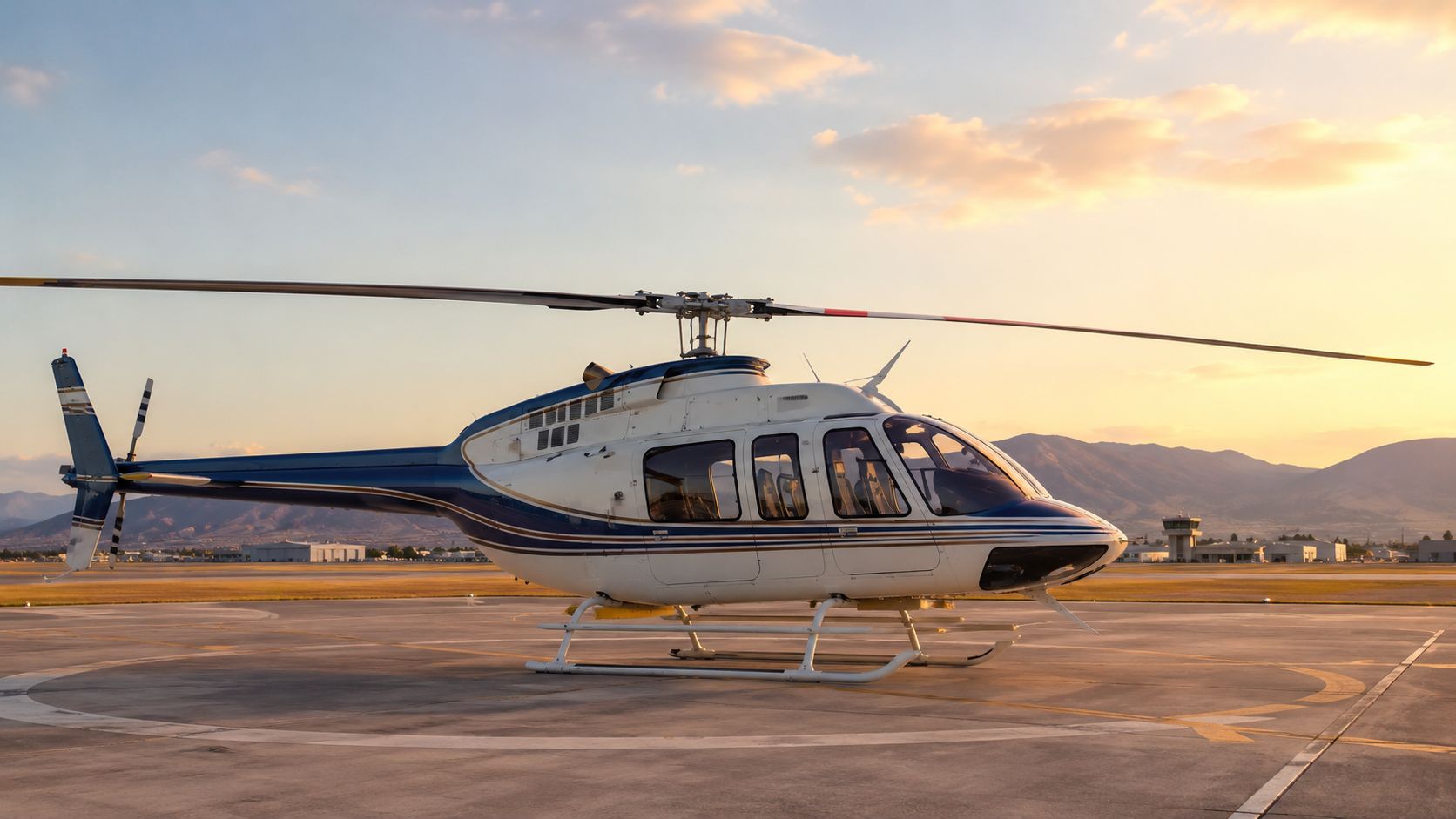
A mature fleet brings practical advantages. There's a broader base of pilots who know the type, more maintenance experience in the market, and a long paper trail of operating norms that help serious planners assess risk. That matters more than marketing copy when you're booking a heliport-to-resort transfer or a point-to-point shuttle and want the flight to feel routine, not experimental.
The LongRanger line also evolved into a stretched, higher-capacity helicopter built for more passengers, more baggage, and better hot-and-high performance, with the L-4 identified as the version powered by the 250-C30P engine and carrying a maximum gross weight of 4,450 lb Airport Technology. Those are the kinds of details that matter to charter planners because they influence what the aircraft can realistically carry, not just what it looks like on a spec sheet.
Practical rule: if the aircraft's age is your first objection, you're asking the wrong question. Ask who maintains it, who flies it, and where it spends its life.
Why experienced planners still ask for it
Buyers who know what they're doing don't always ask for the newest helicopter. They ask for the one that matches the mission, and for regional private flying the LongRanger IV still does that cleanly. Its recurring presence in operator fleets says something important, there's enough support around the type to keep it commercially useful, even after production stopped.
That's the edge of fleet maturity. You're not buying novelty, you're buying a platform that operators understand well enough to keep available, serviceable, and bookable for the kind of trip that makes private aviation worth paying for in the first place.
Technical Specifications That Define the Flight Experience
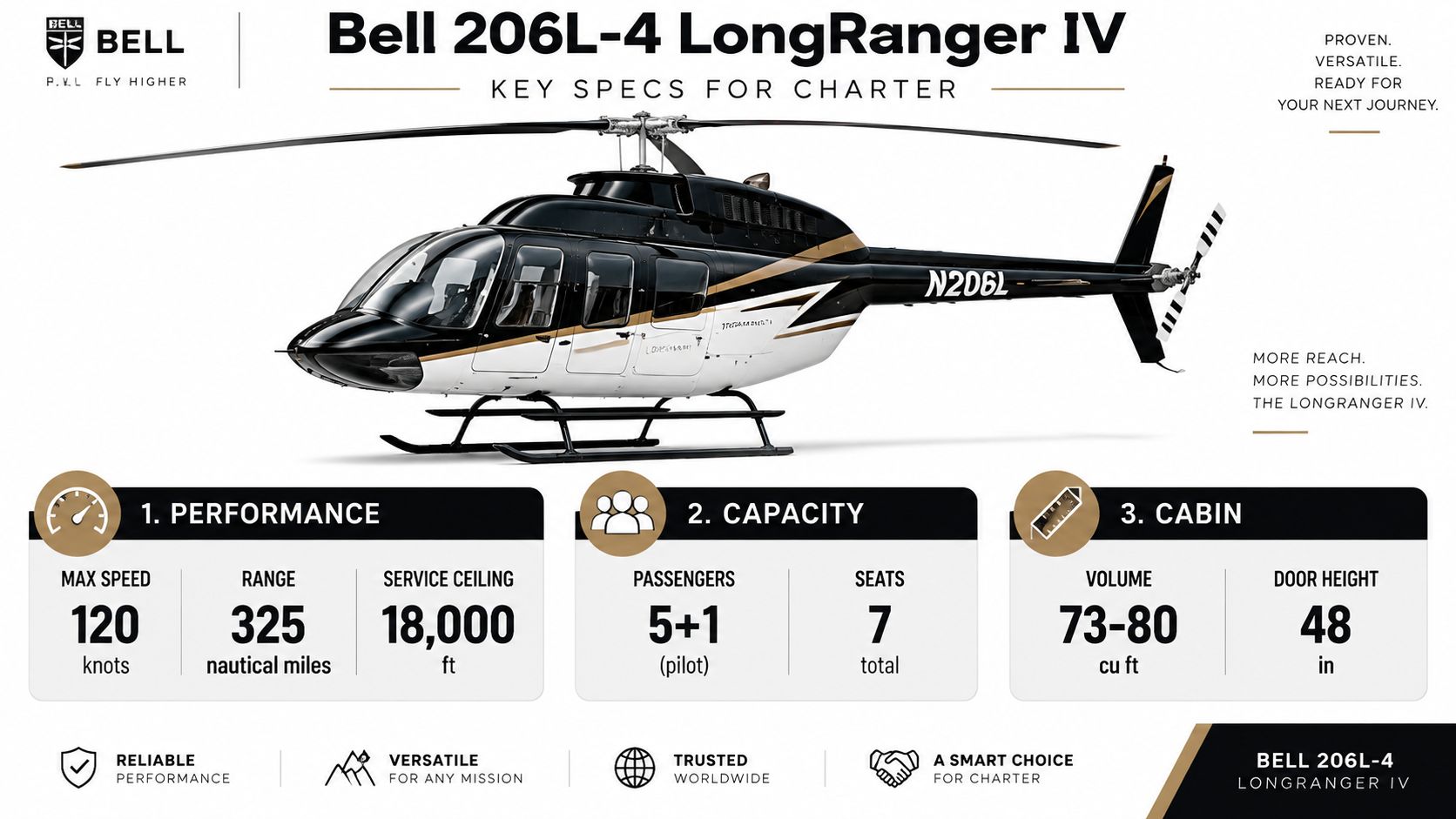
The LongRanger IV's sheet only matters where it changes booking decisions. In practice, that means looking past the familiar range-and-speed talking points and focusing on how the aircraft behaves in thin air, on steep ground, and at imperfect landing sites. The Rolls-Royce/Allison 250-C30P engine is commonly reported at roughly 726 shaft horsepower, and that extra output gives the L-4 more margin when the mission moves into altitude-sensitive terrain JetAV.
Power, ceiling, and hover capability
The number that matters most for a charter client is hover-out-of-ground-effect performance at altitude. Reported figures for the family show roughly 6,500 ft out of ground effect and 10,000 ft in ground effect JetAV. That is the difference between a helicopter that can reliably work a mountain resort landing area and one that looks capable until the air gets thin and the site gets tight.
A certified ceiling of 10,000 ft also gives operators more room to plan around terrain, density altitude, and weather changes without pushing the aircraft into a corner JetAV.
Bottom line: the LongRanger IV earns its place on mountain and resort charters because it keeps enough performance in reserve when the landing environment becomes unforgiving.
What the weight and fuel figures mean in practice
The helicopter's 4,450 lb maximum takeoff weight, about 2,387 lb empty operating weight, and standard fuel load of 110 gallons give operators a usable payload envelope for light private missions JetAV. That matters because charter planners need to know whether a short-hop transfer can carry people, baggage, and still leave enough room for the mission the operator has to fly.
Range needs the same discipline. Published figures sit around 321–357 nautical miles depending on configuration and source, with one reference noting 300 nm, another listing an IFR range of 357 nm, and a third giving payload with full fuel of 737 lb against 742 lb of fuel capacity Aerotour. That spread tells you how fast payload decisions change once fuel planning gets real, especially on routes where the operator has to balance passenger count, baggage, and reserve fuel instead of chasing brochure optimism.
Passenger and Cargo Configurations for Private Travel
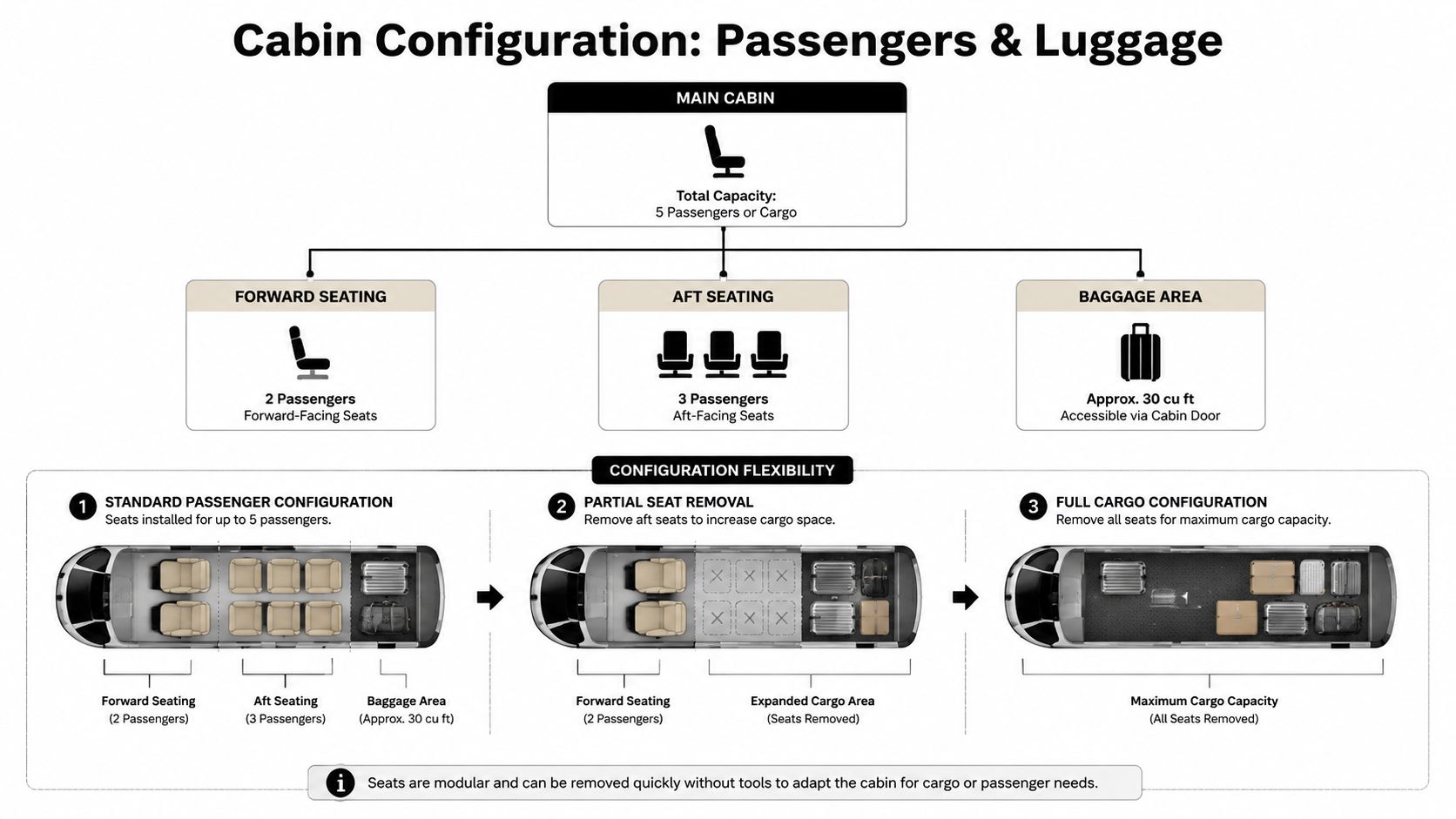
The LongRanger IV works best when you stop thinking of it as a “small helicopter” and start thinking of it as a disciplined transport tool. The cabin is reported at about 73 to 80 cubic feet, with baggage volume around 16 to 20 cubic feet, and the aircraft is typically configured for 1 pilot plus up to 6 passengers Airport Technology. That's enough flexibility for serious private travel, but only if the group's luggage habits stay civilized.
The load that works, and the load that doesn't
An executive transfer with four adults and briefcases is the sweet spot. So is a resort hop with one or two couples and light bags. The machine can carry a useful load reported roughly between 1,670 and 2,141 lb depending on publication and loading assumptions, but those numbers only help if you keep fuel, people, and bags in balance Airport Technology.
A family of six with hard-shell suitcases and winter luggage is a different story. That can still work, but it forces trade-offs, usually in fuel planning or baggage discipline. In charter, the aircraft doesn't care about your status. It cares about weight.
How to book it without creating a packing problem
The smartest way to use the LongRanger IV is to match it to trips where the cabin matters more than cargo volume. For example, a one-way transfer to a hotel heliport, an island arrival with soft bags, or a short business hop where every passenger is traveling light. When planners insist on full passenger loads plus heavy luggage, they're often forcing the wrong aircraft into the mission.
Video reference for cabin familiarity and onboard flow:
To ensure a smooth flight, ask the operator how they balance bags, fuel, and seating before you confirm. That single question tells you more than a polished brochure ever will.
Common Charter Missions and Where This Helicopter Excels
The LongRanger IV earns its keep on missions that are short, time-sensitive, and operationally simple. Executive hops, scenic flights, resort transfers, and shuttle sectors to remote properties are the right use cases because they match what this aircraft does well. Keep the mission tight, keep the baggage light, and it becomes a practical charter tool. Push it beyond that and you are forcing the wrong helicopter into the job.
Short executive hops and city transfers
For city heliports and fixed-base operators, the LongRanger IV works best on regional movements where schedule control matters more than cabin polish. It handles point-to-point business travel cleanly, especially when the itinerary is a short coastal run, a city-to-resort leg, or a simple island transfer. In those cases, the aircraft is easy to dispatch, easy to turn around, and straightforward to live with.
For travelers using a heliport like Monaco Heliport, the LongRanger IV fits itineraries that value predictable loading and fast departures over extra cabin volume. That is a practical charter decision, not a romantic one, and it is often the right one for short private movements.
Scenic work and resort access
On scenic flights, the cabin layout gives passengers an open, uncomplicated ride without the bulk of a larger helicopter. That matters on leisure flights because the experience should feel relaxed, not overbuilt. On resort or island missions, it is a smart choice when the operator knows the destination well and the luggage plan is controlled.
It also works well for hotels and properties with tight landing logistics. A mature fleet and a crew that understands local procedures will make the difference between a clean arrival and an annoying delay. For charter buyers, that operator quality matters more than glossy aircraft photos.
Where it stops making sense
The LongRanger IV is the wrong aircraft for transalpine crossings, Caribbean island-hopping that needs 400+ nm legs, bulky luggage, or itineraries that demand more cabin room and a wider fuel cushion. It is also the wrong call if your trip requires twin-engine redundancy. If the mission stretches the aircraft that far, choose a different helicopter and stop trying to make this one fit.
Evaluating Operator Safety and Fleet Condition
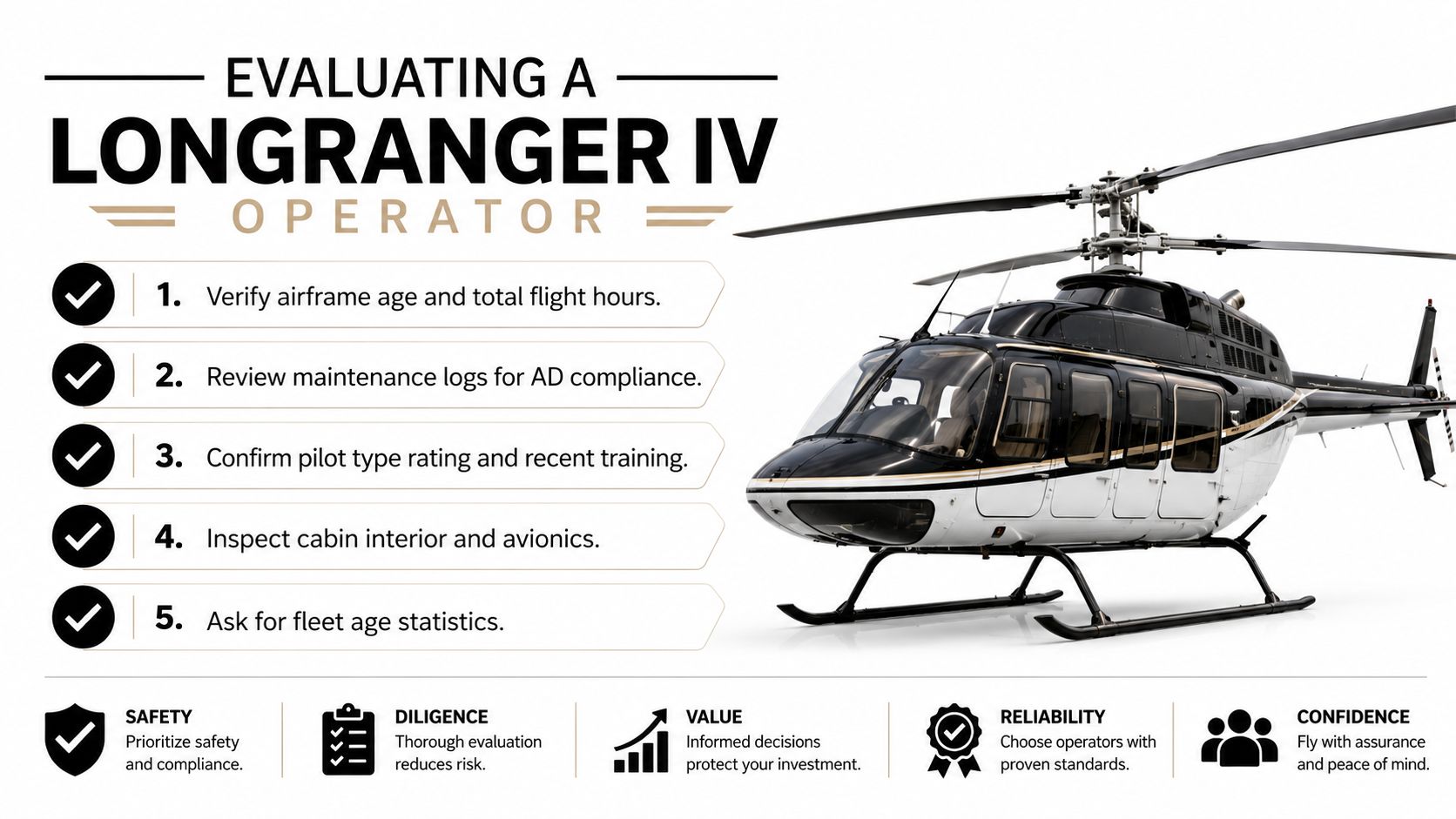
Booking an older helicopter is less about the model than the operator. A well-maintained LongRanger IV can be a sensible choice, but a neglected one is a bad bet no matter how handsome the paint looks. The right operator should welcome scrutiny, because mature aircraft demand disciplined maintenance and honest answers.
What to ask before you send payment
Start with the airframe itself. Ask about total flight hours, maintenance logs, recent inspections, and whether the aircraft has had avionics or interior retrofits. Then move to the crew, because pilot training and recency matter just as much as shiny instruments. If the operator hesitates, that's your answer.
Third-party safety audits matter more than self-description. Marketing departments don't maintain aircraft, engineers do.
The command-and-control question is straightforward, too. You want to know who signs off the aircraft, where it's based, and how the operator handles unscheduled maintenance. In a mature fleet, those details separate serious operators from mediocre ones.
Why third-party ratings belong in the conversation
Use independent safety validation, not just internal promises. For private aviation, that means checking whether the operator holds recognized third-party safety ratings, because those audits force a level of accountability that glossy web pages can't fake. The point isn't to collect badges. The point is to reduce the odds of booking an aircraft with hidden risk.
Accident history also matters, especially for an out-of-production type. Independent reporting has shown the LongRanger family has been involved in tail-rotor-effectiveness events, which is exactly why operational context counts. You're not avoiding the model, you're insisting on an operator that understands its quirks.
If you want a stricter framework, use the standards on the Haute Jets safety page as your baseline and hold every operator to the same bar.
Understanding Charter Pricing and Cost Drivers
Helicopter pricing is less mysterious than most brokers pretend. You're paying for aircraft availability, fuel, positioning, pilot time, landing access, and the operator's willingness to commit the aircraft to your mission. With the LongRanger IV, the quote can look clean on paper and still climb quickly once repositioning and heliport charges are added.
What moves the price
Fuel load is a major lever because the aircraft's usable payload shifts with mission planning. Repositioning is another, and it's the one most clients overlook. Local sourcing matters because avoiding unnecessary ferry time keeps the quote grounded in the actual trip rather than in the operator's empty-leg recovery plan.
That's why broker structure matters more than people admit. A per-flight wholesale model is easier to read than a bundled program where hidden assumptions blur the cost of the aircraft you're getting. For a helicopter charter, clarity beats loyalty.
How to judge a quote
A strong quote should tell you which aircraft you're getting, where it's positioned, and what's included. If it doesn't separate flight time from positioning, or if it buries handling and landing charges, you're not seeing the full picture. That's not a bargain, it's a delay tactic.
If you want a broader sense of how private aviation costs are structured, compare the elements against the typical charter cost drivers described on the private jet charter cost guide. The mechanics differ by aircraft type, but the logic is the same, transparency is worth paying for.
Booking Your LongRanger IV Charter Through Haute Jets
Booking should be precise, not ceremonial. Start by stating the mission, departure point, arrival point, passenger count, luggage style, and whether you need special coordination for pets, ground transport, or a tight return window. That's how you get an aircraft match instead of a generic availability quote.
The next step is operator selection. The value of a large network is that it lets the charter team source the right helicopter near your departure point, which cuts unnecessary repositioning and keeps the aircraft choice tied to the trip rather than the broker's convenience. For a mature type like the LongRanger IV, that proximity matters even more because it narrows the field to operators who already know the platform well.
Once the booking is moving, demand the details that eliminate surprises. You should receive tail number, crew bios, and a weather briefing before departure, and you should confirm anything that affects boarding, from Wi-Fi availability to cabin preferences and pet handling. On a helicopter, the smallest mismatch can become the whole story.
If the Bell 206L-4 LongRanger IV fits your route, don't settle for a vague quote or an aircraft that's merely “similar.” Haute Jets can source the right helicopter, confirm the operator, and keep the booking tied to your actual mission instead of an inflated repositioning bill. If you're planning a short-hop charter in 2026, start with the aircraft that still makes operational sense, then let the flight team handle the details.