
You’re probably not shopping the King Air 350i on paper alone. You’re trying to solve a trip.
A common brief looks like this: family out to Martha’s Vineyard for the weekend, then a Monday meeting in Boston, with luggage, changing passenger mix, and an expectation that the airplane feels private, quiet, and easy rather than merely “available.” That’s where the king air 350i interior starts to matter more than the aircraft category label.
Clients often come to this aircraft after comparing a light jet against a turboprop and realizing the decision isn’t just about speed. It’s about how the cabin works for the mission. If you need short-field flexibility, a usable cabin, and lower-friction boarding for a multi-stop regional trip, the King Air 350i behaves like a very capable flying SUV. It sits in a useful middle ground between smaller cabins that can feel tight and larger aircraft that may be harder to source efficiently for short regional flying.
The King Air 350i Cabin Experience
For weekend-family-plus-Monday-business flying, the King Air 350i earns attention because its cabin supports two very different uses without feeling compromised. You can load family luggage, seat everyone comfortably, then use the same cabin as a workable business environment on the next leg.
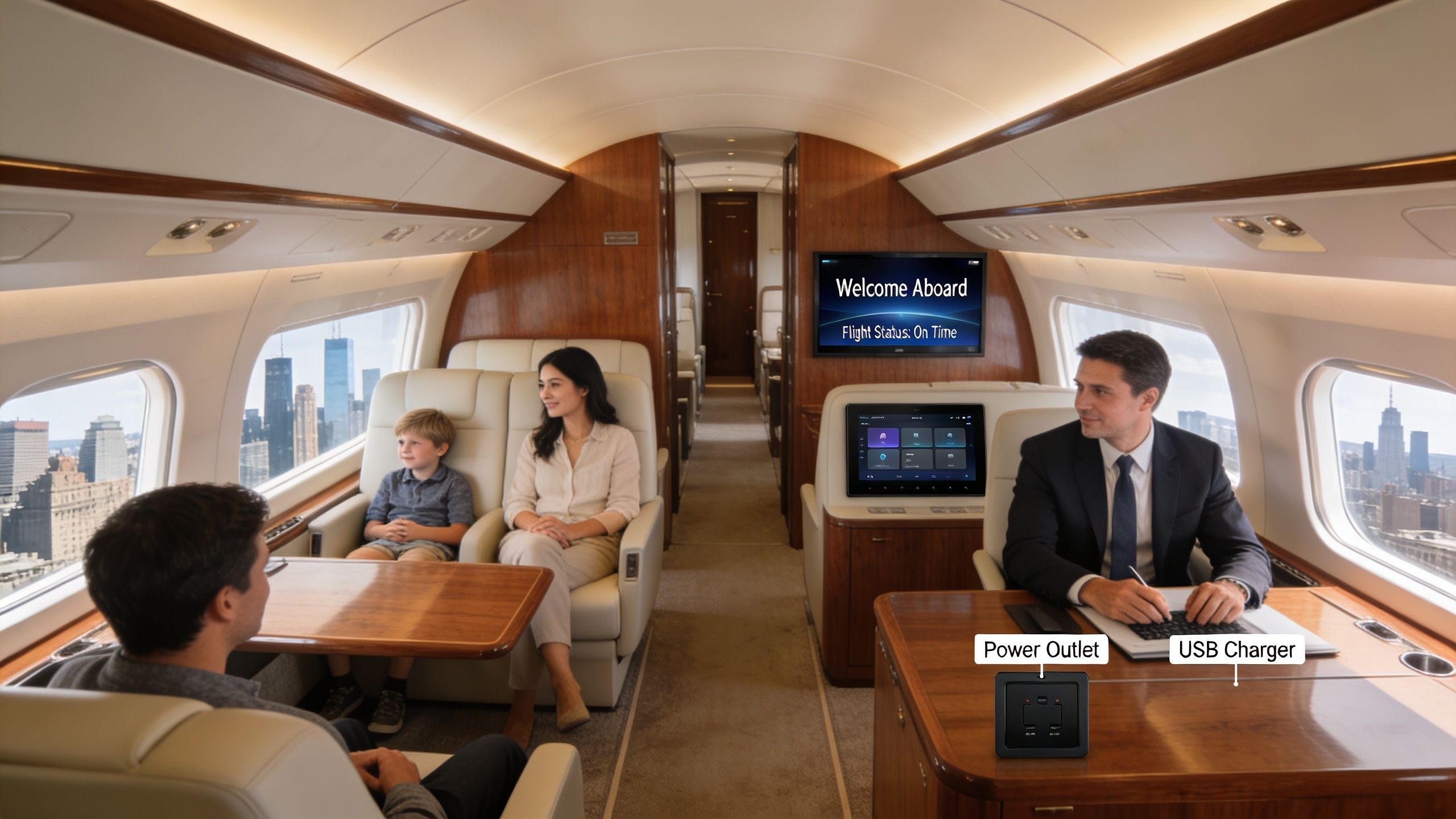
That’s why many charter clients looking at regional missions should study the actual King Air 350 options in charter service closely instead of treating every turboprop as interchangeable. Cabin comfort, layout, and onboard details change the experience more than most first-time charterers expect.
Why this cabin feels different on real trips
The 350i doesn’t win by pretending to be a light jet. It wins by being more useful on the kinds of routes where clients value access, comfort, and practical space.
A family notices the easy social layout. A business traveler notices whether there’s room to open a laptop, spread papers, and hold a quiet conversation. A travel manager notices whether the airplane can handle the bags, the schedule, and the airport choice without creating a second problem to solve.
Practical rule: If your trip includes a resort runway, a secondary airport, or more than one type of passenger need on the same itinerary, the cabin matters as much as the performance sheet.
What works well in the King Air 350i interior is balance. It’s upscale without being delicate. It’s roomy for a turboprop without feeling oversized for short sectors. And for on-demand charter, that balance often translates into a better fit for real regional flying than clients first assume.
Cabin Dimensions and Versatile Layouts
Cabin shape affects charter comfort before any amenity does. In the King Air 350i, the squared-oval fuselage gives passengers more usable space at shoulder and elbow level than a tighter round cabin usually allows, which is one reason this aircraft holds up well on regional trips with mixed passenger needs.
According to Textron Aviation’s King Air 360 cabin specifications, which reflect the same family cabin cross-section and general interior footprint clients will recognize in the 350i, the cabin measures 19 feet 2 inches in length, 54 inches in width, and 57 inches in height. For charter clients, those numbers matter less on paper than they do in use. You feel them when four adults sit face to face, when a parent helps a child get settled, or when a business traveler wants enough personal space to arrive ready for a meeting instead of ready to get off the airplane.
That is the practical value of this cabin. It supports more than one type of mission without forcing the aircraft into a narrow role.
A good private jet interior guide for comparing cabin layouts can help set expectations, but the booking question is simpler. Confirm how the operator has this specific aircraft configured, because the same model can serve very different trips well or poorly depending on seat count and cabin setup.
What those dimensions mean on a real charter
The standard executive layout is usually the right answer for on-demand charter. It gives passengers room to interact, work, or avoid feeling compressed on short hops and multi-stop days.
Higher-density layouts exist, but they change the experience materially. More seats can make sense for team shuttles, golf groups, or short transfers where moving everyone together matters more than personal space. They are usually a poor fit for senior executives, families with children, or any client who expects the cabin to function as part of the trip rather than just transportation.
| Configuration | Passenger Count | Best For |
|---|---|---|
| Executive club layout | 8 | Family trips, corporate travel, mixed-use regional missions |
| Maximum cabin configuration | 11 | Larger groups that still want a private cabin setting |
| Commuter conversion | Higher-density shuttle use | Group transfers where seat count matters more than executive comfort |
The trade-off is straightforward. As seat density rises, personal space, ease of movement, and overall cabin comfort usually fall. On charter, that matters because clients are not buying a model name. They are booking a specific tail with a specific interior.
What to confirm before you book
Ask for the actual seating configuration, not the brochure maximum. Confirm whether the aircraft is set up in the standard club arrangement, whether the aft area is usable for passengers as expected, and whether the mission is better served by eight comfortable seats than by trying to fit in more people.
That step prevents the most common booking mistake with this aircraft category. Clients see a flexible cabin and assume every King Air 350i offers the same experience. It does not. The aircraft is at its best when the layout matches the mission.
Executive Seating and Personal Workspace
A King Air 350i earns its keep on charter when passengers can use the cabin for something more than sitting through a short leg. On a morning run to a board meeting, that usually means four executives reviewing notes face to face, devices charging, with enough table space to work without balancing a laptop on a knee.
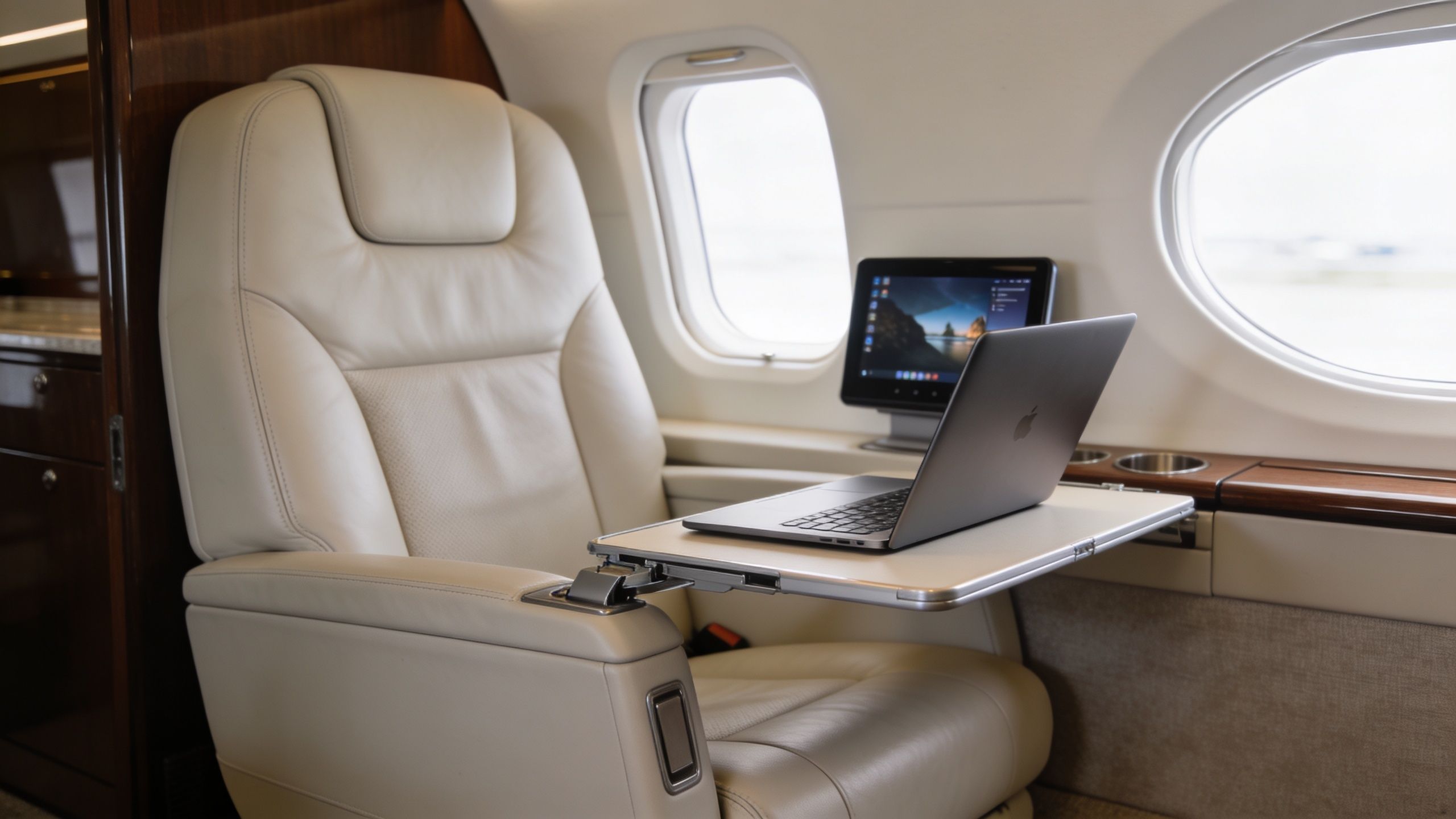
The standard executive cabin is well suited to that job. Textron Aviation’s King Air 350i interior overview describes a double-club seating layout with work tables, power outlets, and seating designed for business travel rather than shuttle duty. In practice, that gives clients a cabin where conversation, meals, and laptop work can happen in the same space without asking passengers to compromise on posture or legroom.
The details matter. A club arrangement supports real discussion on sectors where a team wants to use the flight as meeting time. Individual tables matter for travelers who need to sign documents, review a deck, or set out lunch for a child. In-seat power matters for charter because many regional trips are booked precisely to protect the schedule. If the cabin cannot support productive time in the air, part of the value of private aviation disappears.
For a wider comparison of how cabin layout affects comfort and usability across aircraft categories, this private jet interior guide is a useful reference.
What charter clients should confirm
Do not assume every King Air 350i on the market presents the same workspace. Ask the operator for current cabin photos and confirm three things before booking:
- Table usability: Confirm that the tables are fitted and available for passenger use, not removed or restricted by a modified layout.
- Power at your seat: Verify outlet type and location if passengers plan to work en route with laptops, tablets, or medical devices.
- Seat condition and adjustment: Confirm the aircraft has the executive club interior, and ask whether the seats recline and track as expected.
Those checks sound minor. They are not. Haute Jets’ model of sourcing the exact aircraft is useful here because the mission may call for a true working cabin on one trip and a simple regional lift on the next. The model name gets you into the category. The actual tail number determines whether the cabin fits the brief.
Best use cases for this seating layout
The King Air 350i interior performs especially well on missions where the cabin needs to stay useful from takeoff to landing:
- Executive day trips: The club setup supports eye contact and direct discussion, which works well for partner meetings, site visits, and deal teams.
- Family regional travel: Parents get a cabin that is easier to manage for snacks, devices, and conversation than a denser commuter-style layout.
- Mixed business and leisure itineraries: One passenger can work with a laptop and power access while others use the same cabin for a quieter, more relaxed ride.
The trade-off is straightforward. This is an efficient turboprop cabin with a serious executive layout, not a stand-up midsize jet office. Clients who book it for short to medium regional sectors usually come away very satisfied. Clients who expect broad aisle movement and the open feel of a larger jet should set expectations accordingly.
A Full Suite of Onboard Amenities
Amenities only matter if they solve a passenger problem. In the King Air 350i, the best ones do exactly that. They reduce friction, keep people comfortable, and make the aircraft viable for more than a quick repositioning hop.
Comfort that supports the mission
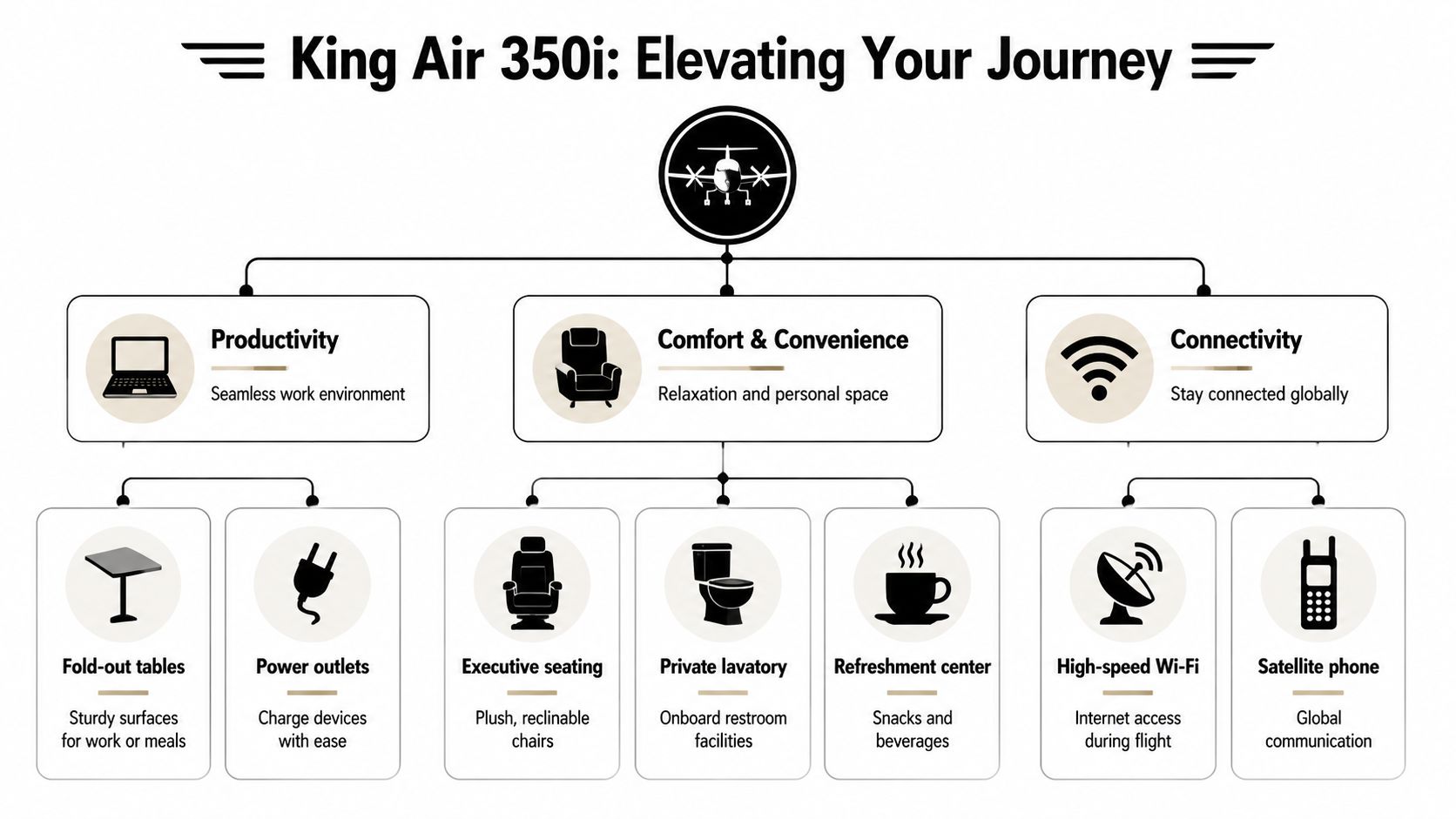
According to Jet Advisors’ King Air 350i overview, cabin amenities include electronically dimmable windows, standard Wi-Fi, and a private aft lavatory. The same source notes that the Pro Line Fusion avionics integrate cabin pressure controls that reduce dehydration, and that the cabin’s width helps prevent the claustrophobic feel common in narrower jets. It also states an empty weight of about 9,955 lb with more than 5,000 lb useful load, supporting short hops such as Miami to Turks & Caicos without a fuel stop.
For charter clients, that translates into a few simple benefits. Windows that dim electronically help children nap, help executives reduce glare on screens, and help everyone manage light without fiddly plastic shades. A private aft lavatory matters because it turns the airplane from a bare transport tool into something you can use confidently for longer regional sectors.
Productivity and connectivity
The most practical tech features are usually the least glamorous.
- Wi-Fi: Confirm that it’s active on the specific aircraft, not just listed as a fleet feature.
- Seat power: Essential if your group is carrying laptops, tablets, or presentation gear.
- Pull-out work surfaces: Better for actual productivity than many people expect on a turboprop.
For travelers who need to stay connected, the same Jet Advisors source states Wi-Fi latency is below 200 ms at cruise and ties that to video-call usability. That’s helpful, but I’d still tell any client to confirm expected performance for their route and use case before booking. “Available” and “reliable enough for your specific need” are not always the same thing.
What to confirm before departure
Amenities vary by tail, refurb, and operator practice. Before you lock in a flight, check:
- Lavatory privacy. Ask whether it has a solid door and whether the belted position is usable for your mission.
- Refreshment setup. Confirm what’s stocked and whether your catering request fits the cabin setup.
- Wi-Fi status. Ask whether it’s installed, activated, and routinely used by charter passengers.
- Window controls and climate. Small details, but they affect comfort more than clients expect.
The best cabin amenities are the ones nobody complains about mid-flight. That usually comes down to privacy, power, connectivity, and a cabin environment that feels settled.
What works with the King Air 350i is that the amenity package supports both business and leisure use. What doesn’t work is assuming every aircraft listed under the same model name has identical onboard details. Verification matters.
Understanding Luggage and Storage Capacity
A luggage problem usually shows up before the aircraft ever leaves the ramp. A family arrives with two rollers, two duffels, a stroller, a pet carrier, and a few loose items they assumed would “fit somewhere.” A business group brings standard carry-ons plus trade-show cases or demo kits. The King Air 350i handles that mix better than many clients expect, but only if the trip is planned against the actual aircraft assigned.
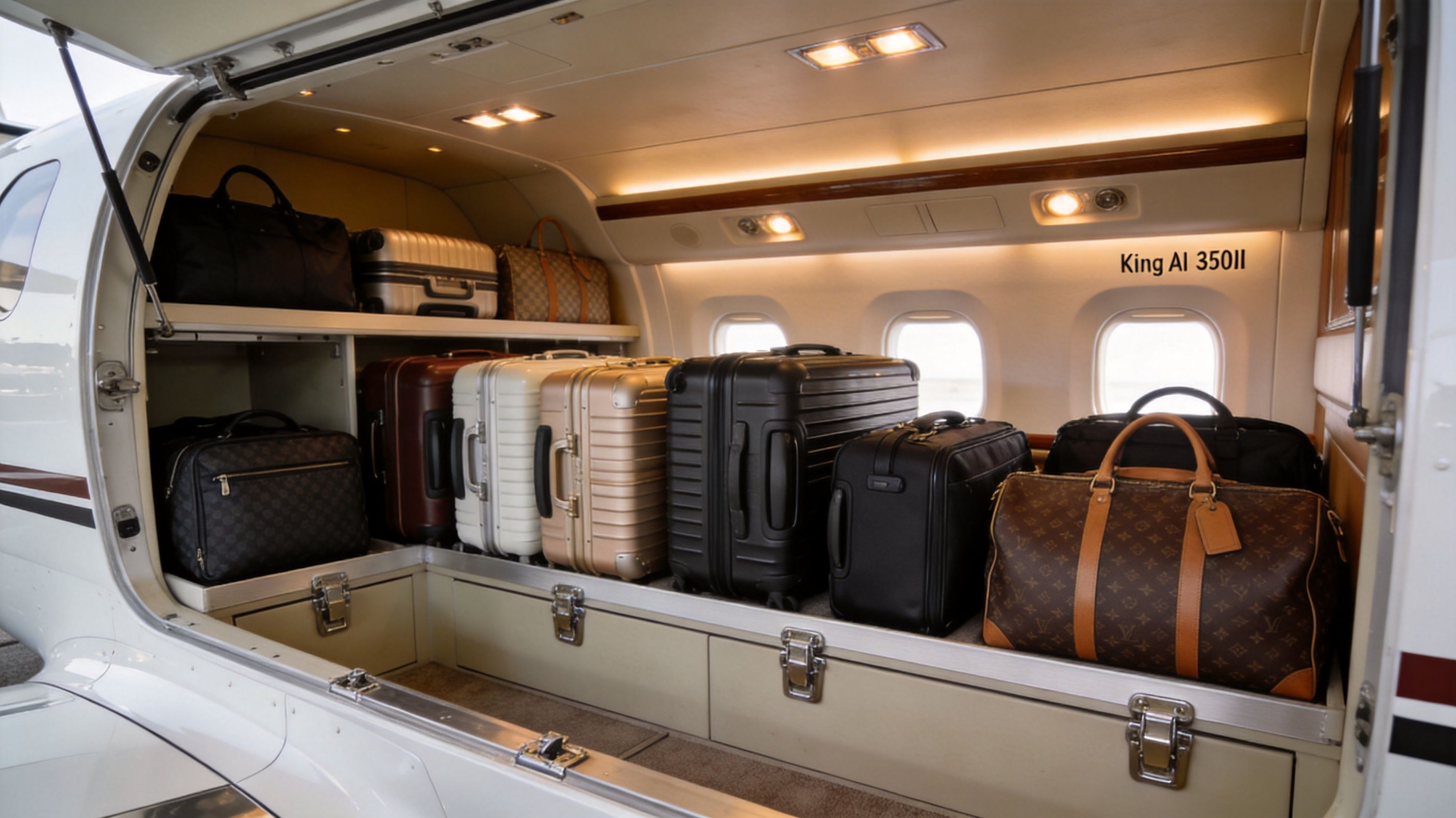
Beechcraft’s King Air 350i specifications outline the aircraft’s baggage areas and confirm the availability of a sizable aft baggage door configuration on this model. For charter use, that matters more than the brochure language. Usable storage is what keeps you from repacking on the tarmac, leaving gear behind, or forcing cabin items into passenger space.
That advantage shows up on specific missions. Families benefit when bulky items can be loaded without turning boarding into a negotiation. Corporate travelers benefit when presentation materials, garment bags, or odd-shaped cases fit without compromising the seating plan. Golf trips, ski transfers, and pet travel also become easier to handle on a King Air than on aircraft that offer less forgiving baggage access.
Capacity on paper is only part of the answer. The critical question is whether your exact load works with your passenger count, route length, and any special equipment. A full cabin changes the planning. So does winter baggage, catering, or equipment that cannot be stacked.
For travelers who want a broader packing framework before they send a manifest, this guide to luggage and private jet travel is a useful reference.
Smart packing questions to ask
- Will any items need to stay accessible in flight? Keep medication, valuables, and child essentials in the cabin if they may be needed en route.
- Are you bringing bulky or rigid equipment? Dimensions matter as much as total weight.
- Is the baggage list final? Last-minute additions are where otherwise suitable aircraft start to become tight.
- Are you booking by aircraft type or by exact tail? On charter, that difference matters because cargo-door configuration, interior storage setup, and loading practicality can vary.
The best practice is simple. Send photos or a detailed list of the actual bags before you book. That is how we match the mission to the right King Air 350i, or steer a client to a better option if the load profile says this aircraft is close to its comfort limit.
A good baggage setup improves the whole charter experience. Boarding is faster, the cabin stays clear, and passengers are not managing luggage around their feet for the first hour of the trip.
The Quiet and Comfortable In-Flight Experience
A client boarding a King Air 350i for a two-hour regional sector usually wants one of two outcomes. They need to keep working without shouting across the cabin, or they want to arrive less drained than they would after a commercial connection. The interior matters because it directly affects both.
Beechcraft positions the 350i around passenger comfort upgrades that include the Quiet Cabin system, which is designed to reduce cabin noise and make conversation easier in cruise, as outlined on Textron Aviation’s King Air 360 page. For charter clients, the practical point is simple. Ask whether the exact aircraft you are booking has an active noise-reduction system, when the interior was last refreshed, and whether headsets are still preferred for cockpit visits or brief in-flight coordination.
Noise drives fatigue faster than many first-time turboprop clients expect. On a short hop, that may only mean a less pleasant ride. On a day with two or three legs, it affects concentration, calls, reading, and how fresh the group feels on arrival.
The cabin’s upright proportions also help the aircraft feel less confining than some light aircraft in the same mission category. Beechcraft’s published cabin dimensions for the current family show a stand-up-friendly environment by turboprop standards, which is one reason the 350i remains popular for executive shuttle work and family trips where passengers are in and out of the aircraft more than once during the day. If interior planning matters to you before booking, aiStager's guide to renderings is a useful reference for understanding how layout presentation can differ from what a cabin feels like in person.
Comfort in turbulence needs a realistic explanation. The King Air 350i is a capable turboprop, not a magic carpet. In light to moderate chop, many clients find it composed and confidence-inspiring for regional charter. In rougher air, ride quality still depends on routing, weather, pilot technique, and where you sit in the cabin. Clients who are sensitive to motion should say so before booking. We often adjust seat assignments, departure timing, or even aircraft choice based on that alone.
What this means on actual charter missions
| In-flight factor | What it changes for charter clients |
|---|---|
| Lower cabin noise | Easier conversation, better rest, less end-of-day fatigue |
| More upright cabin proportions | Easier boarding and a less cramped feel on multi-leg itineraries |
| Predictable ride for regional sectors | Better fit for executives, families, and travelers new to turboprops |
The trade-off is straightforward. A King Air 350i can deliver a calm, productive cabin for the missions it was built to fly, but the experience still depends on the exact aircraft and the day’s weather. Clients choosing by tail number rather than by generic model usually get the better result.
Confirming Your Ideal Cabin Before You Book
Experienced charter clients recognize a key difference from casual shoppers: “King Air 350i” is a model name, not a guarantee of a specific cabin. Interior condition, seating plan, refresh cycle, connectivity, pet rules, and owner preferences can vary meaningfully from one aircraft to another.
That matters even more now because post-2025 charter trends show more customization. According to Aircraft Exchange’s guide to the Beechcraft King Air 350i, there has been a 20% increase in operator integration of SAF-ready engines and customized interiors. The same source notes that clients can select the exact year and model, confirm pet policies, and even pay with Bitcoin.
The booking checklist that actually matters
Before you approve any King Air 350i charter, confirm these points:
- Specific seating layout. Ask for the actual cabin configuration, not the typical configuration.
- Interior refurbishment status. A recently refreshed cabin often feels dramatically different from an older one, even within the same model.
- Wi-Fi setup. Confirm installed, active, and suitable for your use.
- Lavatory privacy. Hard door versus lighter privacy setup can matter a lot to families and executive groups.
- Pet policy. Don’t assume. Confirm it for the exact aircraft.
- Storage use case. Tell the charter team exactly what you’re bringing, especially if pets, sports gear, or event materials are involved.
- Sustainability preferences. If SAF compatibility matters to your company or family office, ask early.
Why visual verification helps
Refurbishment language can be slippery. “Updated interior” means different things to different operators. If you’ve ever reviewed renovation plans for a home, yacht, or hospitality suite, you already know why visuals matter. That’s also why resources like aiStager's guide to renderings are useful context. They show how presentation can shape expectations, and why clients should distinguish between polished visuals and the actual delivered environment.
Book the aircraft you’ve verified, not the aircraft category you’ve imagined.
The best charter outcomes usually come from asking a few direct questions and insisting on clear answers. Exact layout. Exact amenities. Exact policies. Exact aircraft. That’s the standard serious clients should expect, especially when the whole point of private aviation is control.
If you want help sourcing the exact King Air 350i cabin that fits your trip, Haute Jets can help you compare specific aircraft, confirm interior details before departure, and book on demand without memberships or jet cards.