

You're leaving the Westside on a Friday afternoon, headed to a poker tournament at Wynn. I-15 traffic is already crawling, your commercial flight options are disappearing, and the thought of crossing a major airline terminal with luggage feels absurd for a trip this short. A private flight from LA to Vegas can solve that problem, but only if you choose the airport pair and aircraft carefully.
The flight itself isn't the hard part. The decisions that matter are where you depart, where you land, how much ground travel remains, and whether the aircraft fits the group. A light jet may be the sensible answer for a small party, while a larger cabin can make sense for baggage, comfort, or a tight multi-stop schedule. This is a time-and-value calculation, not an automatic luxury upgrade.
Why People Choose a Private Flight from LA to Vegas
The traveler leaving the Westside for Wynn has a clear problem. Driving means accepting freeway uncertainty, while commercial air travel adds terminal procedures, fixed departure times, and the possibility that a short flight consumes most of the afternoon. A private charter changes the sequence. You select a suitable Los Angeles-area airport, arrive at the private terminal shortly before departure, and avoid the airline process.
That advantage matters most when the itinerary has a hard deadline. An executive may need to attend a same-day meeting in Las Vegas, a production team may have a show call that can't move, or a wedding party may need to arrive together rather than scatter across separate airline seats. The aircraft becomes useful because it protects the schedule, not because the cabin is glamorous.
The value depends on the trip
A Friday leisure traveler values convenience and a direct arrival near the Strip. A corporate group values schedule control and the ability to work around meetings. A wedding or bachelor-party group values shared transport, privacy, and baggage flexibility. Those are different purchasing decisions, even though they use the same corridor.
The route also supports several arrival strategies. Harry Reid International Airport is generally the practical choice for direct Strip access, while Henderson Executive can be more useful for destinations south of the Strip or in Henderson. North Las Vegas can suit events, residences, and venues on the northern side of the metro area. The right landing field can matter more than shaving a few minutes from airborne time.
Broker's rule: Don't ask only, “How fast is the jet?” Ask, “Which airport combination gets this exact group from its starting point to its final destination with the fewest avoidable steps?”
Private flying isn't automatically faster for every Los Angeles traveler. Someone living close to LAX may lose the advantage by driving across the basin to Van Nuys, particularly when commercial schedules are convenient. The strongest case is a time-critical itinerary, a group that can share the aircraft, or a traveler whose departure and arrival points align naturally with private-aviation airports.
Understanding the Route and Block Time
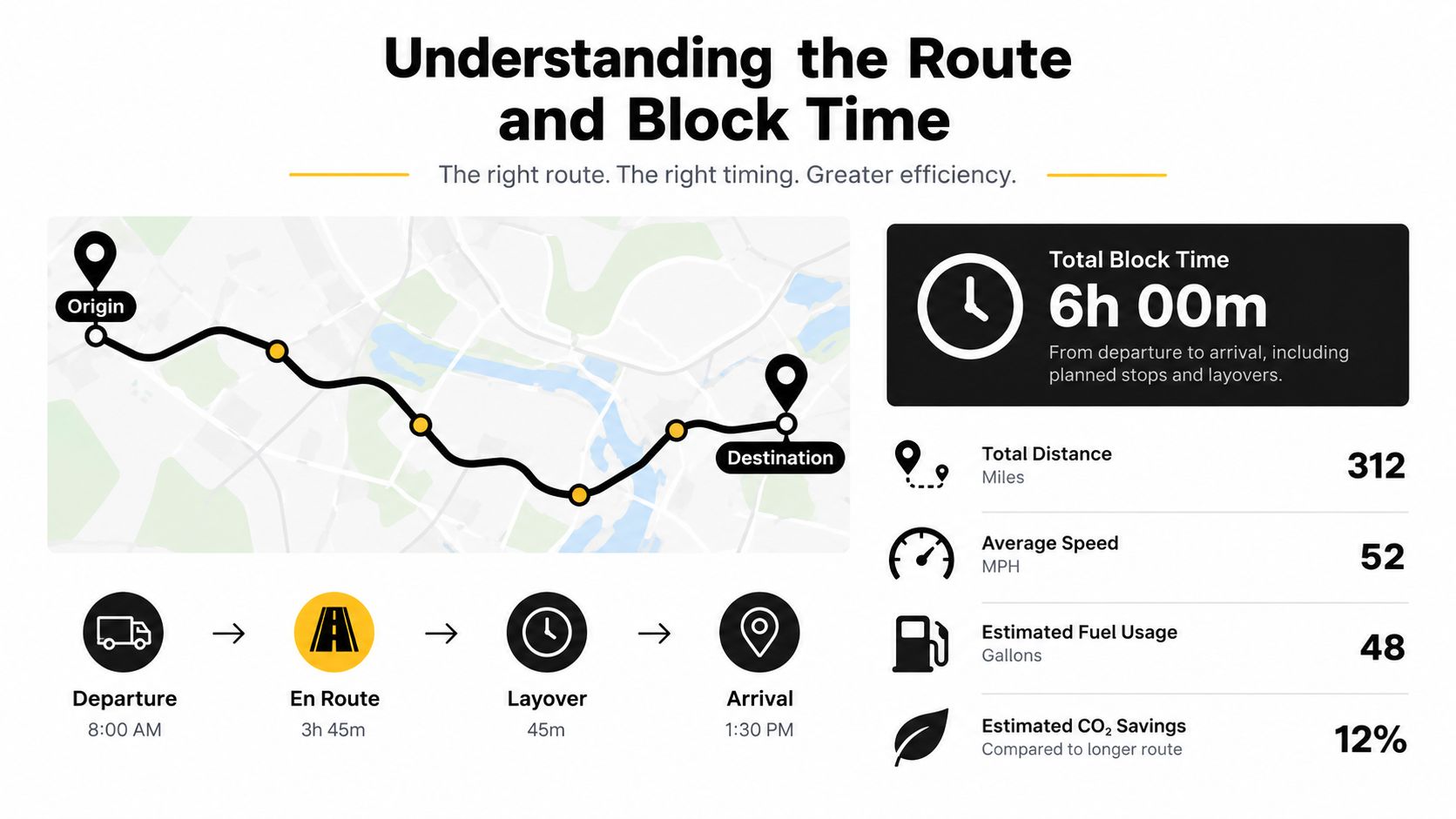
Los Angeles to Las Vegas is a short, established air corridor. A representative Van Nuys to Harry Reid routing is about 199 nautical miles, with approximately 54 minutes of airborne time for a typical jet, according to the route analysis from Stratos Jets. The commonly published LAX to LAS city-pair is about 235 miles, or 378 kilometers, with scheduled nonstop flight time averaging approximately 1 hour and 20 minutes, as shown by FlightConnections' LAX to LAS route data.
That difference doesn't mean the private aircraft is dramatically faster in cruise. Airport choice and ground procedures create much of the practical advantage. Van Nuys, Burbank, Long Beach, and other Los Angeles-area facilities can put the aircraft closer to the traveler, while private terminals reduce the amount of airport processing before departure.
Read the clock correctly
Airborne time isn't the same as block time. Block time includes taxiing, climb, descent, routing, and air-traffic sequencing. Weather, congestion, runway availability, and the selected airports can change the result, so a quote based only on “flight time” doesn't tell you the complete story.
The commercial corridor is busy. FlightConnections reports approximately 169 scheduled LAX to LAS departures per week, an average of 24 flights per day, which confirms that Los Angeles and Las Vegas function as a high-frequency business, entertainment, and leisure connection. Private availability can tighten around major conventions, championship events, fight weekends, and holiday periods, but the operator still has to account for aircraft positioning and airport access.
Why cruise speed is the wrong obsession
On a sector this short, choosing a faster aircraft rarely transforms the itinerary. Eliminating a long repositioning flight, selecting a nearby FBO, or landing at the airport closest to the hotel can have a larger effect on total elapsed time. That's why the request should always include the traveler's starting neighborhood, final destination, baggage, and preferred arrival airport.
For most travelers, the air time is a fixed background detail. Airport pairing and aircraft fit are the variables worth optimizing.
Picking the Right Airports on Both Ends
Los Angeles isn't one departure point. Van Nuys is the default starting field for many private travelers because it has an established general-aviation network and works well for much of the Valley, Westside, and central Los Angeles. Hollywood Burbank is the cleaner choice for Burbank, Hollywood, Pasadena, and Valley itineraries when the road approach is better.
LAX has a role, but it isn't my first choice for a normal LA to Vegas charter. Use it when an international or long-haul connection makes LAX unavoidable, or when a large-cabin aircraft and the existing airport plan justify the complexity. Long Beach can work when the traveler is already nearby or the quote is materially better. It shouldn't be selected only because it appears on a generic airport list.
On the Vegas side, LAS offers the most direct access to the Strip, although commercial-airport activity can make the ground experience more complicated. Henderson Executive is often the smarter choice for Henderson, southern Strip destinations, or itineraries where a quieter general-aviation environment matters. North Las Vegas is useful for northern destinations, private residences, and certain group or convention movements.
Match the pair to the itinerary
- Friday arrival on the Strip: VNY to LAS is the straightforward recommendation when the traveler starts near the Westside or Valley and wants direct Strip access.
- Wedding in Henderson: BUR to HSH can be sensible when the Los Angeles group is near Burbank or the Valley and the event is south of the main resort corridor.
- Convention or group event in the north: VNY to VGT may reduce unnecessary cross-city driving when the venue or accommodation is north of Las Vegas.
- International connection: LAX may be justified, but treat it as a connection-driven decision rather than the default private-charter origin.
Before you accept a quote, ask which FBO handles the aircraft at both ends. Request the FBO name, handling charges, ramp fees, parking treatment, after-hours fees, and ground-transport arrangements in writing. Airport choice can look efficient on a map, yet the terminal or vehicle plan may add unexpected cost and time. Use Haute Jets' guide to Las Vegas FBOs as a starting point for comparing the arrival experience.
| Airport Pair | Best For | Typical Drive Time | Recommended FBOs |
|---|---|---|---|
| VNY to LAS | Westside or Valley travelers going directly to the Strip | Depends on the traveler's origin, traffic, and hotel | Ask the broker to name the assigned FBO and all handling charges |
| BUR to HSH | Burbank-area travelers attending events in Henderson or south of the Strip | Depends on the event location and traffic | Confirm the HSH FBO, ramp fees, and vehicle transfer plan |
| VNY to VGT | Northern Las Vegas venues, residences, and group events | Depends on the final destination | Request the assigned VGT FBO and any event-period restrictions |
Which Jet Category Actually Fits This Trip
For a roughly 199-nautical-mile private sector, a light jet is usually the right starting point. Haute Jets Journal describes light jets as suitable for flights under roughly two to three hours and groups of seven or fewer, which puts this route well inside their practical mission profile.
A Phenom 300 or a Citation CJ-series aircraft is generally the category I'd quote first for a small group with ordinary baggage. These aircraft keep the mission efficient and can use the private airports that make the route worthwhile. The important checks are passenger count, luggage shape and weight, runway conditions, weather, and the operator's dispatch calculations.
Cabin size should solve a real problem
A midsize aircraft such as a Citation XLS+ becomes relevant when passengers need more cabin room, an enclosed lavatory, or additional baggage flexibility. It isn't automatically better for a short hop. If the group is small and lightly packed, the larger cabin can become an expensive solution to a problem that doesn't exist.
A super-midsize aircraft such as a Challenger 350 makes more sense when the group needs a larger cabin, has substantial equipment, includes tall passengers, or is continuing onward after Las Vegas. On a simple one-hour sector, paying for that extra space is difficult to justify unless it improves the actual itinerary.
| Category | Typical Models | Seats | Hourly Rate Range | Best For |
|---|---|---|---|---|
| Light jet | Phenom 300, Citation CJ-series | Groups of seven or fewer, subject to aircraft configuration | Quote-specific | Most small LA to Vegas groups with normal baggage |
| Midsize jet | Citation XLS+ | Confirm the assigned aircraft's configuration | Quote-specific | More cabin room, lavatory comfort, or additional baggage |
| Super-midsize jet | Challenger 350 | Confirm the assigned aircraft's configuration | Quote-specific | Larger groups, tall passengers, equipment, or onward travel |
Turboprops are technically capable of many short routes, but they're usually the wrong recommendation here when the purpose is a polished, time-sensitive LA to Vegas trip. The cabin, speed, and weather comfort may not match what the traveler expects from a jet charter. Aircraft selection should be based on the exact mission, not a generic “upgrade” label. Haute Jets' aircraft-selection guide offers a useful framework for checking those trade-offs.
What a Private Flight from LA to Vegas Really Costs
The cleanest market benchmark is approximately $6,000 one way for a Los Angeles to Las Vegas private charter. Haute Jets Journal identifies that amount as an estimated all-inclusive figure, not a guaranteed quote. Availability, aircraft positioning, departure date, fuel costs, and operator fees can change the final number.
That estimate is more useful than a seductive hourly rate because a charter quote covers the aircraft mission, not merely the minutes spent in the air. The bill can reflect the aircraft's location before pickup, the selected airports, crew requirements, handling, catering, and the terms of the trip.
Ask for the complete quote
A professional quote should identify:
- Aircraft: Make, model, year, tail number when assigned, passenger limit, baggage capacity, and Wi-Fi status.
- Routing: Exact departure and arrival airports, including any repositioning or ferry legs.
- Taxes and fees: Confirm whether the quoted total includes domestic Federal Excise Tax, FBO handling, ramp charges, and other pass-through costs.
- Crew and aircraft stay: Ask whether the aircraft waits in Las Vegas or returns elsewhere, and whether that creates additional crew or overnight charges.
- Services: Catering, pets, special baggage, ground transport, and cancellation terms should be stated before payment.
A lower quote isn't automatically a better quote. If the aircraft must fly empty from another base to Los Angeles, that positioning can materially affect the total. An empty leg can be attractive when the routing and timing already match your plans, but flexibility is limited and the schedule may change.
A round trip can be more efficient than purchasing two unrelated one-way charters when the aircraft and crew can remain aligned with the itinerary. Don't assume that will happen. Ask the broker to compare a round-trip structure with two one-way quotes and explain exactly what changes.
For a broader explanation of quote components, review Haute Jets' private jet charter cost guide. The number that matters is the final payable total, tied to a specific aircraft and airport plan.
Booking the Charter Step by Step
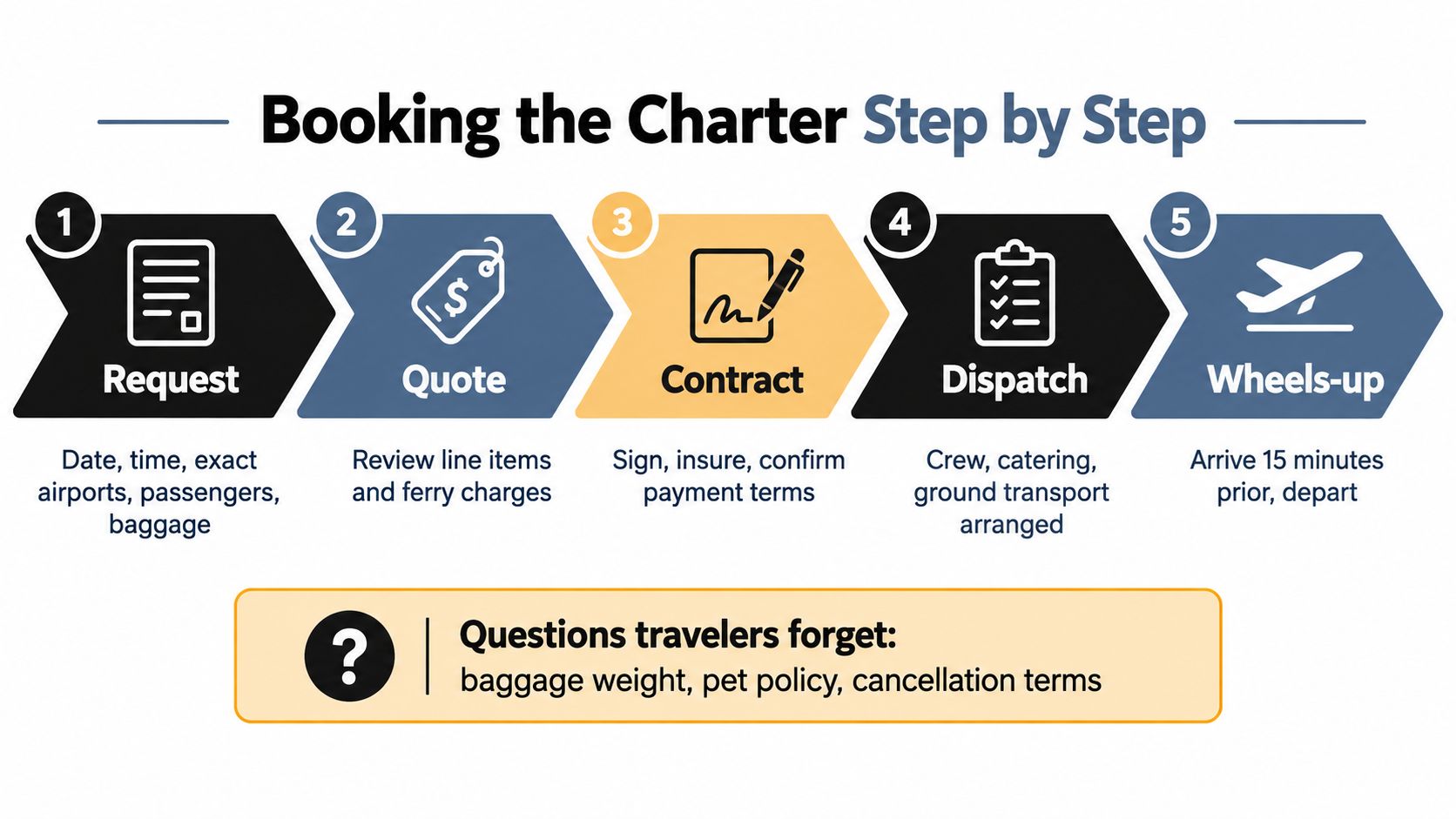
A good booking process starts with a precise request. “LA to Vegas Friday afternoon” isn't enough. Give the broker the departure neighborhood, preferred airport, exact date, target departure time, passenger count, baggage details, pets, and final destination in Las Vegas.
The broker should return an aircraft-specific proposal rather than a vague category. Compare at least two operator options, not merely two broker presentations. The aircraft may be sourced from different bases, and that difference can affect the quote, the departure airport, and the likelihood of a last-minute substitution.
Request and quote review
Check these details before discussing a deposit:
- Exact routing: Is the proposal VNY to LAS, BUR to HSH, or another combination? Don't accept “Los Angeles to Las Vegas” as the complete routing.
- Aircraft identity: Ask for the specific make, model, year, tail number when available, seat layout, lavatory configuration, baggage capacity, and Wi-Fi status.
- Total price: Confirm tax, repositioning, FBO handling, catering, ground transport, and any overnight or waiting charges.
- Operating party: Identify the legal operator, not just the sales company arranging the trip.
Vet the operator
Ask for the operator's FAA Part 135 certificate, current insurance limits, and third-party safety credentials. ARG/US, Wyvern, and IS-BAO records can help you evaluate the operator, but the paperwork should correspond to the aircraft and legal carrier that operates your flight.
Don't let a broker switch operators after taking your deposit without written approval. The contract should state the substitution rules, refund rights, cancellation schedule, weather procedures, and what happens if the promised aircraft becomes unavailable.
Before wiring money: Request the operator name, certificate information, assigned or proposed tail number, complete price, cancellation terms, and FBO charges in one written package.
Confirm the final plan
After signing, confirm catering, passenger names, baggage, pets, and ground transportation. Reconfirm the departure time on the morning of travel, particularly during major Las Vegas events or periods of heavy traffic.
Arrive with enough time for the FBO process, but don't accept a generic arrival instruction without knowing the terminal. Your driver should have the correct FBO address, and the broker should tell you who meets the aircraft in Las Vegas. The final confirmation should include the tail number, crew details, weather briefing, passenger manifest, and contact information for operational support.
Sustainability and the Honest Trade-Offs
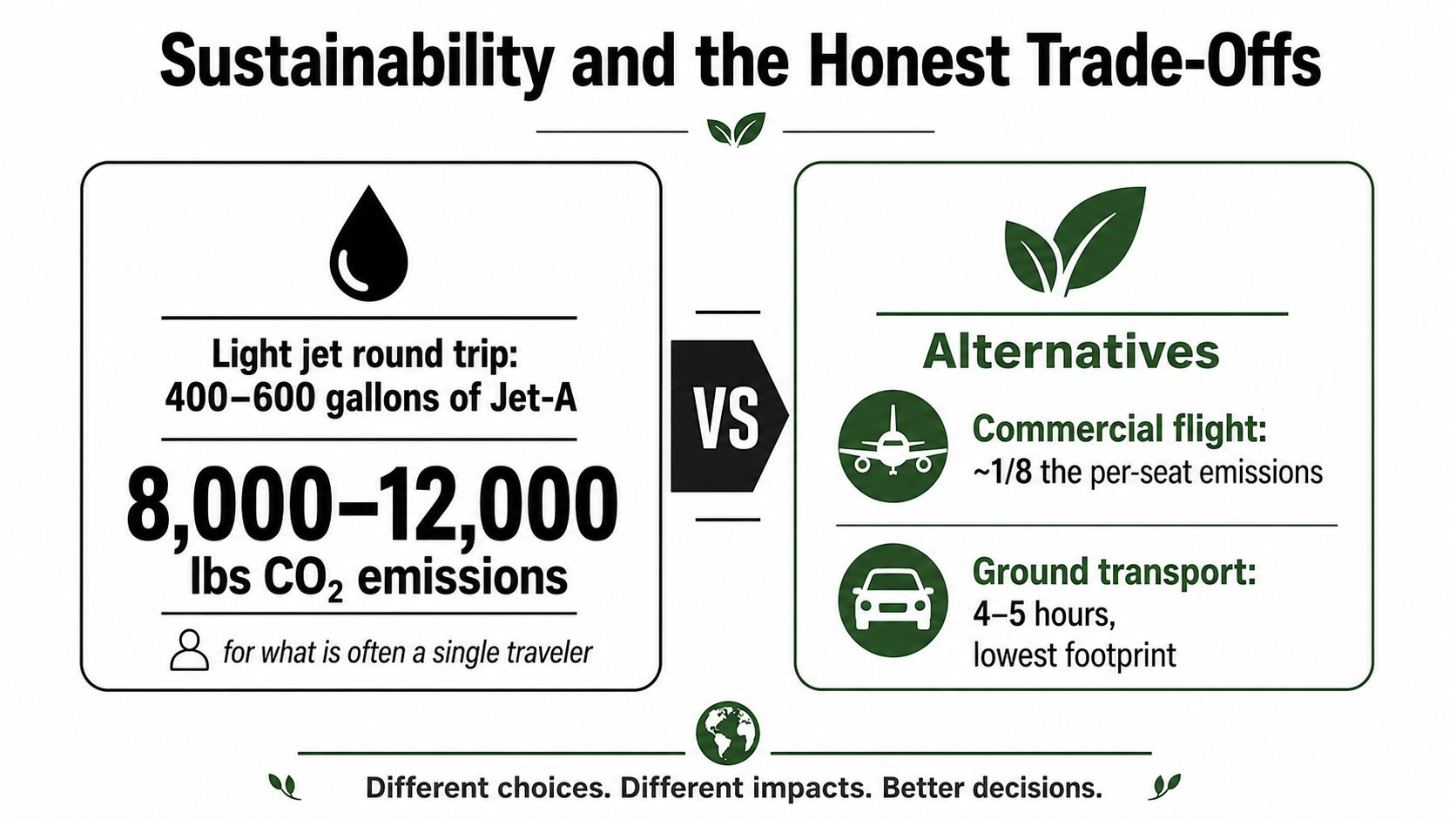
A private flight from LA to Vegas has a substantial environmental cost, especially when a small aircraft carries only a few people. A 2026 analysis of the route reported approximately 544.5 kilograms of CO₂ for a private flight, compared with 48.88 kilograms for a commercial flight, or roughly 12 times greater emissions intensity per passenger-kilometer. Those figures appear in the High Flyers 2026 analysis.
That comparison should change the buying question. If private aviation is the only way to protect a medical movement, a security-sensitive itinerary, a multi-stop business day, or a time-critical entertainment commitment, the time value may justify the impact. If the only benefit is avoiding a modest amount of airport inconvenience for one leisure traveler, the environmental argument is weak.
What mitigation can and can't do
Sustainable aviation fuel can reduce lifecycle emissions in some circumstances, but it doesn't make the aircraft's physical operation disappear. Availability, feedstock, logistics, and accounting all matter. Ask whether SAF is physically supplied to the aircraft, attributed through a book-and-claim system, or discussed only as a future purchasing option.
Offsets deserve the same scrutiny. Request the project name, verification standard, retirement record, and explanation of whether the program addresses direct emissions or broader lifecycle effects. An offset purchase isn't the same as eliminating fuel burn at source.
Aircraft choice also matters. A larger jet for a small party can worsen the per-passenger comparison, while filling available seats can make the group calculation less severe. The responsible decision is to match the smallest suitable aircraft to the passengers, baggage, weather, runway, and schedule.
Use private flying selectively. It's defensible for a full group with a hard commitment, a complex itinerary, or a genuine privacy and security requirement. It isn't the right answer when commercial travel or ground transport can meet the schedule without meaningful disruption.
Ask the operator three direct questions: What aircraft will operate the flight, what sustainability accounting is included, and which part of the claimed benefit comes from actual fuel reduction rather than an offset?

Haute Jets arranges on-demand charter options with airport pairing, aircraft selection, operator credentials, and final trip details handled before departure. If your itinerary depends on the right LA origin and Las Vegas arrival field, visit Haute Jets and request a quote built around your actual neighborhood, passenger list, baggage, and schedule.