
You're trying to get out of Oklahoma City fast, and you don't want the quote to swell after you've already made the decision. Maybe it's a Friday departure to Dallas, maybe it's a longer trip that needs more cabin and more range, but the same mistake keeps costing people money. They ask for “a private jet” before they decide which airport, which aircraft class, and which operator base best fits the mission.
Private jet charter Oklahoma City works best when you treat it like an operations problem, not a luxury purchase. The invoice changes based on where the airplane sits, which airport you use, and whether your broker is pulling an aircraft in from somewhere else just to cover your leg. If you want control over the final price, start with the airport and the aircraft position, then work backward from there.
Choosing Between Oklahoma City's Two Charter Airports
A lot of first-time clients in Oklahoma City make the same assumption, they think there's one “private airport” and everything else is just noise. That's wrong. Wiley Post Airport and Will Rogers World Airport play different roles, and the wrong choice can make a simple trip feel heavier than it should.
On the northwest side of the metro, Wiley Post Airport (KPWA) is the cleaner fit for lighter missions. It has three runways and sits 14 km northwest of Oklahoma City as listed in the airport profile. The field is active, too, with 387 aircraft based on the field, including 35 jet airplanes, and an average of 229 aircraft operations per day. Its movement mix is mostly transient general aviation at 66%, with air taxi at 2% and military at 1% according to the airport's published traffic profile. That's the kind of activity that matters when you care about quick turnarounds and aircraft already nearby.
Will Rogers World Airport (OKC) is the better call when you want a commercial-adjacent gateway with more airport muscle around it. It's identified in charter listings as a private-jet departure and arrival point, and one directory notes that Private Jets Inc., an FAA-approved Part 135 operator, and Jetset FBO both operate there, with Jetset offering fueling, hangaring, parking, charter, maintenance, and flight instruction services in its Oklahoma City listing. If you care more about broader airport services and commercial connectivity than about operating out of a smaller field, this is the airport to ask about first.
Practical rule: ask for Wiley Post when the trip is regional and the aircraft is likely to be a turboprop or light jet. Ask for Will Rogers when cabin size, service depth, or the rest of the commercial airport ecosystem matters more than speed through a smaller field.
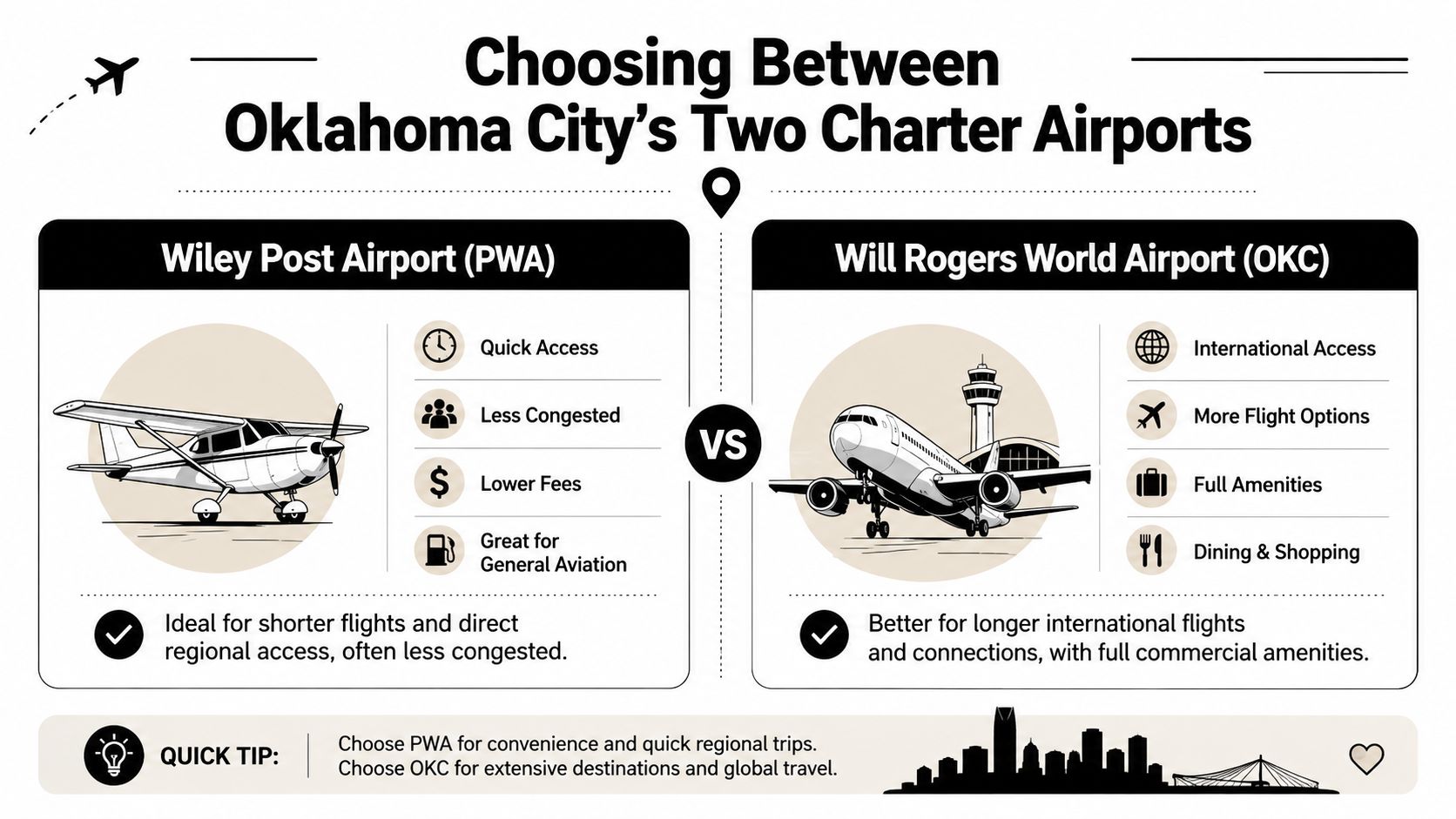
The cleanest booking habit is simple. If your trip is short and regional, lead with Wiley Post. If you need a larger cabin or prefer the airport with the fuller commercial infrastructure, lead with Will Rogers. For a broader planning lens on how airport choice affects private flying, use the Haute Jets airport guide as a reference point.
Matching Your Mission to the Right Aircraft
Aircraft choice is where Oklahoma City trips either stay efficient or start leaking money. Don't start with a brand name. Start with passenger count, baggage, nonstop range, and whether the aircraft already fits the runway and airport you've picked.
A light jet is usually the right answer for a quick Texas hop or a short regional business move. A midsize jet makes sense when you need more cabin space, more range, or a little more breathing room for passengers and bags. Once you push into longer sectors, you're no longer arguing over comfort, you're solving for range and payload first.
Think in mission profiles, not marketing tiers
A Dallas to Oklahoma City leg is the sort of mission where a light jet usually keeps the economics under control. In published Oklahoma City examples, that route is cited at about $9,700 all-in for six passengers on a light jet from a market pricing guide. That's a useful benchmark because it shows how a compact cabin can work well on a short route when you're not forcing a bigger airplane onto a smaller trip.
A Miami to Oklahoma City mission is a different animal. The published example uses a midsize jet at about $29,300 one way in the same pricing guide. Longer range, different payload expectations, different economics. A light jet can be the wrong tool there, even if the cabin looks appealing on paper.
For a more expansive route, a long-range jet becomes the category that fits the mission. Published Oklahoma City hourly bands place long-range jets at $12,500 to $17,500 per hour in a charter pricing benchmark. That's why the conversation should move from “What's your nicest jet?” to “What aircraft category can cover the trip without dragging in unnecessary cost?”

One more point matters for Oklahoma City specifically. Wiley Post Airport is the practical fit for lighter aircraft and shorter access needs, while Will Rogers World Airport is the stronger choice when you're moving up in cabin size or want the airport with the deeper service stack. If you're comparing fleets before you book, a fleet page that lets you sort by cabin and range is far more useful than a glossy gallery of aircraft photos.
The right airplane is the smallest aircraft that covers the mission cleanly. Anything larger than that is usually a comfort decision, not an efficiency decision.
How Charter Pricing Actually Works in Oklahoma City
Most buyers fixate on the hourly rate because it's the number that gets quoted first. That's a mistake. The actual number is billable flight time multiplied by the aircraft hourly rate, then you add the rest of the trip mechanics, fuel surcharge, crew fees, landing and handling charges, and the U.S. domestic 7.5% Federal Excise Tax as outlined in charter cost guidance.
What belongs in the quote
Billable time is not just the airborne segment. Industry pricing guidance says it can include repositioning time and daily minimums, while ground time generally isn't billed in the same calculator guide. That one detail is where a lot of Oklahoma City quotes go sideways. If the aircraft has to fly in from another city, you're paying for it whether the operator labels it cleanly or folds it into the headline rate.
Published Oklahoma City hourly bands give you the market shape. Turboprops run about $1,500 to $3,000 per hour, light jets about $3,750 to $4,750 per hour, midsize jets about $5,000 to $6,250 per hour, heavy jets about $8,750 to $12,000 per hour, and long-range jets about $12,500 to $17,500 per hour from an Oklahoma City pricing source. Another Oklahoma City provider reports prices increased by almost 20% from 2020 to 2022 in the same market context, which is a good reminder that the market doesn't sit still.
| Aircraft Class | Hourly Rate Band | Typical OKC Use Case |
|---|---|---|
| Turboprops | $1,500 to $3,000 | Short regional hops, efficient local departures |
| Light Jets | $3,750 to $4,750 | Dallas runs, quick business trips |
| Midsize Jets | $5,000 to $6,250 | Longer domestic sectors, more cabin room |
| Heavy Jets | $8,750 to $12,000 | Larger groups, premium comfort |
| Long-Range Jets | $12,500 to $17,500 | Farther missions, international-style range |
The discipline is to demand an all-in quote. Don't approve a number until it shows the aircraft category, the billable time, and whether the aircraft is already positioned near Oklahoma City. If the airplane has to be dragged in from far away, you're probably paying a repositioning markup whether anyone says the word or not.
A clean booking workflow is straightforward. Match the trip length to the smallest viable aircraft, then ask whether the tail is already near OKC or KPWA before you accept the quote. On Oklahoma City trips, that step matters more than a glossy hourly rate ever will.
Safety and Certification Checks That Actually Matter
Safety is paperwork first and trust second. If a broker can't tell you who holds the certificate, what audit standard the operator meets, or whether the specific aircraft tail has been verified, keep shopping.
The two ratings that matter
The names to know are Wyvern Wingman and Argus Gold or Platinum. Those aren't marketing stickers, they're third-party audit markers that separate operators with serious vetting from the rest of the field. Haute Jets says it works exclusively with Wyvern Wingman or Argus Gold/Platinum-rated operators, and that's the standard I'd use for any Oklahoma City charter request.
The basic questions are simple. Who is the actual operator? What was the most recent audit date? Has the exact tail number been checked against the rating, or did someone just quote a company name and hope that was enough?
If the broker answers vaguely on safety, assume the rest of the quote is vague too.
The warning signs are easy to spot. A suspiciously cheap rate, no clear certificate holder, no tail number before deposit, or a refusal to name the safety audit should slow the deal down. Cheap aircraft are rarely cheap after the missing paperwork gets priced in.
There's also a practical reason to care about the certificate chain. Oklahoma City departures can happen quickly, and fast bookings tempt people to skip verification. That's exactly when operator quality matters most, because there's less time to fix a bad assumption once the passenger list is already final.
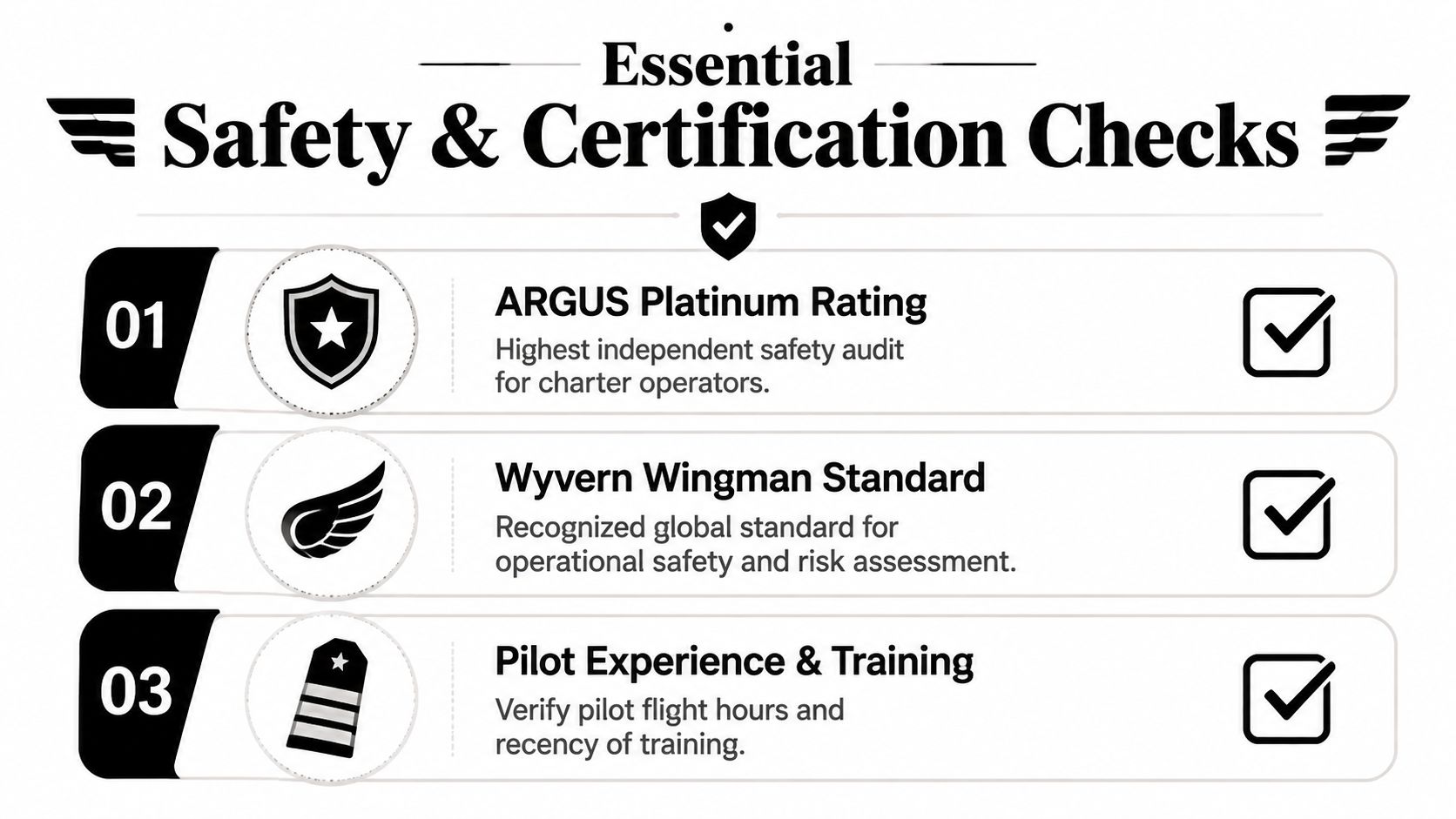
Use this as your checklist before you send money:
- Certificate holder: confirm the legal operator, not just the broker.
- Audit standard: ask whether the aircraft is under Wyvern Wingman or Argus Gold/Platinum review.
- Tail verification: make sure the exact aircraft on the quote is the one tied to the rating.
- Crew confidence: ask how long the crew has been assigned to that tail.
- Maintenance clarity: confirm the aircraft isn't being sold to you on a stale availability note.
If a quote looks unusually low and the operator gets defensive when you ask for the audit trail, move on. In private aviation, weak documentation usually means more surprises later, not fewer.
Booking Timeline and the 24-Hour Preflight Confirmation
A clean charter booking is mostly a timeline problem. You request the quote, the operator confirms the aircraft, the contract gets signed, the deposit lands, and then the final details need to lock before departure. Skip one step and you usually pay for it at the airport.
What should happen before departure
For short-notice Oklahoma City flying, same-day and next-day departures can be realistic, but the better habit is to ask early and force the operator to commit to specifics. Don't just accept a “yes, we can do that.” Get the tail number, get the crew assignment, and get a clear dispatch window.
The 24-hour preflight confirmation should arrive the day before departure. It should contain the tail number, crew bios, weather briefing, passenger manifest, and any catering or ground-transport notes. If any of those pieces are missing, ask for them immediately. That's not nitpicking, that's how you keep the flight from turning into a series of last-minute calls.
No manifest, no clean departure. If the operator can't finalize the flight details the day before, don't assume the morning of departure will be smoother.
If you're booking out of Wiley Post or Will Rogers, the logic is the same. Confirm the airport, confirm the operator, and confirm the exact aircraft that will show up. For a first booking, that discipline matters more than trying to chase a shiny cabin photo or the cheapest available quote.
The most reliable workflow is easy to repeat:
- Request the quote with route and headcount.
- Review the aircraft category, not just the sticker rate.
- Ask who holds the certificate and which safety audit applies.
- Sign only after the contract matches the mission.
- Check the 24-hour confirmation for the tail, crew, weather, and manifest.
If any piece is fuzzy, don't force the trip. Oklahoma City has enough charter volume to support a cleaner option when you insist on the details.
Avoiding Repositioning Fees Through Local Sourcing
Repositioning is the most annoying fee in on-demand charter because it hides inside the quote until the end. It happens when your aircraft isn't already near Oklahoma City, so the operator has to fly it in before your leg even starts. You're paying for movement you didn't ask for.
Why local sourcing changes the invoice
A locally sourced aircraft beats a generic broker quote. If the tail is already based in or frequently operating from OKC or KPWA, the operator can often avoid the extra positioning leg entirely. That's why a good quote should always say where the airplane is sitting before it talks about the hourly rate.
On a short route like Oklahoma City to Dallas, the difference can be sharp even when the aircraft category stays the same. A repositioned quote can look reasonable on the surface and still carry a hidden cost because the inbound leg gets baked into the billing. A locally sourced jet on the same trip is cleaner, faster to dispatch, and usually easier to defend when you compare the invoice line by line.
The practical move is simple. Ask for aircraft base location, then ask whether the tail is already near the departure airport. If it isn't, ask what the repositioning leg costs and whether there's an aircraft based closer to Oklahoma City. That one question saves more money than most buyers realize.
The Haute Jets model is built around sourcing from owner-operators near the departure city, which is exactly the right structure for this problem. If the aircraft is already positioned near the metro area, you're much less likely to get padded by a deadhead leg that should've never been on your bill in the first place.
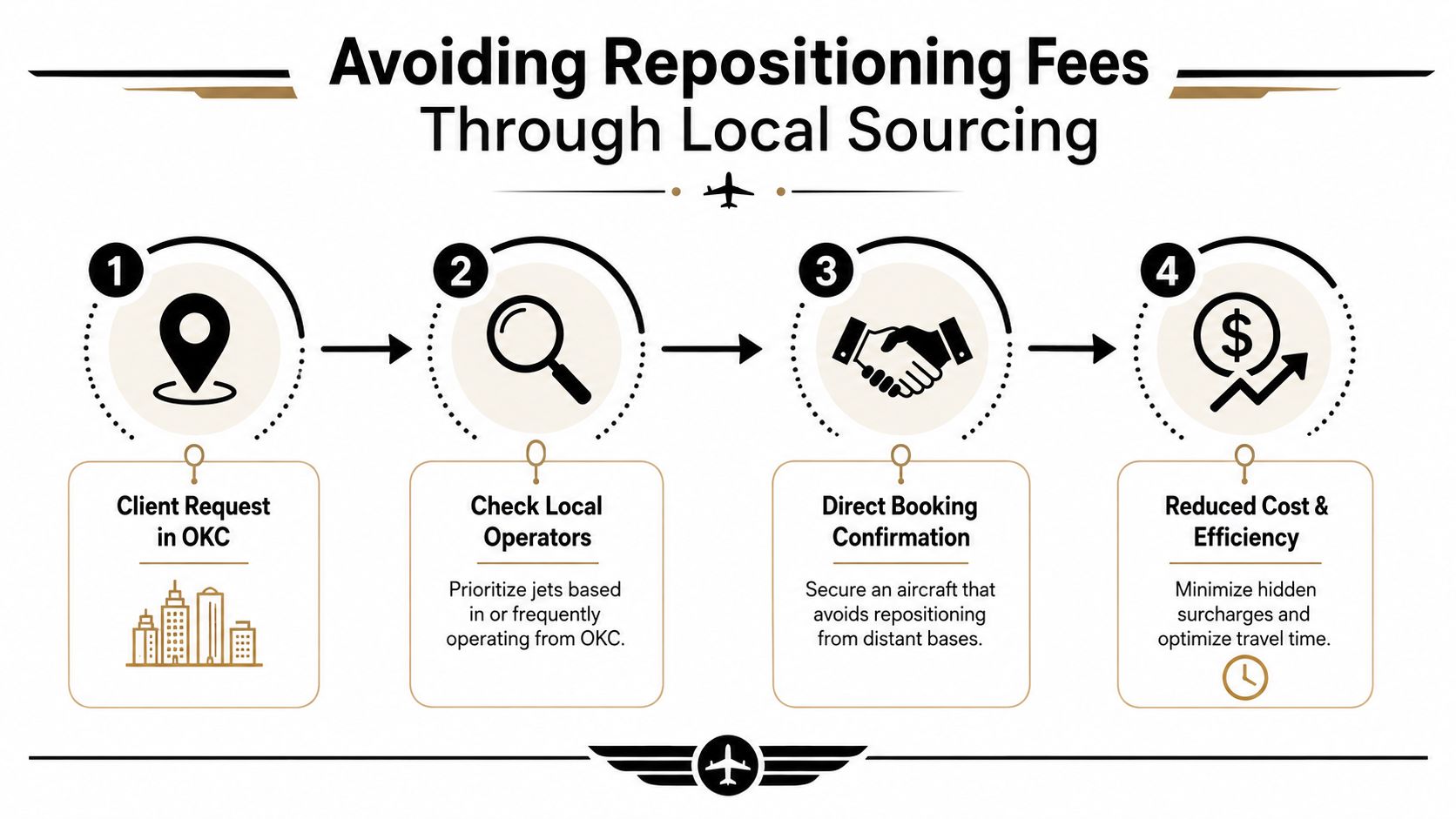
Use this sequence every time:
- Client request in OKC: give the route, date, passengers, and luggage.
- Check local operators: prioritize aircraft already based near the city.
- Direct booking confirmation: make sure the quoted tail avoids a distant reposition.
- Reduced cost and efficiency: remove hidden surcharges before they land on the invoice.
A charter that starts with a local aircraft base is cleaner. It shortens the risk chain, reduces markup, and gives you a better shot at your desired departure time.
On-the-Ground Details That Change the Experience
Once the airplane and price are settled, the ground game decides whether the trip feels polished or clumsy. Private flying should not turn into a scavenger hunt for a car, a snack, or a clear pickup point.
FBO parking and curbside planning
At the airport, the fixed-base operator, or FBO, is where the trip really starts. For Oklahoma City departures, you want a charter setup that lets vehicles pull in easily, load quickly, and avoid awkward handoffs. If you're traveling with a team, family, or extra luggage, tell the operator in advance so the ramp staff knows what's coming.
Ground transport should be confirmed before the airplane moves. Black car, rideshare, or hotel shuttle, it doesn't matter which one you use as long as it's booked and timed against the aircraft arrival. Last-minute transport planning creates more friction than it should, especially if your arrival airport is different from your departure point.
Catering works the same way. Light snacks are easy, but if you want a specific vendor or a more detailed menu, ask early and don't assume the FBO will guess right. Let the FBO handle basic catering when the trip is simple. Push for a specific vendor only when the meal itself matters to the mission.
Pets and practical cabin habits
Pet policies vary by operator and aircraft, so don't assume the answer is yes until you've asked. Disclose the pet at booking, confirm the cabin setup, and ask whether any cleaning rules or carrier requirements apply. Private aviation makes pet travel far easier than commercial flying, but only if the crew knows what's boarding.
A short pet checklist keeps you out of trouble:
- Advance disclosure: say the pet is coming when you request the quote.
- Cabin suitability: confirm the aircraft can accommodate the animal comfortably.
- Cleaning expectations: ask about post-flight fees or handling rules.
- Ground timing: make sure the pet's pickup and drop-off don't delay boarding.
The best Oklahoma City charter is the one where the aircraft, airport, ground car, and catering all line up before you arrive. If those pieces are loose, the flight still happens, but the experience stops feeling private.
If you want a cleaner way to book private jet charter Oklahoma City without paying for avoidable repositioning, Haute Jets can source aircraft near your departure point and line up the flight details before you commit. Start with your route, passenger count, and target date, then visit Haute Jets and ask for a quote that shows the aircraft, the airport, and the all-in cost.