
Most Mexico travel coverage gets Los Cabos wrong. The official posture for Baja California Sur is Level 2: Exercise Increased Caution, not the broader Mexico-wide Level 3 framing many travelers remember, and U.S. government personnel face no travel restrictions in the state’s tourist areas according to OSAC’s advisory summary. That distinction matters.
If you’re planning a luxury trip, the right question isn’t “Is Mexico safe?” It’s “What does the travel advisory for Los Cabos Mexico mean for my route, property, transport, crew, and daily movement?” Those are different questions, and they require different answers.
For a high-net-worth traveler, Los Cabos is not a place for denial or drama. It’s a place for disciplined logistics. The resort corridor is built for international visitors, the operating environment is familiar to premium hospitality teams, and with smart handling on the ground, the risk profile is manageable.
What fails people in Los Cabos usually isn’t cartel theater. It’s preventable sloppiness. Unvetted transfers. Late-night improvisation. Flashy routines. A villa arrival with no transport confirmation. A crew that got a flight plan but no local security brief.
This guide is written for that reality. It treats the travel advisory for Los Cabos Mexico as a practical operating document, not a headline. You’ll get the official interpretation, the on-the-ground picture, entry requirements, movement strategy, private aviation protocols, and the emergency framework that should be in place before you depart.
Decoding the Official Travel Advisory for Los Cabos
Treat the advisory as an operating brief, not a headline. For Los Cabos, the official posture is straightforward. Baja California Sur sits under a Level 2 advisory, which means increased caution for crime, not special movement restrictions inside the state’s main tourist zones, as noted in the OSAC advisory summary.
For a private aviation traveler, that distinction matters immediately. A Level 2 destination supports normal premium travel patterns with tighter controls around arrival, transfer, and personal routine. It does not call for the kind of restrictive ground posture, daylight-only assumptions, or route limitations associated with higher-risk parts of Mexico.
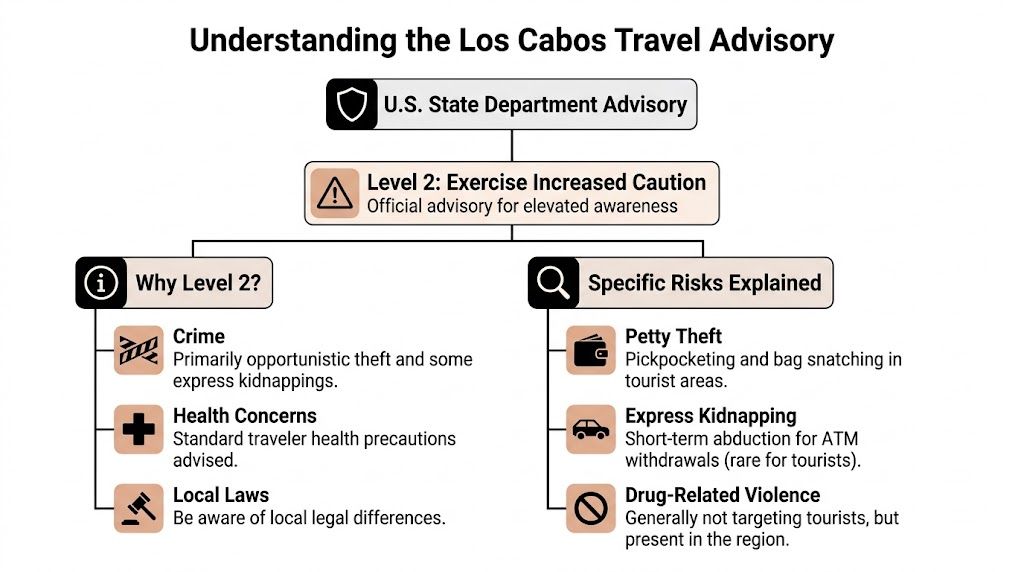
What Level 2 means in practice
Level 2 rewards disciplined planning.
For Los Cabos, I want five things in place before wheels down:
- Prearranged airport or FBO transfer: Your vehicle, driver, passenger count, and destination should be confirmed before departure day.
- Fixed arrival chain: Aircraft to ramp handling, ramp handling to escort point, escort point to vehicle. No improvisation.
- Known venues only: Use established resorts, residences with professional management, reputable marinas, and concierge-screened operators.
- Controlled exposure: Keep watches, jewelry changes, cash handling, and public schedule talk out of sight.
- Crew instructions: Flight crew should have their own transport, hotel plan, and local contact protocol instead of relying on ad hoc decisions after landing.
That is the right reading of the advisory for this market. It is a cue to tighten procedures, especially at transition points where affluent travelers become predictable and visible.
What the advisory does and does not signal
It signals a real but manageable crime environment. It does not signal that Los Cabos should be treated like a no-go destination.
The practical risk is not the resort corridor itself. The practical risk is sloppy execution around it. A family arrives on a charter, assumes the FBO handoff will be orderly, then discovers the driver cannot be identified, luggage sits exposed during a delay, and two members of the party peel off into separate cars. That is how avoidable exposure starts.
This is also why private flyers need a more precise interpretation than commercial passengers. Commercial travelers usually move through a crowded, structured process. Private aviation clients move faster, with more privacy and more visible wealth. That is an advantage only if the ground sequence is controlled.
The correct client posture
Use the advisory to screen decisions fast. If a plan introduces uncertainty, remove it.
A sound Los Cabos plan usually follows this sequence:
- Confirm the arrival handoff before departure
- Move directly from the airport or FBO to the resort or villa
- Book dining, marine activity, and nightlife through vetted channels
- Keep the party on one transport plan, especially after dark
- Assign one lead contact for the principal, one for staff, and one for crew
That is how experienced travelers read a Level 2 advisory in Los Cabos. They do not overreact. They control the handoffs, reduce exposure, and keep the trip easy because the logistics are tight.
Understanding the On-The-Ground Reality and Risks
The best counterweight to bad headlines is localized reality. In Los Cabos, that reality is more stable than outsiders assume. According to the 2026 Traveler Safety Index coverage from The Cabo Sun, 90% of tourists in Los Cabos report feeling safe, and Cabo San Lucas scores 94/100 for stability.
That doesn’t mean “drop your guard.” It means the resort ecosystem functions as a protected tourism zone, and most visitors experience exactly that.
What the actual risks look like
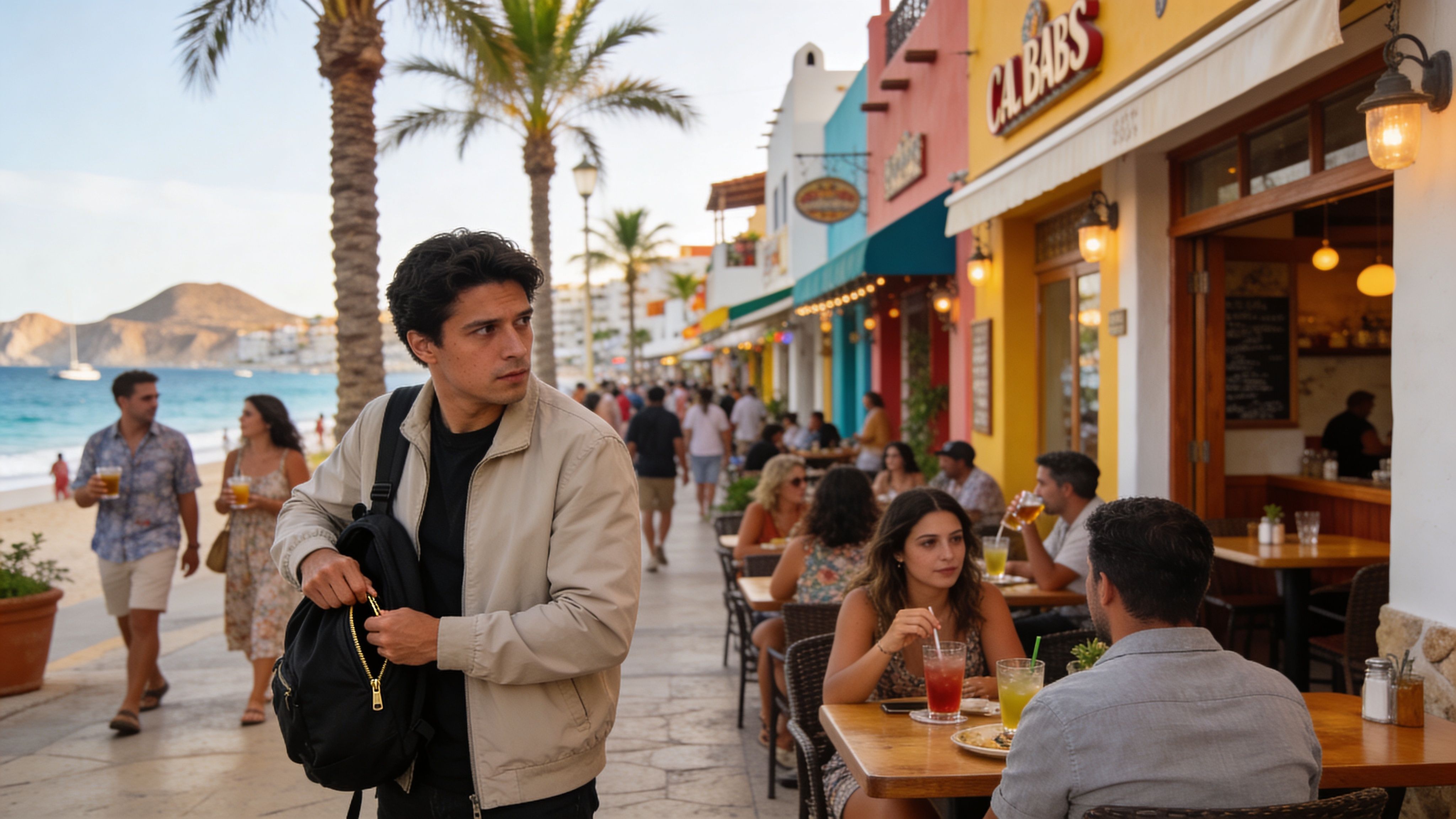
For luxury travelers, the most relevant threats are usually low-level and situational:
- Petty theft: Bags, phones, wallets, and loose beach items are the easiest targets.
- Scam pressure: Inflated pricing, pushy sellers, and transport confusion can catch distracted arrivals.
- Nightlife drift: The longer the evening goes, the more likely people abandon their original plan and accept bad transport choices.
- Unguided excursions: Off-road, marine, or remote outings become riskier when you improvise instead of booking reputable operators.
The dominant mistake is thinking “safe destination” means “frictionless everywhere.” It doesn’t. Los Cabos is safest when you stay inside predictable hospitality channels.
Separate national noise from local operating conditions
National reporting on Mexico often collapses all regions into one narrative. That’s analytically useless.
Los Cabos benefits from geography, a tourism-centered economy, and a mature luxury service infrastructure. In practice, a guest moving between SJD, a major resort, a recognized golf club, and a pre-booked dinner has a very different exposure profile from someone moving unpredictably through unfamiliar areas after dark.
Most problems for affluent travelers in Cabo start with unnecessary improvisation, not the destination itself.
What deserves your attention besides crime
Security is only part of the equation. Weather and excursion judgment matter too.
Use this quick lens before you approve an activity:
| Decision area | Good choice | Bad choice |
|---|---|---|
| Airport transfer | Pre-arranged, name-matched pickup | Negotiating on arrival |
| Boat charter | Reputable, concierge-booked operator | Dockside impulse booking |
| Night out | Fixed venue plan and return car | Venue hopping without transport lock |
| Adventure outing | Guided, insured operator | Unguided remote excursion |
This is the practical interpretation of the travel advisory for Los Cabos Mexico. Stay inside vetted systems and the destination works very well. Drift outside them without a plan and you create your own problem set.
Current Entry and Health Requirements for 2026
Many travelers waste time. They assume Mexico entry is casual, then discover that “easy” still requires organization. If you want a smooth arrival into Los Cabos, prepare like a professional traveler, not a vacationer winging it.
Your arrival checklist
Use this pre-departure standard:
- Valid passport: Carry a passport with adequate validity for international travel and verify details match your booking exactly.
- Immigration paperwork: Confirm the current arrival process with your carrier or handler before departure, especially if you’re flying private.
- Customs readiness: Keep declarations accurate and accessible. Don’t bury important paperwork in checked baggage or hand it to staff without review.
- Medication and health items: Pack essentials in your carry-on, with labels and supporting documentation if needed.
- Insurance documents: Have medical and evacuation coverage details available in digital and printed form.
If you’re arriving by private aircraft, the customs and immigration process is more efficient than commercial travel, but only if it’s coordinated correctly. Haute Jets Journal’s guide to the customs and immigration process when flying overseas in a private jet is worth reviewing before departure because it reflects that speed comes from preparation, not privilege.
What I recommend clients do
Don’t rely on memory. Build a one-page arrival brief for everyone traveling. It should include passport copy, destination address, local host or concierge contact, transport details, insurance summary, and emergency numbers.
Bring your own clarity. Border officials appreciate travelers who know where they’re staying, how long they’re staying, and who’s handling their onward movement.
For health planning, the right approach is conservative. Carry your own core medications, hydration support, and any physician-advised travel basics. Los Cabos is a comfortable destination, but comfort isn’t a substitute for preparation.
Actionable Strategies for a Secure Los Cabos Trip
Security in Los Cabos should be proactive, not theatrical. You don’t need a convoy. You need clean habits, vetted movement, and a low-friction routine that doesn’t create openings.
Start with transport. That’s the most common point where a polished trip gets sloppy.

The best publicly stated tactical advice comes from Visit Los Cabos. Their guidance notes that using dispatched app-based services like Uber from regulated stands reduces vulnerability by 40%, and that travelers can dial 911 or the Tourist Assistance line for a response time under 5 minutes in resort zones according to Visit Los Cabos Q&A guidance.
My recommended operating rules
Use these rules exactly as written:
- Lock transport before wheels down: Your driver should be identified in advance, not selected curbside.
- Move bag-to-vehicle fast: Don’t linger outside the airport comparing options.
- Keep the first stop simple: Go directly to the resort or villa. Skip the “quick grocery stop” unless it’s planned and necessary.
- Treat nightlife as a logistics event: Confirm departure and return transport before the first drink.
- Control beach exposure: Phones, watches, cards, and room keys get misplaced fast. For practical physical safeguards, this guide on how to keep valuables safe at the beach is useful because it addresses the exact theft pattern travelers ignore.
What discretion actually looks like
Discretion isn’t about pretending you aren’t affluent. It’s about not signaling your routines.
Don’t discuss villa location, aircraft type, shopping purchases, or dinner reservations in front of drivers, beach staff, or strangers. Don’t post your location in real time. Don’t let children or assistants wander with room numbers, wristbands, or loose devices visible.
Here’s a practical visual brief on the destination and travel flow:
Property and daily movement
Hotels generally handle access control better than many travelers realize. Villas vary widely. If you’re renting a private residence, insist on clear arrival protocols, named staff, gate control, and a simple guest access policy.
Field rule: Luxury without movement discipline is just expensive exposure.
For day-to-day movement, less is better. Choose fewer venues. Stay longer in each. Eliminate unnecessary road segments. The safer trip is usually the one with the calmer schedule.
Exclusive Advisory for Private Aviation Travelers
Generic travel content often falls short. Standard tourism advice assumes you’re arriving through a commercial terminal, moving with the crowd, and following public airport flows. That is not how a private client enters Los Cabos.
The primary issue under a Level 2 posture isn’t whether private aviation is viable. It is. The issue is whether your aviation team has translated the advisory into specific tarmac, FBO, customs, transport, and crew procedures. Most haven’t.

As noted by Escape to Cabo’s analysis of the information gap, private travelers under a Level 2 advisory need specific guidance on FBO security protocols at SJD, secure ground transport from the tarmac, and pre-flight crew briefings, areas that standard travel advice doesn’t address in their Cabo safety guidance.
What should be arranged before departure
For private arrivals into SJD, I recommend a written movement plan with these elements:
Handler confirmation Your operator or broker should confirm handling details, arrival procedures, customs sequence, and passenger handoff points in writing.
Ground transport chain The vehicle should be assigned before departure, with plate details, driver identity, and exact pickup procedure confirmed.
Passenger split planning If principals, family, staff, or security are moving separately, establish the order in advance. Don’t solve that on the ramp.
Crew lodging and movement Crew should have transport and hotel routing confirmed before landing, not arranged ad hoc after passengers deplane.
What matters at the FBO
Private terminals create privacy, but privacy isn’t the same as process. The strongest private movements are boring. Fast deplaning, controlled baggage handling, direct customs flow, immediate vehicle transfer.
Weak movements usually feature chatter, waiting, and last-minute confusion around bags or escort procedures.
Use this checklist:
- Names match exactly: Passenger manifest, IDs, and ground contact list should align.
- Baggage accountability is assigned: One person tracks hand-carry valuables and checked items.
- No free-form pickup zone: Drivers and greeters should be pre-cleared.
- No public linger time: Once cleared, depart promptly.
Crew briefing under a Level 2 advisory
Flight crews don’t need alarmist language. They need actionable local context.
A proper crew brief should cover:
- airport handling specifics
- ground movement expectations
- hotel routing
- late-night transport avoidance
- passenger confidentiality
- who to call if plans change after arrival
If the principal changes dinner locations, extends a marina stop, or asks for an unplanned road transfer, the crew shouldn’t improvise independently. One local point of contact should control revisions.
For travelers who want a broader operational primer, Haute Jets Journal’s piece on flying private to Mexico with Haute Jets is useful because it frames the practical differences between a standard international trip and a well-managed private arrival.
My bottom line for private clients
Private aviation gives you control. That only matters if you use it.
A disciplined private arrival in Los Cabos should feel nearly frictionless. Wheels down. Clear the formalities. Enter the vehicle you already know. Reach the property without improvisation. Brief the staff once. Then enjoy the destination.
That’s how affluent travelers should respond to the travel advisory for Los Cabos Mexico. Not with anxiety. With tighter choreography.
Emergency Preparedness and Medical Resources
Prepared travelers rarely need emergency support. Unprepared travelers need it at the worst possible moment. Build your response plan before departure and make sure every adult in the party has it saved offline.
Los Cabos Emergency Contacts
| Service | Phone Number |
|---|---|
| Emergency services | 911 |
| Tourist Assistance line | +52 624 105 0551 |
Adventure activities deserve special discipline. The Canadian government advisory notes that unguided adventure activities can increase risk, and recommends reputable, insured operators and Wyvern Wingman-rated ground transport, which it says helps support a 99% incident-free benchmark for corporate and private travelers in its Mexico travel guidance.
What should be in your medical plan
Your hotel concierge is not your medical strategy. You need:
- Primary insurance confirmation: Verify international treatment terms before you leave.
- Medical evacuation coverage: This is the piece many affluent travelers assume they have and often don’t.
- Medication continuity: Keep critical prescriptions in original packaging in your carry-on.
- Hospital preference list: Ask your property or travel advisor which local facilities regularly treat international patients.
- Activity screening: If an operator feels casual about waivers, transport, or weather, walk away.
If you’re unclear on evacuation billing and what U.S. coverage may or may not handle, this explainer on Medicare coverage for air ambulance services is worth reading before departure. It’s a useful reality check.
The standard I expect clients to meet
Everyone in the traveling party should know three things. Where they are staying. Who the local decision-maker is. How to trigger emergency assistance.
Haute Jets also publishes a broader private aviation safety overview that’s useful if your trip includes aircraft coordination, executive travel, or family movement with staff.
Don’t outsource preparedness to the destination. Los Cabos can respond well. Your job is to arrive with a plan worth responding to.
Final Recommendations for Your Los Cabos Journey
Here’s my direct read. Los Cabos remains a strong choice for luxury travelers who want sunshine, privacy, and a manageable security environment. The travel advisory for Los Cabos Mexico should not scare off a well-prepared client. It should sharpen the way you travel.
Treat the destination correctly. Interpret Level 2 as a call for discipline, not retreat. Keep your transport controlled. Keep your schedule tight. Book reputable operators. Don’t improvise after dark. Don’t confuse exclusivity with invulnerability.
The travelers who have the smoothest Los Cabos experience usually do less, but do it better. They arrive with documents in order, vehicles confirmed, villa or resort access structured, and one clear point of contact for any change. That’s why their trip feels effortless.
If you’re flying private, the value isn’t just comfort. It’s command over the details that matter most. A controlled arrival, reduced friction, tighter timing, and fewer exposure points all improve the trip before you even reach the hotel.
Los Cabos rewards travelers who respect logistics. Do that, and you can enjoy the destination for what it is. Relaxed, polished, and far safer in practice than the broad Mexico headlines suggest.
If you want complete control over your Los Cabos itinerary from aircraft selection to pre-flight confirmations and vetted operator standards, Haute Jets offers on-demand private charter access to 3,500+ Wyvern and Argus-rated aircraft worldwide, with no memberships or jet cards required.