
You're probably here because you've looked at a price, whether for a product, a service, or a private flight, and wondered a simple question: am I paying the actual price, or just the public-facing version of it?
That question sits at the heart of what wholesale pricing is. The term is commonly understood in the context of stores buying inventory in bulk. That's correct, but incomplete. In practice, wholesale pricing is about getting closer to the source cost by removing layers between buyer and supplier.
For physical goods, that usually means buying larger quantities. For premium services, the logic changes. You may not be buying “in bulk” at all. You may be paying less because someone removed an unnecessary intermediary, a padded margin, or a logistics charge that shouldn't have been there in the first place.
That distinction matters more than ever. Many guides still define wholesale as a static business-to-business discount, often 30–50% below retail, yet they miss how dynamic wholesale pricing works in service sectors like aviation, where rates can change with real-time asset availability rather than fixed volume purchases, as noted by SimplyDepo's discussion of wholesale pricing.
Haute Jets Journal is a useful place to examine that idea because private aviation exposes the concept clearly. In that market, the biggest difference between a retail-style quote and a wholesale-style quote often isn't “bulk.” It's transparency.
Understanding the True Cost of Your Purchase
You buy a watch, a case of wine, or a charter flight. The invoice looks polished. The service feels premium. But polished pricing and efficient pricing aren't the same thing.
A lot of buyers assume price reflects intrinsic value alone. In reality, price often reflects distribution structure. Every layer between the source and the end buyer can add cost. Sometimes that added cost pays for real work. Sometimes it pays for convenience. Sometimes it covers a markup the buyer never sees broken out.
Where people get confused
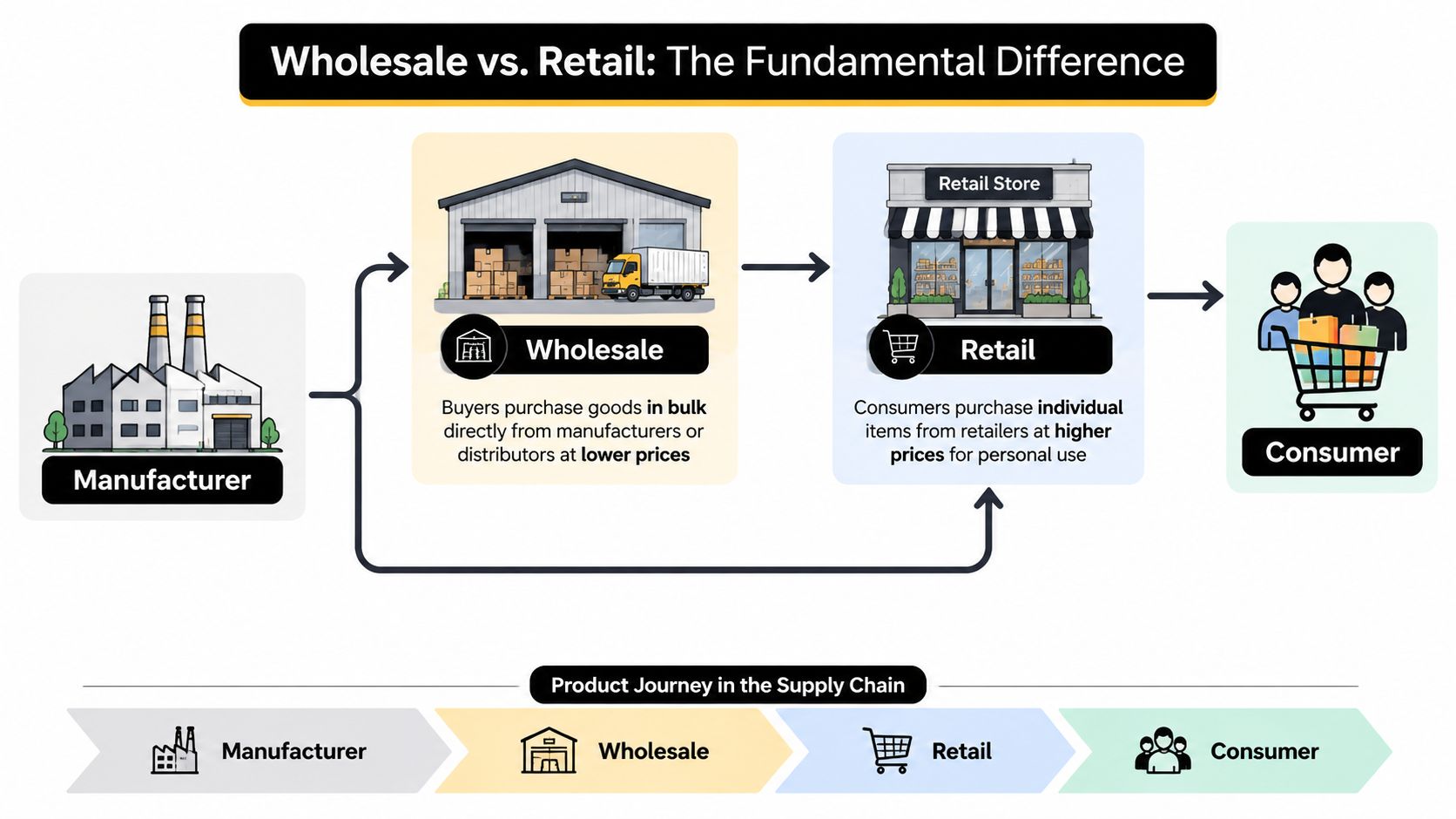
The confusion starts because wholesale pricing is usually taught through product examples. A manufacturer sells to a wholesaler. The wholesaler sells to a retailer. The retailer sells to the consumer. That model is real, but it conditions people to think wholesale only exists when boxes move through warehouses.
That's too narrow.
Practical rule: Wholesale pricing isn't just “buying more.” It's buying closer to the source cost structure.
In goods, that often means larger order sizes. In services, it can mean direct access to the underlying provider. A business buyer may secure a better rate because the seller avoids retail marketing, customer acquisition costs, or one-off fulfillment overhead. In private aviation, a flyer may access a lower quote because the aircraft is sourced more directly and the quote excludes inflated routing costs.
The real value of wholesale access
A discerning buyer should ask three questions:
- Who is providing the product or service? The named seller may not be the original source.
- Which costs are structural? Materials, labor, fuel, crew, maintenance, and overhead are part of the base economics.
- Which costs are layered on later? Brokerage spreads, retail presentation, and avoidable logistics can raise the final price.
That's why understanding wholesale matters. It gives you a pricing lens. You stop treating every quote as fixed and start examining how it was built.
Wholesale vs Retail The Fundamental Difference
A client booking a private jet often sees one number on the quote. Behind that number, there may be very different pricing models. One provider is showing you direct aircraft access with operating costs and a clear margin. Another is adding layers of sourcing fees, routing markups, and intermediary spread. Both are selling the same trip. The economics are not the same.
That is the cleanest way to understand wholesale versus retail.
For physical goods, the distinction is easier to see. A watchmaker sells to a trade buyer at one price. A boutique then adds showroom rent, staff, merchandising, and its own profit margin before selling to the customer. The retail buyer is paying for the product and for the buying experience around it.
Services follow the same logic, but the layers are less visible.
In wholesale pricing, the buyer gets closer to the original cost structure. In retail pricing, the buyer pays a final customer price that includes added selling, support, presentation, and margin. A reseller sits between those two points. It buys access from one party and sells it onward with another markup.
What changes between the models
The difference is about economic position, not just a lower or higher number.
| Characteristic | Wholesale Pricing | Retail Pricing | Reseller Pricing |
|---|---|---|---|
| Typical buyer | Businesses, distributors, trade buyers | Individual consumers | Businesses or individuals buying to sell again |
| Purchase pattern | Usually bulk or contract-based | Usually single-unit or small quantity | Varies by model |
| Position in supply chain | Earlier | Final stage | Between source and end buyer |
| Price level | Lower per unit | Higher per unit | Marked up from acquisition cost |
| Main value | Access to source economics | Convenience, presentation, service | Distribution, market access, curation |
Why the gap exists
For goods, wholesalers usually sell at a price that still leaves room for the retailer to earn its margin. The U.S. Chamber of Commerce explains the basic relationship clearly in its guide to wholesale vs. retail. The wholesaler earns on efficient distribution and larger-volume transactions. The retailer earns on customer access, merchandising, service, and smaller individual sales.
Private aviation translates that same principle into service form.
A retail-style jet quote may include extra commercial layers because the seller is not close to the aircraft operator or owner. A wholesale-oriented model removes part of that stack. The savings do not come from buying ten flights at once the way a store buys ten cases of inventory. They come from reducing intermediary fees and quoting closer to the actual operating economics of the trip. If you want to see how those trip costs are built, this guide to private jet charter cost breakdowns gives useful context.
Wholesale pricing sits closer to source economics. Retail pricing sits closer to end-customer packaging and convenience.
Why reseller pricing needs a separate category
Reseller pricing often gets mistaken for wholesale because the seller did not create the product or operate the service directly. But a reseller is not automatically offering source-level economics.
A reseller may buy from a wholesaler, a distributor, a marketplace, or another broker and then add its own spread. In luxury services, that distinction matters. If your goal is cost transparency, ask one practical question: is this quote built from direct supply access, or from someone else's quoted price plus another margin?
That question changes how you read the number in front of you.
How Wholesale Prices Are Calculated
A wholesale price starts with a simple question: what must the seller recover before anyone else in the chain adds value or margin? In goods, that usually means production cost. In services, it means the direct cost of delivering the job.
The math is straightforward, but the inputs matter.
The two formulas you should know
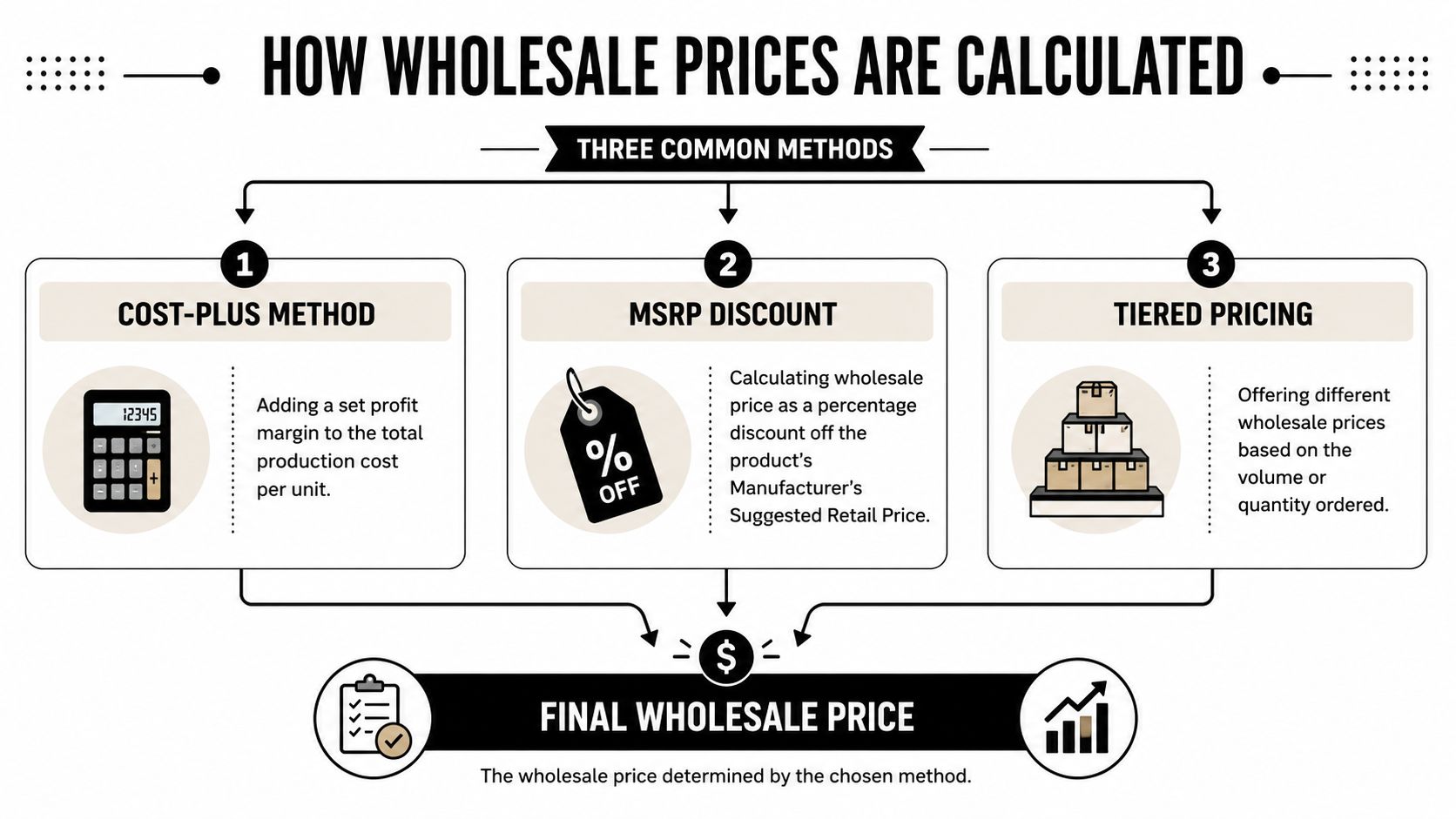
The first method is cost-plus pricing. A seller totals its direct cost, then adds a markup.
Formula: Wholesale Price = Cost × (1 + Markup %)
The second is margin-based pricing. Here, the seller begins with the profit margin it needs to keep and solves backward to a price.
Formula: Wholesale Price = Cost ÷ (1 − Margin %)
The difference sounds minor, but it changes how people talk about price. Markup is added on top of cost. Margin is the share of the final selling price the seller keeps after cost. The two are related, but they are not interchangeable.
For example, if an item costs $15 and the seller wants a 50% gross margin, the math is:
$15 ÷ (1 − 0.50) = $30
The same logic appears in wholesale pricing references from Shopify's wholesale and retail pricing guide, and margin formulas are also commonly taught in finance and accounting resources such as Buyers Connect AI, where pricing discussions often separate markup from margin for procurement decisions.
A simple way to read the result
Using that $15 to $30 example, the wholesale price is not just a random midpoint between cost and retail. It is the supplier's attempt to cover cost, protect its own economics, and still leave room for the next seller.
If the retailer later sells that item for $60, each layer is paying for a different job. The supplier pays for making or sourcing the product. The retailer pays for customer acquisition, presentation, service, and transaction handling.
That same framework helps with private aviation, even though no physical inventory changes hands. Replace manufacturing cost with trip economics such as aircraft availability, crew, fuel, airport fees, and repositioning. Then ask whether the quote adds one commercial layer or several. A useful reference point is this breakdown of private jet charter cost components, because it separates operating costs from sales markup.
Other methods businesses use
Some sellers use absorption pricing, which rolls overhead into the base cost before adding profit. A manufacturer might include rent, equipment, and administrative labor. A charter seller might include internal service overhead before presenting a final rate.
Others use MSRP discounting. The supplier starts from an intended retail price and gives trade buyers a set discount. The National Retail Federation explains MSRP as the manufacturer's suggested retail price, which is often used as a reference point rather than a rule.
Tiered pricing is another common model. The unit price falls as order size, contract size, or booking commitment rises. In aviation, the equivalent is often access-based rather than volume-based. A buyer may get closer to source pricing because the provider has direct operator access, not because the buyer purchased ten flights in a pallet-sized bundle.
Wholesale pricing is a pricing structure built from source cost and required margin, then shaped by how much of the selling chain remains between supplier and buyer.
That is why formula alone never tells the full story. Two quotes can use the same math and still land far apart if one starts from direct cost inputs and the other starts from another intermediary's marked-up quote.
Applying Wholesale Models Across Industries
A buyer sourcing linen for a hotel, software licenses for a regional sales team, or flight time for a chief executive faces the same question: how many layers sit between the source and the final price?
That is the thread that connects wholesale models across very different industries. The product changes. The buying logic does not. Wholesale pricing gives the buyer a rate shaped by a closer relationship to the source, whether that source is a factory, a producer, a software vendor, or an aircraft operator.
Three industries, three versions of wholesale
In fashion, a department store buys a collection before any individual customer walks in and chooses a single piece. The store pays for inventory access and resale margin, not the retail experience built for a shopper browsing one item at a time.
In food service, a restaurant buys ingredients on terms that reflect repeat demand and operational use. It is not paying for consumer packaging, direct-to-home fulfillment, or the marketing costs attached to ecommerce sales. The pricing structure matches the role of the buyer.
Software follows the same principle in a less visible form. A business that licenses seats for a whole team often pays a lower effective rate per user than an individual subscriber, because the vendor is selling broader usage through one commercial relationship instead of many small retail transactions.
Private aviation belongs in the same discussion.
The service is high-value and on-demand, but the pricing stack still depends on who controls supply, who presents the quote, and who adds margin along the way. In goods, wholesale often comes from buying more units. In aviation, it often comes from removing layers between the traveler and the aircraft source.
That distinction matters. A client booking one charter is not trying to buy in bulk like a retailer filling a warehouse. The client is trying to avoid paying extra intermediary fees on a single, expensive purchase. In that sense, aviation offers a cleaner example of wholesale logic than many physical goods categories.
A practical way to see that structure is to compare direct private jet pricing models with conventional retail-style charter quotes. The point is not that every flight is inexpensive. The point is that the quote sits closer to the operating source.
For buyers who want a broader view of how procurement logic changes across categories, Buyers Connect AI is a useful reference point because it centers the buying process itself, not just the sticker price.
The Haute Jets Model Direct-to-Owner Wholesale Pricing
Private aviation exposes a weakness in the standard textbook definition of wholesale. You aren't ordering fifty flights to earn a discount. You're trying to avoid paying retail-style padding on a single trip.
What wholesale means in charter
In business aviation, wholesale pricing is often described as a Net/Net structure. That means the quote reflects the operator's direct cost basis before brokerage markups and certain end-user fees are layered on. The point isn't a cosmetic discount. The point is transparency.
That's why direct sourcing matters. If the aircraft owner-operator or a closer operational source provides the quote, the buyer sees pricing that's built from aircraft economics rather than from a retail brokerage stack.
Where charter pricing gets inflated
One of the biggest sources of inflation in conventional charter is repositioning. If the aircraft isn't near your departure city, someone has to move it to you before your actual trip begins. That movement costs money, and in many booking structures, the customer absorbs it.
Wholesale pricing in private jet charter eliminates repositioning fees that can inflate charter prices by 20–40% when conventional brokers or jet card programs source aircraft from farther away, as explained in Haute Jets Journal's charter pricing discussion.
That's a different idea from keystone pricing in retail goods. The savings don't come from ordering more units. They come from removing a logistics burden and intermediary markup that never needed to exist for that itinerary.
Why local aircraft sourcing matters
A local aircraft changes the economics immediately:
- Less ferry time: The aircraft doesn't need to travel as far before the paid leg begins.
- Cleaner quote structure: The buyer pays more directly for the trip being flown.
- Better comparison value: You can distinguish operator cost from sales-layer pricing.
This is also where direct-to-owner models become practical for high-end clients. A buyer doesn't need a membership to understand whether the quote reflects actual availability near the departure point or an expensive sourcing detour.
A transparent rate model becomes easier to evaluate when you can compare aircraft options by mission profile, cabin size, routing, and operating basis. Readers who want to see how that plays out in market-facing terms can review private jet pricing options.
A short explainer helps if you want to see the booking dynamic in motion.
Why this model changes the meaning of wholesale
For a physical product, wholesale often depends on quantity. For a private flight, wholesale depends on access. Access to the right operator. Access to the right aircraft. Access to a pricing model that doesn't conceal avoidable routing costs.
That's why the term deserves a broader definition. In high-value services, wholesale pricing can mean paying something much closer to source economics, even on a single transaction.
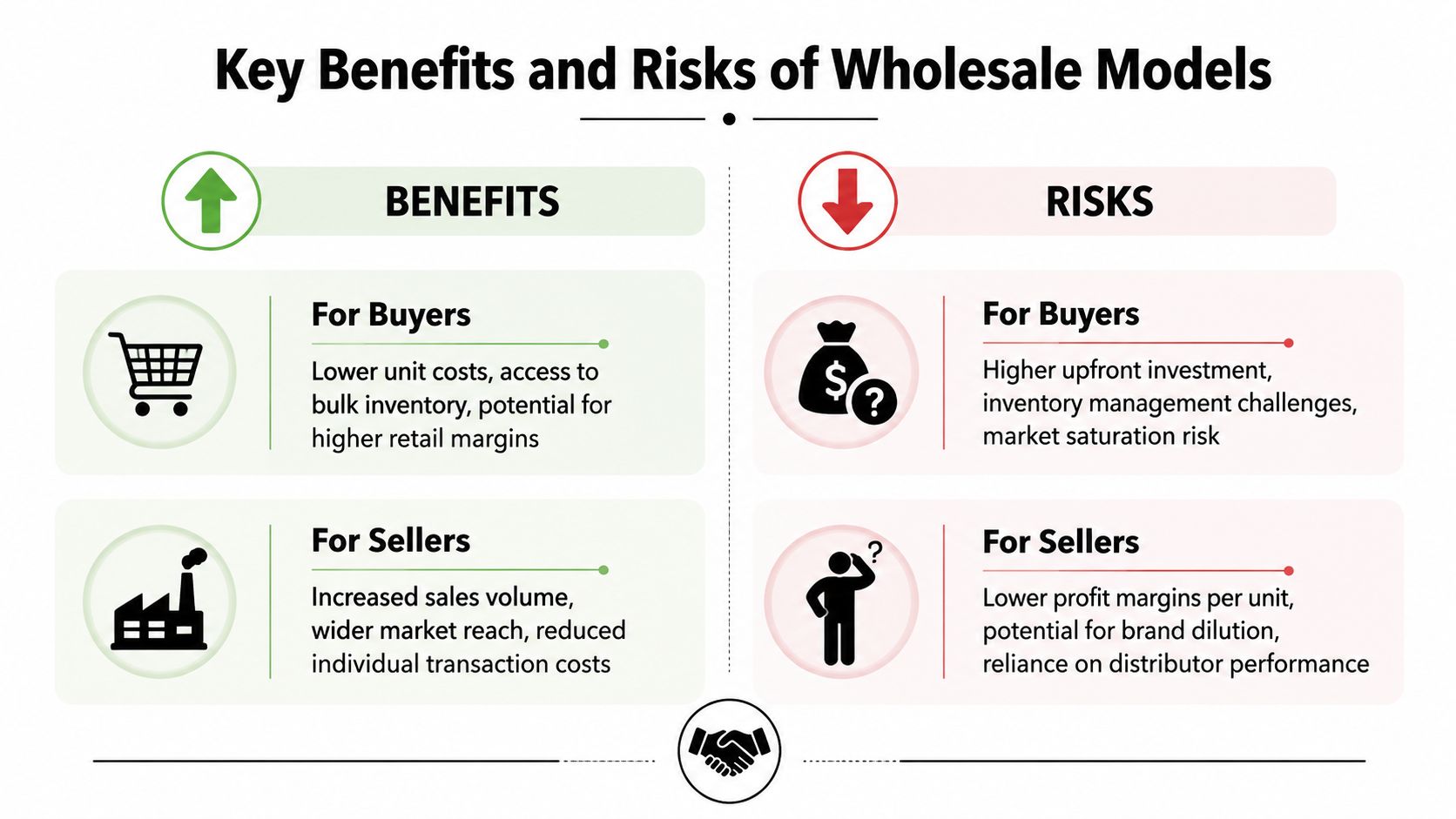
Key Benefits and Risks of Wholesale Models
Wholesale models create real advantages, but they also shift responsibility. That's true whether you're buying inventory for resale or evaluating a service quote that cuts out an intermediary layer.
From the buyer's side
Buyers usually pursue wholesale for three reasons.
- Lower acquisition cost: Paying closer to source pricing can preserve margin or reduce total spend.
- Better price visibility: Buyers can see whether they're paying for actual production and delivery or for distribution layers.
- More direct supplier access: Direct relationships often improve clarity around availability, specs, and terms.
In a goods business, the tradeoff is obvious. The buyer may need to hold inventory, manage storage, and forecast demand. In a service setting, that burden changes form. You may not hold stock, but you may need to evaluate quote quality more carefully.
The lower price isn't the whole benefit. The bigger benefit is knowing what you're actually paying for.
From the seller's side
Sellers often like wholesale models because they can simplify revenue flow.
| Perspective | Benefits | Risks |
|---|---|---|
| Buyer | Lower unit economics, more transparency, stronger purchasing leverage | Upfront commitment, operational complexity, weaker flexibility in some models |
| Seller | Larger order flow, reduced individual transaction effort, wider reach | Lower margin per unit, dependence on channel partners, less control over final presentation |
A manufacturer may accept lower per-unit profit in exchange for more predictable sales volume. A service provider may prefer direct wholesale-style relationships because fewer layers can reduce quoting friction and improve booking efficiency.
Risks that deserve attention
Not every wholesale offer is attractive. Buyers should watch for:
- False wholesale framing: Some sellers use the word “wholesale” when they mean only “discounted.”
- Opaque cost build-up: If you can't see what drives the quote, lower headline pricing may hide tradeoffs elsewhere.
- Mismatch with need: A buyer can overcommit to volume or complexity just to chase a lower sticker price.
For aviation buyers, another wrinkle is availability. A low-looking quote only matters if the aircraft, crew, routing, and service standards are appropriate for the mission. That's also why adjacent concepts like empty leg flights require careful reading. A cheaper rate can be real, but the constraints are often different from a standard on-demand trip.
Frequently Asked Questions About Wholesale Pricing
Can an individual get wholesale prices?
Yes, sometimes. In traditional commerce, wholesale usually targets business buyers because they purchase for resale or buy in larger quantities. But that isn't the only model.
In some service sectors, an individual can access wholesale-style pricing through a direct sourcing structure. The difference is that the discount comes from removing commercial layers, not from purchasing a large quantity.
Does wholesale always require a minimum order quantity?
No. This is one of the biggest misunderstandings in the topic.
Many guides discuss minimum order quantities through generic product thresholds such as 50 units, but that framing misses what some on-demand service markets are doing. The more interesting development is the zero-MQ paradox, where wholesale-style access can be available in a single-user transaction without annual membership fees, as described in MYOB's overview of wholesale pricing questions.
What is MOQ, in plain English?
MOQ means minimum order quantity. It's the smallest order a seller will accept under a wholesale arrangement.
For a product business, that might exist because setup, packaging, production runs, or freight only make sense above a certain level. For a service business, MOQ may not apply at all if the economics come from direct access rather than volume.
How do you negotiate wholesale terms?
Start with the cost drivers, not the discount request.
Ask questions like:
- What exactly is included in this price?
- Is this based on source cost or a resale schedule?
- What changes if volume, timing, or routing changes?
- Which fees are fixed and which depend on logistics?
That approach keeps the discussion commercial instead of emotional. It also reveals whether the seller understands its own economics.
A strong wholesale negotiation isn't about pushing harder. It's about identifying which parts of the price are structural and which parts are optional.
Is wholesale always the smartest choice?
Not automatically. Retail can be the better option if convenience, small quantity, customer support, or flexibility matter more than unit economics. Wholesale makes sense when the buyer understands the structure and can use the pricing advantage.
That's the answer to “what is wholesale pricing.” It's not a magic discount. It's a pricing model that gives certain buyers access to source-level economics under the right conditions.
If you want to evaluate private aviation through that lens, Haute Jets offers a direct-to-owner charter model that helps buyers compare aircraft options based on actual mission requirements and source-aligned pricing rather than membership layers or padded routing assumptions.