
You're probably doing what most first-time charter clients do. You've picked a route, narrowed the aircraft, and then someone sends over a proposal loaded with safety language you didn't ask for and don't fully trust. ARGUS Platinum. Wyvern Wingman. Registered. Rated. Audited. It all sounds important, but the wording is dense enough that many buyers default to price and availability.
That's a mistake.
In private aviation, the safest booking process is also the most efficient one. When you start with hard third-party standards, you eliminate weak operators early, reduce avoidable diligence, and make faster decisions with less risk. That's why a Wyvern ARGUS certified charter matters. It isn't branding. It's a practical filter for who should even be in the conversation.
Your Guide to Wyvern and ARGUS Safety Standards
A client calls and wants a same-day jet from New York to South Florida. They've got three quotes in hand. One is cheaper. One has the nicest cabin photos. One carries ratings they don't recognize. Their first question usually isn't about the cabin. It's this: what do these safety labels mean, and which ones matter?
The short answer is simple. Wyvern and ARGUS are the two names serious charter buyers watch because they are voluntary, third-party safety rating systems used in private aviation. They sit above basic operator self-description and force outside review. If you want a clean starting point for due diligence, that's where you begin.
What the labels are telling you
A safety rating only matters if it reflects real verification. With Wyvern and ARGUS, the value is that an external organization reviews the operator rather than letting the operator grade itself. That changes the conversation from promises to documentation.
If you want a baseline before you look at any quote, review Haute Jets safety standards. The point isn't to memorize industry jargon. The point is to know which credentials separate a professionally managed charter operation from a seller who only sounds polished.
Don't reward the best sales pitch. Reward the operator that can stand up to recurring outside scrutiny.
The standard I'd use as a buyer
For a high-value client, I wouldn't treat top-tier third-party ratings as optional. I'd treat them as table stakes. If an operator can't show a credible, current safety standing from a recognized outside system, I move on.
That doesn't answer every safety question. But it gives you a serious first screen, and that first screen saves time, money, and preventable exposure later.
Why Third-Party Safety Audits Are Non-Negotiable
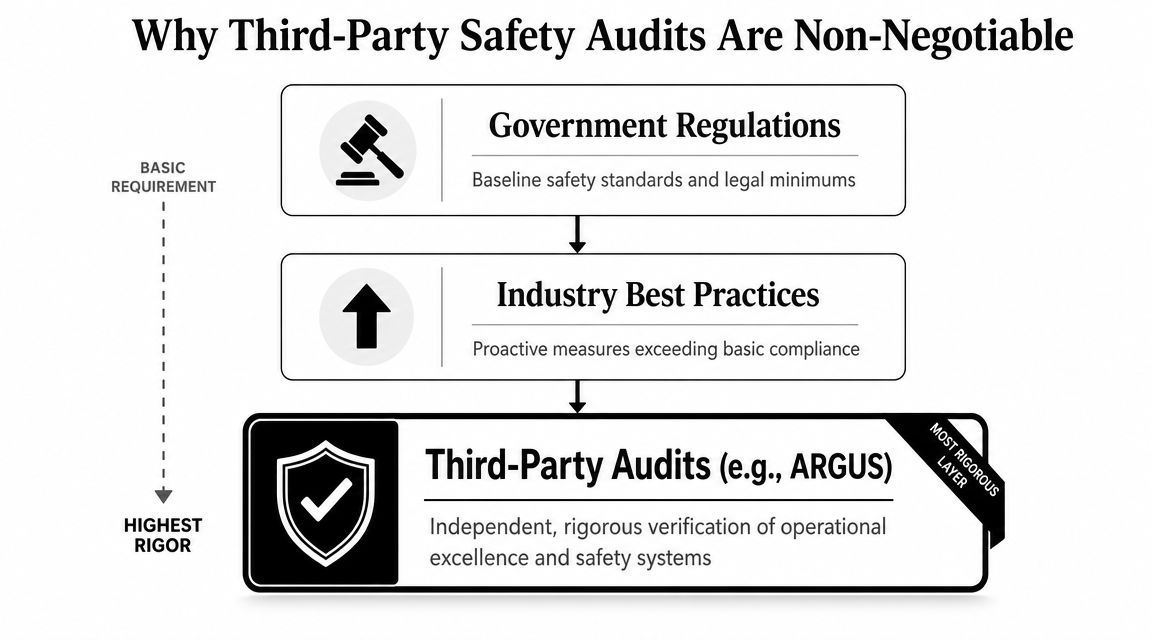
Government regulation matters. It keeps the floor in place. But the floor is not the ceiling.
A useful analogy is motorsport. Road-legal standards let a car operate lawfully. A Formula 1 team still runs a radically deeper system of checks, procedures, and performance discipline because baseline compliance isn't enough when the margin for error is thin. Charter aviation works the same way. Regulatory oversight establishes legal minimums. Third-party audits examine whether an operator runs a disciplined operation day after day.
What a serious audit adds
When I vet an operator, I'm not looking for a clean website. I'm looking for proof that the company can maintain standards consistently under pressure. Third-party systems matter because they push beyond the minimum legal checklist and look at how the operator performs.
That includes areas like:
- Crew quality: pilot qualifications, training records, and how credentials are documented.
- Maintenance discipline: whether aircraft records are current, organized, and aligned with a professional operating standard.
- Safety management: whether the operator has a documented Safety Management System and uses it as a working process, not a brochure phrase.
- Ongoing oversight: whether the rating depends on recurring review rather than a one-time snapshot.
For clients who also rely on white-glove trip planning, this same logic applies to the broader travel chain. A resource like the Explore Effortlessly travel concierge guide is useful because it shows how disciplined planning removes friction before it becomes a problem. In aviation, the consequences are higher, which is why independent audits matter even more.
What passengers can't verify on their own
Most buyers can judge cabin photos, catering, and timing. They can't independently inspect maintenance systems or validate pilot records before every trip. That's the gap third-party audits fill.
A strong operator should welcome that scrutiny. If a company resists independent verification, that tells you enough.
For a broader view on operational consistency, this Haute Jets Journal piece on private jet safety and reliability is worth reading. Reliability follows safety discipline. It doesn't exist separately from it.
Practical rule: If an operator only asks you to trust their internal standards, you're taking on diligence that should've been done before the quote ever reached you.
Decoding ARGUS Ratings Gold and Platinum
Your aircraft is fueled, the schedule is tight, and the people on board cannot afford an avoidable problem. That is where ARGUS matters. It gives you a disciplined way to separate operators with verified operating controls from operators with polished sales language.
Why ARGUS has operational value
ARGUS is useful because it turns safety diligence into a booking filter. Instead of relying on branding, you can review an operator through standardized data and an established audit process. ARGUS describes its CHEQ system as a registry used to review charter operators through factors tied to operational history, pilot background, and maintenance oversight in its ARGUS CHEQ and ratings overview.
That matters for cost as much as safety. Operators that maintain audit-ready records, stable training standards, and consistent maintenance programs tend to cancel less, substitute less, and create fewer last-minute problems. In charter, reliability starts there. It is one of the clearest ways strong safety discipline supports market efficiency instead of adding waste.
What Gold means in practical terms
Gold tells me the operator has cleared a recognized third-party review and is not asking you to accept safety claims on faith. It is a credible starting point.
For many trips, Gold can be acceptable. The right call depends on the mission, the aircraft, the route, and who is flying. If the passenger profile is straightforward and the operator's history is clean, Gold may fit the brief.
Still, I would not stop at the badge. I would confirm who is operating the flight, whether the specific aircraft matches the operator's usual standards, and whether the crew assignment supports the trip.
What Platinum changes
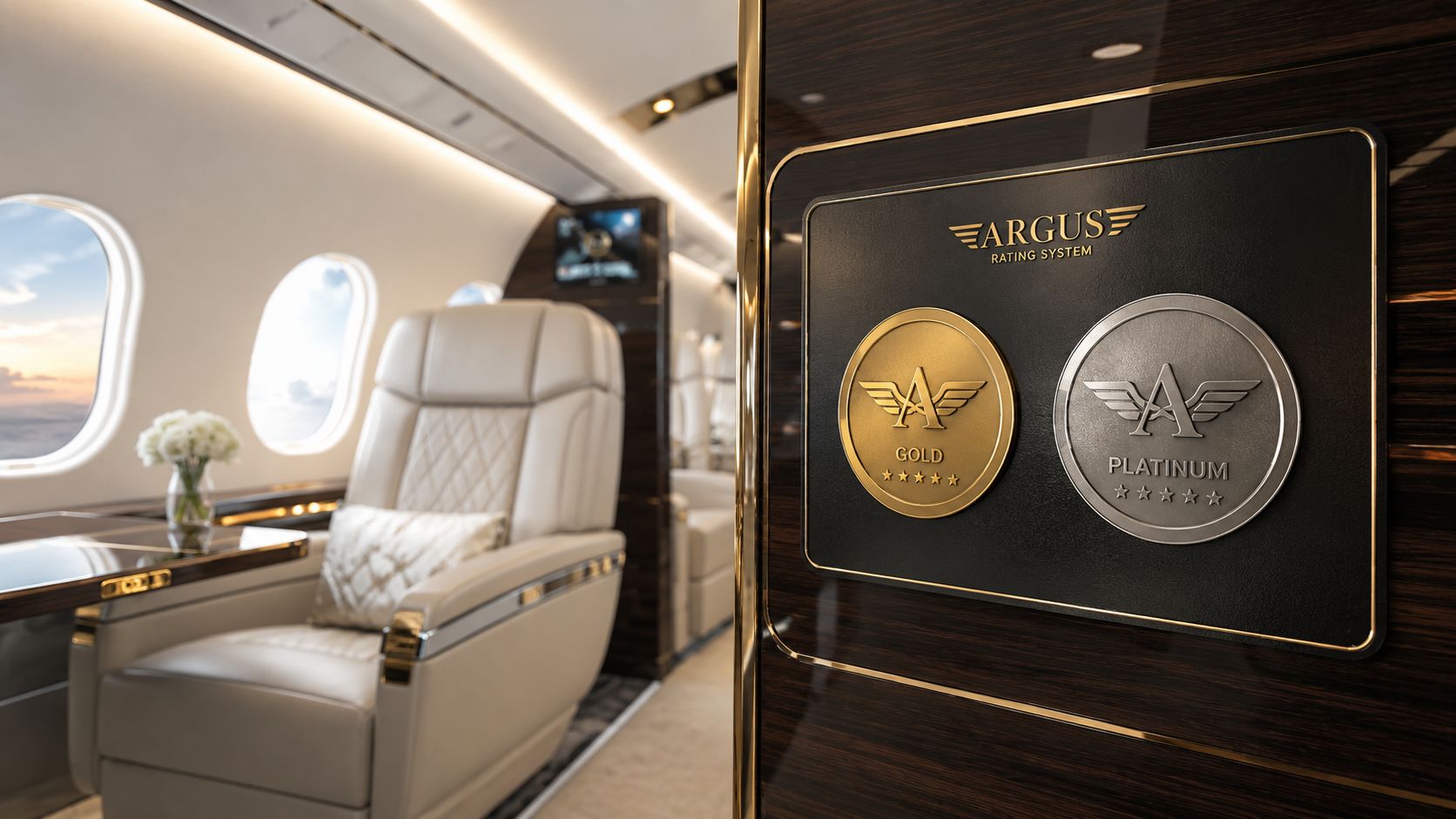
Platinum deserves more weight because it reflects a higher level of scrutiny. ARGUS states that Platinum includes an onsite audit and ongoing qualification requirements, which puts direct pressure on the operator to maintain standards between trips, not just during a file review, as outlined in the ARGUS Platinum operator rating criteria.
For a serious client, that distinction is important. Platinum reduces uncertainty. You are buying a stronger operating environment, not a nicer label.
That usually translates into better execution. The operator has invested in procedures, training discipline, recordkeeping, and audit performance. Those investments are not cosmetic. They help prevent the expensive failures clients experience, such as aircraft changes, crew issues, compliance delays, and avoidable service disruption.
For board travel, family office movements, and any itinerary with little tolerance for disruption, ARGUS Platinum should be the default preference. It protects the mission and usually lowers the total cost of charter by reducing execution risk.
Understanding Wyvern Ratings Wingman and Registered
Your aircraft is on the board, the schedule is tight, and the quote looks fine. Then the sales team says the operator is "Wyvern registered" and expects you to treat that as a complete safety answer. I would not accept that. In charter, vague labels create expensive risk.
Wyvern matters because it gives buyers an external way to check how seriously an operator submits to scrutiny. The key is reading the label correctly. Registered and Wingman do not carry the same weight, and treating them as interchangeable is a mistake.
Registered is a starting point, not a decision point
A Wyvern Registered operator has entered the system. That may help with visibility and basic screening, but it is not the level I would use to clear a flight for a principal, board team, or family itinerary with real downside if something goes wrong.
If a broker or operator stops at "registered," ask for the next answer immediately. Has the company earned Wyvern Wingman, and is that status current for the actual operator on your trip?
That distinction affects buying efficiency. Stronger standards reduce the time wasted chasing documents, questioning crew qualifications, or cleaning up avoidable changes late in the process.
Why Wingman carries more value
Wyvern describes Wingman as an audited status built around operator review and pilot credential verification through PASS, its pilot and aircraft safety survey process, on the Wyvern Wingman program page. That is what serious buyers should care about. Independent review of the operation. Verification tied to the people flying the trip. Ongoing status that has to be maintained.
This is not about paying extra for a fancy badge. It is about buying a lower-friction operating environment. Operators that submit to tighter outside review usually run cleaner records, tighter crew documentation, and more consistent trip execution. That protects the mission and cuts hidden costs.
What I look for in a proposal
I interpret Wyvern language exactly.
- Wyvern Registered: treat it as limited information, not clearance.
- Wyvern Wingman: verify that the status is current and tied to the certificate holder operating your flight.
- No clear Wyvern status: move on unless the operator can support the trip with equally strong third-party evidence.
One more point. Wingman does not guarantee a perfect trip. No rating does. It does give you a better filter, and better filters are how experienced buyers avoid cheap quotes that become costly charters.
If an operator cannot explain its Wyvern status in one clear sentence and verify it fast, I would question the rest of the operation too.
ARGUS Platinum vs Wyvern Wingman A Head-to-Head Look
At the top of the market, buyers usually end up comparing ARGUS Platinum and Wyvern Wingman. That's the right comparison because both signal a higher operational standard than baseline charter marketing language. The useful question isn't which badge looks better. The useful question is what each one emphasizes and how often that status must be maintained.
Side-by-side comparison
| Criterion | ARGUS Platinum | Wyvern Wingman |
|---|---|---|
| Position in system | Highest ARGUS level cited in available material | Highest Wyvern certification cited in available material |
| Audit method | Annual on-site audit | On-site audit |
| Pilot verification emphasis | Includes specified pilot flight-hour minimums and ongoing monitoring through CHEQ | Independent pilot verification through PASS |
| Safety system focus | Reviews crew qualifications, documented SMS, maintenance records, and insurance coverage | Reviews operator standards with pilot-level verification and recurring renewal |
| Recurring review cadence | Reviewed annually | One source states recertification happens every two years for certain tiers |
The practical difference
If I reduce both systems to buyer language, ARGUS Platinum feels especially strong on formal operating thresholds, database monitoring, and a defined annual review cycle. Wyvern Wingman stands out for operator audit discipline and pilot verification through PASS.
Neither rating should be treated casually. One industry article notes that ARGUS maintains records for thousands of aircraft and pilots, and another explains that the distinction between these systems matters because they help consumers compare operators beyond minimum regulatory requirements. The same source says Wyvern Wingman recertification happens every two years for certain tiers, while ARGUS Platinum is reviewed annually, which makes both ratings useful as recurring benchmarks rather than one-time trophies in this comparison of ARGUS and Wyvern ratings.
My recommendation
If you can book an operator that holds either current ARGUS Platinum or Wyvern Wingman, you're in a strong part of the market. If an operator holds both, even better. If they hold neither, I wouldn't pretend the savings are worth the trade.
The nuance matters for brokers. It shouldn't complicate the client's decision. Your standard should be simple: current, verifiable, top-tier third-party oversight.
How Top Safety Ratings Deliver Higher Value and Lower Costs
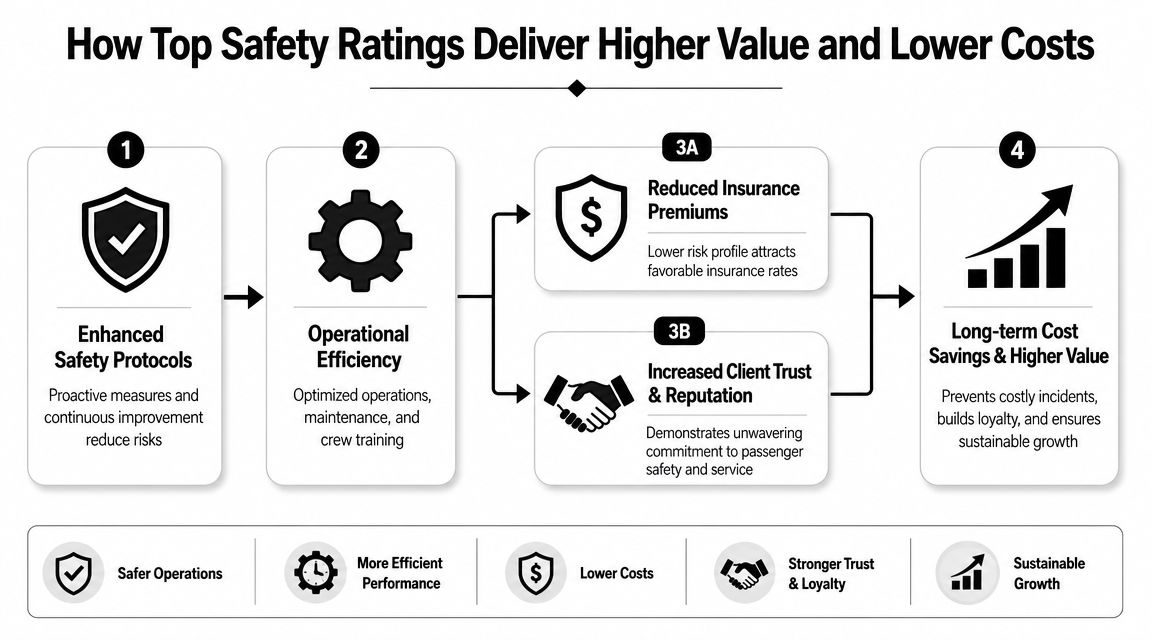
Clients often assume safety standards add cost. In charter, that's incomplete thinking. Strong safety filters often make the market cheaper to operate within because they reduce noise, shorten diligence, and prevent bad aircraft from entering the quote set in the first place.
That's the part many buyers miss. A Wyvern ARGUS certified charter isn't just about reducing risk in the air. It reduces waste on the ground.
Better filtering creates better pricing conversations
When your broker starts with operators that already meet recognized outside standards, the discussion moves faster to aircraft suitability, crew fit, airport practicality, and positioning cost. That's where real savings are found.
A weak safety screen creates hidden expense. You spend time evaluating operators that should never have been presented. You invite uncertainty into scheduling. You increase the odds of last-minute substitutions and avoidable operational friction.
Why disciplined operators create economic value
Well-managed operators tend to run cleaner systems. Cleaner systems usually mean better recordkeeping, stronger crew management, and fewer ugly surprises when the trip is close to departure. That matters because reliability has financial value, even when it doesn't show up as a line item.
Insurance is part of that broader picture too. If you want a plain-English primer on how risk profile connects to aviation coverage, this guide to boat and airplane insurance is a useful outside reference. The exact underwriting details vary, but the broader lesson is straightforward: risk management and cost are tied together.
Where this fits into the booking model
This is also why curated charter networks work when they're built correctly. Haute Jets states that it sources from 3,500+ owner-operators across 175 countries and charters exclusively from Wyvern Wingman and ARGUS Gold/Platinum-rated operators, which turns safety into the initial filter instead of the final afterthought. That structure supports local sourcing and can help reduce repositioning inefficiency before the trip is even priced, based on the publisher information provided.
If you want context on why clients specifically ask for rated aircraft, read the benefits of flying private on Wyvern-rated jets.
Buyers who treat safety as a luxury add-on usually overpay somewhere else, either in time, in uncertainty, or in preventable operational risk.
Frequently Asked Questions About Charter Safety Ratings
Is one rating system better than the other
Not in a way that should drive a simple booking decision. ARGUS Platinum and Wyvern Wingman are both credible top-tier signals. They emphasize different mechanisms of review, but both give you far more confidence than an operator relying on self-description.
Should I fly with an operator that has neither rating
My advice is no, unless you have a very specific reason and a very strong independent vetting process behind that decision. Most clients don't have the access, time, or technical visibility to recreate what these third-party systems are designed to check. If there's no recognized outside verification, you're absorbing risk that doesn't need to be yours.
How do I verify an operator's claimed rating
Ask for the exact operating company name, not just the sales brand. Then confirm the claimed status through the relevant registry or through your broker's compliance process. Don't accept fuzzy language like “meets Wyvern standards” or “ARGUS-level operation.” Ratings should be stated clearly and verified cleanly.
Is ARGUS Gold enough, or should I insist on Platinum or Wingman
It depends on the mission and your tolerance for exposure. Gold can be acceptable in some circumstances, but for high-value clients, family travel, board travel, or repeat charter use, I'd rather anchor the search around ARGUS Platinum or Wyvern Wingman first. That narrows the field to operators that have accepted deeper scrutiny.
Do these ratings eliminate all risk
No. Nothing in aviation eliminates all risk. What they do is improve the quality of your screening and reduce the chance that you book an operator with weak systems, weak verification, or weak discipline. That's the right use of a safety rating. It's a decision filter, not a magic shield.
If you want help sourcing a Wyvern ARGUS certified charter without sorting through vague operator claims yourself, talk to Haute Jets. A good charter process should start with verified safety, then move to aircraft fit, routing, and price. That order protects both your schedule and your capital.