Beyond the tail number, what defines the safest private jets? Most buyers start with a cabin photo or a model name, but safety is built elsewhere, in operator certification, third-party audits, maintenance discipline, crew proficiency, and the systems that keep the aircraft predictable in real-world conditions. That's the standard Haute Jets Journal uses here, because the safest outcome for a charter client is a vetted operation, not a logo on the fuselage. Element Aviation's private jet safety comparison also reinforces that the best charter decisions come from understanding the whole safety system, not chasing the loudest name. For a broader consumer-safety example outside aviation, even practical guidance from DME Superstore's elderly fall prevention tips shows the same principle, the safest choice is usually the one that reduces avoidable risk before the trip begins.
1. Wyvern Wingman Certification as the Gold Standard for Operator Vetting
Wyvern Wingman matters because it moves the discussion from image to evidence. In private aviation, a polished aircraft can still sit inside a weak operating system, and that is why third-party vetting carries so much weight for careful charter clients. Safety depends on top-tier third-party audits, disciplined maintenance, and standardized crew training, not brand reputation alone. Element Aviation makes that point clearly, and it aligns with what experienced buyers look for before they book.
What a serious buyer should verify
Wyvern Wingman certification is useful because it answers the question most aircraft lists avoid, who is operating the aircraft today? That is the difference between a model-level ranking and a real safety decision. Haute Jets builds its network around that distinction, sourcing from operators with audited standards rather than leaving safety to chance.
Practical rule: ask for the certification status, the audit date, and the exact tail number. A strong operator can show current documentation without hesitation.
A rigorous audit culture shows up in the details that matter on the day of travel, consistent procedures, cleaner handoffs, and fewer surprises at the airport. Corporate flight departments value that kind of documentation because it reduces uncertainty across the charter chain. For the client, the benefit is straightforward. You are not buying a promise, you are buying a verified operating environment.
Wyvern also fits the way elite charter sourcing works at Haute Jets, where vetted operators are the point of the service. That makes the certification more than a badge. It becomes the first filter in a safety stack designed to keep weak operators out of the booking process.
2. ARGUS Gold and Platinum Ratings as Insurance-Backed Assurance
ARGUS ratings matter because they sit at the intersection of safety and underwriting. That's important for clients who want to know whether an operator is merely compliant or disciplined. In practical terms, Gold and Platinum sit at the top tier of safety performance, and the reason experienced buyers care is simple, insurers and counterparties have their own risk tolerance, so unsafe operators tend to get exposed quickly.
The strongest evidence in the brief comes from the link between rating quality and operating discipline. Industry material on private aviation safety says reputable charter becomes materially safer when the operator follows strong safety programs and the aircraft has no fatal incident history. Haute Jets Journal's deep dive on Wyvern and ARGUS ratings is relevant because it connects these ratings to the broader charter buying decision rather than treating them as decorative labels.
How buyers should think about the rating
A Platinum rating is valuable because it signals a deeper level of process maturity, but the primary win is consistency. The operator has to keep documentation current, maintain crew training, and preserve maintenance integrity over time. That's why insurance validation matters. Underwriters don't reward paperwork, they reward risk control.
If an operator can't produce current ARGUS documentation quickly, that's a signal to slow down, not a reason to negotiate harder.
This is also where charter clients should think beyond the aircraft category. A newer jet can still be a poor choice if the operator cuts corners. Conversely, a well-run fleet with strong oversight can be a safer environment than a flashier but loosely managed alternative. That's the central insight behind the safest private jets discussion, and it's the one most model-only rankings miss.
For high-net-worth travelers, the practical standard is straightforward. Ask for the current rating, confirm it independently, and make sure the documentation matches the operator, not just the broker's brochure. That single step filters out a surprising amount of risk.
3. The 24-Hour Pre-Flight Confirmation That Reduces Surprises
Safety becomes real when a client can verify the flight before wheels-up. Haute Jets' 24-hour pre-flight confirmation process is important because it replaces vague assurances with named details, tail number, crew information, weather briefing, manifest, and aircraft-specific facts. That's not just convenience. It's how you lower the chance of last-minute substitutions that can muddy the safety picture.
Why transparency changes the risk profile
A charter customer can't evaluate what they can't see. That's why tail number confirmation matters so much, because the exact aircraft is what carries the safety history, maintenance status, and current configuration. Crew biographies and certifications also matter because they let the client understand who is flying the trip, not just what model is on the itinerary.
A serious operator will also confirm maintenance status, catering, and ground arrangements in writing. Those details sound operational, but they matter because sloppy trip coordination often correlates with sloppy safety culture. Weather briefings are part of the same discipline. If the operator is already tracking the route environment carefully, you're dealing with a team that thinks ahead rather than reacts late.
Practical rule: verify the tail number against the aircraft registry, read the crew information as soon as it arrives, and ask for clarification if anything changed after confirmation.
That mindset is especially useful for high-profile travelers, where timing pressure can tempt people to accept whatever aircraft appears at the last minute. The safest private jets experience is the one where the client understands the aircraft before arrival at the FBO. In other words, the trip should feel controlled long before the doors close.
For Haute Jets Journal readers, the broader lesson is that transparency is a safety feature, not a luxury add-on. If the operator is disciplined, the confirmation email will look detailed rather than rushed.
4. Maintenance Tracking and Documentation as the Foundation of Safety
Maintenance is where safety becomes measurable. An aircraft that is well managed leaves a paper trail, and that trail should be easy to review. The most credible operators maintain records that show inspections, repairs, and replacements over time, because safe aviation depends on prevention, not improvisation.

The brief's core point is worth keeping front and center, the safest private jets are tied to operator excellence and disciplined maintenance, not cabin branding. Haute Jets Journal's MRO guide is useful because it frames maintenance as an operational system, not a hidden back-office function. That's exactly how high-end buyers should think about it.
What good documentation usually looks like
A proper maintenance file should reflect current inspections, component replacement schedules, and recurring review by the operator. Newer aircraft often have an easier path here because they tend to carry fewer accumulated hours, but age alone is not the deciding factor. A well-maintained older airframe can still outperform a neglected newer one in practical safety terms.
- Inspection records: confirm the last major inspection and the current status of required checks.
- Component history: ask how engines and avionics are tracked and replaced.
- Compliance culture: look for evidence of preventative, not reactive, maintenance.
- Operator accountability: ask whether the same standards apply across the fleet.
Modern safety culture also values predictability. Operators that keep clean logs and react early to wear usually earn more trust from insurers and charter advisors because they reduce the chance of unresolved defects. That's one reason the charter market pays attention to fleet history, not just paint and interiors.
In the safest private jets conversation, maintenance is the quiet differentiator. It doesn't make for flashy marketing, but it's one of the clearest signs that a flight has been managed by professionals who understand how aviation risk really works.
5. Crew Qualification and Continuous Training as Human Safety
A jet is only as safe as the people flying it. That sounds obvious, but it's easy to overlook when a cabin brochure dominates the booking decision. In private aviation, decision-making, recurrent training, and crew resource management shape outcomes just as much as the aircraft itself.
The public material in the brief is consistent on this point. Safety reports and operator guidance emphasize that reputable operators invest in recurring simulator sessions, emergency drills, type-rating proficiency, and structured CRM practices. Those measures don't guarantee perfection, but they do create a crew that can recognize unusual situations and respond calmly. That's especially relevant in charter, where routes, airports, and weather can vary widely from trip to trip.
What to ask about the flight crew
A strong operator should be able to provide the captain's flight hours, years of experience, recent training, and route familiarity. For a long-range or mountain route, that context matters. For an international trip, experience with customs, alternates, and changing weather patterns matters too.
Practical rule: if the crew summary is vague, don't treat that as normal. It should be easy to see who is flying, what they've trained on, and when they last completed recurrent training.
The safest private jets are often paired with crews that know their aircraft well. That means not just flying the type, but understanding its systems, limitations, and emergency behavior. Operators that keep training standardized across the fleet usually create fewer weak links, because every pilot follows the same operating culture.
Charter buyers should resist the temptation to focus only on aircraft glamour. A newer jet with a weak crew is a poor safety proposition. A mature aircraft flown by highly trained professionals under a disciplined program can be the safer choice. The safest environment is built by people, then reinforced by systems.
6. Avionics and Navigation Systems That Lower Workload
Modern avionics matter because they reduce the burden on the flight crew and improve situational awareness. In private aviation, that translates to better margins in bad weather, more informed routing, and fewer moments where a pilot is forced to rely on memory or guesswork. The safest private jets are often the ones equipped with newer cockpit technology because the technology helps crews manage complexity.
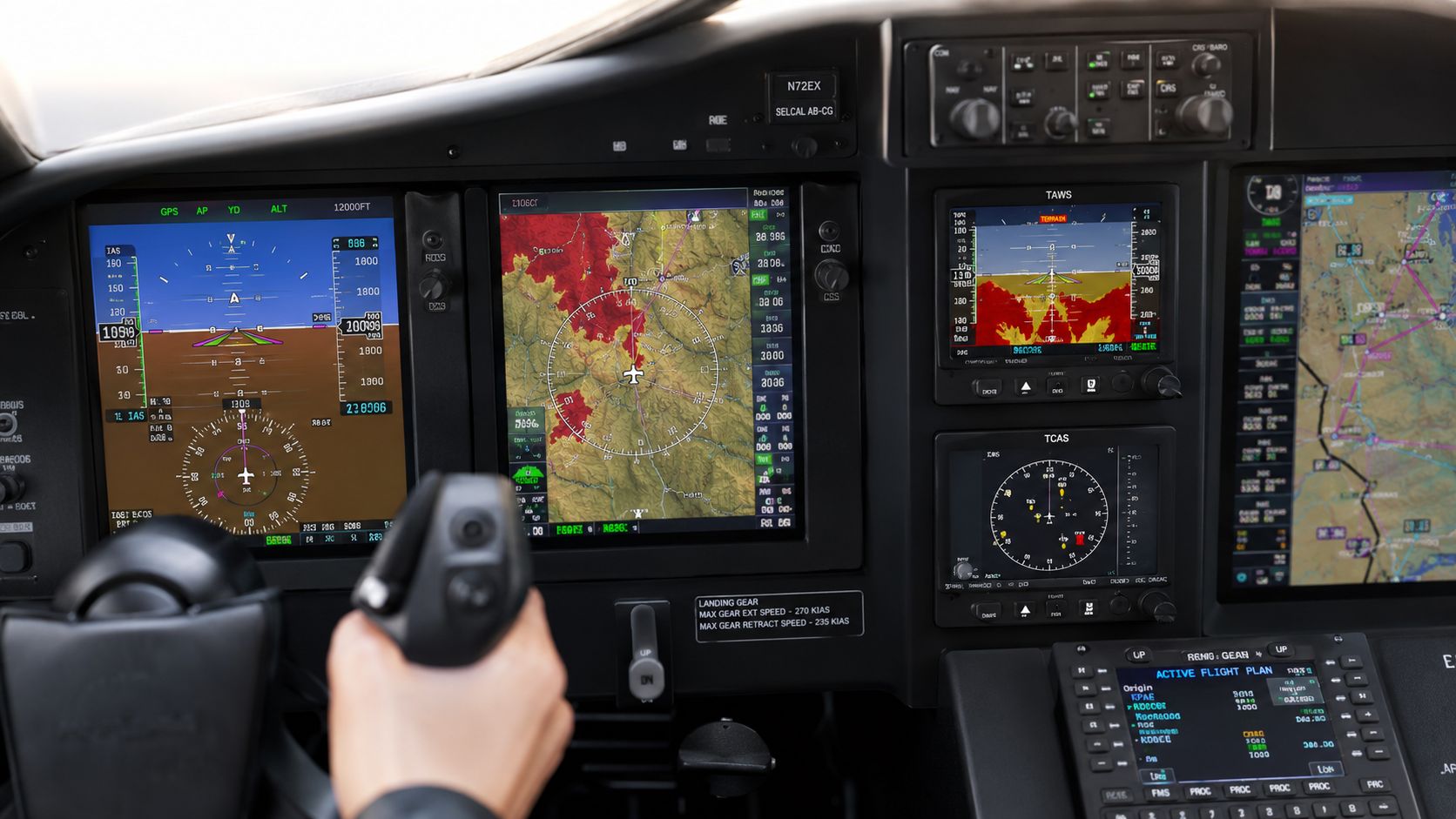
The aircraft families often named in safety roundups, including the Bombardier Global 7500, Dassault Falcon 8X, Gulfstream G500/G600, Cessna Citation Longitude, and Embraer Praetor 600, are repeatedly discussed in part because they combine newer design certification with current-generation avionics. Independent reporting also highlights very limited or no fatal-incident histories for some of those types in early service, which is one reason they appear so often in safety conversations. Simple Flying's safest private jets list captures that pattern, especially around the G500/G600 and Praetor 600.
What modern equipment does for a charter client
Systems like glass cockpits, terrain awareness, traffic collision avoidance, and weather radar don't replace judgment, but they help the crew see more and react earlier. That's why experienced operators value current avionics so highly. It's also why passengers on long-range flights should ask what cockpit suite is installed, not just what the cabin feels like.
The brief also points to Haute Jets Journal's safety-focused aircraft guide, which fits the broader conclusion here. Safety is not one gadget. It's the cumulative effect of navigation aids, warning systems, and the training to use them correctly.
New avionics don't make an operator safe on their own, but they widen the margin for error when weather, routing, or traffic gets complicated.
For charter clients, that means a smart booking question is not “Is it a famous model?” It's “What cockpit systems does this exact aircraft have, and how current are they?” That's a better proxy for real-world safety than a glossy aircraft profile.
7. Insurance Coverage and Liability Protection as a Safety Signal
Insurance is one of the clearest outside checks on operator quality. Underwriters don't care about luxury branding, they care about risk. If a fleet has poor practices, claims history, or weak procedures, coverage becomes more expensive or harder to obtain. That makes insurance a useful safety signal for charter clients who want an independent view of operator discipline.
Haute Jets' positioning around complete coverage fits this logic well, because a serious operator should be able to show hull insurance, liability protection, and passenger accident protection without hesitation. That doesn't just protect the traveler financially. It shows the operator is functioning inside a risk framework that external professionals are willing to support. The same principle appears in the brief's reference to Expat Global Medical's air evacuation coverage guidance, which underscores how travelers in high-mobility situations benefit from clearly defined protection.
What to request before departure
A well-run operator should be able to provide proof of coverage, confirm policy scope, and state whether international operations are included. If a client is flying outside the United States, that last point matters a lot. Coverage that looks fine on paper can still be inadequate for the actual route.
- Policy proof: request current documentation, not verbal reassurance.
- Passenger protection: verify that passenger accident coverage is included.
- Claims clarity: ask whether there have been recent claims or if the record is clean.
- Route fit: confirm the policy extends to the destination and airspace involved.
Insurance doesn't make a charter safe by itself, but it exposes whether the operator's risk profile has passed an external test. That's why high-end buyers and institutional decision-makers pay attention to it. In a market where safety varies by operator, insurance is one of the few filters that speaks the language of accountability.
For the safest private jets experience, the goal is not to trust a promise. It's to confirm that multiple independent parties, including underwriters, have already stress-tested the operation.
7-Point Private Jet Safety Comparison
| Item | Implementation complexity | Resource requirements | Expected outcomes | Ideal use cases | Key advantages |
|---|---|---|---|---|---|
| Wyvern Wingman Certification: The Gold Standard for Operator Safety Vetting | Very high, third‑party audits and ongoing surveillance | Extensive audit documentation, dedicated safety teams, continuous compliance costs | Strong independent validation of operator safety and ongoing oversight | Corporate/institutional charters, risk‑averse clients, regulatory compliance needs | Independent, rigorous certification; continuous monitoring; transparent comparisons |
| ARGUS Gold and Platinum Ratings: Insurance‑Backed Safety Assurance | High, risk‑based scoring with insurer review | Regular audits, data sharing with underwriters, investment in safety programs | Quantifiable safety metrics tied to insurance underwriting and premiums | Operators seeking insurer-backed credibility; broker/charter partnerships | Insurance alignment; public, comparable ratings; financial incentive for safety |
| 24‑Hour Pre‑Flight Confirmation: Transparency and Verification Protocol | Moderate, coordinated information gathering and verification | Ops coordination, real‑time data collection, communication systems | Reduced last‑minute surprises; verified tail number, crew, and services | Individual charters, VIP passengers, last‑minute itineraries | Immediate transparency; passenger reassurance; prevents substitutions |
| Aircraft Maintenance Tracking and Documentation: The Foundation of Operational Safety | High, detailed tracking systems and auditability | Electronic logs, MRO processes, parts traceability, inspection resources | Proactive maintenance, lower mechanical failure risk, verifiable history | Older fleets, high‑utilization aircraft, safety‑focused purchasers | Demonstrable maintenance compliance; preventative safety posture; insurer confidence |
| Crew Qualification and Continuous Training Standards: Human Factors in Safety | High, recurrent training programs and recordkeeping | Simulators/instructors, recurrent training budgets, crew scheduling | Improved crew competency, fewer human‑factor incidents, consistent standards | Challenging operations, international flights, VIP/VIP service expectations | Experienced crews, CRM proficiency, reduced pilot error |
| Avionics Technology and Navigation Systems: Modern Equipment Reduces Risk | Moderate to high, equipment upgrades and pilot currency | Capital for avionics, upgrade downtime, specialized pilot training | Enhanced situational awareness, reduced workload, fewer navigation incidents | IFR operations, adverse weather, long‑range or congested airspace | TAWS/TCAS/weather radar; precision navigation; fatigue reduction |
| Insurance Coverage and Liability Protection: Financial Assurance of Safety Standards | Moderate, policy negotiation and underwriter requirements | Premiums, loss‑history reporting, proof of coverage documents | Financial protection for passengers and operators; underwriter enforced standards | Institutional contracting, high‑liability missions, international operations | Enforces safety via underwriting; passenger financial protection; signals operator quality |
Fly with Confidence Your Safety Checklist for Every Charter
True safety in private aviation comes from deliberate, verifiable, and continuous effort. It's not found in a brand name alone, but in the synthesis of elite operator certification, proactive maintenance, crew excellence, and operational transparency. Element Aviation and the broader safety roundups in this article all point in the same direction, the safest private jets are usually the best-governed ones.
The practical lesson for a charter client is straightforward. Ask for the certificate, the audit status, the tail number, the maintenance record, the crew credentials, the avionics suite, and the insurance documents before you book. If an operator can't produce that information cleanly, the flight isn't ready. If it can, you've already done more risk screening than most travelers ever will.
Haute Jets is built around that standard, sourcing from vetted operators rather than treating safety as an afterthought. For travelers who want on-demand private aviation without guesswork, the right next step is to request a charter from a team that confirms the aircraft, the operator, and the documentation before departure.
A CTA for Haute Jets.
What Makes a Jet Secure
What Makes a Private Jet Safe?
Private jets are equipped with cutting-edge safety technologies that ensure the highest levels of airworthiness and reliability. These include redundant systems, sophisticated avionics, and state-of-the-art flight control systems. The Gulfstream G650 and Bombardier Global 7500, for example, feature enhanced weather radar and synthetic vision technology, allowing pilots to navigate adverse conditions safely.
Auto-Land Features in Modern Private Jets
Modern private jets are equipped with groundbreaking auto-land features, revolutionizing what makes a jet secure. These advanced systems leverage AI and automation to enhance safety and efficiency, providing unparalleled peace of mind for discerning travelers.
What is the Safest Private Jet?
When it comes to determining the safest private jets, several aircraft stand out for their exceptional safety features and track records. The Cessna Citation 680 Sovereign, for instance, is renowned for its advanced avionics and robust design. Similarly, the Dassault Falcon 2000 and Bombardier Challenger 300 are highly regarded for their cutting-edge safety systems.
According to industry experts, the Bombardier Global Series and Gulfstream G650 are among the most secure options, boasting state-of-the-art technology and rigorous maintenance protocols. The Dassault Falcon 900, Airbus Corporate Jet, and Embraer Phenom 300 also rank highly in safety ratings.